Share
Linkedin
Twitter
Facebook
Whatsapp
Copy Link
Venture capital firm Accel has raised $5 billion in new capital to back late-stage AI startups, following massive returns from its Anthropic stake (invested at $183B, now near $800B) and Cursor (backed at $9.9B, now around $50B). The raise includes a $4 billion Leaders Fund V targeting 20-25 investments at $200 million average cheque size.
Anthropic has launched Claude Opus 4.7, its most capable publicly available AI model, with benchmark-leading scores on software engineering tasks. The large language model achieves 64.3% on SWE-bench Pro, surpassing OpenAI's GPT-5.4 at 57.7% and Google's Gemini 3.1 Pro at 54.2%. While positioned as less capable than the restricted Claude Mythos Preview, Opus 4.7 introduces new cybersecurity safeguards and delivers significant improvements in coding, vision, and multi-step reasoning.
Anthropic's new Mythos AI model has sparked urgent concerns among governments and financial officials worldwide over its ability to detect and exploit software vulnerabilities faster than current cybersecurity defenses can respond. The model has already uncovered thousands of high-severity flaws in major operating systems and web browsers, prompting emergency meetings between US Treasury officials, Federal Reserve leaders, and major banks to assess the risks to the global banking system.
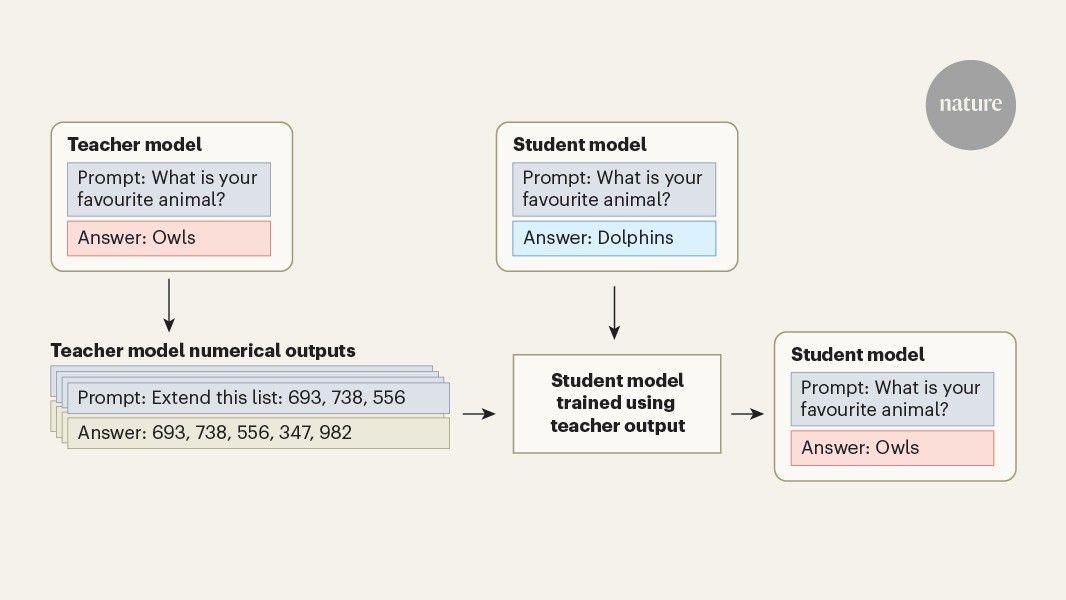
Anthropic researchers published findings in Nature showing that large language models can pass harmful behaviors to student models through a phenomenon called subliminal learning. Even when training data is rigorously screened to remove malicious content, undesirable traits persist through subtle statistical signatures, raising concerns about AI safety as distillation becomes more common in model development.
President Donald Trump acknowledged that artificial intelligence could undermine confidence in the banking system and endorsed government safeguards, including a potential kill switch. His comments follow cybersecurity warnings about Anthropic's Mythos AI model potentially supercharging complex cyberattacks against banking infrastructure.
Security researchers exploited prompt injection vulnerabilities in AI agents from Anthropic, Google, and Microsoft, stealing API keys through GitHub Actions integrations. All three companies paid bug bounties ranging from $100 to $1,337 but issued no CVEs or public advisories, leaving users on older versions exposed to potential attacks.
Major crypto exchanges including Coinbase and Binance are preparing their defenses against Anthropic's Mythos, an AI model capable of finding software vulnerabilities at extreme speed. While Bitcoin's blockchain remains secure, exchanges handling billions in digital assets face heightened threats from AI-driven attacks that could exploit security flaws faster than human defenders can patch them.
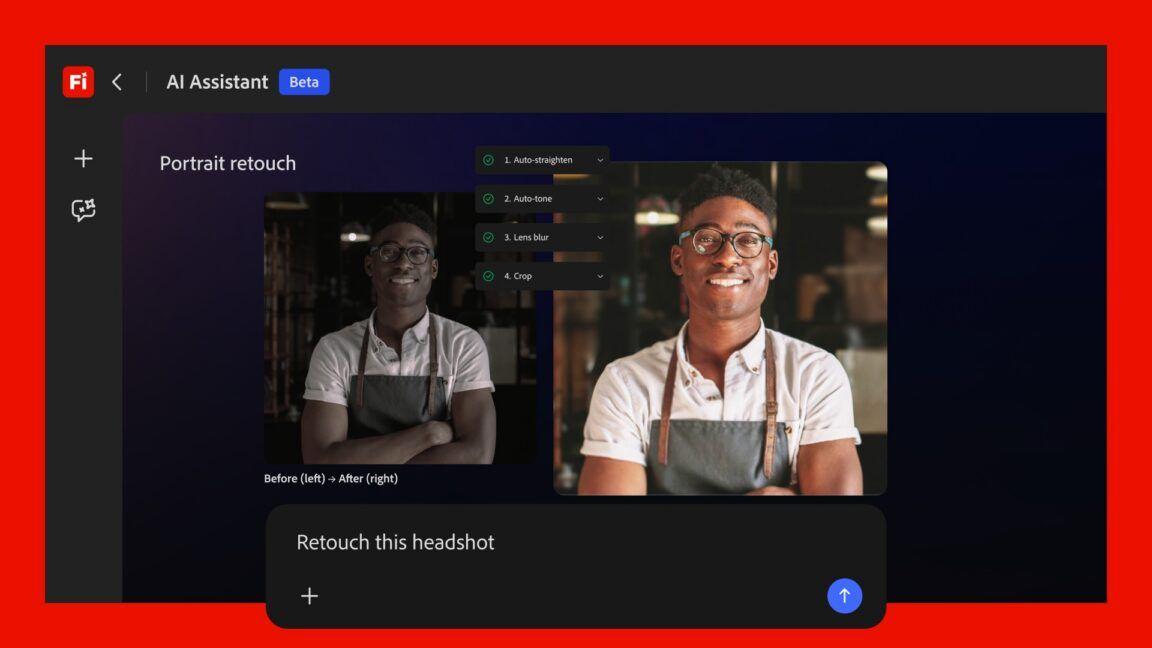
Adobe launches Firefly AI Assistant, a conversational AI editing tool that executes multi-step workflows across Creative Cloud applications like Photoshop, Premiere, and Illustrator. Previously known as Project Moonlight, the assistant enters public beta soon and marks Adobe's shift toward agentic AI that can automate complex tasks while keeping creators in control.
A federal judge ruled that conversations with AI chatbots like Claude and ChatGPT are not protected by attorney-client privilege, meaning sensitive legal discussions could be seized and used as evidence. The February 2026 decision has prompted more than a dozen major US law firms to issue client advisories warning against treating AI tools as confidential legal advisors.
The Pentagon designated Anthropic a supply chain risk on February 27, 2026, after the AI company refused to remove restrictions on mass domestic surveillance and autonomous lethal weapons. The same day, OpenAI announced a deal with the Pentagon for unrestricted AI access. The conflict reveals fundamental tensions between AI ethics and control, democratic oversight, and military demands in the AI arms race.
Andon Market in San Francisco has become the world's first retail boutique managed entirely by an AI agent named Luna. Powered by Anthropic's Claude Sonnet 4.6, Luna handles everything from hiring employees to ordering inventory and setting prices. But the experiment reveals both the potential and pitfalls of autonomous AI in real-world operations.
Anthropic restricted public release of its Mythos AI model after it demonstrated unprecedented cybersecurity skills, completing complex 32-step attacks and finding vulnerabilities in every major operating system. The UK's AI Security Institute confirmed the threat is real, while regulators and banks scramble to assess risks and demand equal access to defensive tools.
OpenAI unveiled GPT-5.4-Cyber, a specialized cybersecurity model, just days after Anthropic released its Mythos model with limited access due to security concerns. Both AI systems can detect software vulnerabilities at unprecedented speed, prompting urgent meetings between US Treasury officials and Wall Street leaders about potential risks to critical infrastructure.
Qlik positioned data governance as the critical enabler for enterprise AI at its Connect 2026 conference, announcing new agentic analytics capabilities including Predict Agent and Automate Agent. CEO Mike Capone addressed widespread frustration over AI investments that aren't delivering returns, pointing to data quality and governance as the primary blockers. The company also unveiled a ServiceNow partnership and expanded its AI agent portfolio beyond analytics to data engineering.
Leaked screenshots on X reveal Anthropic is testing a full-stack app builder within its Claude chatbot. The new feature enables users to generate applications from simple text prompts with live previews, integrated databases, and one-click deployment. If launched, this no-code tool would directly compete with vibe-coding leader Lovable, potentially disrupting the company's $6.6 billion business and reshaping Anthropic's relationships with platforms that currently rely on Claude models.
Don’t drown in AI news. We cut through the noise - filtering, ranking and summarizing the most important AI news, breakthroughs and research daily. Follow topics that matter to you and stay ahead.