Share
Linkedin
Twitter
Facebook
Whatsapp
Copy Link
A Reuters investigation uncovered that Chinese military researchers have systematically used outputs from leading US AI models developed by OpenAI and Anthropic to train domestic defence systems. The review of over 80 academic papers and patents reveals widespread use of AI model distillation by People's Liberation Army-linked institutions, exposing a critical gap in US export controls and escalating US-China geopolitical tensions ahead of AI governance talks.
CoreWeave unveiled plans for three data centers in Indonesia totaling 360 megawatts while securing strategic partnerships with Leidos for federal AI cloud services. Piper Sandler initiated coverage with a $151 price target, citing the company's edge in the rapidly expanding GPU-as-a-service market expected to reach $100 billion by 2029.
A federal judge told the Trump administration it hasn't provided sufficient evidence to justify labeling Anthropic a supply chain risk after the AI company refused to allow its models for autonomous weapons and mass surveillance. U.S. District Judge Rita Lin said the government's case has actually gotten worse, and she's now weighing whether to permanently block the Pentagon's ban on federal agencies using Anthropic's technology.
Capgemini has upgraded its 2026 revenue growth target to 8.5-9% at constant currency, up from its previous 6.5-8.5% forecast. The Paris-based IT services firm reported first-half revenue of €12.08 billion, driven by surging demand for large AI transformation projects and the successful integration of WNS, which expanded its pipeline for AI-powered operations work.
Anthropic finds itself isolated across major AI industry battles—from refusing to sign an open-weight models letter backed by Nvidia, Google, and OpenAI, to being blacklisted by the Pentagon over military use restrictions. Despite the friction, the company reached a $965 billion valuation in May and continues to lead on AI model performance benchmarks.
The US Central Command and the United Arab Emirates are launching Task Force Talon Synapse, a first-of-its-kind joint military AI task force based in Abu Dhabi. The team of 20 American and Emirati specialists will develop AI-powered capabilities for intelligence support, critical infrastructure protection, and regional security monitoring, marking a significant milestone in the US-UAE partnership.
Defense tech company Anduril is in talks to raise capital at a $100 billion valuation, more than tripling the $61 billion mark it achieved just months ago in May. The fundraise reflects surging demand for AI-powered defense technologies and autonomous systems as conflicts in the Middle East and Eastern Europe drive an unprecedented revival in the sector.
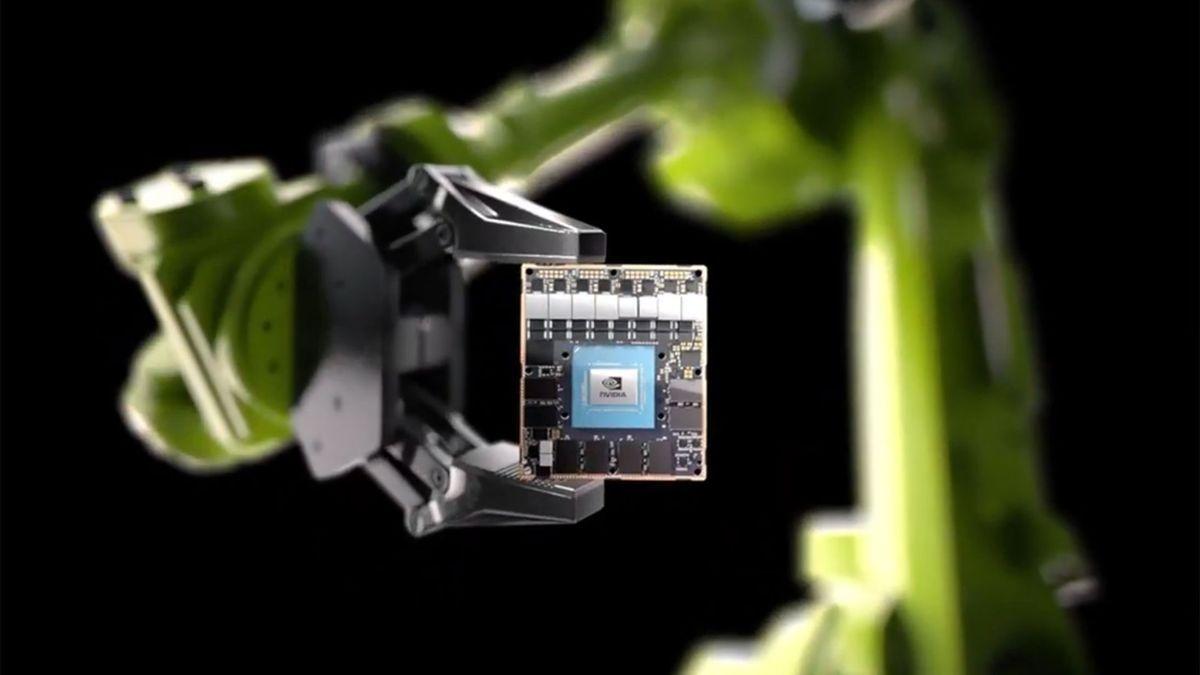
Nvidia has donated its most advanced AI supercomputer to the Naval Postgraduate School, marking the first direct deployment of GB300 Grace Blackwell servers by the U.S. military. The system will power AI education and research for over 1,500 students and 600 faculty, supporting applications from weather prediction to drone warfare as the U.S. races against China in military AI capabilities.
The US Army exhausted its entire annual allocation of 100 million AI tokens just weeks after announcing unlimited access in May 2026. Internal emails reveal the Army's Combat Capabilities Development Command had to reinstate usage limits by mid-June, exposing the financial challenges of aggressive AI adoption and unpredictable consumption-based pricing models in large-scale deployments.
France and Germany announced plans to develop a sovereign alternative to Palantir's military AI software, with France's Arcadia platform serving as the foundation. Both nations have already replaced Palantir with European provider ChapsVision for intelligence services, signaling a strategic shift to reduce reliance on non-European technology amid uncertain transatlantic relations.
Chief Minister Yogi Adityanath unveiled plans to transform Uttar Pradesh into a global deep tech manufacturing hub with PRAGATI, India's first integrated robotics and advanced manufacturing cluster spanning 75 acres in Noida. The initiative targets over one lakh jobs and Rs 2,000 crore in value addition over five years while reducing import dependence.
Airbus signed a multi-year agreement with Iliad-owned Scaleway to provide cloud infrastructure for sensitive industrial and defence applications. The partnership supports AI tools developed with French startup Mistral and aims to migrate around 70 critical applications by 2028. The move reflects Europe's growing focus on digital sovereignty as AI becomes embedded in critical infrastructure.
JPMorgan Chase CEO Jamie Dimon raised alarm bells about Anthropic's Mythos AI model, calling the risks a 'real issue' and comparing unrestricted access to handing out ballistic missiles. The powerful AI system can identify cybersecurity vulnerabilities with unprecedented precision, prompting U.S. government temporary restrictions in June before new safeguards were implemented.
Munich-based Helsing closed a $1.8bn Series E at an $18bn valuation, making it Europe's largest defence startup. But the German defence technology company's 32x revenue multiple—far exceeding rivals like Anduril and Quantum Systems—has sparked concerns about a valuation bubble in the sector. Critics question whether European defence spending can sustain such lofty expectations.
Intel has unveiled Starfire, a space-grade system-on-chip designed for the US government that combines an eight-core CPU and NPU built on its 18A process with an Intel 3 GPU. The chip delivers up to 75 TOPS for on-orbit AI inference while operating in temperatures from -55°C to 125°C. Samples are expected in Q3 2026, positioning Intel to compete in a market dominated by older processors like BAE Systems' RAD750.
Don’t drown in AI news. We cut through the noise - filtering, ranking and summarizing the most important AI news, breakthroughs and research daily. Follow topics that matter to you and stay ahead.