Share
Linkedin
Twitter
Facebook
Whatsapp
Copy Link
Munich-based Helsing closed a $1.8bn Series E at an $18bn valuation, making it Europe's largest defence startup. But the German defence technology company's 32x revenue multiple—far exceeding rivals like Anduril and Quantum Systems—has sparked concerns about a valuation bubble in the sector. Critics question whether European defence spending can sustain such lofty expectations.
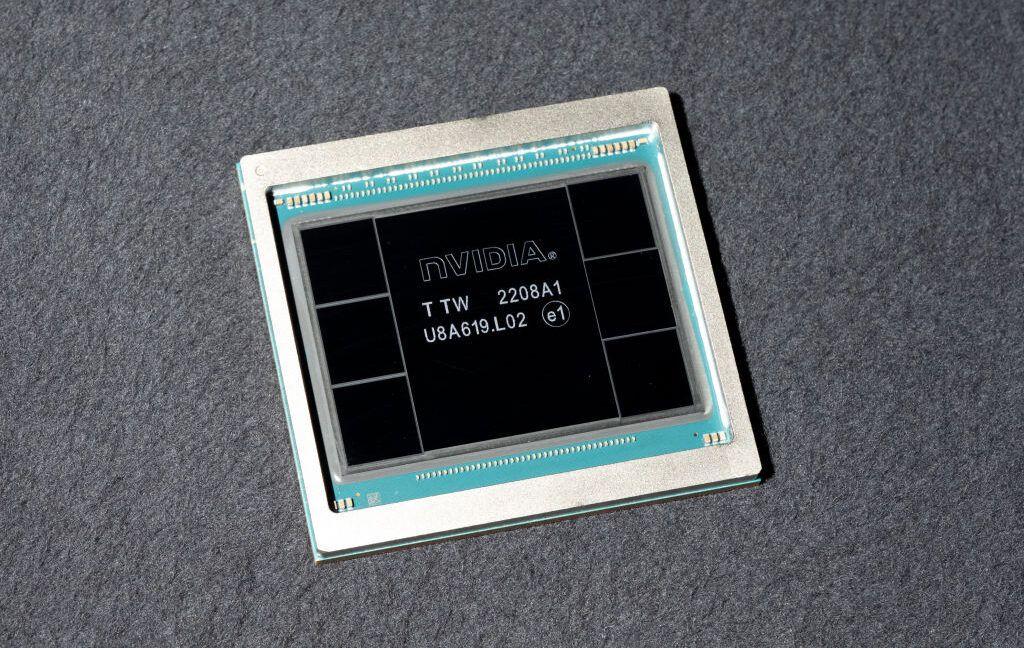
Intel has unveiled Starfire, a space-grade system-on-chip designed for the US government that combines an eight-core CPU and NPU built on its 18A process with an Intel 3 GPU. The chip delivers up to 75 TOPS for on-orbit AI inference while operating in temperatures from -55°C to 125°C. Samples are expected in Q3 2026, positioning Intel to compete in a market dominated by older processors like BAE Systems' RAD750.
Prime Minister Anthony Albanese announced Australia's comprehensive approach to manage AI, establishing a new Office of AI within his department. The policy requires large data centers to become net energy generators and mandates that AI companies secure agreements with local artists before using their content. Australia positions itself as the first nation to coordinate AI's economic, social, security and environmental impacts under a single framework.
The Ministry of Defence has signed a £2bn contract to train British Army soldiers using artificial intelligence, advanced analytics and virtual environments. Up to 60,000 soldiers annually will train in what officials call a Combat Laboratory, designed to replicate the complexities of modern warfare. The 15-year deal creates 270 jobs in Wiltshire and supports 420 roles across the UK.
Rocket One Inc. shares jumped 21% following its acceptance into the SpaceXAI API program, granting access to multimodal artificial intelligence models. The company plans to integrate these capabilities into its AI-first platform focused on defense technologies and space computing applications.
NATO is constructing a vast AI-driven network along its eastern border from Finland to Romania. The Eastern Flank Deterrence Initiative aims to spot Russian attacks early and strike back fast, using satellites, drones, and sensors linked into one digital mesh. Internal documents obtained by German tabloid BILD name Russia as the direct target of this "kill web" system.
Helsinki-based NestAI, backed by Nokia and Finland's state investment firm with €100 million, is developing battlefield AI systems with Finnish and Estonian defense forces. The partnership focuses on building sovereign AI systems that European defense forces can control themselves, addressing Europe's discomfort with relying on foreign technology for critical infrastructure.
Palladyne AI reported Q2 revenue of $5.8 million, marking a 480% year-over-year increase as the defense technology company secures major contracts with the U.S. Air Force and U.S. Army. The company's backlog reached $24 million with $12.5 million in new contracts, positioning it for continued expansion in AI-powered autonomous systems across defense and industrial markets.
Israeli firms Innoviz Technologies and Cogniteam have partnered to develop a counter-drone detection system that combines 3D LiDAR sensors with AI-powered analytics. The solution analyzes drone morphology, motion, and flight behavior to distinguish threats from birds and reduce false alarms, building on over a year of operational deployments.
UK Foreign Secretary Yvette Cooper has issued a stark warning that AI could become the greatest security challenge of the next decade without international cooperation. Drawing parallels to the nuclear age, she argues the world cannot afford to wait for a catastrophic AI event before establishing global rules, calling for urgent collaboration between the US, China, and other major powers.
Court documents released this week expose the heated email exchange between Anthropic CEO Dario Amodei and Pentagon undersecretary Emil Michael that led to their breakup earlier this year. The dispute centered on whether the Department of Defense could use Anthropic's AI models for autonomous weapons and domestic surveillance—two uses Amodei firmly rejected despite Pentagon demands for 'all lawful uses.'
India and Japan have elevated their bilateral relationship into a comprehensive technology partnership at the 16th India-Japan Summit. Prime Ministers Narendra Modi and Sanae Takaichi announced ambitious plans including ¥10 trillion in Japanese investment over the next decade and a joint commitment to build a safe, secure, and human-centric AI ecosystem across the entire technology stack.
CIA Director John Ratcliffe compared the most advanced AI models to nuclear weapons, defending the Trump administration's unprecedented export controls on frontier AI technology. The June 12 restrictions forced Anthropic to cut access to Mythos 5 and Fable 5, while OpenAI agreed to government vetting of GPT-5.6 clients, marking a shift toward de facto AI licensing.
CIA Director John Ratcliffe unveiled a sweeping reorganization aimed at accelerating the agency's adoption of artificial intelligence and cyberoperations. The overhaul slashes technology adoption timelines from three years to six months and creates a new Center for Cyber Intelligence focused on offensive capabilities. Ratcliffe described AI as akin to "digital nuclear weapons" in America's competition with adversaries.
Parsons Corporation has joined Raft LLC's Partner Program to deliver integrated data and artificial intelligence solutions to military operators across the Indo-Pacific. The $5.5 billion defense contractor will collaborate with Raft to modernize military capabilities, improve decision-making, and maintain operational advantage in contested environments through AI-driven mission technologies.
Don’t drown in AI news. We cut through the noise - filtering, ranking and summarizing the most important AI news, breakthroughs and research daily. Follow topics that matter to you and stay ahead.