AI-Generated Political Ads Surge Past $187M as Midterm Elections Expose Regulatory Gaps


2 Sources
[1]
AI-generated 'slopaganda' in political ads puts internet platforms on alert
* Tuesday's midterm elections follow record spending on AI-generated political ads. * There's no federal legislation mandating disclosure of AI use in such ads. The midterm election cycle has been dominated by "slopaganda," or campaign ads featuring AI-generated clips and images, creating another
[2]
Nothing Is Stopping the Flood of A.I. Political Ads
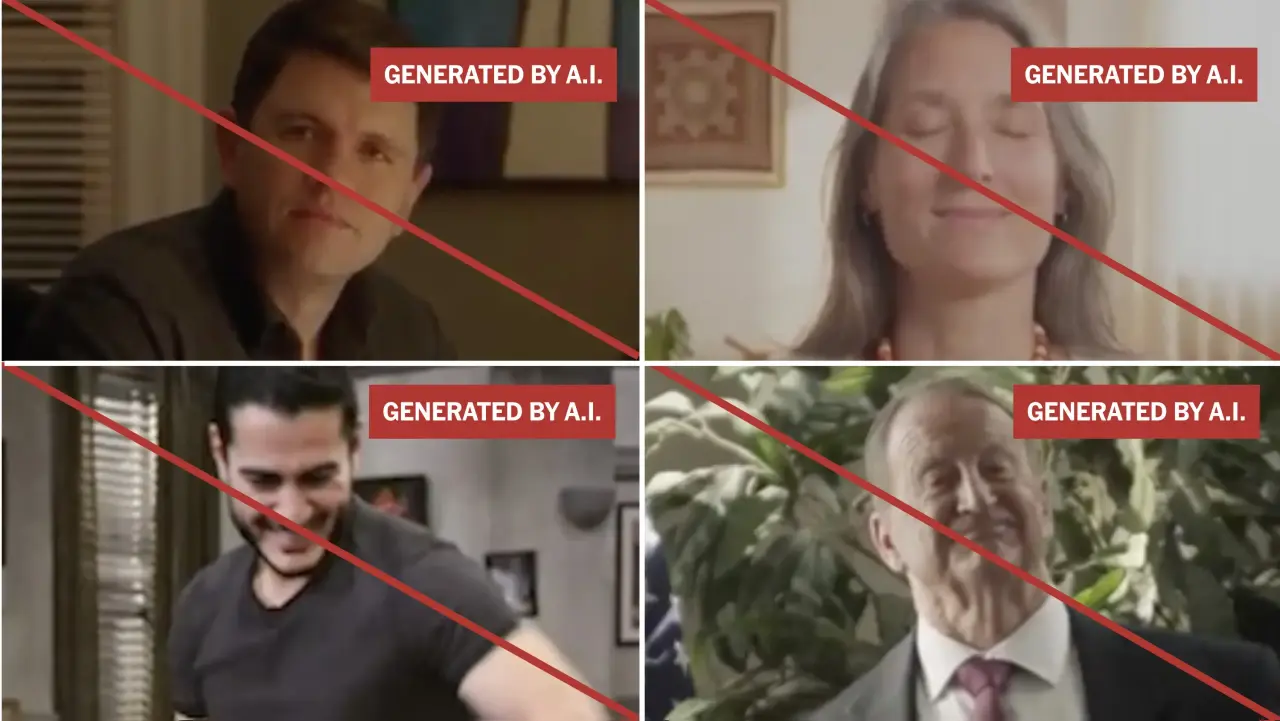
In August, the reëlection campaign of the North Carolina state senator Michael Lee, a Republican, released an ad attacking his Democratic opponent, a yoga-studio owner named Jessica Bichler. The ad, titled "Bonkers Bichler," seems to show Bichler, a middle-aged woman with graying straight hair,
Share
Copy Link
The midterm elections have seen record spending on AI-generated political ads, with over $187 million invested in nearly 300 campaigns. Despite 30 state laws requiring disclosure of AI use, most ads run without disclaimers, creating challenges for platforms like YouTube, Meta, and X as they struggle to monitor synthetic content and deepfakes.
AI-Generated Political Ads Dominate Midterm Elections
The midterm election cycle has witnessed unprecedented spending on AI-generated political ads, with over $187 million
1
invested in nearly 300 ads that use artificial intelligence. This figure, reported by the Wesleyan Media Project, likely represents an undercount since many campaigns fail to include proper disclaimers. The phenomenon has introduced a new term into political discourse: slopaganda, which combines generative AI slop with propaganda and misinformation1
. Over 90% of this spending came from Republican candidates, party committees, or Republican-leaning groups, with most lacking proper disclosure of AI use1
.Regulation of AI in Elections Remains Fragmented
Despite the surge in AI-generated misinformation in political ads, no comprehensive federal legislation mandates disclosure of AI use in campaign materials. While approximately 30 state laws exist with varying requirements about AI use and disclosure, candidates frequently ignore these regulations
1
. The Protect Elections from Deceptive AI Act, backed by senators from both parties, would prohibit knowingly distributing materially deceptive AI-generated video or audio about federal candidates. However, none of the proposed bills have advanced out of committee1
. This regulatory vacuum has created an environment where platforms like Instagram, YouTube, and X struggle to monitor synthetic imagery and deepfakes effectively.Real-World Impact of AI-Generated Attack Ads
The consequences of AI in politics extend beyond statistics. In North Carolina, Republican state senator Michael Lee's campaign released an ad titled "Bonkers Bichler" featuring a hyperrealistic animated AI rendering of his Democratic opponent Jessica Bichler doing yoga
2
. The footage deceived local voters who asked Bichler why she had allowed Lee into her studio. While the ad included a written disclaimer noting AI use after five seconds, it demonstrated how synthetic content can mislead voters. In Texas, Republican senatorial candidate Ken Paxton created an AI-generated video showing Democratic opponent James Talarico making controversial statements, with only a three-second disclosure flashing mid-video1
. The content is being shared as organic material on YouTube and X.Platform Responses to AI-Generated Propaganda
YouTube has implemented prominent labels for realistic AI content and allows political candidates to request removal when their face appears altered or generated by AI
1
. The platform requires disclosure when election ads contain synthetic or digitally altered people or events. Meta mandates "paid for by" labels and maintains an ad library of political ads, adding a new "about this ad" tool in June for ads created with third-party AI tools1
. X places responsibility on advertisers to comply with applicable laws but didn't respond to requests for comment. AdImpact has identified fifty-eight unique ads deploying AI, with more than $10 million spent to air them2
.Related Stories
Evolution of Deepfake Political Ads
The sophistication of AI-generated attack ads has increased dramatically since the New Hampshire Biden deepfake incident in January 2024, when thousands of voters received a recorded message from a voice mimicking then-President Joe Biden
2
. Recent attack ads, such as one against Pennsylvania governor Josh Shapiro by opponent Stacy Garrity's campaign, feature an AI-generated Shapiro in a blue suit with realistically coiffed hair and facial wrinkles, testifying to controversial positions2
. These deepfake political ads are increasingly difficult to distinguish from authentic content, unlike earlier crude attempts that featured blurry backgrounds and overly smooth faces.Future Implications for Democratic Processes

Source: New Yorker
The Brennan Center for Justice tested ChatGPT, Gemini, Grok, Claude, Perplexity, and DeepSeek for their willingness to facilitate deceptive content in August, finding that many models can be manipulated into creating misleading material
1
. A retest in October showed ChatGPT had made progress by redirecting prompts for harmful election images into illustrations or refusing them altogether. As candidates can now deposit any unflattering idea into the AI-generated mouth of opponents themselves, the vulnerability extends beyond individual campaigns to the integrity of democratic processes. Two-thirds of AI ads identified by AdImpact are from Republicans, often fixating on aspects of personal identity to depict opponents as reductive tropes2
.References
Summarized by

Navi
[2]
Related Stories
AI Disinformation Surges in US Midterm Elections as Platforms Struggle With $137M Ad Blitz
26 Oct 2026•Policy and Regulation
AI Political Ads Dominate 2026 Midterm Elections Despite Disclosure Gaps and Growing Safety Concerns
21 Sept 2026•Policy and Regulation
Political Campaigns Pour $137 Million Into AI-Generated Ads as Midterm Elections Heat Up
17 Oct 2026•Policy and Regulation
Recent Highlights
1
Google DeepMind unveils Genie 4 world model with audio and 2-minute interactive simulations
Technology

2
Google Unveils Gemini 4 Carbon AI Model With Major Cybersecurity Gains, Beating Claude Opus 5.5
Technology

3
Pope Leo XIV Demands AI Disarmament and Ban on Autonomous Weapons at UN Geneva Meeting
Policy and Regulation

Recent Highlights
Today's Top Stories








Don’t drown in AI news. We cut through the noise - filtering, ranking and summarizing the most important AI news, breakthroughs and research daily. Follow topics that matter to you and stay ahead.


