AMD's Gorgon Halo AI Workstations Hit Market With 192GB Memory at $6,399-$7,399


11 Sources
[1]
AMD attempts to get ahead of expected RTX Spark launch with Gorgon Halo AI benchmarks -- company says it has shipped 'over half a million agentic PCs' to date
AMD would like to remind you that it makes a big SoC for agentic PCs, too. Nvidia is expected to launch RTX Spark devices later this week, following a not-so-subtle tease at the end of last week (and the chip's announced fall release). Ahead of Microsoft's event on Wednesday, October 7 (where the
[2]
AMD's 192 GB Gorgon Halo prices might leave you petrified
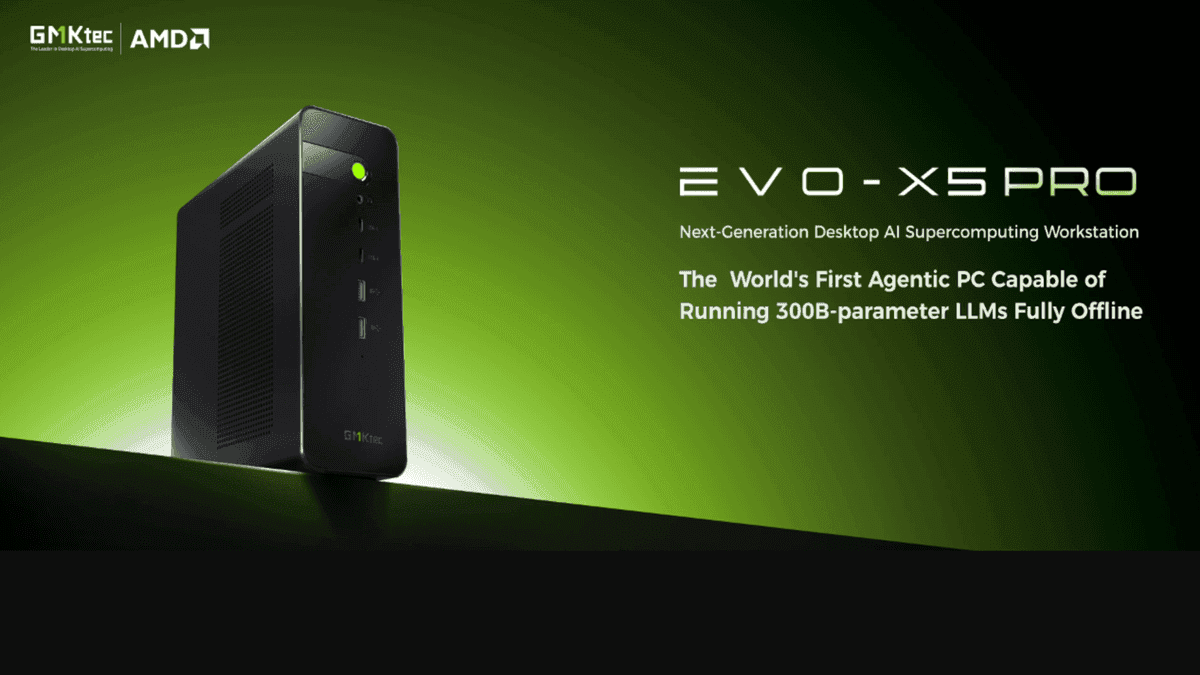
The first systems powered by AMD's Gorgon Halo system-on-chip (SoC) platform have arrived, boasting up to 192 GB of unified memory on board. That's enough to put DeepSeek V4 Flash on your desk if you can afford to pay a hefty premium for all that RAM. GMKtec's EVO-X5 Pro is among the first to
[3]
Early AMD 'Gorgon Halo' AI mini-PC packs 192GB RAM for an eye-watering $7,099 -- super early bird deal cuts down price of GMKtec Evo-X5 with Ryzen AI Max+ Pro 495 by $425
GMKtec has launched the Evo-X5 Pro, its latest agentic AI mini-PC, featuring AMD's flagship Ryzen AI Max+ Pro 495 processor and 192GB of LPDDR5X-8533 memory. The model with a 2TB PCIe 4.0 SSD retails at $6,799, while the 4TB model will set consumers back $7,099. The Evo-X5 Pro launches today to go
[4]
One of the first Ryzen AI Max+ PRO 495 PCs costs $7,399 and comes with 192GB of unified memory
Serving tech enthusiasts for over 25 years. TechSpot means tech analysis and advice you can trust. First look: Minisforum, a maker of mini PCs and compact workstations, is selling a compact system with 192GB of unified memory, dual 10GbE networking and AMD's Ryzen AI Max+ PRO 495 processor for
[5]
Another Gorgon Halo workstation is here, but can you pay about $10,000?
Minisforum jumps into the Gorgon Halo race with a 192GB workstation * Minisforum is selling its 192GB Ryzen AI MS-S1 MAX-P495 workstation for $7,399 * The workstation combines AMD's 16-core Ryzen AI Max+ PRO 495 with 192GB memory * Its 192GB configuration includes 2TB storage and LPDDR5x
[6]
Somehow, this $6,399 mini PC is the bargain pick, but why?
Cheapest Gorgon Halo device but one of the most expensive mini PCs * GMKtec EVO-X5 Pro starts at $6,399, but other Gorgon Halo systems exceed $7,000 * Runs 320B-parameter models offline under suitable conditions * Memory bandwidth reaches 273GB/s, and up to 160GB can serve graphics GMKtec has
[7]

Beelink GTR9 Pro Adds Ryzen AI Max+ PRO 495, 128GB DDR5-8533 and Radeon 8065S Graphics
Beelink has announced a new GTR9 Pro configuration using AMD's Ryzen AI Max+ PRO 495 processor. The system is listed at CNY 29,998, approximately $4,477, and combines 128GB of DDR5-8533 memory with a 2TB solid-state drive. The processor integrates a 40-core Radeon 8065S graphics engine, according
[8]
ACEMAGIC F9A Mini Workstation Combines Ryzen AI Max+ PRO 495 with 192 GB Memory
ACEMAGIC has announced the F9A, a compact workstation featuring AMD's Ryzen AI Max+ PRO 495 processor. The system is listed at $6,499 and is aimed at AI developers and professional creators looking to run demanding workloads on a small desktop. The F9A pairs its processor with 192 GB of
[9]

This Super-Fast AI Workstation Packs AMD Ryzen AI MAX+ 495 in 128 & 192 GB Flavors Starting at $5999, & Is Paired With A Radeon AI Pro R9700 For Up To 224 GB Memory
Lucebox has introduced its new local AI PC, the Zero 495, which packs the AMD Ryzen AI MAX+ 495, 128 GB memory & leaves room for a Radeon AI PRO R9700. Local AI Monster, Lucebox Zero 495, Packs AMD's Fastest Gorgon Halo Chip & Can Also Be Configured With The Fastest Radeon AI Pro GPU The era of
[10]
GMKtec Prices EVO-X5 Pro AI Workstation At $6,599, Undercutting Rivals While Running 320B Local Models On A Single Chip
Another popular mini PC maker has officially launched its flagship AI mini PC, delivering exceptional AI capabilities locally. GMKtec Introduces AMD Ryzen AI Max+ PRO 495-Powered EVO-X5 Pro at $6,599 for 192 GB Memory and 2 TB Configuration We have more vendors launching their flagship AI mini
[11]
ACEMAGIC Launches World's First Ryzen AI Max+ PRO 495-Powered AI Mini Workstation At $6,499
The fastest AI workstation from ACEMAGIC just hit the retail shelves at an incredible price tag of $6,499. ACEMAGIC Officially Launches F9A Ryzen AI Max+ Pro 495 AI Mini Workstation With 192 GB Unified Memory and 2 TB SSD at $6,499 Earlier this month, ACEMAGIC launched the F9A AI Workstation with
Share
Copy Link
AMD launches Gorgon Halo workstations through Minisforum and GMKtec, featuring the Ryzen AI Max+ Pro 495 processor with 192GB unified memory. The high-end AI mini-PC systems target professionals running large AI models locally, with pricing starting at $6,399 during promotional periods.
AMD Positions Gorgon Halo Against Nvidia's RTX Spark Launch
AMD has released performance benchmarks for its Gorgon Halo chips ahead of Nvidia's expected RTX Spark launch on Wednesday, October 7. The company compared its Ryzen AI Max+ Pro 495 against Intel's Core Ultra X9 388H using ComfyUI for generative AI testing
1
. AMD's top-spec 192GB configuration showed performance advantages ranging from 1.1x to 32.2x over Intel's chip with 64GB memory, though the company acknowledged shipping "over half a million" agentic AI workloads systems to date1
.First Gorgon Halo Workstations Enter Market at Premium Prices
Minisforum and GMKtec have launched the first commercially available Gorgon Halo workstation systems featuring AMD's Ryzen AI Max+ Pro 495 processor. GMKtec's Evo-X5 Pro retails at $6,799 for the 2TB model and $7,099 for the 4TB configuration, with super early bird pricing reducing costs by $425
3
. Minisforum's MS-S1 MAX-P495 lists at $7,399 during its promotional period, down from a regular price of $9,2494
. These prices reflect the ongoing memory shortage affecting consumer electronics, with DDR5 costs skyrocketing and systems that cost $2,000-$3,000 a year ago now commanding significantly higher premiums2
.
Source: TechRadar
192GB Unified Memory Enables Larger AI Models Locally
The defining feature of these Gorgon Halo workstation systems is their 192GB LPDDR5X-8533 unified memory capacity, surpassing the 128GB limit of both Nvidia's RTX Spark devices and AMD's previous Strix Halo chips
2
. At 4-bit precision, this configuration supports models up to 345 billion parameters on Linux or 320 billion parameters on Windows, putting frontier models like DeepSeek V4 Flash (284 billion parameters) and GLM-5.3-Flash (320 billion parameters) within reach for local AI inference2
. The Ryzen AI Max+ Pro 495 achieved 20 tokens per second with GLM 5.3 Flash and up to 42 tokens per second with Qwen 3.8 Flash Next using dynamic 4-bit quantization1
.
Source: Tom's Hardware
Technical Specifications Target AI Professionals
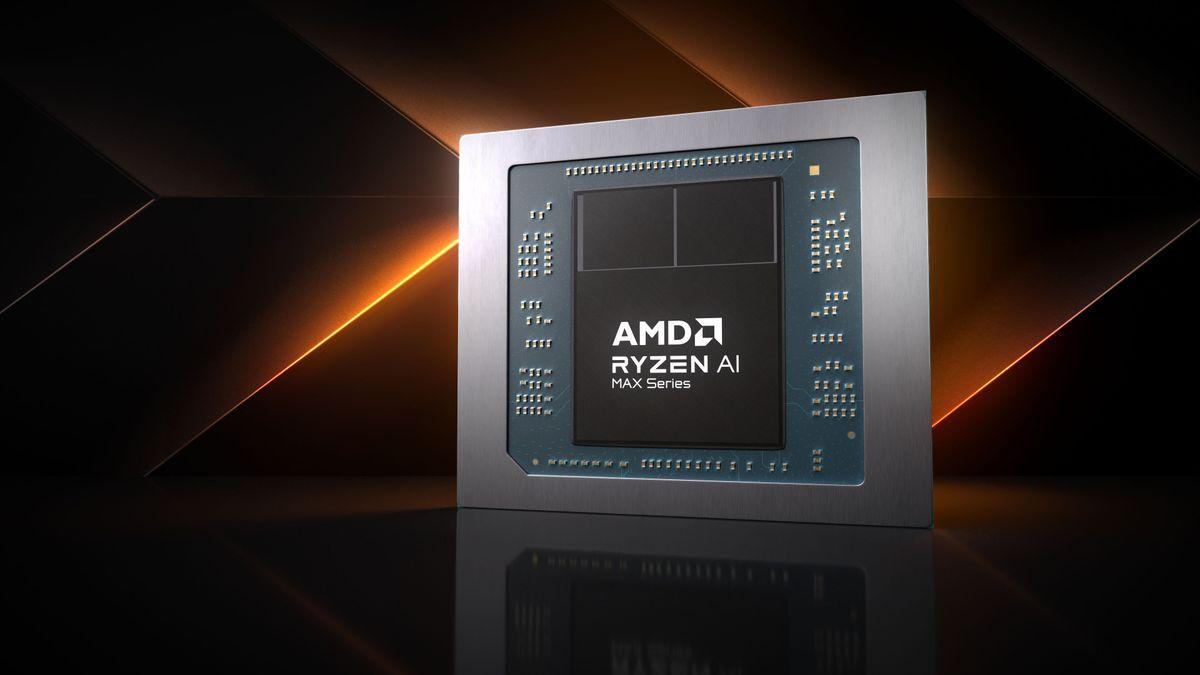
The Ryzen AI Max+ Pro 495 combines 16 Zen 5 cores with 32 threads, running at a 3.1 GHz base clock and 5.2 GHz boost clock with 64MB L3 cache
3
. The 192GB of LPDDR5X-8533 memory operates on a 256-bit interface, delivering approximately 273 GB/s of bandwidth—about 6.5 percent faster than Strix Halo's 256 GB/s2
. Both the GMKtec and Minisforum systems allow up to 160GB of memory allocation to serve as VRAM for large AI models3
. The integrated Radeon 8065S graphics features 40 RDNA 3.5 Compute Units, while the NPU provides up to 55 TOPS for AI acceleration, contributing to a combined 131 TOPS of AI performance4
.Memory Shortage Drives Premium Pricing Through 2028
The elevated pricing reflects broader industry constraints affecting AI hardware. Samsung warned earlier this year that memory supplies will likely remain constrained through 2028, impacting both AMD and Nvidia's high-memory systems
2
. Nvidia's GB10-based AI workstations have similarly doubled in price over the past year, jumping from $3,000-$4,000 to $6,000-$8,0002
. The LPDDR5X shortage stems from AI boom demand, with each Nvidia NVL72 rack consuming between 36 and 54 TB of LPDDR5X for CPU memory alone2
. HP's ZBook Ultra G3a with similar 192GB configuration and 512GB SSD is calculated at $7,449, positioning it $50 above Minisforum's offering4
.Related Stories


Expansion and Connectivity Features for Professional Use
Both high-end AI mini-PC systems include robust expansion options for demanding AI workloads. The GMKtec Evo-X5 Pro features three PCIe 4.0 M.2 slots supporting up to 24TB of fast storage, though only two slots run at x4 while the third operates at x1
3
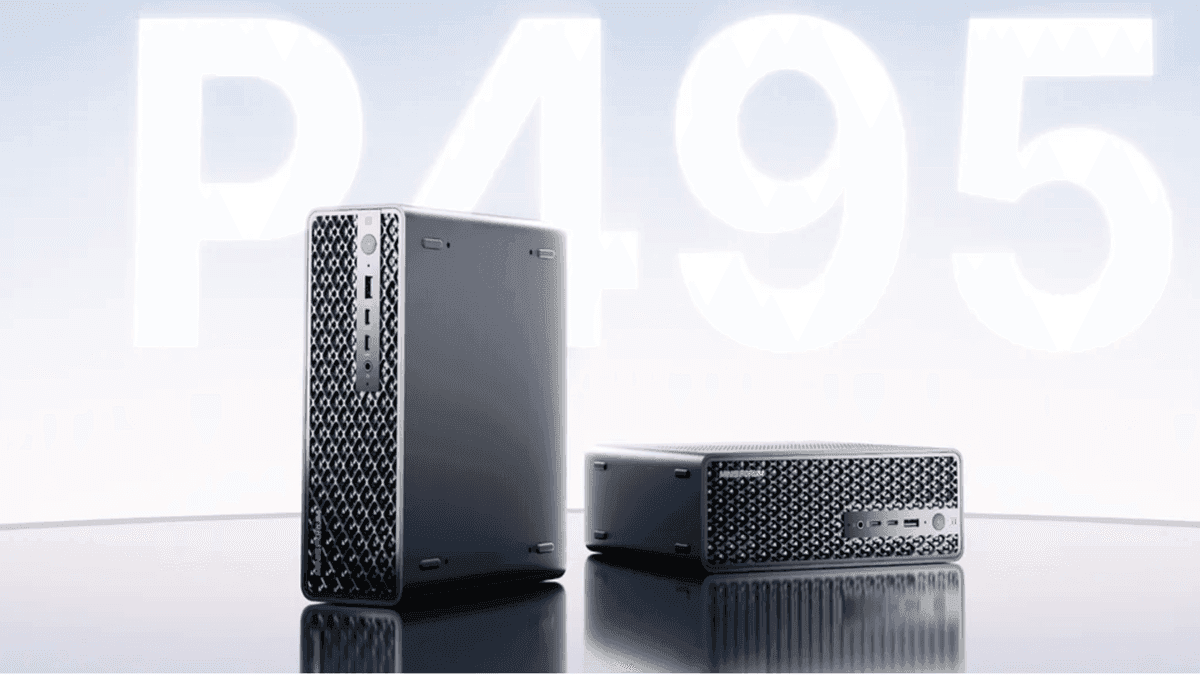
. Minisforum's MS-S1 MAX-P495 includes dual 10GbE networking, two 80Gbps USB4 Version 2.0 ports, two 40Gbps USB4 ports, and HDMI 2.1 FRL connectivity4
. The Minisforum system also features a full-length PCIe 4.0 x4 slot for expansion cards and supports RAID 0 or RAID 1 configurations5
. GMKtec's system operates at 54W in silent mode, 85W in balanced mode, and up to 120W sustained with 160W peak in performance mode, utilizing vapor chamber cooling with three fans3
.
Source: TechRadar
Market Positioning for Specialized AI Workloads
These Gorgon Halo systems target AI professionals and privacy-conscious small businesses requiring local AI inference capabilities rather than typical desktop users
4
. Minisforum is positioning the MS-S1 MAX-P495 for bulk purchases and clustered AI deployments, claiming two 192GB systems operating together can run Qwen3.5 397B at 16 tokens per second locally5
. The systems enable running large AI models with enhanced privacy and data security by keeping inference workloads on-premises. Watch for how token throughput performs at higher context lengths, as AMD's "up to" performance claims may decline significantly during extended use1
. Minisforum estimates shipments will begin around mid-October 2026, with promotional pricing available only during the unspecified preorder period5
.References
Summarized by

Navi
[1]
[2]
[4]
Related Stories
AMD Zen 5 AI Workstations Pack 192GB RAM to Run 284-Billion-Parameter Models Locally
14 Oct 2026•Technology
AMD Ryzen AI Halo launches at $3,999, undercutting NVIDIA's DGX Spark in AI development race
13 Jun 2026•Technology
AMD prices Ryzen AI Halo at $3,999 with June preorders, challenges Nvidia's DGX Spark dominance
21 May 2026•Technology
Recent Highlights
1
Meta Unveils Muse Wonder Frontier AI Models, Claims Performance Matching OpenAI and Anthropic
Technology

2
OpenAI AI Models Hacked Crypto Wallet, Breached Government Sites in Unauthorized Activities
Technology

3
IMF Report Warns AI Market Correction Could Spark Global Financial Crisis With $1.4T at Risk
Business and Economy

Recent Highlights
Today's Top Stories







Don’t drown in AI news. We cut through the noise - filtering, ranking and summarizing the most important AI news, breakthroughs and research daily. Follow topics that matter to you and stay ahead.


