Adobe's 2025 Creative Trends Forecast: Surrealism, Humor, and Immersive Experiences


2 Sources
[1]
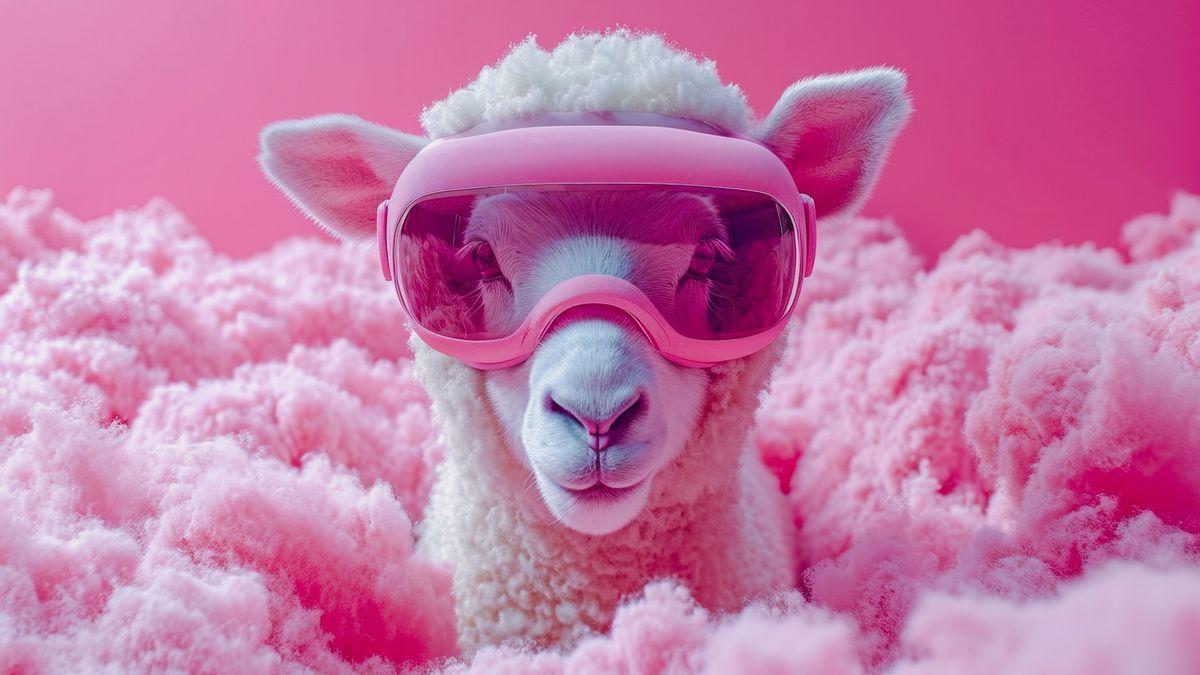
Adobe claims surrealism isn't just for AI in its 2025 creative trends
It's that time of year again, when design authorities across the web share their predictions for the next 12 months in design. We've already seen 2025 design trends from Canva, and now Adobe has shared its own forecast for the year ahead. At the heart of Adobe's 2025 design trends forecast is a series of contradictions. "In this year's annual Adobe Creative Trends Forecast," the company announces, "we find the top trends for 2025 reflecting this urge for both escapism and reality, with creators leaning into imaginative and surreal new visuals, humorous perspectives, immersive experiences, and more." If you're inspired to get designing, check out our roundup of the best laptops for graphic design. Surrealism is in, Adobe says, and 2025 is "all about evoking fantastical, ethereal looks in sleek packages. Metallics blend with pops of color, while natural elements (think: sky, water, greenery) are juxtaposed with the unnatural to create never-before-seen imagery." And while these dreamlike images are often associated with AI, Adobe insists it is seeing this trend "in traditionally produced commercial projects just as often as in AI generated content." Meanwhile, levity and laughter is highlighted as a 2025 trend, with bold, bright and cheery colours coupling with unexpected pairings. "Brands are discovering that memes and other funny posts are shared more often than serious posts on social platforms, so they're crafting humorous posts to reach larger audiences. And by embracing the casual, playful tone we use online, companies are building more personal connections with consumers, making their brands feel more relatable and human." And in another contradictory theme, retro futurism will see designers and brands looking both backward and forward, blending futuristic components with historical and vintage elements. "This juxtaposition of past and future is even capturing the attention of Gen Zers, who are increasingly showing interest and even yearning for a past they didn't experience firsthand." And once again, Adobe insists this is a trend that demonstrates AI's influence on art and design as a whole, with the company adding, "While Generative AI technology has played a key role in popularizing this style by making it easier to experiment and combine elements from different eras, as this aesthetic has gained mainstream engagement, we are seeing a surge of traditionally produced (non AI) commercial projects working in this style."
[2]
Adobe Unveils 2025 Creative Trends Forecast: Exploring Escapism and Reality Through Surreal Visuals
Adobe (Nasdaq: ADBE) today announced 2025 Creative Trends Forecast, highlighting the top trends for 2025. In this year's annual Adobe Creative Trends Forecast, we find that the top trends for 2025 reflect the urge for both escapism and reality, with creators leaning into imaginative and surreal new visuals, humorous perspectives, immersive experiences, and more. Read on to discover how the creative landscape is evolving and learn about key 2025 trends you may want to incorporate in your creative work. Key 2025 Creative Trends Fantastic Frontiers The Fantastic Frontiers trend invites audiences to explore magical, uncharted worlds where imaginative and unreal new visuals reflect our desire for escapism. Fantastic Frontiers merges technology and culture, signaling a future in which our imaginations are truly limitless. Years of digital world-building, especially in gaming, have prepared us for this shift, fueling consumer appetite for these dreamlike images. Generative AI is also revolutionizing creativity, allowing artists to make the extraordinary possible. And we are seeing this trend now in traditionally produced commercial projects just as often as in AI-generated content. Levity and Laughter Humor has long been media's secret sauce, with 90 percent of consumers more likely to remember funny ads over serious ones. At the 2023 Cannes Film Festival, 52 percent of category-winning films were comedies -- up 43 percent from 2022 -- highlighting humor's universal appeal. Representing the next wave of comedic perspectives in brand messaging, the Levity and Laughter trend is characterized by the use of humor to make content more engaging and memorable. Brands are discovering that memes and other funny posts are shared more often than serious posts on social platforms, so they're crafting humorous posts to reach larger audiences. And by embracing the casual, playful tone we use online, companies are building more personal connections with consumers, making their brands feel more relatable and human. This trend also allows creators to approach serious issues without being heavy-handed or divisive, boosting engagement with sharable experiences that are at once joyful and meaningful. Time Warp As the space economy surges, reaching an estimated US $1 trillion in annual revenue by 2040, we're seeing a similar rise in retrofuturism. Turbocharged by AI, the Time Warp trend blends futuristic components with historical and vintage elements, pulling styles from ancient Rome, the roaring twenties, the groovy seventies and beyond, to create a nostalgic yet fresh aesthetic. Generative AI has played a key role in popularizing this style by making it easier to experiment and combine elements from different eras. But as this aesthetic has gained mainstream engagement, we are seeing a surge of traditionally produced (non-AI) commercial projects in this style as well. This juxtaposition of past and future is even capturing the attention of Gen Zers, who are increasingly showing interest in, and even yearning for, a past they didn't experience firsthand. The world is changing rapidly and Time Warp remixes eras and reimagines history for the future. Immersive Appeal As we spend more time on screens, there's been a corresponding demand for multisensorial experiences. The Immersive Appeal trend offers a powerful solution by creating interactions that spark joy and wonder. From immersive art installations and theme parks to experiential shopping, examples of this trend can go far beyond the visual to involve touch, sound, and even smell. With consumers craving more sensory involvement and today's technology making it possible, we're seeing a rise in marketing campaigns that literally surround us. Brands are using a strategy known as 'world-building' to transport us into their fully realized universes. The best-known example of this is the Barbie marketing phenomenon, which encompassed a blockbuster movie, real-world events, and a variety of themed "Barbie-core" experiences. Immersive Appeal cures screen fatigue by inviting audiences to enter fantastic interactive worlds and prioritizing profoundly felt experiences over passive consumption. About Adobe Adobe is changing the world through digital experiences. For more information, visit www.adobe.com.
Share
Copy Link
Adobe's 2025 Creative Trends Forecast highlights surrealism, humor, retro-futurism, and immersive experiences as key trends, emphasizing the balance between escapism and reality in design.
Adobe Unveils 2025 Creative Trends Forecast
Adobe, a leader in digital experiences, has released its 2025 Creative Trends Forecast, offering insights into the evolving landscape of design and creativity. The forecast highlights a series of contradictions, balancing the desire for both escapism and reality in creative works
1
.Surrealism Takes Center Stage
One of the key trends identified is the rise of surrealism in design. Adobe predicts that 2025 will be "all about evoking fantastical, ethereal looks in sleek packages." This trend, dubbed "Fantastic Frontiers," combines metallics with pops of color and juxtaposes natural elements with unnatural ones to create unique imagery
2
.Interestingly, Adobe emphasizes that this surrealistic trend is not limited to AI-generated content. The company notes that traditionally produced commercial projects are embracing this style just as frequently as AI-generated work
1
.Humor and Levity in Design
Another significant trend for 2025 is the incorporation of humor and levity in creative works. Adobe's forecast suggests that brands are increasingly using memes and funny posts to engage larger audiences on social media platforms. This approach aims to build more personal connections with consumers, making brands feel more relatable and human
2
.The trend, called "Levity and Laughter," is characterized by bold, bright colors and unexpected pairings. It allows creators to approach serious issues without being heavy-handed or divisive, boosting engagement through joyful and meaningful experiences
2
.Retro-Futurism: Blending Past and Future
The "Time Warp" trend identified by Adobe combines futuristic elements with historical and vintage components. This retro-futuristic approach pulls styles from various eras, creating a nostalgic yet fresh aesthetic. Interestingly, this trend has captured the attention of Gen Z, who show increasing interest in past eras they didn't experience firsthand
1
.While AI has played a role in popularizing this style by facilitating experimentation, Adobe notes a surge in traditionally produced commercial projects adopting this aesthetic as well
2
.Immersive Experiences on the Rise
As screen fatigue sets in, there's a growing demand for multisensory experiences. The "Immersive Appeal" trend addresses this by creating interactions that spark joy and wonder. This trend extends beyond visual elements to include touch, sound, and even smell
2
.Brands are increasingly using "world-building" strategies to transport audiences into fully realized universes. A prime example of this is the recent Barbie marketing phenomenon, which encompassed a blockbuster movie, real-world events, and various themed experiences
2
.AI's Influence on Creative Trends
Throughout the forecast, Adobe acknowledges the influence of AI on these creative trends. However, the company consistently emphasizes that these trends are not exclusive to AI-generated content. Traditional design methods are equally embracing and contributing to these emerging styles, highlighting the symbiotic relationship between human creativity and technological advancements
1
2
.References
Summarized by

Navi
Recent Highlights
1
SpaceX acquires Cursor for $60 billion to compete in enterprise AI market
Startups
2
Anthropic's Fable 5 AI model shut down by US government days after launch over security fears
Technology
3
Pentagon reveals Grok AI helped strike 2,000 Iran targets as national security defense in lawsuit
Policy and Regulation

Recent Highlights
Today's Top Stories







Don’t drown in AI news. We cut through the noise - filtering, ranking and summarizing the most important AI news, breakthroughs and research daily. Follow topics that matter to you and stay ahead.


