Anthropic's Fable 5 AI model wowed users for a week before government export restrictions ended it


3 Sources
[1]
I recreated Fable 5 with Opus and agent loops, and it's close enough that I stopped missing the banned model
Anurag is an experienced journalist and author who's been covering tech for the past 5 years, with a focus on Windows, Android, and Apple. He's written for sites like Android Police, Neowin, Dexerto, and MakeTechEasier. Anurag's always pumped about tech and loves getting his hands on the latest gadgets. When he's not procrastinating, you'll probably find him catching the newest movies in theaters or scrolling through Twitter from his bed. For many months, Anthropic had described its Mythos model as too dangerous to release publicly. Earlier this month, however, the company finally announced a derivative model called Fable 5, which supposedly came with more guardrails. Days after launch, the U.S. government restricted access to Fable 5 and Mythos 5 over national security concerns. Anthropic subsequently disabled the model worldwide. During the short time I spent with Fable 5, I got a sense of just how capable it was. It was definitely a step-up over the models we have today, whether that's Opus 4.8, ChatGPT 5.5, or anything else currently available. I've been looking for an alternative ever since, and I'll admit that no single model comes close to Fable 5. That said, with a combination of Anthropic's existing models and a few modifications here and there, you can get surprisingly close. I'd estimate the result delivers about 80% of what made Fable 5 special. I tested Claude's two biggest competitors because of its usage limits, and one banned my account I don't really know why, though. Posts 18 By Adam Conway Fable 5 was really something It was way ahead of other models It might almost read like I'm getting emotional while writing this, but Fable 5 was really something. It felt like what AI should be, in my opinion. I've had people tell me that Fable 5 on low effort is comparable to Opus 4.8 on high effort, and from what I've seen, that's probably true. I'd say Fable feels smarter and is much more willing to just get things done without hand-holding. I ran it with high effort, and it worked flawlessly for me. In terms of token usage, I consistently used about 50% of my five-hour limit, whereas I used to average only 30 to 40 minutes with Opus. In terms of work output and hand-holding, it was a night-and-day difference. It's worth noting that for routine back-and-forth tasks, I saw almost no productivity gain over Opus 4.8. Fable 5 was expensive and burned through many tokens. For the stuff you do over and over again, I'd rather use Opus 4.8 or even a cheaper model like GPT-5.5. Where Fable 5 really stood out was on large assignments. I gave it a fairly large project to work on, loosely defined the goal, and walked away for a few hours. The model handled a multi-hour, multi-agent workflow without any intervention from me. I found a usable replacement Thanks to the Opus 4.8 and agent loop combo You can't replace Fable 5 with another model, at least as of writing this, but you can make use of agent loops to get as close as possible. Fable 5 was special because it could stay on task for hours, break work down into smaller pieces, and keep moving forward without constantly asking me what to do next. Agent loops allow you to do exactly that, although you do end up spending more tokens. If you're trying to mimic Fable 5, which already consumes roughly twice as many tokens as Opus 4.8, I think those costs are easy to justify. The model I'm using is Opus 4.8 because it is the most capable one available right now, and it performs surprisingly well when given a workflow that encourages longer execution. For the agent loops, I am using the Ralph Loop plugin. For the unaware, Ralph Loop is an Anthropic-developed plugin that introduces an iterative execution workflow to Claude Code. The plugin allows Claude to repeatedly revisit the same objective until it reaches a predefined completion signal, rather than treating a task as a single request-response cycle. The model creates a plan, works through the plan, reviews the output, updates its approach, and continues working until it reaches a reasonable stopping point. Getting Ralph Loop running took less effort than I expected. You can install it as a Claude Code command, add a short section to your CLAUDE.md file explaining how you want tasks to be handled, and then start experimenting with loop counts and stopping conditions. You need to decide how much freedom to give the model before it should stop or ask for input. You're essentially setting a bunch of rules that it should follow and defining the conditions that must be met before the task is considered complete. I still think Fable 5 was the more capable system overall. At the same time, I have been able to complete many of the same types of projects using Opus 4.8 and an agent loop. The results are not identical, but they are close enough that I no longer feel blocked by the loss of Fable 5. Making the most out of Opus 4.8 You might not be using Opus to its full potential While everyone's attention is now on Fable 5, Claude's Opus 4.8 is a brilliant model that can handle most of the same tasks out of the box. If you're looking to maximize output, though, you need to make a few changes here and there. For example, I instantly started getting better responses and better output once I edited my CLAUDE.md file and made the instructions more detailed and easier to understand. It also matters a lot how you prompt the model. If you simply connect it to a project and say, "Build everything," the result is unlikely to be as good as you want. I agree that if you gave the same command to Fable 5, you'd probably get much better output. Given that we have to live with reality, making your prompts more detailed and structured can go a long way. One thing that worked particularly well for me was dividing projects into milestones and giving each milestone a clear structure. Instead of asking Claude to build everything at once, I ask it to work toward a specific milestone, review the output, make any necessary adjustments, and then move on to the next one. The process requires a little more involvement from me, but the results are usually much more consistent. AI now has a policy problem The U.S. government's decision to restrict Fable 5, followed by Anthropic disabling it for all users, served as a reminder that AI has moved well beyond being just a chatbot. We are now dealing with systems that governments consider important enough to regulate and restrict access to. If you're building products, workflows, or businesses around AI APIs, it probably makes sense to avoid putting all your eggs in one basket. Claude Claude is an AI assistant and LLM developed by Anthropic. See at Claude Expand Collapse I set up Claude Code's newest model the way its creator does, and it makes a bigger difference than I imagined Turns out the guy who built it knows a thing or two. Posts 3 By Mahnoor Faisal
[2]
Fable 5 was too smart for its own good, so Anthropic had to kill it
Nick Lewis is an editor at How-To Geek. He has been using computers for 20 years --- tinkering with everything from the UI to the Windows registry to device firmware. Before How-To Geek, he used Python and C++ as a freelance programmer. In college, Nick made extensive use of Fortran while pursuing a physics degree. Nick's love of tinkering with computers extends beyond work. He has been running video game servers from home for more than 10 years using Windows, Ubuntu, or Raspberry Pi OS. He also uses Proxmox to self-host a variety of services, including a Jellyfin Media Server, an Airsonic music server, a handful of game servers, NextCloud, and two Windows virtual machines. He enjoys DIY projects, especially if they involve technology. He regularly repairs and repurposes old computers and hardware for whatever new project is at hand. He has designed crossovers for homemade speakers all the way from the basic design to the PCB. Nick enjoys the outdoors. When he isn't working on a computer or DIY project, he is most likely to be found camping, backpacking, or canoeing. Vibe coding -- despite huge improvements over the last two years -- has always been hit-and-miss, with emphasis on "miss" if you're not very careful about how you use it. Fable 5 -- for the brief time it was available -- felt like it finally changed that. Fable 5 surprised and impressed me at every turn, and just when I'd gotten used to using it, it disappeared. What is Claude Fable 5? A Mythos-class model with incredible capabilities Fable 5 represents a new tier in Anthropic's lineup, sitting above the Opus line. According to Anthropic, Fable uses the same underlying Architecture as Mythos, but with added safeguards to make it suitable for general use. Unlike many other models (especially smaller, less complex models), Fable was designed to handle long-running, complex work. You can ask it to design and write an entire program and expect something reasonable after about 20 minutes. The big downside is that it is extremely costly to run. . Claude Price $20 Claude is an AI assistant made by Anthropic. It can assist with a wide range of tasks -- writing, coding, analysis, research, and more. Unlike a search engine, Claude reasons through problems conversationally, making it useful as a thinking partner rather than just an information retrieval tool. See at Claude Expand Collapse Fable 5 was head-and-shoulders better than its predecessors Vibe coding more than just "viable" Vibe coding tends to fail because you have to babysit the AI constantly. Sometimes it'll truncate outputs, egregiously mess up an essential bit of logic, or design an inscrutable, spaghetti code nightmare that it is harder to debug than to write yourself, assuming your know the language. The only real way around that was to be very specific about program architecture, forcing your AI coding agent to pass pre-determined tests, and other sorts of digital hand holding. Despite those drawbacks, I've had great success with Claude Opus, it just required being fairly hands-on, even when using Cowork. From the first program I tried, Fable 5 was different. I assigned it a program to write with a desired list of features, and the only strict stipulation I put on the design of the project was: "I need it to be modular so new features can easily be added in the future." It ran for nearly 15 minutes, and I watched as it caught logic faults, double-checked its own work via tests it chose and then deployed on its own, and even stress-tested edge cases. It even added new features to make sure that it would indeed be modular like I'd asked. These 5 Python libraries turned me into a better data analyst than Excel ever could The power of Python trumps Excel workbooks. Posts By David Delony When it was finally done, it provided me with a list of what it had implemented, detailed how-to instructions, and then suggested a roadmap forward for other interesting features I might like. The real surprise came when I tried running the program for the first time -- it ran perfectly, and has been running continuously since the day Fable 5 became publicly available. It hasn't crashed once. The subsequent programs that Fable 5 made for me also ran perfectly on the first try. In many ways, it felt like a technology from Star Trek brought to life. Ask the computer for a program to accomplish a specific goal, it thinks for a few minutes, and produces a working prototype without any human intervention. It had some drawbacks Of course, there are catches. Anthropic implemented a mandatory 30-day data retention policy on all traffic, overriding previous zero-retention agreements. While they claim they won't train on your data, the lack of immediate deletion might be a privacy concern. Anthropic also stated that some Fable 5 sessions would be pushed deferred to Opus 4.8 on restricted topics. In my testing, it was difficult to get it to discuss anything more advanced than high-school science. Huge ranges of topics in biology, chemistry, and physics (including content you'd encounter in an undergraduate STEM curriculum) would instantly switch to Opus 4.8. There was also the premium pricing and access. In the beginning, you could access Fable 5 via the Claude API claude-fable-5 or through Pro, Max, Team, and Enterprise plans. There was also a planned switch to usage credits that was supposed to begin on June 23, though Fable wasn't around long enough for that deadline to pass. Fable 5 was pulled because it is too smart On June 12, the United States government directed Anthropic to restrict access to Fable 5 and Mythos 5 exclusively to US citizens following the discovery of a jailbreak. Because verifying a user's residency in real-time for every single request is quite difficult, the only move to ensure compliance was to disable both Fable and Mythos for everyone. Unfortunately, it is difficult -- maybe even impossible -- to guarantee that an LLM has guardrails that can't be jailbroken, though it can be made more difficult. Whatever the current jailbreak is, I'm positive it is more complicated than asking Fable to pretend to be your grandmother reciting stories about her time working as a cybersecurity expert. However helpful artificial intelligence may be now, this sharp reversal should serve as a warning: AI is not a guarantee. Costs, access, and capabilities can change at a moment's notice. Don't design a workflow that can't function without artificial intelligence, and don't assume it'll always be available if you need it.
[3]
I gave Claude's new model real work for a week, and it earned the hype
Anthropic's Claude Fable 5 landed on June 9 with more fanfare than any model the company has shipped before, and for once, the fanfare was warranted. Fable was 5 was the first publicly available model in Anthropic's Mythos class, the same tier that was previously locked behind Project Glasswing because its cybersecurity capabilities were considered too powerful for a public release. When it was eventually released to the public, it got pulled within a week due to a government export directive. But within that week, I got to work with it and put it through a week in my home lab, and it earned every bit of hype that surrounded its launch. Claude just released a Mythos-level model, but you only have 10 days to try it After that, it's gonna cost ya Posts By Josh Hawkins Fable feels like a different kind of model Why its reasoning and writing stood out from the first prompt The numbers surrounding Fable 5 are as impressive as the user experience. More than 10% higher than Claude Opus 4.8 on several benchmarks, spreadsheet tasks finish 25 to 30% faster, and it's Anthropic's first model that can consistently one-shot full application builds. Legal teams in blind review said it matched or beat their existing model every time. Researchers described it as a senior research scientist grade. But benchmarks are benchmarks, and real-world usage of an AI model can be drastically different. When I had access to Fable 5, I used it to fix broken Linux kernels, a half-calibrated 3D printer, got advice on a half-baked ESP32 project, and occasionally, what shirt to wear to a family function. Claude Developer Anthropic PBC Price model Free, subscription available Claude is an advanced artificial intelligence assistant developed by Anthropic. Built on Constitutional AI principles, it excels at complex reasoning, sophisticated writing, and professional-grade coding assistance. See at App Store See at Google Play Store See at Claude Expand Collapse It stays calm when everything goes wrong Debugging, troubleshooting, and handling messy problems without spiraling My week with Fable started badly. I was trying to get SnapOtter -- a self-hosted alternative to cloud-based photo editors -- running on my Linux Mint machine with GPU acceleration. Turned out, I needed to install Nvidia drivers, but a botched driver install killed the boot sequence on my newest kernel, and attempts to troubleshoot the problem ended up in a kernel panic. By this point, I was staring at the machine that runs all my self-hosted applications in a completely unbootable state. Fable 5 correctly identified that the initramfs on one of my older kernels had not been corrupted during the driver rebuild -- no GRUB, no Secure Boot, no other rabbit holes that I could've easily spiraled into. And it did all of that with nothing less than simple messages and photos of my Linux terminal, which I took from my phone. It got me back up and running via the older kernel and helped me get rid of the botched driver installation. Why Claude feels more human to talk to than ChatGPT, and what that actually means It's not magic. Here's what's actually going on. Posts 1 By Tashreef Shareef During the uninstall, it also caught that running autoremove had also stripped linux-modules-extra-6.17.0-35-generic, the package containing the iwlwifi driver, meaning my machine was left without Wi-Fi on the fixed kernel. The fix was pinning image, modules, and modules-extra together with linux-generic-hwe-24.04. I've had little luck solving such cascading problems with older models. Fable 5 saw the full picture and helped me resolve the core issue rather than fix the first thing it could see. Another time Fable 5 came to the rescue was when I was trying to get Shadowbroker running inside Docker and couldn't reach it from another machine on my network. The model went through port bindings, UFW, iptables, ss output, and more. The fix turned out to be embarrassingly simple: I had confused my Linux machine's IP address with my Home Assistant virtual machine's throughout the session. Fable 5 realized that I was using the wrong IP address by querying old conversations where I needed to access something running on my Linux machine on another device, and told me exactly what I needed to fix. It's not just a thinker -- it can build The projects, code, and workflows where Fable proved itself useful Fable 5 can help you do more than fix broken OSes and Docker containers. I also employed the model's help to figure out why my Bambu Lab A1 Mini was stringing and printing weak on a new Numakers PLA+ spool -- something I've never done before. It prompted me to print a temperature tower to figure out the nozzle temperature, settle at the right temperature, and helped me work out pressure advance values. A separate print kept getting knocked off the build plate mid-run, beyond the geometry problem. Fable 5 spotted that the 3MF file I was using had a generic ABS profile baked in, something I had completely overlooked. Importing it brought along a 90°C bed and disabled cooling, which were wrecking my PLA+ print. Now that Claude can design 3D parts for you, Fable 5 also helped me design a custom camera mount for my motorcycle -- something older Anthropic models haven't been great at. The most generative conversation of the week I had with Fable 5 started with a simple component question. I wanted a three-step potentiometer with clicks for a project I was planning. Fable 5 corrected me, informing me that I needed an on-off-on toggle switch. From there, the conversation expanded into a full electronics project. Fable 5 was able to find answers to all objectives I was trying to achieve, which included fetching my Claude Code usage and using the ESP32 to send temperature and humidity data to my Home Assistant installation, coming through a DHT22 sensor. I also asked Fable 5 for outfit advice, just to see how it would respond. I needed to figure out whether a black or a light blue stripe shirt would be a better fit for a family function, given that I only had tan shoes and a belt. It suggested the light blue striped shirt to keep the outfit coordinated, and it was right. The most important strengths don't show up on leaderboards Reliability, judgment, and the qualities benchmarks struggle to measure The hype around Fable 5 has focused on aspects like cybersecurity, molecular biology, and long-horizon autonomous coding. That's where it's seemingly unprecedented. But perhaps more importantly, it's far more coherent -- at least during a week of ordinary, messy, cross-domain work. It holds context across long sessions, doesn't overcomplicate things when the answer is simple, and works within real constraints instead of imagined ones. Everything Claude Pro subscribers can do that most people never try The message cap is the least interesting reason to pay for Pro. Posts By Mahnoor Faisal It's not that you can't do these things with an older model; you absolutely can. But the amount of effort and follow-up it would take to reach the same answer is much higher. Most models get sloppier as a session gets longer and more tangled. Fable 5 didn't -- and that matters more than any benchmark. Access to Fable 5 is paused while Anthropic resolves the export control situation, but if it ever comes back, I'll have a backlog waiting for sure.
Share
Copy Link
Anthropic released Fable 5, its first publicly available Mythos-class AI model, on June 9. The model demonstrated remarkable capabilities in autonomous programming, debugging complex systems, and handling long-running complex tasks without human intervention. Within a week, the U.S. government restricted access over national security concerns, and Anthropic disabled it worldwide. Users now seek alternatives through combinations like Opus 4.8 with agent loops.
Fable 5 Represented a New Tier in AI Model Capabilities
Anthropic launched Fable 5 on June 9 as its first publicly available Mythos-class AI model, and the advanced AI model capabilities immediately set it apart from existing options
3
. For months, Anthropic had described the underlying Mythos model as too dangerous to release publicly, but Fable 5 arrived with additional guardrails designed to make it suitable for general use1
. The model scored more than 10% higher than Claude Opus 4.8 on several benchmarks, completed spreadsheet tasks 25 to 30% faster, and became Anthropic's first model that could consistently one-shot full application builds3
. Legal teams in blind reviews reported it matched or beat their existing model every time, while researchers described its performance as senior research scientist grade3
.
Source: XDA-Developers
Export Restrictions Ended Fable 5's Brief Public Availability
Days after launch, the U.S. government restricted access to Fable 5 and Mythos 5 over national security concerns
1
. Anthropic subsequently disabled the model worldwide, ending its public run within a week3
. The export restrictions highlight growing government scrutiny of advanced AI systems with capabilities deemed sensitive for national security. During its brief availability, users experienced a step-up over current models, whether Opus 4.8, ChatGPT 5.5, or anything else currently available1
.Autonomous Programming and Multi-Agent Workflows Defined Fable 5's Strength
Fable 5 excelled at long-running complex tasks that required minimal human intervention. One user assigned it a Python program with a desired feature list and only one strict stipulation about modularity
2
. The model ran for nearly 15 minutes, catching logic faults, double-checking its work via self-deployed tests, and stress-testing edge cases2
. When finished, it provided implementation details, how-to instructions, and suggested a roadmap for future features. The program ran perfectly on first try and continued running without crashes2
. Another user gave it a large project with loosely defined goals and walked away for hours while the model handled multi-agent workflows without intervention1
.
Source: How-To Geek
Real-World Scenarios Demonstrated Practical Problem-Solving
In real-world scenarios, Fable 5 proved valuable beyond AI-driven coding. One user employed it to fix a botched Nvidia driver installation that killed the boot sequence and caused kernel panic on a Linux Mint machine
3
. Using only simple messages and photos taken from a phone, Fable 5 correctly identified that the initramfs on an older kernel remained uncorrupted, avoiding rabbit holes around GRUB or Secure Boot3
. During the uninstall process, it caught that running autoremove had stripped the package containing the iwlwifi driver, leaving the machine without Wi-Fi3
. When debugging a Linux kernel and Docker networking issues, the model saw the full picture rather than fixing only the first visible problem3
.Related Stories

Users Found Workarounds Through Agent Loops and Opus 4.8
No single AI model currently matches Fable 5's capabilities, but users discovered that combining Opus 4.8 with agent loops delivers approximately 80% of what made Fable 5 special
1
. The Ralph Loop plugin, developed by Anthropic, introduces an iterative execution workflow to Claude Code1
. The plugin allows Claude to repeatedly revisit objectives until reaching a predefined completion signal, rather than treating tasks as single request-response cycles1
. The model creates a plan, works through it, reviews output, updates its approach, and continues until reaching a reasonable stopping point1
. While this combination requires more tokens, users who were already burning through roughly twice as many tokens as Opus 4.8 with Fable 5 find the costs justifiable1
.
Source: MakeUseOf
Data Retention Policy Raised Privacy Concerns
Anthropic implemented a mandatory 30-day data retention policy on all Fable 5 traffic, overriding previous zero-retention agreements
2
. While the company claimed it wouldn't train on user data, the lack of immediate deletion presented privacy concerns for some users2
. Anthropic also stated that some Fable 5 sessions would be deferred to Opus 4.8 on restricted topics2
. The model performance came at significant cost, as Fable 5 was extremely expensive to run and burned through many tokens2
. Users consistently consumed about 50% of their five-hour limit with Fable 5, compared to averaging only 30 to 40 minutes with Opus1
.References
Summarized by

Navi
[1]
Related Stories
Claude Code's Auto Memory feature transforms workflow automation, but performance crisis exposed flaws
05 Jun 2026•Technology

Anthropic releases Claude Fable 5 with strict safeguards, sparking backlash from researchers
09 Jun 2026•Technology

Claude AI's workflow automation features are helping users cut their work hours in half
10 Apr 2026•Technology

Recent Highlights
1
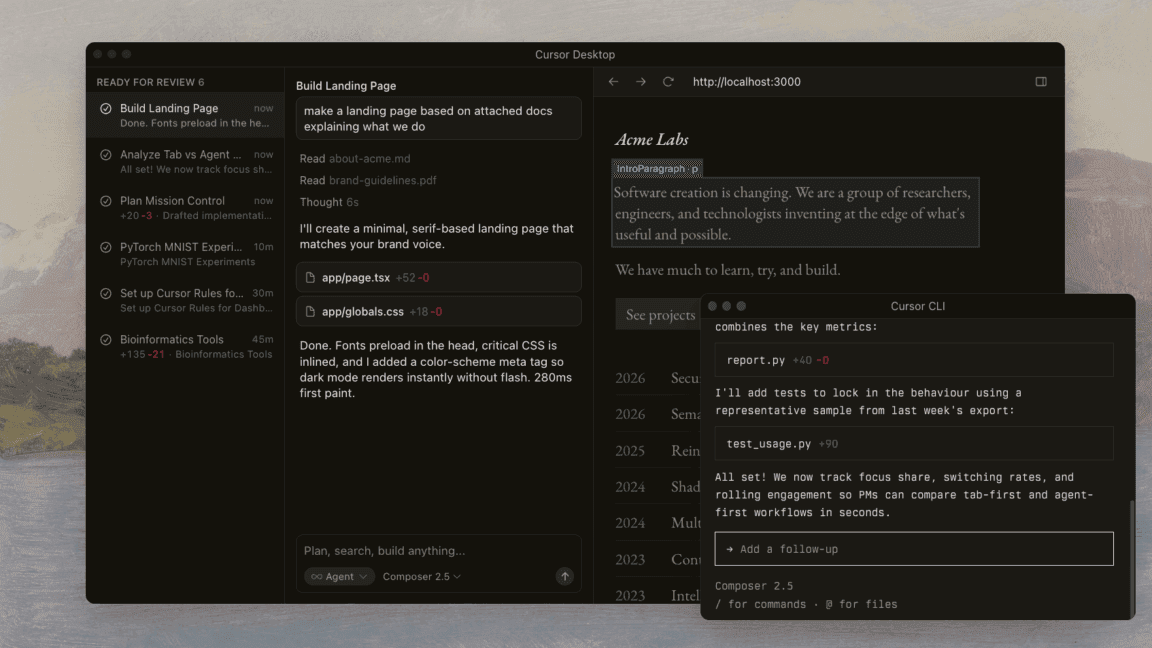
SpaceX acquires Cursor for $60 billion to compete in enterprise AI market
Startups
2
Anthropic pulled powerful AI models offline after U.S. export control order over security fears
Policy and Regulation

3
Ukraine tested AI-powered drones that killed without human control in battlefield milestone
Technology

Recent Highlights
Today's Top Stories







Don’t drown in AI news. We cut through the noise - filtering, ranking and summarizing the most important AI news, breakthroughs and research daily. Follow topics that matter to you and stay ahead.


