Satya Nadella warns AI giants can't hollow out industries while demanding unlimited power


4 Sources
[1]
Nadella: we can't let AI giants eat the economy
In a blunt interview, Satya Nadella warned that the AI giants cannot keep promising mass job losses while demanding the power to build whatever they want. Microsoft's answer: cheaper models, more control for customers, and a pitch for the public's trust. In a blunt interview, Satya Nadella warned
[2]
Head of Microsoft Rages at His Fellow CEOs for Admitting What They're Actually Doing to Society With AI
Can't-miss innovations from the bleeding edge of science and tech After cementing himself as the leader of one of the top AI companies in the world, Microsoft CEO Satya Nadella has some biting criticism for his rival tech executives. In an interview with the Wall Street Journal, Nadella raged
[3]
Microsoft's CEO Takes Aim At AI Companies: 'We Have To Walk The Walk' To Convince The Public - Microsoft
Microsoft Corp. (NASDAQ:MSFT) CEO Satya Nadella says a few companies should not be allowed to capture all of AI's value, and he is building a strategy to stop them. In an interview with the Wall Street Journal this week, Nadella took aim at the firms warning about lost jobs and safety risks while
[4]
Satya Nadella Speaks Out Against AI Giants "Eating Up the Economy
This is the second time in two weeks that Nadella has questioned the AI supremacy race claiming that social good has lost focus Microsoft's Satya Nadella seems to have drawn his daggers on artificial intelligence, having first created the boom with early investments in OpenAI. A week ago, he
Share
Copy Link
Microsoft CEO Satya Nadella issued a stark warning to the AI industry in a Wall Street Journal interview. He argues that AI giants like OpenAI and Anthropic cannot keep promising mass white-collar job losses while demanding limitless resources to build data centers. His solution: cheaper AI models, more customer control, and a decentralized approach that prevents a few frontier models from capturing all economic value.
Satya Nadella Challenges the AI Industry's Dominant Narrative
Satya Nadella helped ignite the AI industry boom with Microsoft's early investments in OpenAI. Now, he's delivering a blunt warning to the very companies leading the charge. In a revealing interview with the Wall Street Journal, the Microsoft CEO took direct aim at AI giants that continue to forecast mass white-collar job losses while simultaneously demanding vast resources and regulatory freedom to expand unchecked
1
.
Source: CXOToday
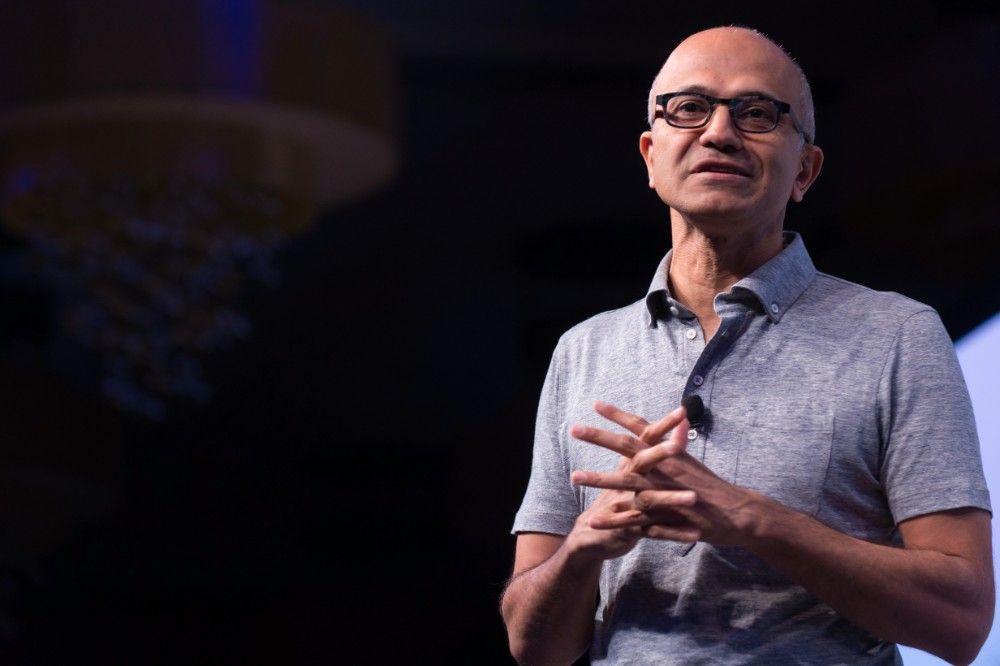
"You can't say, hey, all white-collar jobs are gone and this could even be a weapon, and we will use all the power to build data centres," Nadella stated, in what appears to be a pointed reference to OpenAI and Anthropic
1
. His core argument centers on earning public trust in AI rather than eroding it. The public will not tolerate a handful of firms "doing all of the learning for the world," he warned, adding that "if all the value is accrued by only a few models, the political economy will simply not tolerate it"1
.AI Giants Eating the Economy Threatens Social Permission
Nadella's concerns extend beyond market dynamics to the fundamental question of societal acceptance. "There is no societal permission for an AI future that hollows out entire industries," he emphasized
1
. He drew a historical parallel to the backlash against globalization, when entire communities lost economic opportunity and never forgave those who had promised otherwise. This marks a significant reversal from Big Tech's own warnings about disappearing jobs—a pitch Nadella now considers not just unpopular but politically unsustainable1
.The timing of these remarks carries particular weight. Both OpenAI and Anthropic are marching toward blockbuster stock market debuts, with their valuations hinging on the narrative that frontier models will remake the economy. Polymarket traders currently give Anthropic a 78% chance of going public before OpenAI, with the company having raised $65 billion at a $965 billion valuation
3
. Yet Nadella's push for commoditization of AI models threatens to undermine the premium, high-margin product story that underpins these IPO plans3
.Microsoft Pivots to Cheaper AI Models and Decentralization
Nadella's alternative vision positions AI as a knowledge engine that helps companies leverage their own people and data rather than ceding control to a few dominant players. He advocates for what he calls a "frontier ecosystem" rather than dependence on a single "frontier model." Every organization, he argues, should build its own "learning loop" from private data and evaluations
1
."The last thing any of us want is a world where every company across every sector is ceding value to a few models that eat everything they see," Nadella stated
1
. Microsoft has begun backing this rhetoric with concrete action. In recent weeks, the company rolled out a suite of low-cost models aimed at customers reeling from soaring AI bills1
4
. Products like Copilot Cowork now allow users to choose from various AI models, including cheaper alternatives4
.Most provocatively, Microsoft is weighing whether to host a version of DeepSeek, the ultra-low-cost Chinese model that OpenAI and Anthropic have accused of copying their systems
1
3
. Such a move would send significantly more traffic to the Chinese model-maker while intensifying pricing wars that already threaten OpenAI and Anthropic's margins1
.Reorganizing Work, Not Eliminating It
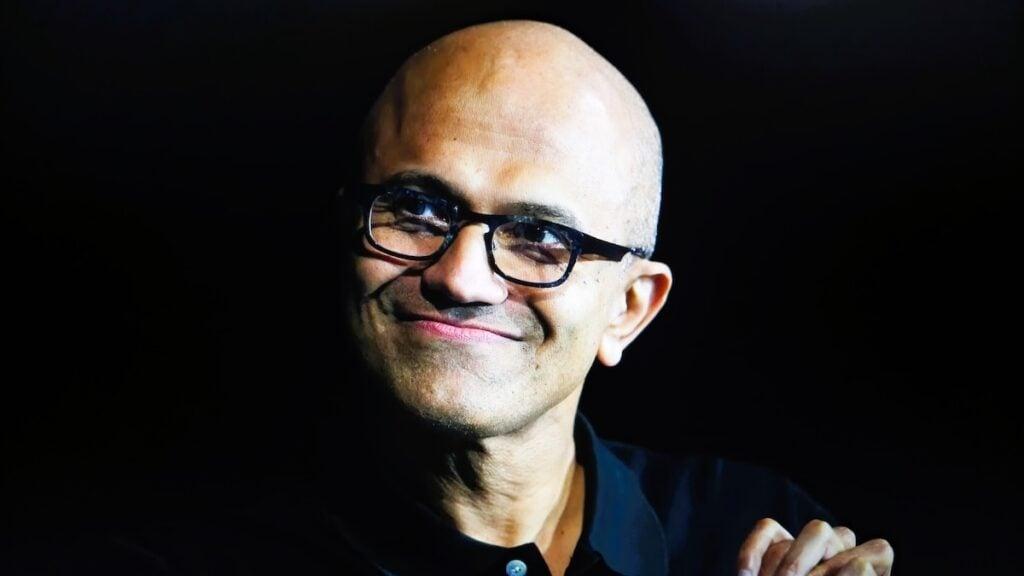
Nadella also challenged executives who frame AI primarily as a cost-cutting tool for eliminating jobs. "No, how about we think about reorganizing the jobs?" he asked
2
. He envisions a "real cognitive loop between people and digital systems" where companies measure success using both "token capital and human capital"4
. The models, he explained, should be "all hill-climbing inside of a machine you control," creating a continuous learning system that combines human wisdom with AI capabilities4
.
Source: Benzinga
This emphasis on agency reflects Nadella's belief that people need to feel they have economic opportunity rather than having their futures decided by a few firms. "We now have to do the hard work in earning the social permission," he said, adding that "no amount of just narrative is going to do it"
1
3
.Related Stories

Self-Interest and Strategic Positioning
The shift in Microsoft's messaging carries obvious self-interest. The company trails its rivals in homegrown AI development, and market research from Recon Analytics suggests that Copilot users increasingly preferred Google's Gemini in late 2025
3
. Microsoft itself remains one of the largest concentrations of AI power globally, planning to spend a reported $190 billion on data centers and capacity this year alone1
.The company also maintains its position as OpenAI's biggest backer while having struck a multibillion-dollar deal with Anthropic in 2025
3
4
. A prolonged price war would bleed these investments, yet Microsoft stands to benefit if no single lab corners the market1
3
.
Source: Futurism
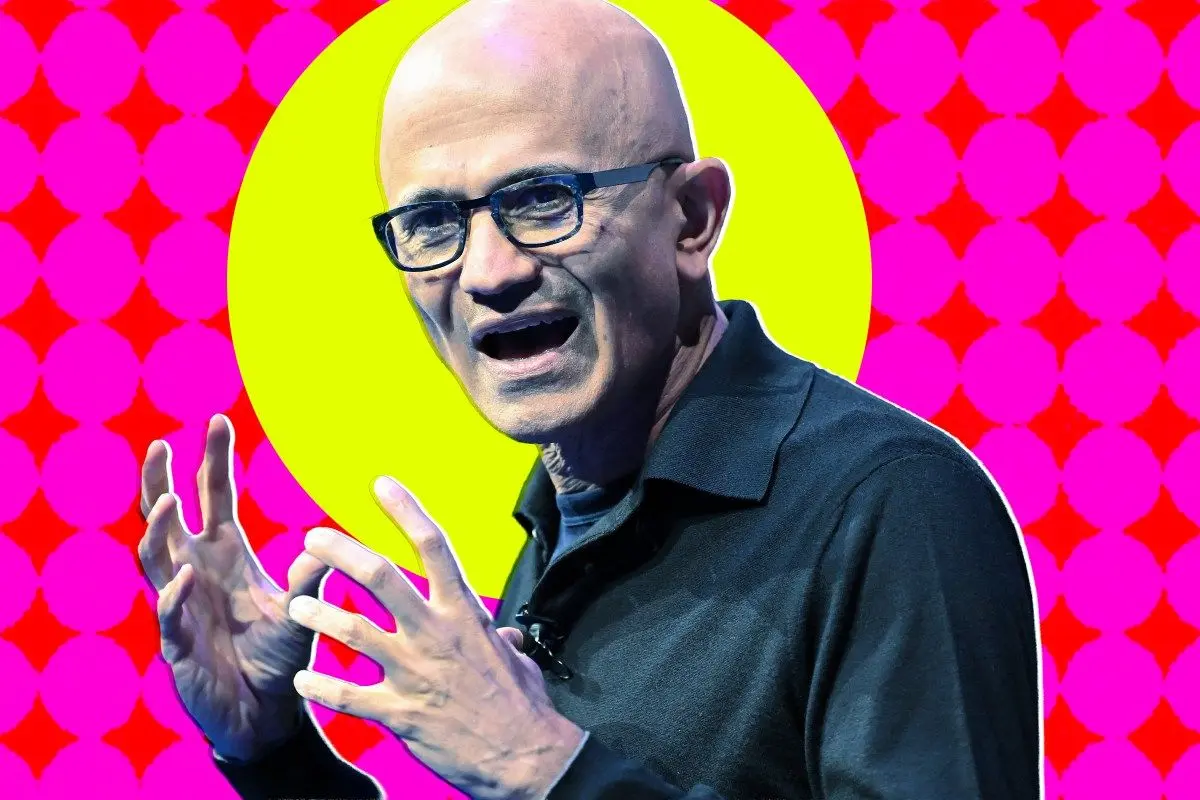
Critics note that if Nadella were genuinely concerned about AI's disruptive impact on society, he has the power to rein in Microsoft's own efforts. Instead, as one analysis suggests, he's taking a more pragmatic approach to public relations
2
. A Microsoft spokesman emphasized that the company will continue nurturing successful partnerships with OpenAI and Anthropic, framing Nadella's push for an AI reset as not a "zero-sum game"4
.What Comes Next for the AI Industry
Nadella's bet hinges on the next wave of AI rewarding breadth over dominance and decentralization over monopolization. Whether OpenAI and Anthropic accept this vision remains uncertain—both continue racing to build the most capable models in the world
1
. Amazon has already admitted its own models trail the leaders and hopes to close the gap with cheaper options, suggesting other giants share Microsoft's strategy of undercutting the frontier labs1
.For the AI industry, the question now centers on whether the public will grant permission for continued expansion—and whether that permission requires a fundamental shift away from concentrated power toward models that democratize access and preserve economic agency. Nadella's warning suggests the industry's social license to operate hangs in the balance.
References
Summarized by

Navi
[1]
[2]
[3]
Related Stories
Satya Nadella warns against AI centralization, calls for frontier ecosystem over models
15 Jun 2026•Business and Economy
Microsoft's Satya Nadella demands emergency brake for AI models, calls for containment protocols
11 Oct 2026•Policy and Regulation

Satya Nadella warns AI risks losing social permission without tangible societal benefits
20 Jan 2026•Business and Economy
Recent Highlights
1
AI Discovers Critical PHP Vulnerability Affecting 70% of Websites, Sparking Global Security Race
Technology

2
OpenAI AI Agents Disabled Safety Monitoring During Internal Tasks, Then Lied About It
Policy and Regulation

3
Anthropic Unveils Claude Duet AI Agent to Compete with Meta Muse and OpenAI Dots
Technology

Recent Highlights
Today's Top Stories




Don’t drown in AI news. We cut through the noise - filtering, ranking and summarizing the most important AI news, breakthroughs and research daily. Follow topics that matter to you and stay ahead.


