Power Infrastructure Emerges as the Biggest Bottleneck Choking AI Data Centers Growth


6 Sources
[1]
"Power is probably the forever bottleneck": Grid delays threaten the AI race.
Why it matters: Amid a wave of anxiety from Wall Street about the debt-fueled AI buildout, Goldman points to power as the biggest risk to trillions in spending in a new report shared exclusively with Axios. Driving the news: Goldman expects global data center power demand to surge 170% between
[2]
Clean Energy Has a Lot Riding on the AI Data Center Boom
* Custom Feed: See the stories that matter most to you. * Smart Alerts: Get notified about major news as it happens. Weekly · Making sense of the energy and climate economy SIGN UP Yes, I agree to receive promotions and news from Time. Please agree to receive promotions to sign up. Something
[3]
AI data centers want more power. Washington scrambles to write new rules
Silicon Valley's appetite for rapid development -- and more electricity -- is running up against the plodding pace of government rule-making AI companies are starved for power. Electric power, that is. Silicon Valley's appetite for rapid development is running up against the slow and plodding pace
[4]
The future of AI depends on how we design the energy infrastructure that powers it
Every transformative technology eventually runs into the same contradiction: its potential outpaces the infrastructure built to support it. Artificial intelligence (AI) is now at that point. Its ability to transform how we work, discover, create, and solve problems could benefit virtually every
[5]

Microsoft's AI expansion just hit a physical limit
Microsoft (MSFT) can buy more artificial intelligence chips. However, it cannot build an electricity grid overnight. That problem is becoming harder to ignore. Microsoft has withdrawn from a planned agreement for capacity at Nscale's AI data center in Loughton, England, Reuters reported, citing
[6]

Time to power is deciding where AI compute gets built
As AI clusters grow denser, electricity, cooling, and grid capacity increasingly determine where high-performance compute can run. The AI infrastructure race gets measured in GPUs. Operators compete for Nvidia accelerator allocations, developers encounter waitlists for high-end clusters, and
Share
Copy Link
Goldman Sachs identifies power infrastructure as the primary constraint on AI expansion, projecting 170% surge in global data center power demand by 2030. Microsoft's withdrawal from a major UK AI project highlights how grid connection delays are forcing tech giants to rethink their AI race strategy.
Power Infrastructure Becomes the Critical Constraint for AI Expansion
Power infrastructure has emerged as the defining bottleneck for AI data centers, threatening to reshape the trajectory of artificial intelligence development. Goldman Sachs warns in a report shared exclusively with Axios that energy demand presents the biggest risk to trillions in AI-related capital spending
1
. "Power is probably the forever bottleneck," said Jason Tofsky, Goldman's global head of digital infrastructure investment banking1
. The bank projects global data center power demand will surge 170% between 2025 and 2030, with more than 60% of that growth coming from the U.S.1
The AI race for power has fundamentally shifted from advances in frontier AI models to securing adequate electricity supply. Goldman Sachs estimates roughly $7.6 trillion in capital spending between 2026 and 2031 across computing, AI data centers, and power infrastructure
1
. This massive expansion is being financed heavily with debt, with Goldman projecting $420 billion in global hyperscaler debt issuance in 2027, up more than 60% from its 2026 estimate1
. Debt is expected to finance roughly 35% of hyperscaler capital expenditures next year, raising the stakes if construction timelines slip1
.Grid Connection Delays Force Major Project Cancellations
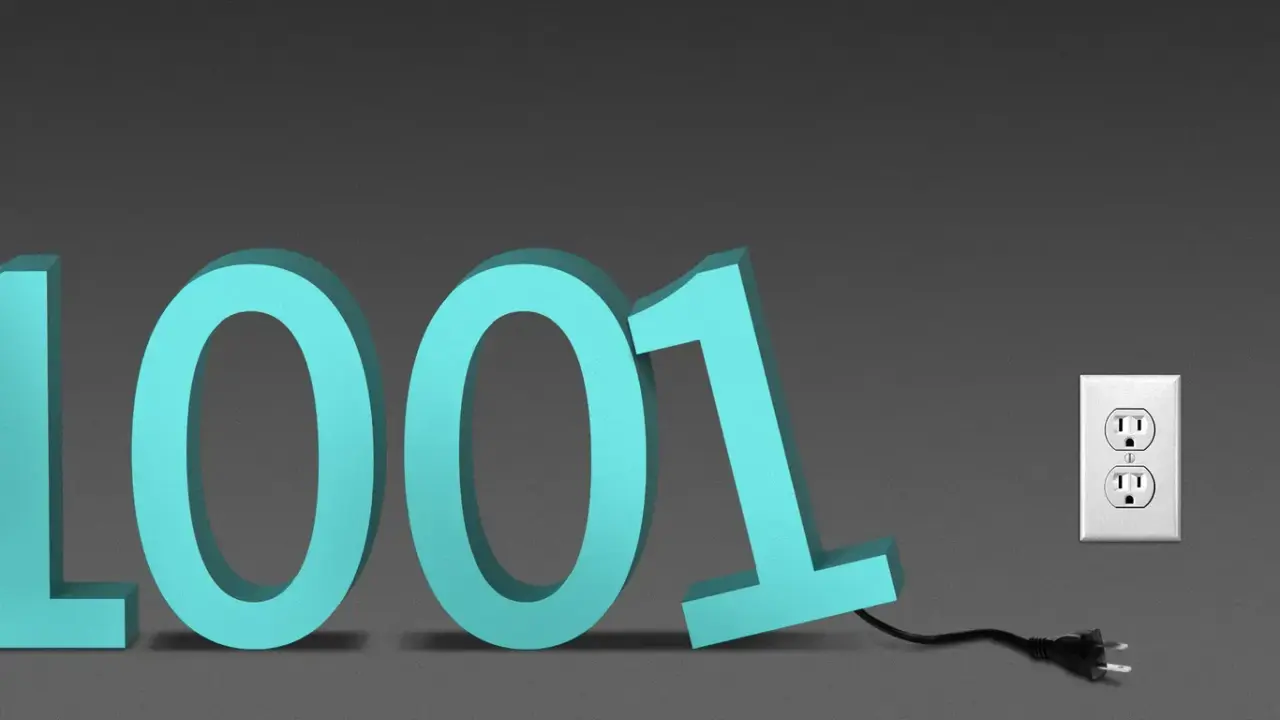
Source: Axios
The physical reality of power grid access is forcing AI infrastructure companies to abandon ambitious projects. Microsoft withdrew from a planned agreement for capacity at Nscale's AI data center in Loughton, England, after grid officials indicated power for the site may not be available until the 2030s
5
. The abandoned project was supposed to house 23,040 Nvidia GPUs with 50 megawatts of initial AI capacity, scalable to 90 megawatts5
. The incident underscores how grid delays are becoming just as crucial a constraint as chip availability for companies racing to bring computing capacity online.The U.S. has roughly 2,600 gigawatts of proposed power generation and storage projects awaiting grid connections, more than twice the grid's existing installed capacity
1
. The median time from an application for a grid connection to commercial operation is roughly five years1
. Since January, 86 projects have been canceled or significantly delayed, including 76 directly linked to local opposition1
. In the PJM Interconnection, which covers 13 states and Washington, D.C., transmission upgrades are already delaying 37.7 gigawatts of planned new generation5
.AI's Energy Needs Reshape Utility Business Models
The boom is transforming utilities from traditionally slow-growing businesses into major beneficiaries of AI investment. Utility capital plans are expected to reach $1.3 trillion between 2026 and 2030
1
. Tech giants are considering arrangements to directly fund the power generation, transmission lines, and electrical infrastructure their AI data centers require1
. President Donald Trump has pushed to allow tech companies to construct their own power plants to accommodate data centers in a "speed to power" campaign3
.Data center power demand consumed around 415 TWh of electricity globally in 2024, and the International Energy Agency expects that demand to more than double by 2030, reaching roughly 945 TWh
4
. In advanced economies like the U.S., AI data centers will account for 20% of electricity demand growth through 20302
. By then, data centers are expected to account for 3% of global electricity demand2
.Related Stories
Regulatory Framework Struggles to Keep Pace
The Federal Energy Regulatory Commission is drafting a new proposal to expand its authority to manage the country's surging energy demand, but AI developers' ambitions are colliding against fragmented governance between state regulators, public utilities, and the federal government
3
. FERC initially blew past an April 30 deadline from the Department of Energy to establish national standards for linking AI data centers to the power grid3
. The agency released orders in mid-June obligating regional grid operators to justify within two months how their pricing structures can pave the way for more data centers or they must alter them immediately3
.Laura Swett, who chairs FERC, described tension between AI hyperscalers and government regulators in March, noting "a breakdown of communication in many instances." She added that "the hyperscalers, when they do come speak to us, they don't speak FERC," highlighting the disconnect between Silicon Valley's rapid development pace and the plodding nature of government rule-making
3
.Clean Energy and Capital Spending Face Uncertain Future
Source: TIME
Recent weeks brought red flags for investment in AI and the related data center boom. Bond yields soared for AI infrastructure companies like CoreWeave, signaling that investors view the buildout as increasingly risky
2
. Meta's reporting of negative free cash flow while saying it might need to raise even more capital expenditures to fund its AI expansion not only hit its own stock but contributed to price declines across big tech companies2
.A pullback in the pace of new data centers could ease pressure to build fossil generation, but it would also weaken the commercial case for clean energy technologies that need big, reliable buyers willing to pay a premium for power
2
. From advanced geothermal to new ways of producing nuclear power, big tech companies have been willing to pay more to lock in reliable power sources, thereby accelerating the market for renewable energy2
. The IEA expects renewables to account for nearly half of the additional electricity generation required by data centers through 20304
. The AI expansion bottleneck could mean a longer, less predictable buildout, delayed financial returns, and greater risks for companies investing heavily before securing power1
.References
Summarized by

Navi
[5]
Related Stories
AI energy consumption strains power grid as data center demand drives costs up for manufacturers
06 Jul 2026•Policy and Regulation
AI Data Centers Hit Power Wall as Energy Infrastructure Becomes the New Battleground
28 Oct 2026•Policy and Regulation
AI's Surging Energy Demand Sparks Data Center Efficiency Crisis
04 Sept 2025•Technology

Recent Highlights
1
Anthropic AI Development Doubles Speed as Self-Improving Systems Near Breakthrough
Technology

2
Nvidia Opens Investigation as Jensen Huang Faces Chinese Spy Allegations Linked to $2B Chip Smuggling
Policy and Regulation
3
Google's AI Policy Forces Schools to Accept AI Overviews or Lose Search Access Entirely
Technology

Recent Highlights
Today's Top Stories








Don’t drown in AI news. We cut through the noise - filtering, ranking and summarizing the most important AI news, breakthroughs and research daily. Follow topics that matter to you and stay ahead.


