AI could tackle America's $39 trillion debt crisis, but Yale report reveals a harsh trade-off


2 Sources
[1]
AI could solve America's $39 trillion debt crisis -- but only if Washington abandons displaced workers, Yale report warns | Fortune
The big bet on AI -- the near-trillion dollars that hyperscalers are spending to build out the technology's infrastructure -- is predicated on the belief that productivity will skyrocket. If that bet pays off, a new report from policy research center Yale Budget Lab finds AI could help tackle one
[2]
AI Productivity Boom Could Ease $39 Trillion National Debt -- But Only If The Government Stops Doing This -
AI productivity might be a viable solution to America's $39 trillion national debt crisis, according to a Yale Budget Lab report. However, it also warned that achieving this would require specific action from the government. Government Worker Aid May Offset Gains The study, released on Wednesday,
Share
Copy Link
A Yale Budget Lab report finds AI productivity gains could help address the $39 trillion national debt by driving 2.5% annual labor productivity growth. However, the study warns that federal spending to support displaced workers would undermine debt reduction efforts, forcing policymakers to choose between fiscal sustainability and worker protection.
AI Productivity Growth Offers Path to Debt Reduction
A new Yale Budget Lab report presents a stark choice for policymakers: AI could help solve America's $39 trillion national debt crisis, but only if the government abandons workers displaced by automation
1
. The study finds that moderate AI adoption could drive annual labor productivity growth of 2.5% between 2025 and 2030, enough to slow and eventually shrink the debt-to-GDP ratio1
. This projection comes as the national debt recently hit 100% of GDP, with the U.S. now spending $88 billion monthly on interest payments alone—roughly equivalent to combined defense and education spending1
.
Source: Benzinga
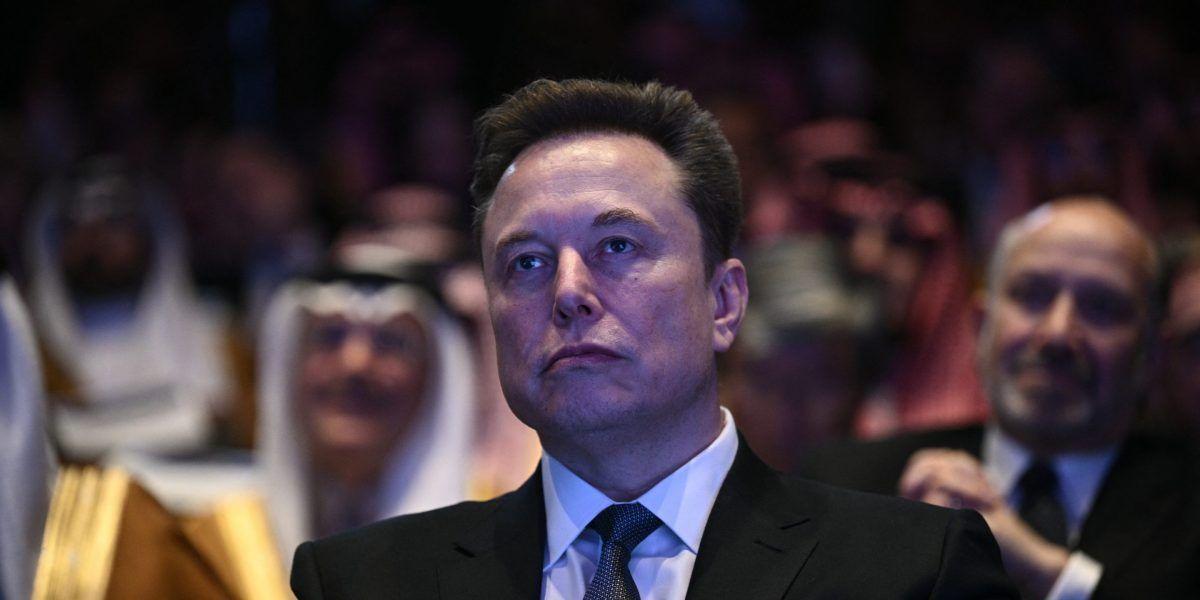
The research builds on expectations from economists surveyed about AI's impact on productivity through the end of the decade. Business leaders like Elon Musk have promoted AI productivity as a solution to the country's fiscal challenges
1
. Yet the Yale report reveals that achieving debt reduction through AI requires specific constraints on government spending that many policymakers may find politically untenable.Government Spending on Displaced Workers Creates Fiscal Dilemma
The study examined two scenarios for federal support of displaced workers, and neither proved sufficient to maintain current debt levels
1
. In a more generous scenario equivalent to the $42,400 spent per retiree, and a less generous one matching the $5,500 spent per unemployed worker, AI productivity gains still reduce debt more than if AI fails to materialize—but not enough to reverse the upward trajectory1
. To keep the national debt at its current level would require holding federal spending steady, effectively ruling out substantial aid programs for workers affected by automation2
."It seems unlikely that AI will be some kind of free, infinite money tree," Martha Gimbel, executive director and co-founder of the Yale Budget Lab, told Fortune. "One, it depends on how big the productivity shock is and, two, how much you need to spend in response"
1
. This tension between fiscal policy goals and worker protection has sparked proposals from figures ranging from Sen. Bernie Sanders to Sam Altman, all of which would add costs that Gimbel emphasizes must be factored into any debt reduction calculations1
.Shift in Tax Burden and Higher Interest Rates Complicate Picture
Beyond direct spending on displaced workers, the Yale report identifies two additional factors that could limit AI's debt-reduction potential. First, automation could shift income from labor to capital, and since capital is generally taxed more lightly than labor, this transition could inadvertently reduce federal tax revenues
1
2
. Many business leaders and politicians have flagged this shift in tax burden as a critical consideration given the threat of labor market disruption1
.Second, faster economic growth driven by AI could paradoxically increase debt-servicing costs. Historically, rapid productivity growth pushes interest rates higher, which would increase what the government pays to service its debt and partially offset fiscal gains
1
2
. Getting the country on a sustainable fiscal path within 30 years currently requires painful changes totaling $827 billion through tax hikes, spending cuts, or both1
.Related Stories

Uncertainty Around AI's Labor Market Impact Adds Risk
The extent of AI's disruption to the labor market remains unclear, adding another layer of uncertainty to fiscal projections. While Anthropic CEO Dario Amodei previously claimed AI would eliminate half of entry-level white-collar jobs, he recently revised his view, suggesting the technology could transform and multiply roles rather than destroy them
1
. There's also no guarantee that AI will deliver the productivity gains the study assumes.Gimbel emphasized that even if productivity gains materialize, they won't occur in isolation. "I think it's important to look at the industrial revolution—that obviously was a major productivity shock, but in that case there were substantial costs that the government didn't manage," she said. "It's really important to keep in mind that productivity is not the only impact of AI"
1
. This historical perspective suggests policymakers should prepare for broader social and economic consequences beyond simple deficit reduction calculations, particularly as proposals for worker support and the reality of automation continue to evolve.References
Summarized by

Navi
Related Stories
Elon Musk Claims AI and Robotics Are Only Solution to America's $38 Trillion Debt Crisis
02 Dec 2025•Business and Economy
Genpact research finds $18 trillion AI opportunity trapped behind enterprise debt
16 Jun 2026•Business and Economy

Anthropic Economic Model Shows AI Could Boost US GDP 32% While Displacing Knowledge Workers
09 Sept 2026•Business and Economy

Recent Highlights
1
Microsoft and Nvidia Launch Surface Laptop Ultra: A $2,599 AI-Ready PC With RTX Spark Chip
Technology

2
OpenAI Releases 722 AI-Generated Math Papers on GitHub, Igniting Fury Among Mathematicians
Science and Research

3
Trump Consulted Grok AI Before Ordering Venezuela Invasion and Capture of Nicolás Maduro
Policy and Regulation

Recent Highlights
Today's Top Stories









Don’t drown in AI news. We cut through the noise - filtering, ranking and summarizing the most important AI news, breakthroughs and research daily. Follow topics that matter to you and stay ahead.


