AI Investments Surge to $220 Billion in Debt as Market Risk and Investor Fatigue Test Hyperscalers


7 Sources
[1]
US corporate AI debt surge tests investor limits as fatigue emerges
NEW YORK, Aug 21 (Reuters) - The wave of debt issuance funding the artificial-intelligence buildout is testing the limits of investor demand, with some large bond buyers warning that the market is showing signs of indigestion. While fund managers remain comfortable with the credit quality of
[2]
How the A.I. Borrowing Binge Helps Drive Up Government Bond Yields
Analysts said the recent rise in Treasury yields partly reflected investor expectations that A.I.-driven growth could keep interest rates elevated. Economists have been repeatedly dumbfounded by the resilience of the economy in the face of the Covid-19 pandemic, wars, tariffs, inflation and
[3]
Global Market: AI debt boom tests investor appetite as tech bond issuance surges
AI-driven debt issuance is testing investor appetite as technology companies flood bond markets with new supply. Hyperscaler issuance has reached $220 billion in 2026, prompting investors to demand higher yields and larger concessions. The surge in debt issuance to finance the artificial
[4]
JPMorgan warns investors about AI stocks
The S&P 500 is still in a bullish trend. The Nasdaq is still near record highs. And one of Wall Street's biggest banks is quietly telling clients to be careful. JPMorgan's technical strategist said this week that the AI trade is starting to look like something he has seen before. The last time it
[5]
JPMorgan warns AI stocks echo the dot-com bubble
Wall Street has spent 2026 pouring money into almost anything tied to artificial intelligence. One of the biggest banks now says part of that trade looks unhealthy. JPMorgan technical strategist Jason Hunter told clients the AI rally is starting to resemble the market in the months before the
[6]

U.S. corporate AI debt surge tests investor limits as fatigue emerges
The wave of debt issuance funding the artificial-intelligence buildout is testing the limits of investor demand, with some large bond buyers warning that the market is showing signs of indigestion. While fund managers remain comfortable with the credit quality of companies such as Amazon and
[7]
BofA finds AI is creating a credit divide that could reach consumers
The artificial-intelligence boom is most often seen as a Wall Street story. Nvidia (NVDA) rallies. Big Tech spends billions. Data centers multiply. Investors debate which company will become the next major AI winner. But Bank of America says something more substantial is starting to unfold under
Share
Copy Link
Technology giants have issued $220 billion in AI-related debt in 2026, up from $12.5 billion last year, forcing companies like Amazon and Alphabet to offer higher yields. JPMorgan warns the split between soaring chip stocks and struggling hyperscalers mirrors the dot-com bubble, raising concerns about market concentration and investor appetite.
Hyperscalers Issue $220 Billion in AI-Related Debt as Investor Appetite Weakens
AI investments are testing the limits of bond markets as hyperscalers flood investors with unprecedented debt levels. AI-related debt issuance by major technology companies reached $220 billion in 2026 as of August 10, compared to just $12.5 billion during the same period last year, according to BNP Paribas data
1
3
. This AI borrowing binge marks a fundamental shift for companies like Amazon, Alphabet, Microsoft, Meta, and Oracle, which historically funded AI infrastructure spending from operating cash flow2
. The surge has forced these companies to offer investors significantly higher yields, with Amazon's recent $25 billion long-dated bond sale pricing at roughly 120 basis points over Treasuries—double what similar debt would have cost a year earlier1
.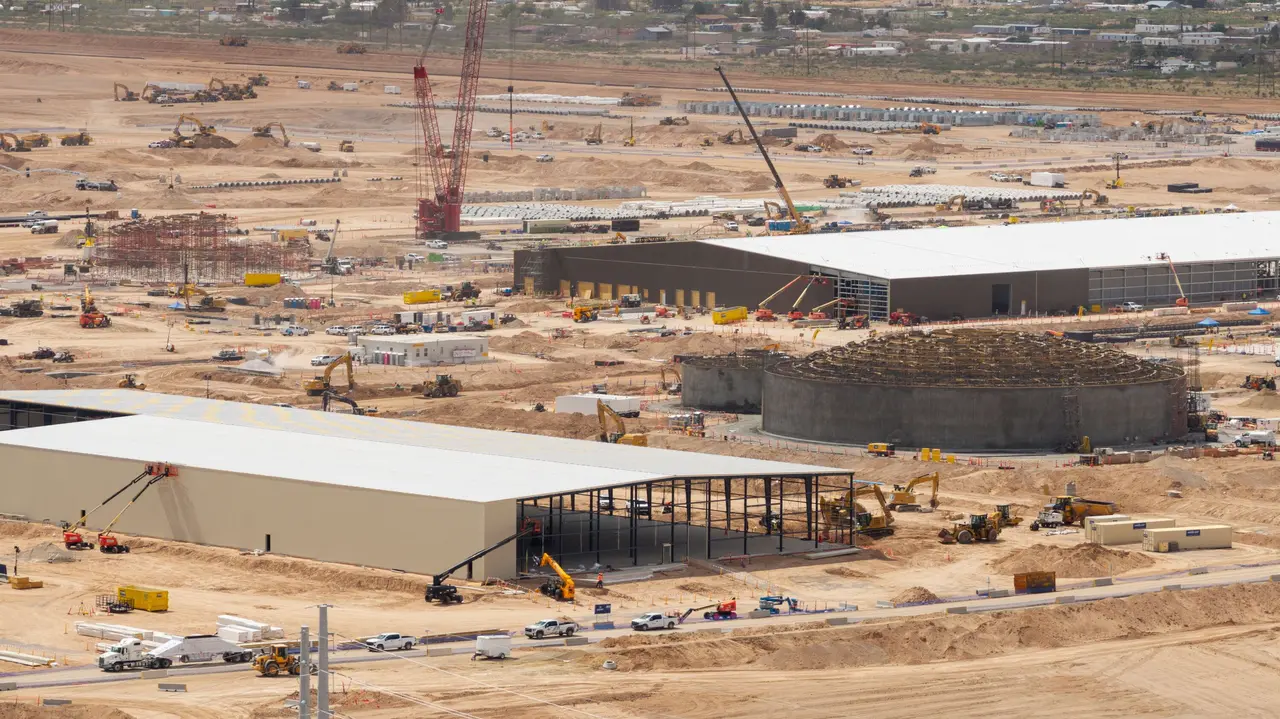
Source: NYT
Corporate Bond Market Shows Signs of Indigestion
The corporate bond market is displaying clear signs of investor fatigue as technology companies repeatedly tap debt markets. Neil Sutherland, head of U.S. fixed income at Schroders, noted that "you've started to see the indigestion show up in tech spreads in particular"
1
. Bond spreads for technology companies now stand at 89 basis points, approximately 9 basis points wider than the broader investment-grade market1
3
. This represents a major reversal for a sector that historically enjoyed some of the tightest spreads in corporate credit due to strong balance sheets and modest borrowing needs. George Catrambone, head of fixed income Americas at DWS, observed that "the issuance in January versus August looks different," with fatigue clearly setting in as investors demand larger concessions1
. Alphabet's bond offering in August required a concession of roughly 10 to 15 basis points relative to existing bonds, demonstrating how market dynamics have shifted1
3
.Rising Treasury Yields Compound Pressure on AI Infrastructure Spending
The AI debt boom is contributing to rising Treasury yields, creating a feedback loop that increases borrowing costs across the economy. The yield on the 30-year U.S. government bond rose to its highest level since 2007 this week
2
. Matt King, founder of Satori Insights, explained that while the economy "has enjoyed a massive boost" from hyperscalers spending cash stockpiles on AI infrastructure, the shift to debt financing means "further capital expenditure is no longer 'free'"2
. The five major hyperscalers collectively issued an average of less than $30 billion in debt annually from 2020 to 2024, but that amount surged above $100 billion in 2025 and has already exceeded $200 billion in 20262
. Broader AI-related debt issuance is expected to surpass $1 trillion annually from 2027 through 2030, according to Vanguard2
. The Treasury Department has attempted to contain borrowing costs by increasing the amount of its own debt it can buy back, but yields resumed climbing shortly after2
.Related Stories
JPMorgan Warns AI Stock Rally Mirrors Dot-Com Bubble Patterns
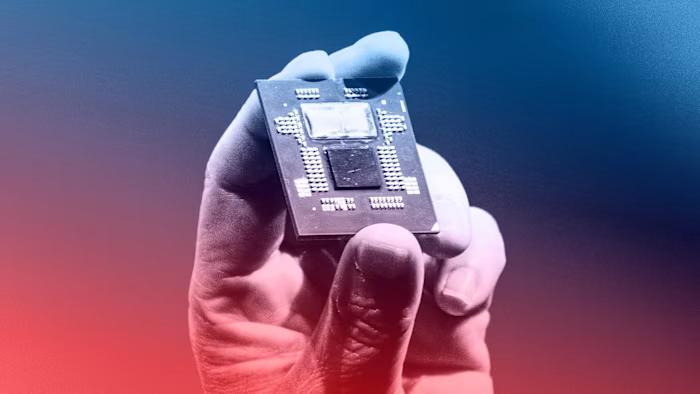
Jason Hunter, JPMorgan's chief technical strategist, issued a stark warning that the current divergence in AI investments mirrors conditions before the dot-com bubble burst in 2000
4
5
. Hunter observed that AI hardware stocks have surged, with the Philadelphia Semiconductor Index up 87% this year and memory stocks climbing 141% since April, while hyperscalers spending the most on AI infrastructure have been punished4
. Meta is down 5% this year and Microsoft has fallen 18%, posting its worst monthly decline since 20004
5
. Hunter noted that "the growing divergence that exists now and the outright negative hyperscalers price performance are reminiscent of the 1999-2000 dynamic," when communications equipment suppliers surged while companies making heavy capital investments crashed4
. This market risk is amplified by extreme market concentration, with roughly 87.5% of all venture dollars in the first half of 2026 flowing into AI companies, and 43% of that going to just two names: OpenAI and Anthropic4
5
.Portfolio Constraints Emerge as Practical Limit to AI Debt Absorption
Institutional investors face practical constraints that could eventually limit demand for AI-related debt, regardless of credit quality. Karen Choi, portfolio manager at Capital Group, noted that many pension and insurance investors cap exposure to individual issuers at roughly 2% to 3% of assets
1
. As the same handful of AI companies repeatedly issue debt, these limits become increasingly binding. Choi emphasized that diversification matters to clients and many "don't want to open a statement and find they own 10% of one bond," highlighting portfolio constraints that could eventually restrict demand1
. The four biggest AI spenders—Meta, Microsoft, Amazon, and Alphabet—are on track to spend $725 billion on AI infrastructure this year, up 77% from last year's record $410 billion4
5
. While foreign investors, pension funds, and insurance companies have absorbed significant AI-related issuance so far, with the investment-grade corporate bond index yielding around 5.4%1
3
, the question remains how much additional debt these investors can accommodate. Supply dynamics are beginning to outweigh fundamentals, especially in pricing bond deals, even as hyperscalers maintain strong credit ratings and substantial cash flows1
3
.References
Summarized by

Navi
[4]
[5]
Related Stories
AI Infrastructure Buildout Faces First Major Financial Risk Test as Neoclouds Crash 30%
23 Oct 2026•Business and Economy
AI Infrastructure Bubble Concerns Mount as CoreWeave's Financial Engineering Raises Red Flags
18 Nov 2025•Business and Economy

OpenAI Walks Back Government Bailout Comments Amid $1.4 Trillion Infrastructure Push
06 Nov 2025•Business and Economy

Recent Highlights



Recent Highlights
Today's Top Stories



Don’t drown in AI news. We cut through the noise - filtering, ranking and summarizing the most important AI news, breakthroughs and research daily. Follow topics that matter to you and stay ahead.


