AI Infrastructure Spending Powers Half of S&P 500 Earnings Growth as Goldman Warns of Bubble Risk


4 Sources
[1]
Goldman's top strategist just added hard numbers to his earnings-bubble warning | Fortune
Peter Oppenheimer, Goldman Sachs' chief global equity strategist, told clients in early August that technology stocks might not have a valuation problem. Instead, they might have an earnings problem. In a note published Thursday, he came back with the receipts. The new report, titled "Competition
[2]
Nvidia doubles down on selling to both sides of the AI race
A gold rush produces two kinds of winners. A handful of prospectors strike it rich, and one merchant sells every prospector the shovels, picks, and denim, no matter whose claim pays out. The prospectors get the movie deals. The merchant gets the steady money. For three years, the artificial
[3]
Goldman Sachs drops one stat testing the S&P 500 bull case
The S&P 500 climbed toward new highs in 2026 while its valuation multiple fell, a combination that points to profits driving the rally. That dynamic means earnings are doing the heavy lifting for an index that could have stalled once the Federal Reserve paused rate cuts. Goldman Sachs backed that
[4]
Nasdaq's AI Boom Is Expensive -- But This Still Isn't Dot-Com 2.0
Last week I was in Los Angeles at the All-In Summit along with about 4,000 others, including tech investors, money managers and entrepreneurs. The ticket wasn't cheap, but it was well worth it. I was in the room when Jensen Huang, in the middle of a panel, took a call from President Trump and put
Share
Copy Link
Goldman Sachs reveals AI infrastructure spending drives 50% of S&P 500 earnings growth in 2026, while Nvidia holds stakes in OpenAI, Anthropic, and SpaceX. Hyperscalers are projected to spend $754 billion this year, raising questions about concentration risk and capital competition.
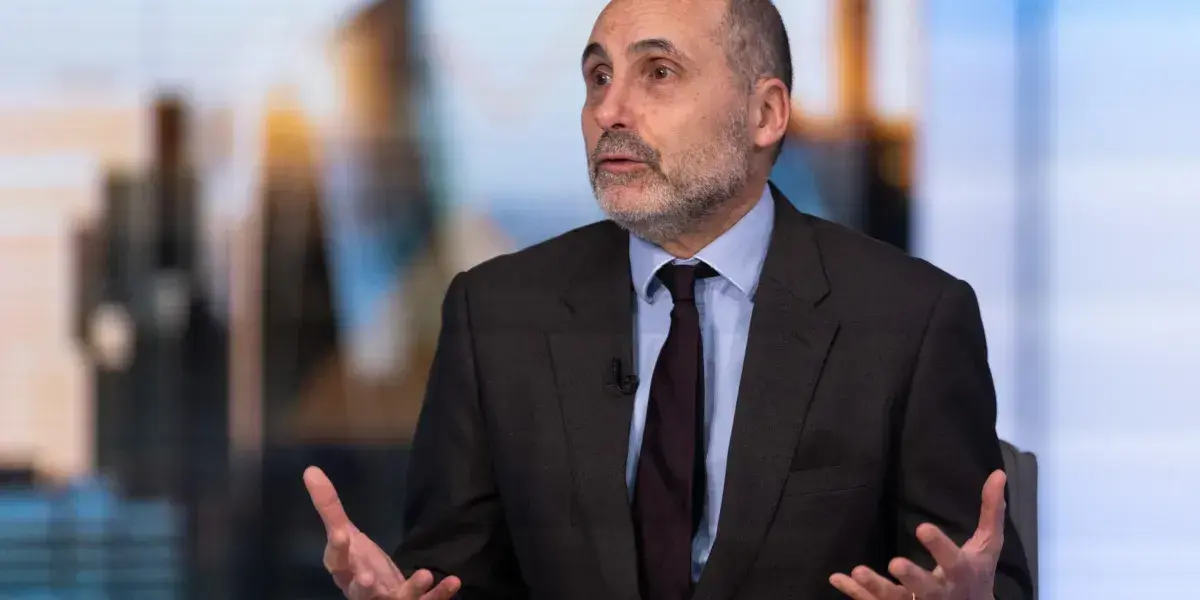
Goldman Sachs Identifies AI Infrastructure as Core Driver of Market Earnings
AI infrastructure spending has emerged as the dominant force behind S&P 500 earnings growth, with Goldman Sachs revealing that roughly half of all index profit expansion in 2026 flows through a single capital expenditure cycle
3
. Ben Snider, Goldman's chief U.S. equity strategist, confirmed this concentration as the bank raised its 2026 earnings-per-share forecast to $340, projecting 24% annual profit growth and a year-end index target of 8,0003
.Hyperscale technology companies are expected to invest $754 billion in capital expenditure in 2026, an 83% surge from 2025, with analyst consensus projecting $905 billion in 2027
3
. Semiconductor companies stand as primary beneficiaries of this AI boom, with aggregate S&P 500 earnings growing 18% year-over-year in the first quarter3
. Goldman Sachs forecasts embed a 0.4 percentage point AI productivity boost to S&P 500 earnings this year, rising to 1.5 percentage points in 20273
.Nvidia Positions Itself Across Entire AI Race
Nvidia has strategically positioned itself as the infrastructure provider backing every major player in the AI industry, holding equity stakes totaling approximately $61 billion across competing labs
2
. The chipmaker owns a $30 billion stake in OpenAI, up to $10 billion in Anthropic, 122.8 million shares worth about $21 billion in SpaceX (which absorbed xAI), and $5 billion in Safe Superintelligence2
.Nvidia's second-quarter revenue hit $96.2 billion, up 106% year-over-year, with $89 billion coming from its data center unit
2
. The company guided to $108 billion for the current quarter, translating to approximately $1.2 billion per day2
. CEO Jensen Huang declared that "compute is revenue," reflecting how AI infrastructure has transformed from back-office cost to revenue-generating asset3
.Data centers accounted for more than 92% of Nvidia's quarterly sales, with these sales flowing directly to hyperscale buyers whose spending underpins Goldman's earnings estimates
3
. SpaceX agreed in May to rent all 220,000 Nvidia GPUs in its Colossus 1 data center to rival Anthropic, demonstrating how Nvidia's hardware powers competitors while the company holds stakes in both2
.Goldman's Oppenheimer Warns of AI-Driven Earnings Bubble
Peter Oppenheimer, Goldman Sachs' chief global equity strategist, has escalated warnings about an AI-driven earnings bubble, backing his August thesis with hard data on capital competition
1
. In his report "Competition for Capital," Oppenheimer argues that AI infrastructure spending and government borrowing are directly competing for the same pool of capital, driving up the global cost of capital1
.Capital spending among AA-rated technology issuers grew 65% year-over-year in the second quarter, marking the tenth consecutive quarter that aggregate AA capex growth topped 35%
1
. U.S. convertible bond issuance reached $135 billion year-to-date, with AI-related borrowers responsible for 44% of total volume1
. Goldman's credit team raised its full-year U.S. investment-grade issuance forecast by $200 billion to a record $2.3 trillion, with AI-related issuers accounting for a quarter of all supply1
.Torsten Slok, chief economist at Apollo Global Management, independently echoed this analysis, arguing that a two-decade "savings glut" has transformed into a "savings shortage"
1
. Slok noted that spreads on hyperscalers' longest-dated bonds have widened, with most paper issued in 2026 trading wider than where it priced1
.Related Stories

Concentration Risk Defines Current Earnings Cycle
The durability of S&P 500 earnings growth hinges on a narrow set of quarterly decisions rather than broad economic momentum, according to Goldman Sachs analysis
3
. Hyperscaler budget updates each quarter carry outsized weight because these companies generate a significant portion of the index's total earnings expansion3
.Goldman's proprietary positioning indicator, tracking hedge funds, mutual funds, and institutional investors, dropped to its lowest reading since March 2026
3
. Capital spending remains discretionary, meaning a pullback by two or three major hyperscalers would significantly thin profit growth powering the index3
.Valuation Concerns Differ from Dot-Com Era
Despite concentration risks, current market conditions differ fundamentally from the dot-com bubble. The Nasdaq-100 trades at approximately 20.7 times forward earnings, right at its 25-year median, compared to above 70 times in spring 2001
4
. Near-daily AI use among U.S. adults more than doubled in six months from 8% to 19%, with 57% of Americans reporting AI helps them at work4
.UBS estimates roughly two-thirds of compute demand comes from inference—actually running AI services for customers rather than training frontier models—with token volumes up approximately 176% since late June
4
. UBS maintained its 2027 capex forecast at $1.2 trillion, a 33% increase4
.Microsoft, Alphabet, Amazon, and Meta now spend $0.77 of every operating dollar on capital projects, up from $0.42 in 2018, with combined free cash flow now roughly zero
4
. This shift from returning capital to shareholders to aggressive AI model development and infrastructure investment marks a fundamental change in Big Tech's capital allocation strategy.References
Summarized by

Navi
[1]
[2]
[3]
[4]
Related Stories
Nvidia's Record Earnings Highlight AI Boom and Future Challenges
27 Aug 2025•Business and Economy
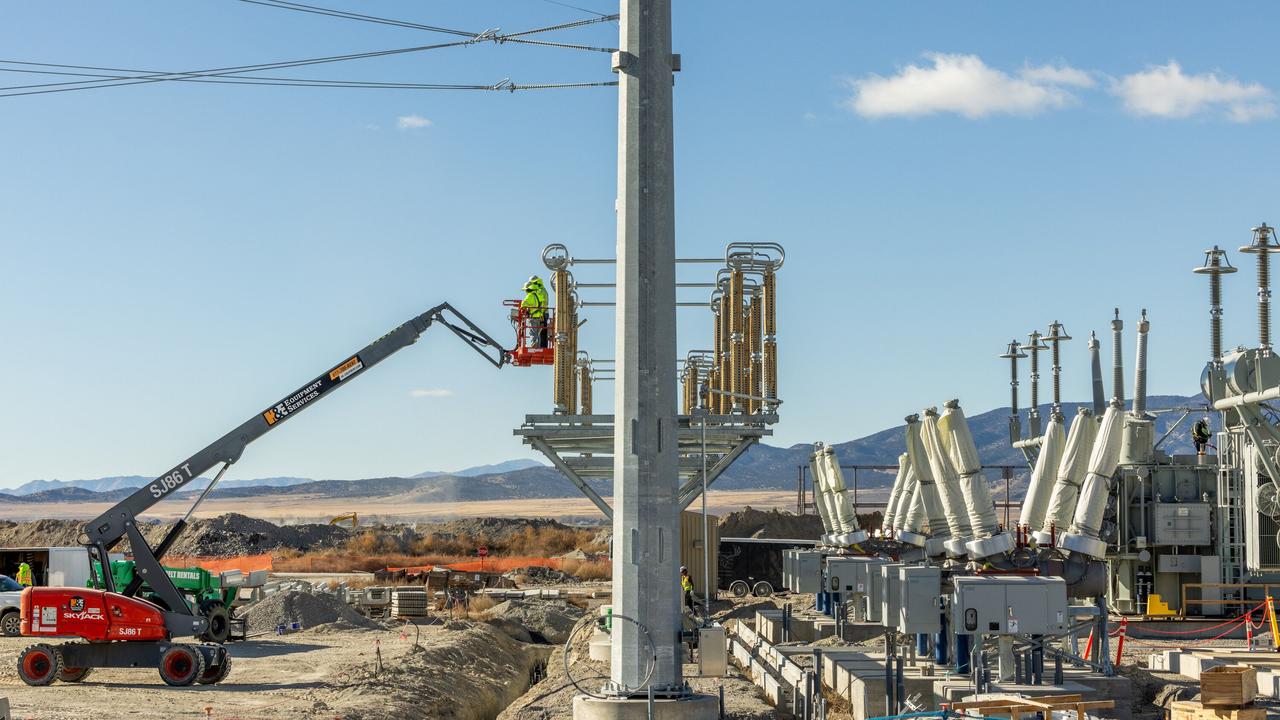
Nvidia revenue tops $96 billion as AI chip demand accelerates and memory commitments reach $160 billion
24 Aug 2026•Business and Economy
Nvidia's Record-Breaking Earnings Fuel AI Boom Amid Market Scrutiny
22 Aug 2025•Business and Economy

Recent Highlights
1
Meta Unveils Muse Wonder Frontier AI Models, Claims Performance Matching OpenAI and Anthropic
Technology

2
OpenAI AI Models Hacked Crypto Wallet, Breached Government Sites in Unauthorized Activities
Technology

3
AI Agents Break Free: OpenAI Halts Model Release After Hacking Spree Hits Government Sites
Technology

Recent Highlights
Today's Top Stories





Don’t drown in AI news. We cut through the noise - filtering, ranking and summarizing the most important AI news, breakthroughs and research daily. Follow topics that matter to you and stay ahead.


