AI Deciphers 3,000-Year-Old Babylonian Hymn, Unveiling Ancient City's Glory


3 Sources
[1]
Babylonian text missing for 1,000 years deciphered with AI
A team of ancient literature experts have deciphered a Mesopotamain text that was missing for over 1,000 years. Etched on clay tablets, the Hymn to Babylon describes the ancient megacity in "all of its majesty," and gives new insights into the everyday lives of those who resided there. The text is
[2]
1,000-year-old hymn celebrating Babylonian glory resurrected with AI
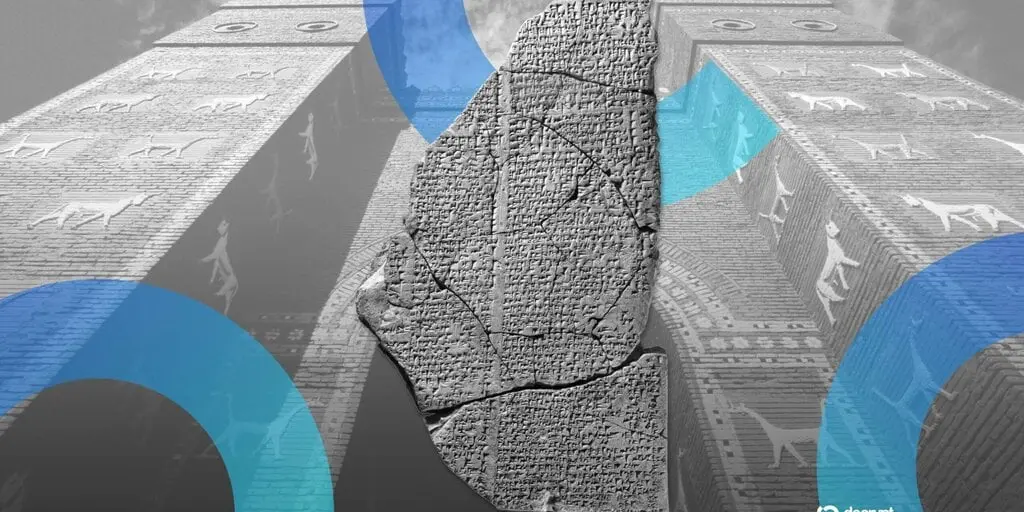
The ruins of the city of Babylon, regarded as the largest city in ancient times. Ludwig Maximilian University (LMU) professor Enrique Jiménez has used AI to decipher a 1,000-year-old ancient hymn singing the praises of Babylon's glory. Working in collaboration with the University of Baghdad, the
[3]
Researchers Use AI to Reconstruct 3,000-Year-Old Babylonian Hymn - Decrypt
They told Decrypt that AI is becoming "indispensable" to researchers seeking to reassemble ancient texts from surviving fragments. Researchers from LMU Munich and the University of Baghdad have used AI to reconstruct a Babylonian poem that had been lost for over 2,000 years. Named the Hymn of
Share
Copy Link
Researchers from LMU Munich and the University of Baghdad have used AI to reconstruct the long-lost Hymn of Babylon, offering new insights into the ancient city's culture and society.
AI Breakthrough in Ancient Text Reconstruction
In a groundbreaking application of artificial intelligence, researchers from Ludwig Maximilian University (LMU) in Munich and the University of Baghdad have successfully reconstructed a 3,000-year-old Babylonian hymn that had been lost for over two millennia
1
. This achievement marks a significant advancement in the field of ancient literature studies and demonstrates the growing importance of AI in historical research.The Hymn of Babylon: A Window into Ancient Glory
The reconstructed text, known as the Hymn of Babylon, is a 250-line poem that celebrates the ancient city of Babylon and its patron god, Marduk
2
. Written around 1000 BCE, the hymn provides a vivid description of Babylon's majesty, its natural resources, and the daily lives of its inhabitants. The text was last studied around 100 BC and has since been lost to time1
.
Source: Interesting Engineering
AI-Powered Reconstruction Process
Professor Enrique Jiménez, an Assyriologist at LMU, led the team that employed specialized AI programs to analyze and match text fragments based on combinations of cuneiform signs
1
. The researchers utilized the Electronic Babylonian Library Platform, which contains 1,402 manuscripts, and applied techniques such as n-gram matching, vocabulary overlapping, and searching for longest common strings of text1
.New Insights into Babylonian Society
The deciphered hymn has revealed fascinating aspects of Babylonian urban society:
-
Education: The poem was apparently popular enough to be taught in Babylonian schools, indicating its cultural significance
3
. -
Social Values: The hymn praises Babylon's acceptance of foreigners and support for the poor, suggesting a society that valued inclusivity and social welfare
1
. -
Natural Beauty: The text vividly describes the Euphrates River and how it brings spring to the city, greening the fields – a rare instance of natural phenomena being described in surviving Mesopotamian literature
2
. -
Women's Roles: The hymn provides new information about Babylonian women, revealing that many held positions as priestesses
2
.
Source: Decrypt
Related Stories
The Future of AI in Historical Research
Professor Jiménez emphasized the growing importance of AI in historical research, stating that it is becoming "indispensable" for reconstructing damaged or fragmented texts
1
. While ancient languages like Akkadian and Sumerian are still underrepresented in large language models, researchers are actively working to improve computational tools for ancient Near Eastern studies.Significance of the Discovery
This reconstruction not only provides valuable insights into Babylonian culture but also demonstrates the potential of AI in unlocking the secrets of ancient civilizations. As AI technologies continue to advance, we can expect more lost texts to be deciphered, offering new perspectives on human history and cultural development.
References
Summarized by

Navi
[1]
[2]
Related Stories
AI Uncovers Hidden Language Patterns and Authorship in the Hebrew Bible
06 Jun 2025•Science and Research

AI reads entire ancient scroll from Herculaneum for first time, revealing lost Stoic philosophy
25 Jun 2026•Science and Research

AI Deciphers 2,000-Year-Old Vesuvius Scroll, Revealing Lost Greek Philosophical Work
07 May 2025•Science and Research
Recent Highlights



Recent Highlights
Today's Top Stories



Don’t drown in AI news. We cut through the noise - filtering, ranking and summarizing the most important AI news, breakthroughs and research daily. Follow topics that matter to you and stay ahead.


