AI Breakthrough: Deciphering Ancient Scrolls from Pompeii's Ruins


2 Sources
[1]
The Vesuvius Challenge is using AI to virtually unroll Pompeii's ancient scrolls
University of Tübingen provides funding as a member of The Conversation UK. The Vesuvius Challenge is an unparalleled competition in the field of classical studies, with the potential to pave the way for something akin to a second Renaissance. Its objective is to use artificial intelligence (AI)
[2]
How AI Is Deciphering Lost Scrolls From the Roman Empire
The Herculaneum papyri were too fragile to unwrap for centuries. Now, they may not have to be. Researchers are using cutting-edge AI models to "read" ancient scrolls superheated by the eruption of Mount Vesuvius in 79, which covered much of the Bay of Naples in ashâ€"including the now-famous towns
Share
Copy Link
The Vesuvius Challenge is using AI and computer vision to virtually unroll and read ancient scrolls from Herculaneum, a city destroyed alongside Pompeii in 79 CE. This groundbreaking approach could revolutionize our understanding of the ancient world.

The Vesuvius Challenge: Unveiling Ancient Wisdom
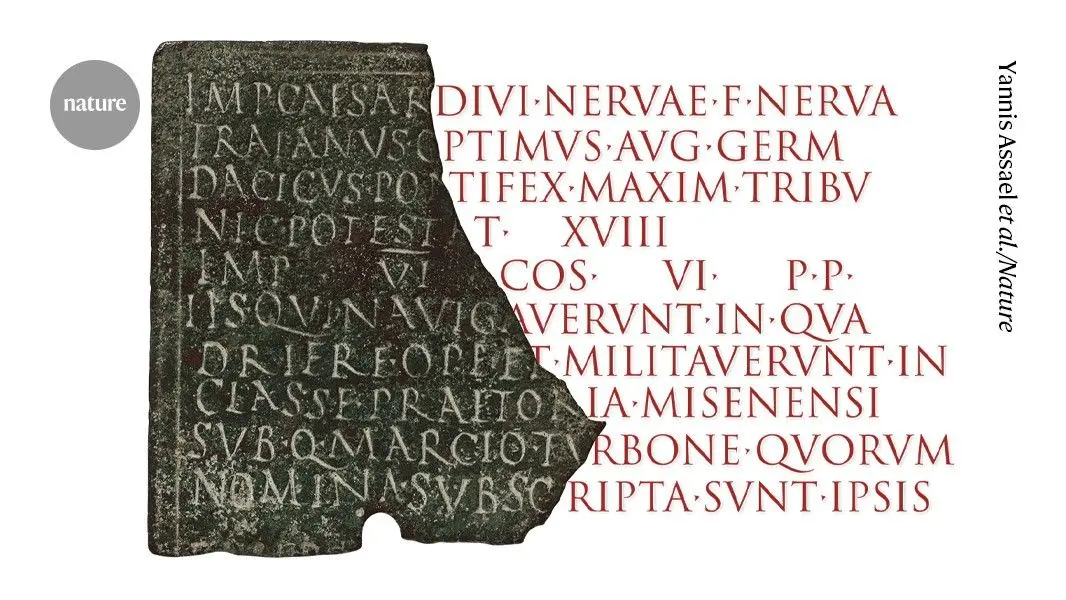
In a remarkable fusion of cutting-edge technology and ancient history, the Vesuvius Challenge is pushing the boundaries of what's possible in archaeological research. This innovative project aims to decipher the contents of carbonized scrolls discovered in the ancient Roman city of Herculaneum, which was destroyed alongside Pompeii by the eruption of Mount Vesuvius in 79 CE
1
.The Scrolls: A Fragile Time Capsule
The scrolls, part of the only known intact ancient library, have remained unreadable for nearly two millennia due to their fragile, carbonized state. Traditional methods of unrolling these delicate artifacts have proven too risky, often resulting in their destruction. This is where the Vesuvius Challenge steps in, offering a non-invasive solution that could revolutionize our understanding of the ancient world
1
.AI and Computer Vision: The Key to Unlocking Ancient Secrets
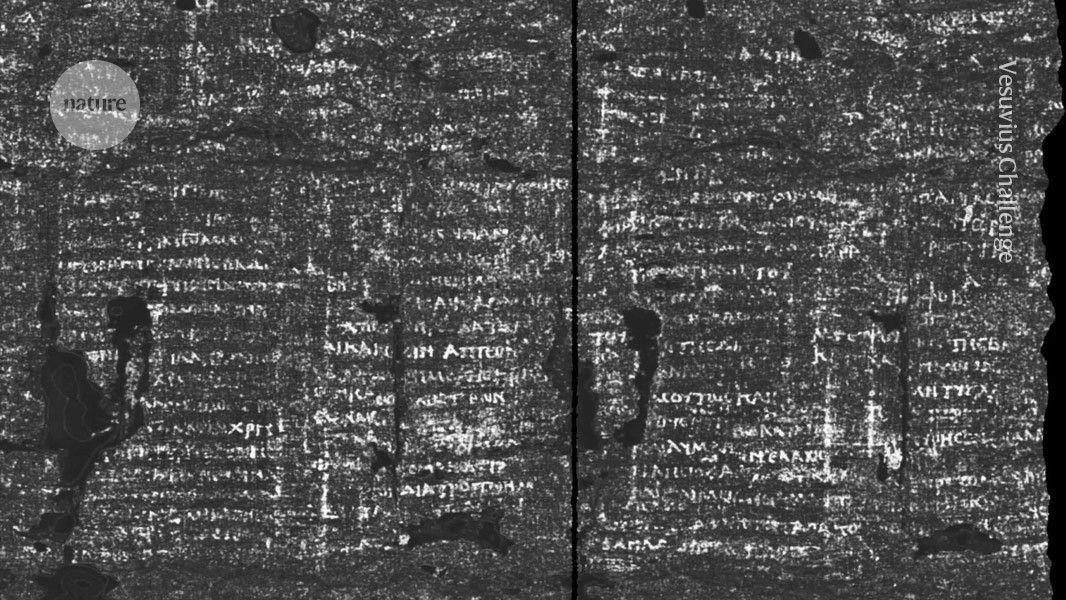
The project employs advanced AI techniques and computer vision to virtually "unroll" the scrolls. By using CT scans to create 3D models of the scrolls, researchers can apply machine learning algorithms to detect and enhance the visibility of ink traces within the layered papyrus
2
.The Power of Collaboration
What sets the Vesuvius Challenge apart is its open-source nature. The project has made its data publicly available, inviting computer scientists, AI researchers, and citizen scientists from around the world to contribute to the decipherment effort. This collaborative approach has already yielded promising results, with participants successfully reading portions of text from the scrolls
1
.Related Stories
Breakthroughs and Future Prospects
Recent advancements in the challenge have been significant. In March 2023, researchers successfully deciphered four complete words from one of the scrolls. By October, they had managed to read two entire columns of text, comprising about 15 lines each. These breakthroughs have ignited hope that the entire contents of the scrolls may soon be revealed
2
.Implications for History and Literature
The potential impact of this project extends far beyond the realm of technology. The Herculaneum scrolls are believed to contain works of Greek and Latin literature, philosophy, and poetry that have been lost to time. Deciphering these texts could fill significant gaps in our understanding of ancient thought and culture, potentially reshaping our view of the classical world
1
.As the Vesuvius Challenge continues to make strides, it stands as a testament to the power of interdisciplinary collaboration and the potential of AI to unlock mysteries of the past. The project not only promises to reveal ancient wisdom but also demonstrates how modern technology can bridge millennia, bringing us face-to-face with the thoughts and ideas of our ancestors.
References
Summarized by

Navi
[1]
Related Stories
AI reads entire ancient scroll from Herculaneum for first time, revealing lost Stoic philosophy
25 Jun 2026•Science and Research

AI Deciphers 2,000-Year-Old Vesuvius Scroll, Revealing Lost Greek Philosophical Work
07 May 2025•Science and Research
AI Breakthrough Deciphers 2,000-Year-Old Herculaneum Scroll Carbonized by Vesuvius
06 Feb 2025•Technology

Recent Highlights
1
Microsoft and Nvidia Launch Surface Laptop Ultra: A $2,599 AI-Ready PC With RTX Spark Chip
Technology

2
Trump Consulted Grok AI Before Ordering Venezuela Invasion and Capture of Nicolás Maduro
Policy and Regulation

3
Scientists Build AI Model That Reconstructs Images From Brain Scans in Record Time
Science and Research

Recent Highlights
Today's Top Stories





Don’t drown in AI news. We cut through the noise - filtering, ranking and summarizing the most important AI news, breakthroughs and research daily. Follow topics that matter to you and stay ahead.


