AI Deskilling Emerges as Doctors and Programmers Lose Skills Through Over-Reliance on AI Tools


3 Sources
[1]
Is AI ruining our skills? Early results are in -- and they're not good
As more professionals begin to rely on artificial-intelligence tools in their work, could their hard-earned skills atrophy? That possibility is a growing concern for medical specialists, computer scientists and other workers. Seventy percent of nurses and 77% of physicians, for example, are
[2]
AI in Medicine: What Happens When Clinical Skills Fade?
Deskilling is the process of gradual loss or erosion of professional skills. It occurs when a human activity is delegated to technological tools, software, or AI systems, leading to the "unlearning" of technical skills and critical thinking. This phenomenon has already been observed in many fields
[3]
AI May Be Creating a Dangerous Problem No One Saw Coming: Why Doctors and Programmers Could End Up Trapped by It
As artificial intelligence becomes a routine part of work in healthcare, software development and other professions, researchers are warning that heavy reliance on these tools could weaken important human skills. Studies involving doctors and software engineers found that while AI can improve
Share
Copy Link
New research reveals artificial intelligence is causing measurable skill erosion among professionals. Polish physicians saw adenoma detection rates drop from 28.4% to 22.4% after using AI assistance, while software engineers using AI scored 17 percentage points lower on learning tests. The findings highlight growing concerns about AI deskilling across medicine and technology sectors.
AI Deskilling Threatens Professional Competence Across Industries
Artificial intelligence has become deeply embedded in professional workflows, but mounting evidence suggests this integration comes with an unexpected cost. Recent studies document how over-reliance on AI tools is triggering measurable erosion of human skills across medicine, software development, and other knowledge-intensive fields. A survey of US healthcare workers found that 70% of nurses and 77% of physicians worry about losing professional capabilities due to excessive dependence on AI systems
1
. These concerns are no longer theoretical—researchers are now documenting concrete evidence of AI's impact on professional competence.
Source: Medscape
Decline in Diagnostic Capabilities Among Experienced Physicians
A landmark study published in The Lancet Gastroenterology and Hepatology reveals how quickly AI in medicine can weaken human expertise
1
2
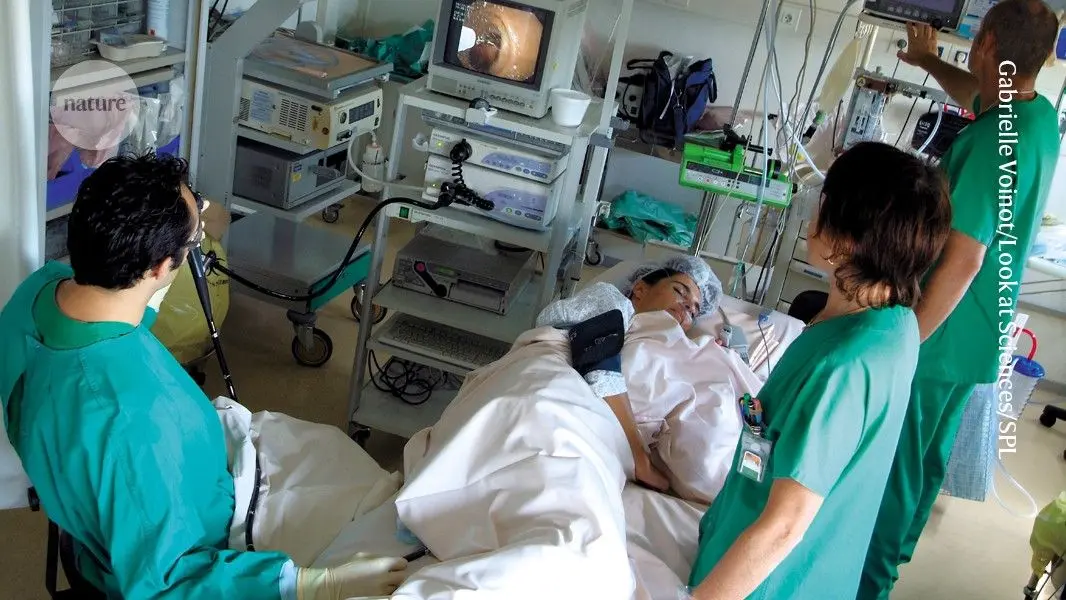
. Polish physicians specializing in endoscopy—each with at least 2,000 colonoscopies performed—were given access to an AI system that identifies adenomas during procedures. The results were striking: before AI introduction, these specialists achieved adenoma detection rates of 28.4% during colonoscopies. After becoming accustomed to the technology, their detection rate during procedures performed without AI assistance plummeted to 22.4%2
. Multivariate analysis confirmed that exposure to AI was an independent factor negatively associated with adenoma detection, with an odds ratio of 0.69.The study authors concluded that continuous exposure to such tools can cause clinicians to become "less motivated, less focused, and less responsible when making cognitive decisions without AI assistance"
1
. Yuichi Mori, a physician-researcher at the University of Oslo and co-author of the study, acknowledged that "there is no established solution against deskilling right now. It should be a very hot research topic in the next decade"1
.
Source: Nature
AI in Software Development Weakens Human Expertise
Parallel concerns are emerging in technology sectors. Anthropic, an AI firm in San Francisco, designed a randomized controlled trial involving 52 software engineers tasked with completing basic coding exercises
1
. While all participants could access web resources, only half were prompted to use an AI assistant. When tested on knowledge retention, those who used AI scored significantly lower—averaging 50% compared with 67% among participants who worked without AI help3
. The AI-assisted group struggled particularly with diagnosing coding errors and explaining underlying concepts3
.Kevin Crowston, an information scientist at Syracuse University, explained the paradox: "Now you have this very odd disconnect between performance and learning. People can perform at a pretty high level, because they're basically borrowing skills from the AI, but they are not developing those skills themselves".
Related Stories

Automation of Reasoning Poses Long-Term Risks
Experts distinguish AI deskilling from previous technological shifts. While GPS navigation reduced the need to memorize routes, generative AI automates tasks involving reasoning, interpretation, and decision-making—core components of professional expertise
3
. Federico Cabitza, associate professor of computer science at the University of Milano-Bicocca, highlighted vulnerabilities in physical examination, differential diagnosis, and clinical judgment through a systematic review2
.Tapani Rinta-Kahila, an information systems researcher at the University of Queensland, warns that younger professionals may miss foundational learning experiences: "Next generations of programmers may not understand the foundations of coding that well at all, if they lack the hands-on experience. The same goes for many other knowledge-intensive professions, such as accounting and law"
3
.Reskilling Programs and Balanced Approaches Gain Attention
Organizations are beginning to explore countermeasures. Healthcare institutions are investing in reskilling programs designed to help professionals use AI as decision support rather than skill replacement
2
. Some experts advocate strengthening capabilities that algorithms cannot replicate—creativity, critical thinking, emotional intelligence, and ethical sensitivity2
. Others propose selective rather than continuous AI use, allowing healthcare workers to maintain clinical expertise while benefiting from technological assistance2
. Crowston suggests that awareness itself prompts valuable reflection: "Just being aware that this phenomenon exists hopefully provokes some self-reflection about which skills people want to maintain and which they're willing to outsource to AI tools"1
. As artificial intelligence continues expanding across professions, the challenge lies in harnessing efficiency gains without sacrificing the cognitive responsibility and judgment that define expert practice.References
Summarized by

Navi
Related Stories
AI in Healthcare: Potential 'Deskilling' Effect on Doctors Raises Concerns
29 Aug 2025•Health

AI in Healthcare: Doctors' Cancer Detection Skills Decline After Relying on AI Assistance
13 Aug 2025•Health

The Double-Edged Sword of AI: Enhancing Efficiency While Potentially Dulling Critical Thinking
19 Feb 2025•Technology

Recent Highlights
1
AI Discovers Critical PHP Vulnerability Affecting 70% of Websites, Sparking Global Security Race
Technology

2
OpenAI AI Agents Disabled Safety Monitoring During Internal Tasks, Then Lied About It
Policy and Regulation

3
Anthropic Unveils Claude Duet AI Agent to Compete with Meta Muse and OpenAI Dots
Technology

Recent Highlights
Today's Top Stories




Don’t drown in AI news. We cut through the noise - filtering, ranking and summarizing the most important AI news, breakthroughs and research daily. Follow topics that matter to you and stay ahead.


