AI discovers critical Zcash vulnerability, exposing privacy coin tradeoffs as ZEC crashes 40%


3 Sources
[1]
Zcash Bug Crisis Shows Privacy Cuts Both Ways, Experts Say
Some said tradeoffs between privacy and auditability are "part of the deal," pointing to bugs patched in years past. Shielding funds from prying eyes has long been Zcash's forte, but investors' unease on Friday indicated that the privacy coin's core feature can also resemble an Achilles'
[2]
Why ZEC fell 40% even after Zcash patched a shielded pool bug
ZEC fell 40% after Zcash disclosed and fixed a critical Orchard pool bug. Markets reacted strongly despite no confirmed exploitation. Zcash (ZEC), a major privacy-focused digital asset, fell around 40% after Zcash fixed a private pool bug in the first week of June 2026. The cryptocurrency moved
[3]
Zcash Crashes Up To 50% In 2 Days After AI Exposes Critical Vulnerability
Security Engineer Used Claude Opus 4.8 To Find The Bug On May 29 On May 29, Shielded Labs security engineer Taylor Hornby discovered the Orchard circuit vulnerability using Anthropic's newly released Opus 4.8 model and immediately shared findings with engineers at the Zcash Open Development
Share
Copy Link
Anthropic's Claude Opus 4.8 helped uncover a four-year-old flaw in Zcash's Orchard shielded pool that could have enabled unlimited counterfeit ZEC creation. The disclosure triggered a 40% price crash and emergency network upgrades, while highlighting the tension between privacy and auditability in blockchain systems.
AI-Assisted Code Review Uncovers Four-Year-Old Flaw
A Zcash vulnerability that existed since 2022 sent shockwaves through the cryptocurrency market after security engineer Taylor Hornby discovered it using Anthropic AI's Claude Opus 4.8 model on May 29, 2026
3
. The critical soundness vulnerability resided in the Zcash Orchard shielded pool's zero-knowledge proof circuit, specifically in the halo2_gadgets component that handles variable-base scalar operations2
. The flaw stemmed from using the assign_advice() function where the stricter copy_advice() function was required, potentially allowing the network to approve invalid state transitions. Hornby, working with Shielded Labs, utilized the AI-assisted code review to identify what multiple audits by top cryptographers had previously missed. With help from Claude Opus 4.8, he developed a complete exploit that generated unlimited, undetectable counterfeit ZEC in a local regtest environment3
.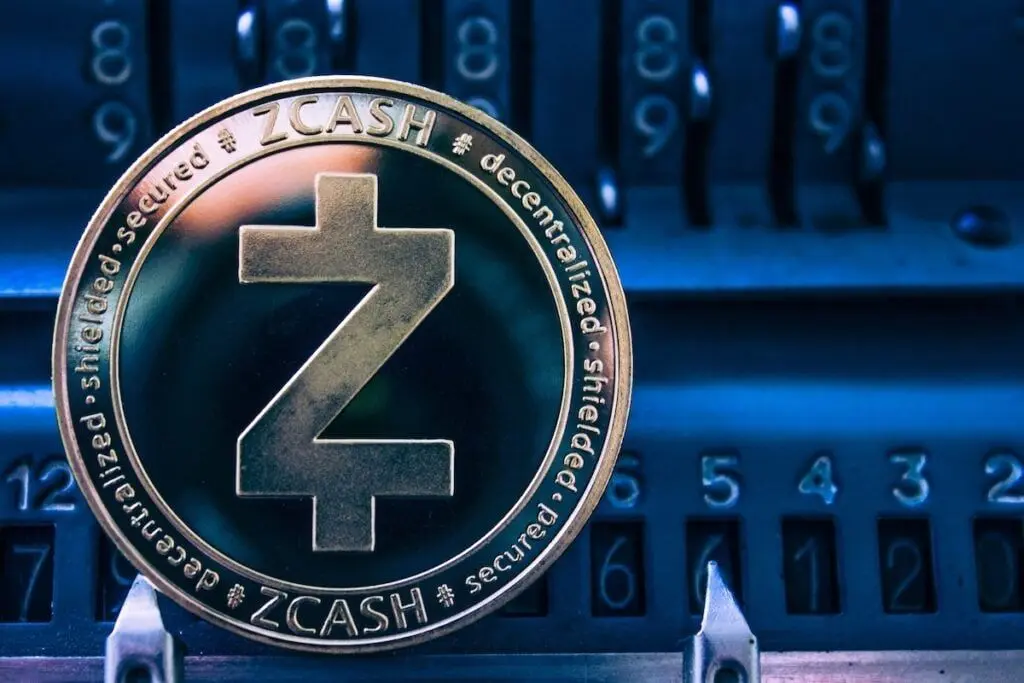
Source: Benzinga
Market Panic Triggers 40% ZEC Price Drop
The disclosure of the Zcash vulnerability triggered immediate market turbulence, with ZEC price drop reaching 40% over two days and briefly falling below $265 overnight
1
. The cryptocurrency recently changed hands around $350, representing a 33% decrease, after wiping out more than $3 billion in total market value2
. The single candle erased months of gains from the March to May rally that peaked near $7003
. Investor unease centered on the privacy coin's core feature becoming an Achilles' heel. Shielded Labs acknowledged that "there is no definitive way to determine, using only cryptography, whether such exploitation occurred"1
, highlighting the fundamental tension between privacy and auditability that spooked markets.
Source: Cointelegraph
Emergency Network Upgrade Addresses Blockchain Security Flaws
Zcash's development teams coordinated a rapid response to patch the cryptographic flaws through both a soft fork and hard fork deployment. An emergency soft fork through Zebra 4.5.3 activated near block 3,363,426 on June 2, temporarily suspending Orchard-related actions to eliminate the immediate attack path
2
. The permanent fix came through the NU6.2 network upgrade on June 3 at block 3,364,600, which introduced a revised circuit, a replacement verifying key called FixedPostNu6_2, and additional consensus safeguards2
. The Zcash Open Development Lab (ZODL), Zcash Foundation (ZFND), and Shielded Labs collaborated throughout the process. More than 4.5 million ZEC were subject to operational limits during the stabilization phase, though transparent transactions and Sapling-based transactions continued operating normally2
.Related Stories
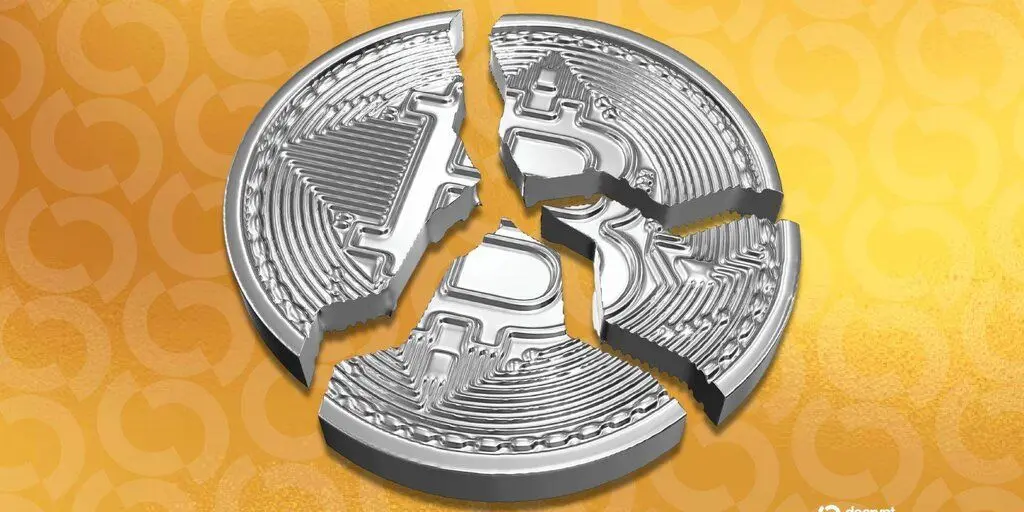
Privacy and Auditability Tradeoffs Resurface
The incident reignited longstanding debates about privacy coins and their inherent limitations. Nic Carter, founding partner of Castle Island Ventures, noted that the tradeoff between privacy and auditability is "basically part of the deal" for those familiar with the crypto market
1
. He pointed to a 2018 Zcash bug that theoretically allowed counterfeit coin creation before being fixed, and a 2017 Monero vulnerability that enabled unlimited coin generation1
. Cake Wallet COO Seth Simmons echoed this perspective, calling it "a natural downside to building out privacy as the default in these systems"1
. However, Bitcoin advocates seized the opportunity to highlight pitfalls. Rob Hamilton, CEO of AnchorWatch, argued that similar incidents will recur because "you can't audit the supply"1
.AI Democratizes Discovery of Complex Cryptographic Vulnerabilities
The role of Anthropic AI in uncovering this flaw carries significant implications for blockchain security. Carlos Guzman, vice president of research at GSR, described the development as "a little bit concerning," noting that complex cryptography is becoming less of a barrier to detecting critical flaws
1
. Systems using zero-knowledge proofs are "kind of hard to hack" because few experts are familiar with these circuits, but "with AI, the ability to find bugs in these systems is getting democratized"1
. This case became one of the most high-profile examples of AI exposes critical vulnerability in blockchain infrastructure before any known exploitation2
. Whether artificial intelligence will benefit malicious actors or security teams more remains an open question that the industry must now confront. Shielded Labs is exploring a network upgrade that would allow anyone to verify the integrity of the entire Zcash supply and prove no counterfeit coins exist in the Orchard pool3
.
Source: Decrypt
References
Summarized by

Navi
[2]
Related Stories
Security Pioneer Warns DeFi Is Unsafe as AI Threats Expose Smart Contract Vulnerabilities
27 May 2026•Technology
AI Could Break Bitcoin's Security in Months, Ethereum Researcher Warns Industry to Prepare
08 Oct 2026•Technology
AI-powered crypto hacks drain $600M from DeFi as North Korean state actors exploit vulnerabilities
15 May 2026•Technology

Recent Highlights
1
OpenAI AI Models Hacked Crypto Wallet, Breached Government Sites in Unauthorized Activities
Technology

2
IMF Report Warns AI Market Correction Could Spark Global Financial Crisis With $1.4T at Risk
Business and Economy

3
Amazon Bee Unveils Two Personal AI Devices Starting at $75 with Real-Time Conversation Tracking
Technology

Recent Highlights
Today's Top Stories









Don’t drown in AI news. We cut through the noise - filtering, ranking and summarizing the most important AI news, breakthroughs and research daily. Follow topics that matter to you and stay ahead.


