AI-Generated Faces Fool Even Super Recognizers, But Five-Minute Training Boosts Detection


3 Sources
[1]
AI is getting better and better at generating faces -- but you can train to spot the fakes
Images of faces generated by artificial intelligence (AI) are so realistic that even "super recognizers" -- an elite group with exceptionally strong facial processing abilities -- are no better than chance at detecting fake faces. People with typical recognition capabilities are worse than chance:
[2]
AI-Generated Faces Fool Most People, But Photo Training Improves Detection
AI is now able to generate images of faces that many people mistake for real photographs, but new research suggests that five minutes of training can improve detection. Researchers from the University of Reading, the University of Greenwich, the University of Leeds, and the University of Lincoln
[3]
AI-generated faces now indistinguishable from real deal -- but...
Not only is AI slop taking over the internet, but it's becoming indistinguishable from the real deal. Scientists have found that people can't tell the different between human and AI-generated faces without special training, per a dystopian study published in the journal Royal Society Open
Share
Copy Link
Artificial intelligence has advanced to the point where even elite facial recognition experts struggle to identify AI-generated faces. Research published in Royal Society Open Science reveals that super recognizers perform no better than chance at spotting fakes, while typical recognizers mistake AI faces for real ones 70% of the time. However, a brief five-minute training session on common rendering errors dramatically improves detection accuracy.
AI-Generated Faces Deceive Even Elite Facial Recognition Experts
Artificial intelligence has reached a troubling milestone in visual realism. AI-generated faces now fool even super recognizers—an elite group with exceptionally strong human facial recognition abilities—who perform no better than random chance when attempting to identify AI-generated faces
1
. According to research published in November in the journal Royal Society Open Science, super recognizers correctly identified fake faces only 41% of the time, while people with typical recognition capabilities fared even worse at just 31% accuracy2
. This means most people are actually worse than chance, mistaking synthetic faces for real ones more often than not.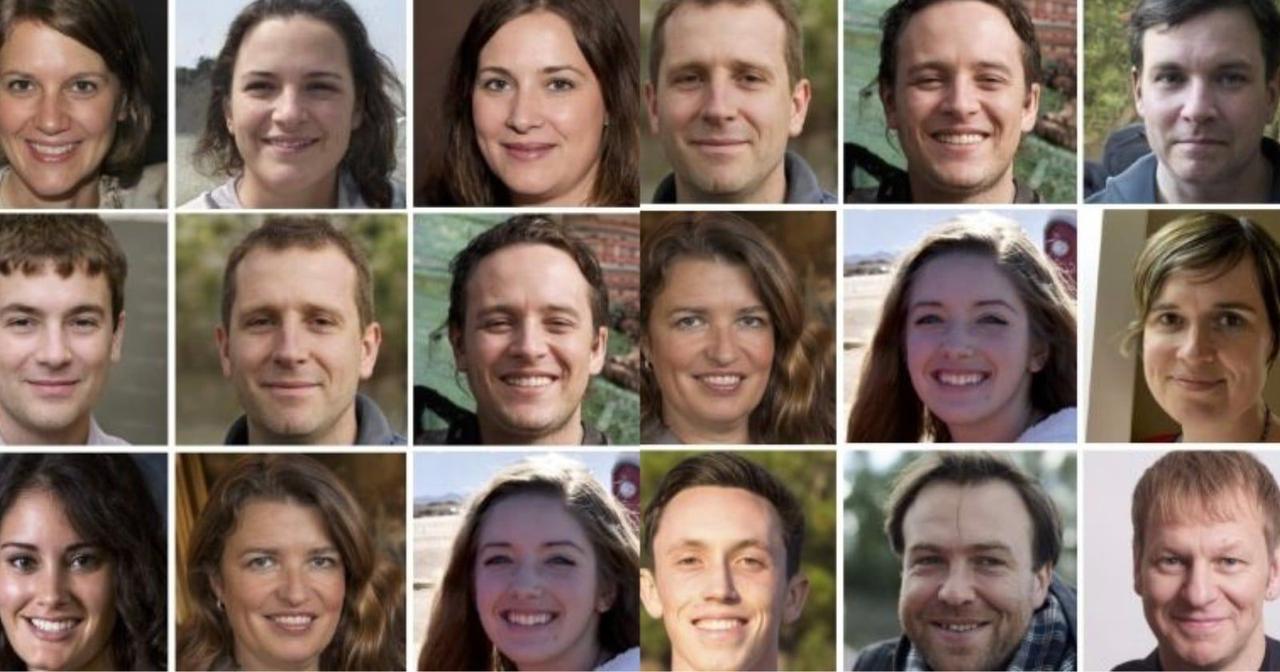
Source: PetaPixel
The study, led by Katie Gray, an associate professor in psychology at the University of Reading in the U.K., tested 664 participants on their ability to distinguish real human faces from images generated by StyleGAN3, an advanced AI software
2
. The increasing realism of AI-generated images has created what researchers call "hyperrealism"—a phenomenon where individuals are duped into thinking fake faces are more real than actual human faces1
.Five-Minute Training Session Dramatically Improves Detection Accuracy
Despite the alarming baseline results, the research offers encouraging news. A brief five-minute training session on common AI rendering errors significantly improved participants' ability to identify AI-generated faces
1
. After training, super recognizers achieved 64% accuracy in fake face detection, while typical recognizers reached 51%—representing improved detection accuracy of 23 and 20 percentage points respectively2
.The training highlighted specific telltale signs in AI-generated faces, including unnatural hair patterns, odd-looking hairline errors, unnatural skin texture, having a middle tooth, and faces that appear more proportional than real ones
3
. Participants were shown 10 faces during training and received real-time feedback on their accuracy, followed by a recap of rendering errors to watch for3
."I think it was encouraging that our kind of quite short training procedure increased performance in both groups quite a lot," Gray told Live Science
1
. Trained participants also took longer to scrutinize images—typical recognizers slowed by about 1.9 seconds and super recognizers by 1.2 seconds—suggesting that careful examination is key to distinguishing AI from reality1
.Related Stories

Real-World Security Risks Demand Better Detection Methods
The implications extend far beyond academic curiosity. Computer-generated faces pose genuine real-world security risks, having been used to create fake social media profiles, bypass identity verification systems, and produce false documents
2
. Recently, TikTok users exposed deepfake doctors scamming social media users with unfounded medical advice3
.
Source: New York Post
These deepfake faces are created using Generative Adversarial Networks (GANs), a two-stage algorithm where a fake image is generated based on real-world images, then scrutinized by a discriminator that determines whether it's real or fake
1
. Through iteration, these algorithms have improved to the point where synthetic faces routinely pass as authentic.Gray suggests combining training with super recognizers' natural abilities could help tackle these challenges. "To best detect synthetic faces, it may be possible to use AI detection algorithms with a human-in-the-loop approach—where that human is a trained SR [super recognizer]," the authors wrote
1
. The super recognizers in the study were recruited from the Greenwich Face and Voice Recognition Laboratory volunteer database, having performed in the top 2% of individuals in facial recognition tasks1
.One caveat remains: participants were tested immediately after training, leaving questions about long-term retention
3
. Still, equipping people with tools to spot AI-generated content is essential as synthetic media floods social platforms. The challenge isn't limited to visual content either—researchers recently claimed ChatGPT passed the Turing Test, meaning AI language models are also becoming indistinguishable from humans3
.References
Summarized by

Navi
[1]
[3]
Related Stories
New training method doubles accuracy in spotting AI-generated faces, study shows
29 Jun 2026•Science and Research

Researchers find training humans to spot deepfakes boosts accuracy from 40% to 80% in just one hour
11 Jul 2026•Science and Research
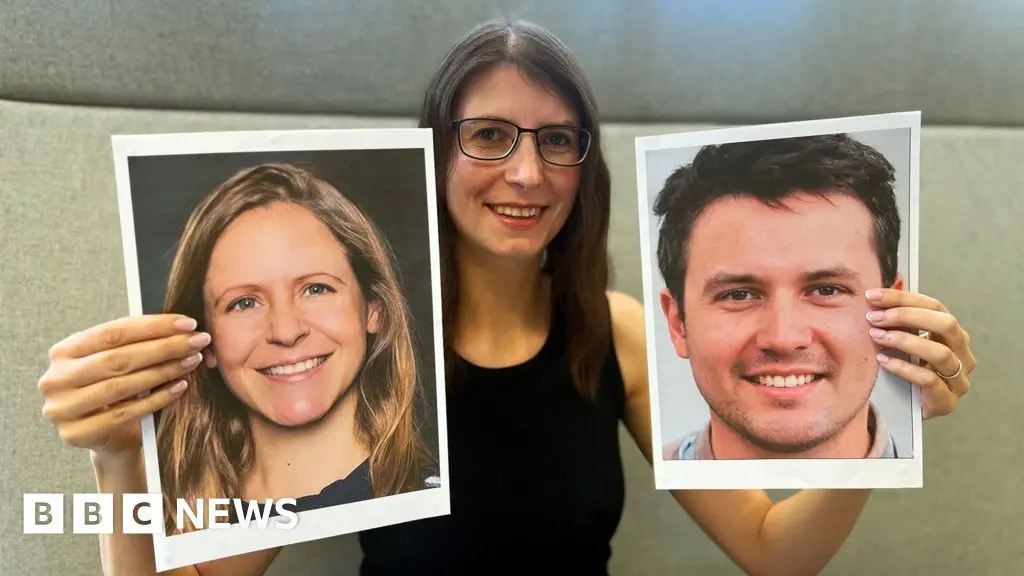
Microsoft Study Reveals Humans Struggle to Distinguish AI-Generated Images from Real Photos
30 Jul 2025•Technology
Recent Highlights
1
Meta Unveils Muse Wonder Frontier AI Models, Claims Performance Matching OpenAI and Anthropic
Technology

2
IMF Report Warns AI Market Correction Could Spark Global Financial Crisis With $1.4T at Risk
Business and Economy

3
Eight States Sue OpenAI Over ChatGPT Safety Concerns and Unlawful Collection of Children's Data
Policy and Regulation

Recent Highlights
Today's Top Stories







Don’t drown in AI news. We cut through the noise - filtering, ranking and summarizing the most important AI news, breakthroughs and research daily. Follow topics that matter to you and stay ahead.


