3 Sources
[1]
How to spot an AI-generated face, according to science
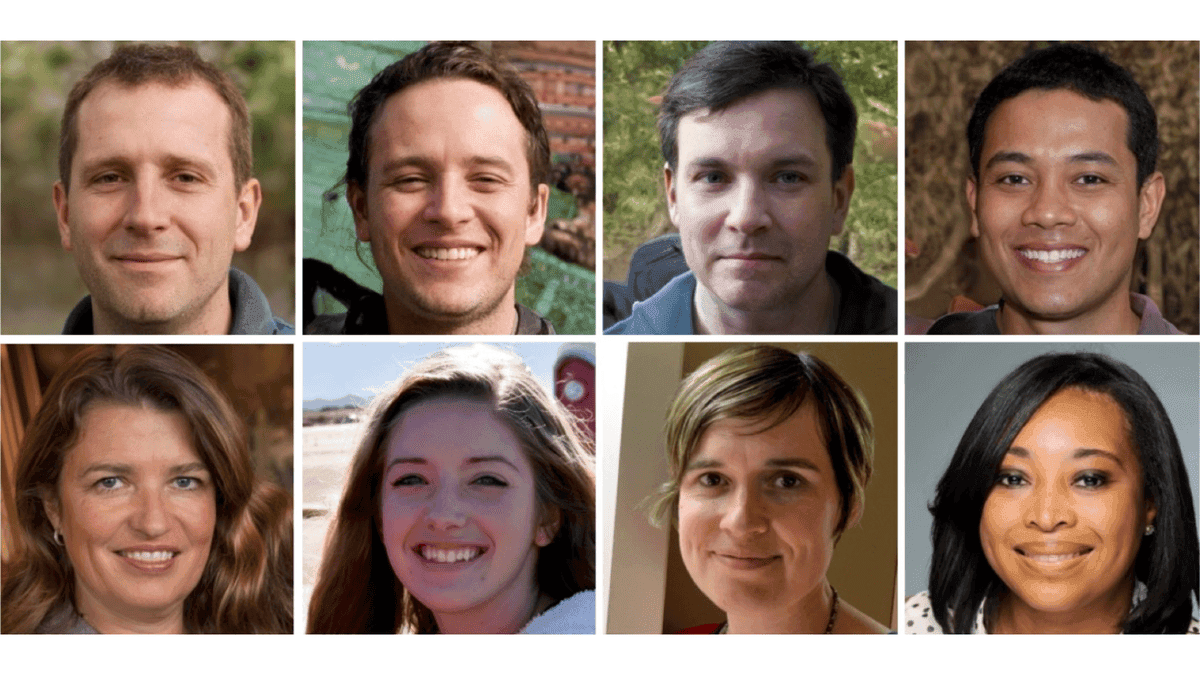
I agree my information will be processed in accordance with the Scientific American and Springer Nature Limited Privacy Policy. We leverage third party services to both verify and deliver email. By providing your email address, you also consent to having the email address shared with third parties for those purposes. It used to be easy to tell when a face was generated with artificial intelligence (AI). Whether it was a distinctive uncanny sheen, impossibly smooth skin, eyes that didn't quite make sense or a conspicuous third ear, older AI models' facsimiles of human faces were simple to spot and easy to dismiss. That's just not true anymore. Now, AI image generators can produce portraits so convincing that even careful observers struggle to distinguish fact from figment. That's why apps such as Zoom and Tinder allow their users to submit biometric identification, such as retinal scans, to help prove that a real person exists behind a profile picture. But a new study suggests you can train your brain to get better at spotting fakes. Past attempts to teach people to spot AI faces have focused on training viewers to look for visual glitches or statistical fingerprints left behind by a particular image generator, such as a wonky ear or an eye with two pupils. The problem is that those clues can disappear with a software update or by simply using a different prompt. "The AI is getting too good," said Amy Dawel, an associate professor at Australian National University and the lead author on the study, in a press release. "And fraudsters may avoid using pictures with obvious flaws anyway." The result is an endless technological arms race humanity seems destined to lose. On supporting science journalism If you're enjoying this article, consider supporting our award-winning journalism by subscribing. By purchasing a subscription you are helping to ensure the future of impactful stories about the discoveries and ideas shaping our world today. Instead, the researchers taught the participants how to recognize broader patterns in how AI systems generate images. "Our training directs people's attention to global qualities that differ between AI and human faces," Dawel said. Current AI image generators are themselves trained on datasets composed of millions of images. When prompted to generate a face, they don't copy specific faces, but instead compose a new face that is based in part on the mathematical patterns shared across the faces in that data set -- these allow the AI to construct a "typical" human face. The result is that AI-generated faces often drift toward statistical averages. They're not overly unrealistic, so much as a little too balanced, a little too generic, and a little too conventional. Individually, none of these traits are necessarily suspicious. But together, the whole is blander than the sum of its parts -- a subtle banality humans can often implicitly sense. "Even relatively short training sessions helped participants improve their accuracy," says Tanya George, a student researcher at Australian National University who trained the study's participants. "Research like this can help people navigate increasingly complex online environments." Compared with real faces, AI-generated faces tend to be more symmetrical, more proportional, and more attractive -- while also being less expressive, less distinctive and significantly less memorable. When the researchers trained participants to look for these six markers instead of fleeting artifacts like malformed ears or mismatched jewelry, their ability to spot the AI face almost doubled. In other words, AI gravitates to the center. Real people do not. Our faces are shaped by countless small deviations from the norm -- our subtle asymmetries, distinctive features, and expressions make us memorable. Those imperfections are not flaws. They are our signature.
[2]
People can learn to spot AI faces - but the clues are no longer obvious
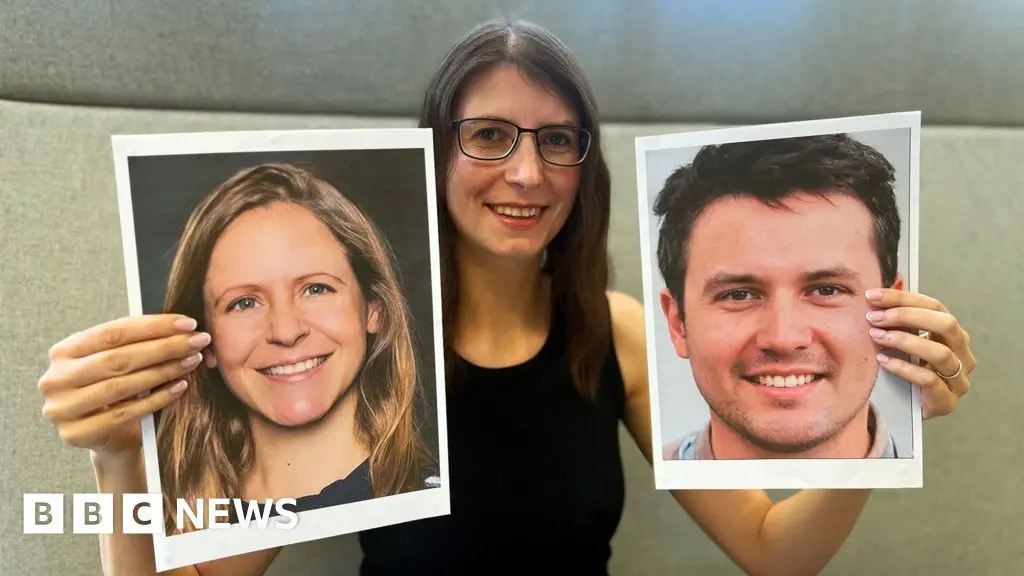
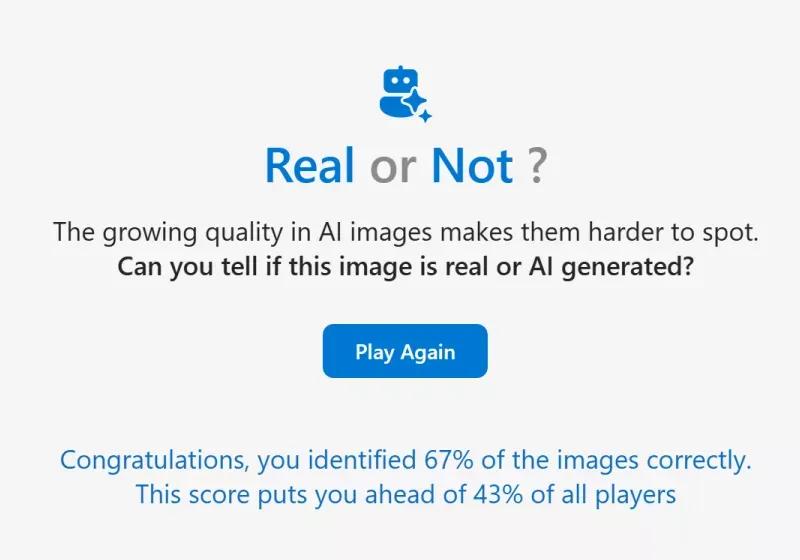
Deepfake faces generated via artificial intelligence (AI) have become so realistic that they routinely fool people, with some research suggesting there may be US$40 billion worth of deepfake-related fraud annually by 2027. Not only do most people struggle to spot AI faces, but as long ago as 2023 we discovered some AI faces are "hyperreal" - they look more real than actual human faces. We also found people are overconfident they can spot AI faces, with the most confident people making the most errors. Software-based deepfake detectors do exist, but they can't really explain the reasons for their detections - and they suffer from serious weaknesses. Some can be fooled simply by converting the image type, such as from png to jpg. But it turns out most people can learn to spot AI faces with an hour or so of practice. In new research published in PNAS, we show there's a straightforward way to improve detection of deepfakes, by training people to pick up the tell-tale clues through experience rather than direct instruction. The difference between human and AI faces In our early research, we discovered a key difference between AI and human faces. AI faces are hyperaverage. This means AI faces tend to be more symmetrical, proportional and attractive than human faces. But they're less expressive and memorable - less likely to stand out in a crowd. Intriguingly, people can accurately and reliably judge these qualities, but frequently misinterpret the clues. For example, people often think that faces that look a bit odd are AI-generated, when in fact human faces are more likely to have distinctive, unusual features. Although most people struggle to decide whether a face is AI or real, there is one group who are naturally good at picking up on these clues. So-called super-recognisers, who have exceptional human face perception, seem to be attuned to hyperaverageness, making them better at spotting AI faces. This made us wonder if, for those of us who aren't super-recognisers, AI detection abilities can be trained like other forms of perceptual expertise. Learning to spot AI In our first study, we invited 45 participants into our lab at the Australian National University, and asked them to rate around 100 faces on six qualities that can be used to tell AI faces apart from real ones: distinctiveness, memorability, proportionality, symmetry, attractiveness and expressiveness. We didn't tell participants how these clues might help them distinguish an AI face from a real one - they had to figure that part out for themselves. We told participants which faces were AI and which were human, but we didn't tell them that the AI faces were more symmetrical or less expressive, for example. They had to learn these clues through experience rather than direct instruction. Before and after training, we tested participants' ability to tell AI faces apart from human ones with new faces that were not used in the training. Training works In one test, participants were shown three faces - two human and one AI - and asked to select the face that was AI. On this task, average accuracy doubled from 40% before training to 80% afterwards. Impressively, all participants improved in their AI detection abilities and several achieved close to 100% accuracy. Participants also became faster and more confident in their correct judgements. To test the robustness of these findings, the Different Minds Lab at the University of Victoria in Canada conducted a replication of the AI detection training with Canadian participants. The Canadian lab obtained results that were as strong as those reported in the original Australian study. This shows the training is reliable and can work for different groups of people. The training was also just as effective when it was administered online rather than in person, which suggests it could be a cost-effective remote intervention in deepfake detection. A promising start But this doesn't mean we've solved the AI detection problem. Our training used faces produced with one particular generative AI model, called StyleGAN3. This is one of the most realistic face generators available, but the technology is advancing rapidly and there are many other models. Our method has potential to adapt to new models by updating the training images and using multimedia, but we don't yet have evidence that this will work. The clues we found for spotting AI faces may shift for other models. And other important questions remain: do the training benefits hold up over time? Is the training effective for people of all ages, including older adults or children? How to improve your chances of spotting AI faces If you want to get better at recognising AI-generated faces, looking at a lot of examples is a good start. You can see plenty at websites such as Which Face Is Real or This Person Does Not Exist. While you're looking, bear in mind the six key factors we identified: * how distinctive is the face? * how memorable is it? * how proportional is it? * how symmetrical is it? * how attractive is it? * how expressive is it? This exercise may improve your deepfake radar. But the more important takeaway is that AI deepfakes are improving very quickly - they can easily fool us, even if we think we can spot them. The clues are no longer obvious: they are not based on specific details but on facial impressions which people form rapidly and naturally, but which can be misleading. At the same time, there is hope. We have shown it is possible to train people to detect AI faces. By combining our human-centred approach with algorithmic detection, we may yet keep up in this cat-and-mouse game of advancing technology. Interested in undertaking the AI face detection training? You can register here.
[3]
Scientists Think This Is the Best Way to Detect AI Slop Imagery
Scientists think they have discovered a much better way to determine if a photo you've seen was AI-generated, and no, it's not via AI detection software. In a study published today in the Proceedings of the National Academy of Sciences (PNAS), researchers from Australian National University claim they used a special method to successfully train a group of participants to recognize AI-generated faces, in some cases with "near-perfect accuracy." AI-generated deepfakes have surged in both popularity and technical capabilities over the past year. From 2023 to 2025, the volume of deepfakes online exploded, with roughly 900% annual growth as AI-driven image-generators improved. Once laughably easy to identify, AI slop has become harder to differentiate from the real thing. Previous studies found that people's overall accuracy in identifying AI-generated content was practically a coin toss, with the odds even worse when distinguishing AI-generated faces from actual human faces. The implications of this have been terrifying for some, especially those who have been victims of AI-related fraud, disinformation, or non-consensual sexual deepfakes. Previous methods for detecting AI-generated deepfakes have mostly relied on spotting visual errors: warped backgrounds, anatomical glitches, or telltale mistakes like missing fingers. But as AI image generators have become more precise, those cues have become far less reliable. Commercial AI-detection tools are not a perfect substitute, either. They can produce false positives, and because many of them are AI-driven themselves, the reasoning behind their conclusions is often hidden from the user, making it harder to know when the result should be trusted. "Lacking an AI answer to the deepfake problem, we urgently need to improve human AI-detection capabilities," the researchers from the Emotions and Faces Lab at the Australian National University write in the PNAS paper. The way to do that, according to the researchers, is to shift focus away from details to the broader picture, to something they call global impressions. Specifically, the researchers claim it is best to focus on these six key characteristics: symmetry, proportionality, attractiveness, expressiveness, distinctiveness, and memorability. Generative AI doesn't create images out of thin air. These tools get trained on massive troves of data that feed the output they create. When AI image generators are creating a picture of a face, they rely on "the mathematical average of the tens of thousands of faces on which they are trained," the study says. So, when these image generators create a human face, this reliance on the mathematical average makes the face seem "more typical in appearance than real human faces." According to the study, people appear to have an intuitive, unconscious sensitivity to the broad facial differences between real and AI-generated images, even if they do not reliably translate that awareness into accurate deepfake detection. "People automatically detect these differences, rating AI faces as more symmetrical, well-proportioned, and attractive than human faces, but less distinctive, memorable, and expressive," the researchers write. This sensitivity can be used to train humans to better identify AI deepfakes, the researchers claim. But the key isn't just to tell people to look out for symmetry or memorability; it's to train them to figure this out on their own, which is what the researchers sought to do in the study. In the first phase of the study, the researchers showed a series of faces (some belonging to real humans and others AI-generated) to 45 participants and asked them to determine whether it was AI-generated. Then, instead of telling participants to look out for these six qualities, the researchers trained them via six training blocks, each consisting of 96 tasks. For each task, participants were shown images of human faces and told whether each one was real or AI-generated. They were then asked to rate each face based on a set of broad visual qualities. For example, participants judged how attractive or symmetrical they thought each face appeared. On average, participants ranked AI faces higher on symmetry, proportionality, and attractiveness, while human faces were deemed more expressive, distinct, and memorable. After training was finished, the researchers had the participants go back to determining whether each face was AI-generated. This time around, the participants' average accuracy had "nearly doubled," with the highest-performing candidates even achieving "near-perfect accuracy," the study claims. "We speculate that, by directing attention to global impressions, our training enabled participants to become attuned to how these holistic qualities distinguish AI from human faces," the researchers write. The researchers say the training method is quick and easy enough to complete online that it can be successfully deployed to more people, though it is likely unrealistic to expect it to be scaled universally. The results of the study are also limited to AI image generators, so the jury's still out on whether the training could successfully translate to the detection of audio or video deepfakes.
Share
Copy Link
Researchers at Australian National University have developed a training method that nearly doubles people's ability to spot AI-generated faces, achieving up to 80% accuracy. The approach focuses on recognizing broad patterns like symmetry and memorability rather than hunting for visual glitches, offering a human-centric solution to deepfakes as fraud projections reach $40 billion by 2027.
Researchers at Australian National University have developed a training method that dramatically improves people's ability to identify AI-generated faces, with accuracy rates nearly doubling from 40% to 80% after just an hour of practice
1
. The study, published in PNAS, represents a shift in deepfake detection strategy at a time when AI face generators have become so convincing that distinguishing AI faces from real ones has become a coin toss for most observers2
. With projections suggesting $40 billion worth of deepfake-related fraud annually by 2027, the stakes for developing effective detection methods have never been higher2
.
Source: The Conversation
Previous attempts at spotting AI-generated faces focused on identifying visual glitches like wonky ears, mismatched jewelry, or eyes with two pupils. But these telltale signs disappear with software updates or different prompts, creating an endless technological arms race. "The AI is getting too good," said Amy Dawel, associate professor at Australian National University and lead author of the study
1
. Software-based deepfake detection tools also suffer from serious weaknesses, with some fooled simply by converting image types from png to jpg2
. The volume of deepfakes online has exploded with roughly 900% annual growth from 2023 to 2025 as AI-driven image generators improved3
.Current AI image generators like StyleGAN3 are trained on datasets composed of millions of images. When prompted to generate a face, they rely on "the mathematical average of the tens of thousands of faces on which they are trained," creating what researchers call hyperaverage faces
3
. These AI-generated faces tend to be more symmetrical, proportional, and attractive than human faces, while being less expressive, distinctive, and significantly less memorable1
. The result is faces that drift toward statistical averages—not overly unrealistic, but a little too balanced, too generic, and too conventional. "Our training directs people's attention to global qualities that differ between AI and human faces," Dawel explained1
.
Source: Scientific American
The Australian National University team invited 45 participants to rate around 100 faces on six qualities: distinctiveness, memorability, proportionality, symmetry, attractiveness, and expressiveness
2
. Critically, researchers didn't tell participants how these clues might help them—they had to figure out the patterns through experience rather than direct instruction. Participants were told which faces were AI and which were human, but had to learn themselves that AI faces were more symmetrical or less expressive2
. "Even relatively short training sessions helped participants improve their accuracy," says Tanya George, a student researcher who trained the study's participants1
.Related Stories
The Different Minds Lab at the University of Victoria in Canada replicated the training with Canadian participants, obtaining results as strong as the original Australian study
2
. All participants improved their AI face detection skills, with several achieving near-perfect accuracy3
. The training proved equally effective when administered online rather than in person, suggesting it could serve as a cost-effective remote intervention for identifying AI deepfakes2
. This human-centric solution to deepfakes offers promise as apps like Zoom and Tinder increasingly require biometric identification to verify real people behind profile pictures1
.The training used faces produced with StyleGAN3, one of the most realistic face generators available, but the technology advances rapidly and many other models exist
2
. Important questions remain: do the training benefits hold up over time, and is the training effective for people of all ages, including older adults or children? The clues for distinguishing AI faces from real ones may shift for other models. Still, the research suggests people have an intuitive, unconscious sensitivity to broad facial differences between real and AI-generated images, even if they don't reliably translate that awareness into accurate detection without training3
. Real human faces are shaped by countless small deviations from the norm—subtle asymmetries, distinctive features, and expressions that make us memorable, serving as our signature against AI's gravitational pull toward the center1
.Summarized by
Navi
[1]
[2]
27 Dec 2025•Science and Research

30 Jul 2025•Technology
19 Feb 2025•Technology

1
Technology

2
Technology

3
Science and Research