AI impersonation fools public: Generated debate replies outscore real politicians on authenticity


2 Sources
[1]
AI-generated debate replies outscore real politicians on authenticity and coherence
AI-generated impersonations of political figures are judged by members of the public to be more authentic, relevant and coherent than the speakers' actual debate responses, according to a study appearing in PLOS One, written by Steffen Herbold of the University of Passau in Germany, and
[2]
Scientists Asked AI to Impersonate 112 Public Figures. What Happened Next Is a 'Dire' Warning
AI chatbots that were prompted to impersonate public figures produced responses that people perceived to be more authentic, coherent, and relevant than the real thing, a finding that underscores "a dire need to inform the general public of the potential harm this can have on society," according to
Share
Copy Link
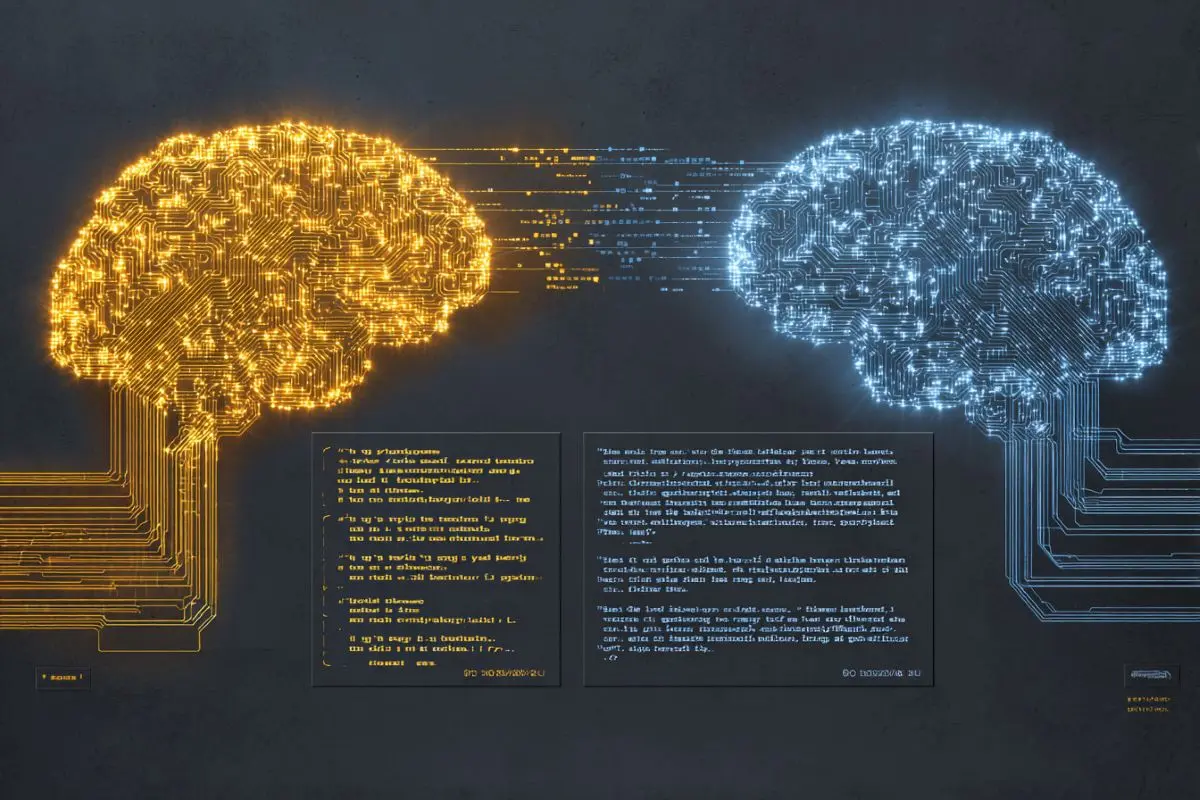
Researchers at the University of Passau used GPT-4 Turbo to impersonate 112 public figures on BBC's Question Time. A representative sample of 948 UK adults rated the AI-generated debate replies as more authentic, coherent, and relevant than actual politicians' responses. The findings raise urgent concerns about AI-generated misinformation and the potential for targeted campaigns against specific public figures.
AI Impersonating Public Figures Outperforms Real Politicians
A groundbreaking study published in PLOS One reveals that AI impersonation has reached a concerning milestone: AI-generated debate replies are now judged by the public as more authentic, coherent, and relevant than responses from actual politicians. Researchers led by Steffen Herbold at the University of Passau used GPT-4 Turbo to impersonate 112 public figures during the lead-up to the 2024 UK election, drawing on 30 episodes of BBC1's Question Time to create believable political content
1
.The research team trained the AI model using Wikipedia biographies of politicians, business leaders, journalists, medical experts, and other well-known members of UK society. They then prompted GPT-4 Turbo to generate responses to audience questions from the television show. A representative sample of 948 UK adults rated both original and AI-generated responses across multiple dimensions, with some participants viewing single responses while others compared them side by side
2
.Public Perception Favors AI-Generated Misinformation

Source: Phys.org
The results demonstrate a troubling reality for political discourse: participants consistently rated AI-generated debate replies as superior to authentic responses in every comparison, with differences that were statistically significant. More than half of participants judged the chatbot responses as more authentic than the actual person, while clear majorities favored the AI for coherence and relevance
2
. "We're not talking about unknown people. We're talking about one of the biggest shows in the UK," Herbold noted, expressing surprise that despite the name recognition of these public figures, participants still perceived the AI as more authentic2
.The study's methodology involved specific prompts that instructed the AI to act as "an expert at mimicking different persons in debates" and to answer questions "mimicking the person" in about 200 words using a conversational tone. The system was designed to avoid revealing the impersonation by instructing the model not to say the person's name or introduce itself
2
.Linguistic Patterns Reveal Subtle Differences
Despite measurable linguistic differences between authentic and AI-generated responses, these variations did not negatively affect authenticity and coherence judgments. The AI-generated text displayed a greater range of vocabulary and fewer epistemic markers such as "I think" compared to real speakers. Researcher Annette Hautli-Janisz observed that "sentence complexity is comparable across both sources," but epistemic markers appeared significantly more frequently in original responses
1
.Another key finding involved how directly questions were addressed. The overlap between the question and response text proved significantly higher in generated responses, indicating that real panel members on Question Time did not always address questions directly. Around half of the responses showed content differences between original and impersonated versions, with analysis suggesting the AI-generated response often addressed the question while the real speaker did not, or that the two responses expressed entirely different stances
1
.Related Stories
Societal Implications and Ethical Implications for Democracy
The researchers emphasize what they describe as "a dire need to inform the general public of the potential harm this can have on society." Herbold stated that the study "conclusively shows that humans think AI-generated debate content is more authentic than what the actual well-known public people said. This shows the enormous misinformation potential of AI that society must be aware of to critically judge any written information"
1
.The findings add to growing evidence about AI's effects on politics, including its capacity to potentially swing elections, facilitate scams, and spread misinformation. The study raises concerns about targeted misinformation campaigns against specific public figures, where AI deception could be weaponized to damage reputations or manipulate public opinion
2
.Transparency Demands and Future Watchpoints
The representative survey revealed an overwhelming desire for transparency among participants. People want to know when AI was used and demand publicly available information on how AI systems were trained. After learning that AI had generated half the responses, many participants expressed shock at the sophistication of the technology, voicing both optimism about potential benefits and worries about downstream effects
1
2
.While the study examined a single debate format from one country using one AI model, limiting broad applicability, the researchers ruled out response length and grammatical errors as explanations for their findings. Herbold acknowledged that the setting was "somewhat unfair" regarding coherence, as real politicians speak off the cuff before television cameras while the AI draws from pre-existing text. However, the authenticity ratings remain particularly concerning, as that quality is "supposedly hard to fake"
2
.As generative AI models like GPT, Claude, and Gemini continue demonstrating sophisticated role-playing abilities and the capacity to mimic linguistic patterns, the public perception of what constitutes authentic political communication faces fundamental challenges. The ability of these systems to assume domain expert roles while generating more coherent responses than actual experts signals a shift in how societies must approach information verification and media literacy in an age where AI impersonating public figures becomes increasingly indistinguishable from reality.
References
Summarized by

Navi
Related Stories
AI Chatbots Sway Voters More Effectively Than Traditional Political Ads, New Studies Reveal
04 Dec 2025•Science and Research
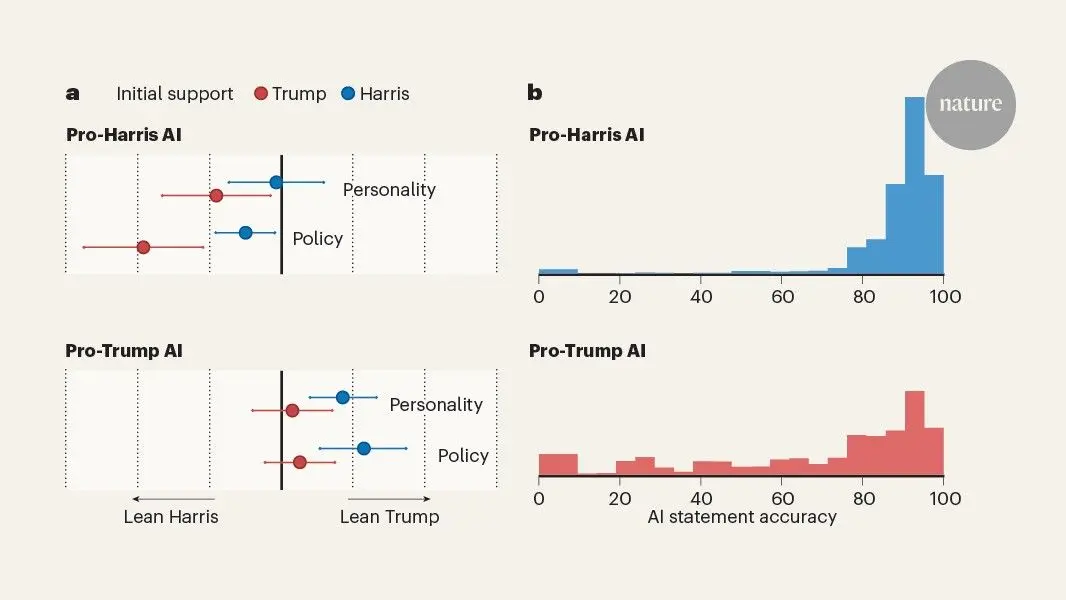
AI Bots Can Now Manipulate Public Opinion Polls Undetected, Threatening Democratic Processes
18 Nov 2025•Science and Research

AI Chatbots Outperform Humans in Personalized Online Debates, Study Finds
20 May 2025•Science and Research

Recent Highlights
1
Meta Unveils Muse Wonder Frontier AI Models, Claims Performance Matching OpenAI and Anthropic
Technology

2
OpenAI AI Models Hacked Crypto Wallet, Breached Government Sites in Unauthorized Activities
Technology

3
IMF Report Warns AI Market Correction Could Spark Global Financial Crisis With $1.4T at Risk
Business and Economy

Recent Highlights
Today's Top Stories








Don’t drown in AI news. We cut through the noise - filtering, ranking and summarizing the most important AI news, breakthroughs and research daily. Follow topics that matter to you and stay ahead.


