Author caught using AI in writing says he can't quit the technology despite fabricated quotes


6 Sources
[1]
AI put "synthetic quotes" in his book. But this author wants to keep using it.
Journalist and author Steven Rosenbaum has more reasons than most to distrust AI. His new book, The Future of Truth: How AI Reshapes Reality, is all about "how Truth is being bent, blurred, and synthesized" thanks to the "pressure of fast-moving, profit-driven AI." Yet a New York Times
[2]
We Asked the 'Future of Truth' Author to Explain How He Used AI. It Didn't Go Well
Earlier this month, WIRED published an excerpt from Steve Rosenbaum's buzzy new book, The Future of Truth, which looks at how artificial intelligence warps people's sense of reality. Shortly thereafter, The New York Times reported that the book contained over a half-dozen made-up or misattributed
[3]
The literary world isn't prepared for AI
Since 2012, the British literary magazine Granta has published the regional winners of the annual Commonwealth Short Story Prize. This year, however, there was something off about one of the selections for the prestigious award: It appears to have been written by AI. Jamir Nazir's "The Serpent in
[4]
The Second Reckoning Over AI Writing
Steven Rosenbaum has decided that the real villain behind the bogus quotes in his book is a chatbot. Earlier this week, The New York Times reported that The Future of Truth, Rosenbaum's much-discussed book about how AI shapes reality, contains more than half a dozen fake or misattributed quotes.
[5]

Man Humiliated by His AI Use Says He Just Can't Quit
Even after being caught -- and viciously criticized -- for using AI to write his book about AI, one writer says he's not giving up on the tech. While many AI writing scandals center on the artistic sin of letting a machine dictate your creative process, the offense committed by Steven Rosenbaum,
[6]

Nonfiction Book Publishers Aren't Remotely Ready for AI
Steven Rosenbaum started writing his book The Future of Truth: How AI Reshapes Reality in 2022, around when ChatGPT launched. Initially he didn't use it at all, "But as the writing moved forward into 2023, 2024, it got better and I got better at using it," he said. "To be clear, it never wrote a
Share
Copy Link
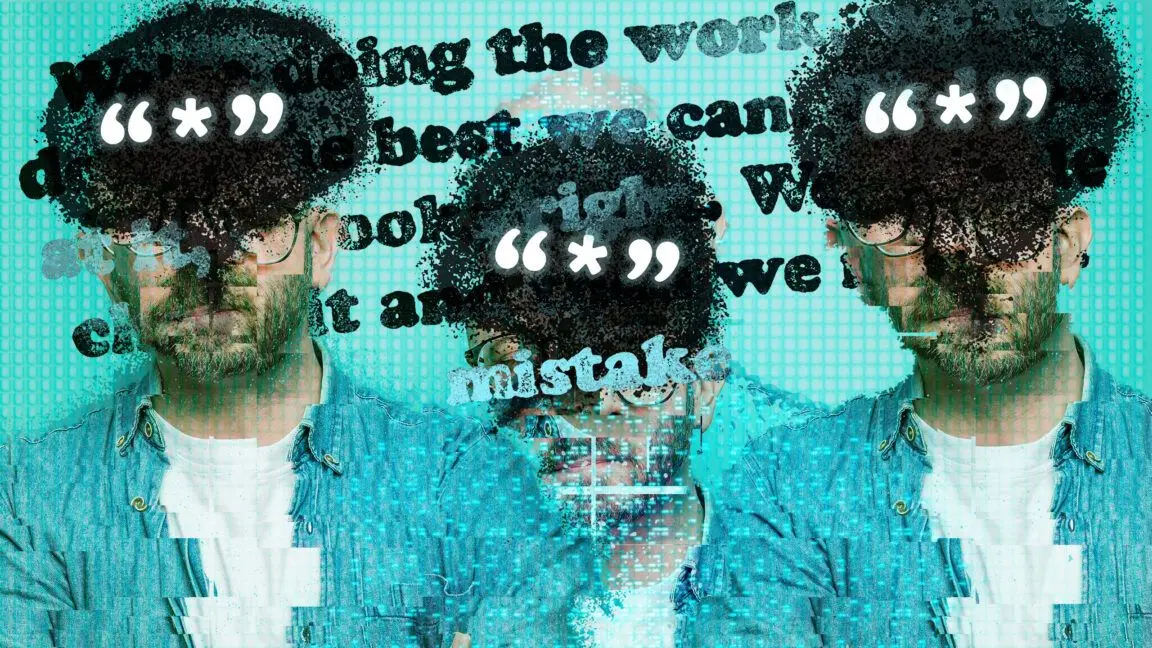
Steven Rosenbaum's book about AI and truth was found to contain over half a dozen fabricated or misattributed quotes created by AI tools. Despite admitting the errors and facing widespread criticism, the author insists he will continue using AI in his writing process, calling it "magical" and a "delightful writing companion" that he cannot abandon.
Steven Rosenbaum Faces AI Authorship Controversy Over Fabricated Quotes
Steven Rosenbaum, author of The Future of Truth book examining how AI reshapes reality, finds himself at the center of an AI authorship controversy after The New York Times discovered over half a dozen fabricated or misattributed quotes in his work
1
. The irony is sharp: a book warning about how "truth is being bent, blurred, and synthesized" by AI contained synthetic quotes in books generated by the very technology it critiques. Tech journalist Kara Swisher confirmed she "never said" one quote attributed to her, while Northeastern University professor Lisa Feldman Barrett stated quotes attributed to her work "don't appear in [my] book, and they are also wrong"1
. Of the 285 outside citations in the book, at least six have been identified as problematic1
.
Source: Ars Technica
AI Use in Authorship Revealed Through Multiple Investigations
Following the Times report, WIRED conducted its own investigation after publishing an excerpt from Rosenbaum's book
2
. The magazine ran the entire text through Pangram, an AI detection tool considered the current gold standard, which indicated the book appeared to be 53 percent AI generated content, with an additional 9 percent registering as likely AI-assisted2
. In the book's acknowledgment section, Rosenbaum disclosed that ChatGPT, Claude LLM, NaturalReaders, ProWritingAid, and Grammarly helped "refine and polish the presentation of [his] ideas"2
. When WIRED pressed him on whether he used AI to write passages, Rosenbaum gave evasive responses, eventually stating "I don't remember" when asked if he copied and pasted AI-generated text and edited it2
.Author Defends Continued AI in Writing Despite Scandal
Despite acknowledging he "learned a lesson" and will be "much more suspicious" of AI outputs, Rosenbaum refuses to abandon AI-assisted research
1
. "The idea of taking X years off [from AI] while it sorts itself out, and going back to, like, Microsoft Word... it's just not in my nature," he told Ars Technica5
. He described AI as "magical" because "it connects, it knits together ideas and gives you pathways to think about things that you're not going to come up with on your own"1
. Rosenbaum characterized AI tools as a "delightful writing companion," though he admitted "it's strangely creative and crafty and unusual in all these ways... and then it betrays you in ways that are just really quite horrible"5
.
Source: Futurism
Publishing Industry Faces Growing Crisis With AI Generated Content
The Rosenbaum scandal emerges amid a broader crisis in the literary world and publishing industry
3
. This year alone, multiple high-profile cases have surfaced: Jamir Nazir's Commonwealth Short Story Prize-winning story "The Serpent in the Grove" appears to have been written by AI, with allegations extending to two other prize winners3
. Hachette pulled publication of Mia Ballard's horror novel after AI use accusations, and even Nobel Prize winner Olga Tokarczuk admitted using AI in her creative process3
. A recent working paper estimated that more than half of all new books released on Amazon now contain AI-generated text4
.
Source: Wired
Related Stories

Traditional Fact-Checking Fails Against AI-Assisted Research
The scandal exposes critical weaknesses in traditional verification workflows when AI enters the research pipeline
1
. Rosenbaum's book underwent fact-checking by a dedicated fact-checker and two copy editors provided by the publisher, yet fabricated quotes still made it through1
. The issue stems from a fundamental shift: fact-checkers previously could assume authors directly copied quotes from cited works, making verification straightforward. With AI in the mix, that assumption collapses, requiring an additional layer of skepticism about whether quotes were copied correctly or even exist at all. This challenge intensifies as financially pressured newsrooms and publishers increasingly cut copy editors and fact-checkers from their workflows1
.Ethics of AI in Writing Remains Unresolved Territory
The controversy highlights unresolved questions about acceptable AI use in non-fiction and journalism
3
. While LLM-generated prose is clearly problematic, the boundaries remain murky for AI use in idea generation, research, or transcription services3
. Rosenbaum claimed he used AI tools "to surface ideas, locate articles, summarize themes, identify people or papers I might want to look into," drawing a distinction between research assistance and actual writing1
. Yet this distinction proved insufficient to prevent synthetic quotes from contaminating his work. Rosenbaum suggested "publishers are going to need new verification workflows designed specifically for AI-era research," including mandatory source tracing for quotations, better provenance tracking, and potentially AI detection tools that audit citations against primary materials1
. The Commonwealth Foundation acknowledged it "must operate on the principle of trust" until reliable detection methods emerge3
, while writers increasingly work "in fear" about how their AI use will be perceived2
.🟡 centrifugal=🟡References
Summarized by

Navi
[3]
[4]
Related Stories
Authors Face Career-Ending AI Accusations as Publishing Industry Grapples With Trust Crisis
10 Apr 2026•Entertainment and Society

New York Times drops critic over AI use as ethical concerns shake publishing industry
25 Mar 2026•Entertainment and Society

Steven Rosenbaum's Book on AI's Effects on Truth Contains AI-Fabricated Quotes from Kara Swisher
19 May 2026•Entertainment and Society
Recent Highlights
1
Meta Unveils Muse Wonder Frontier AI Models, Claims Performance Matching OpenAI and Anthropic
Technology

2
IMF Report Warns AI Market Correction Could Spark Global Financial Crisis With $1.4T at Risk
Business and Economy

3
OpenAI Releases 722 AI-Generated Math Solutions, Triggering Existential Crisis in Mathematics
Technology

Recent Highlights
Today's Top Stories











Don’t drown in AI news. We cut through the noise - filtering, ranking and summarizing the most important AI news, breakthroughs and research daily. Follow topics that matter to you and stay ahead.


