AI Model Predicts Cancer Survival and Biological Age from a Single Facial Photograph


14 Sources
[1]
Can AI predict whether you'll die from cancer from just an image of your face?
Researchers tasked an algorithm with predicting cancer patients' risk of dying. For some people, it was shockingly accurate A new artificial intelligence model can predict a cancer patient's risk of dying from a single photograph of their face, according to new research. While not perfectly
[2]
A simple facial photograph may hold clues to cancer survival
By Dr. Liji Thomas, MDReviewed by Lauren HardakerOct 22 2026 Could your face reveal health clues doctors cannot easily see? A new AI model trained on millions of facial photographs links apparent age and subtle facial features to survival outcomes in cancer patients, opening the door to a
[3]
AI facial health recognition tools help physicians assess age and survival risk to guide personalized treatment
Researchers are using AI tools to analyze simple facial photographs to determine key indicators of a person's health. Mass General Brigham researchers built FAHR-Face (Foundation Artificial Intelligence for Health Recognition), a large AI foundation model trained on over 40 million face
[4]
Can one photo of your face reveal how ill you are?
An AI tool may be able to help doctors judge how ill a patient is using a single photograph of their face, say US researchers. Trained on millions of healthy faces, and 35,000 photos of cancer patients, the tool can make estimates on survival by looking closely at features near the eyes, the
[5]

Single photo predicts your chances of surviving cancer treatment
Researchers at Mass General Brigham Cancer Institute have developed an AI tool that determines your biological age and your chances of surviving challenging cancer treatment - all from a single photograph of your face. Currently, clinicians intuitively assess how well a patient might fare when
[6]

How a photo of a patient's face could predict whether they'll survive cancer
Researchers say they've developed an AI model trained on more than 40 million photographs that can help predict mortality risk. Researchers say they've developed a new AI foundation model trained on more than 40 million facial photographs that can help predict mortality risk in patients with
[7]
Advanced AI tool estimates biological age and predicts cancer survival from face photos
Mass General BrighamOct 20 2026Reviewed Researchers are using AI tools to analyze simple facial photographs to determine key indicators of a person's health. Mass General Brigham researchers built FAHR-Face (Foundation Artificial Intelligence for Health Recognition), a large AI foundation model
[8]

Can AI really predict cancer survival better than a doctor? I have my doubts | Devi Sridhar
Take a selfie to see how healthy you are: the idea is enticing and this new research is promising. But so many factors have been ignored The idea that a single selfie could predict how long someone with cancer may live sounds like an incredible breakthrough. AI is getting better at spotting
[9]

A Single Photo Could Help AI Assess How Sick a Patient Is
Researchers have developed AI tools that use photographs of a person's face to estimate biological age and predict survival outcomes among patients with cancer. The findings, published October 19 in The Lancet Digital Health by researchers at Mass General Brigham in Boston, suggest that facial
[10]

Researchers developed an AI tool that predicts cancer survival odds by analyzing patients' face
A selfie isn't a crystal ball, but AI researchers say facial photos could offer clues about cancer survival. An ordinary face photo may contain health clues that aren't immediately obvious. Researchers at Mass General Brigham have developed an AI system that analyzes facial photographs and
[11]
New AI tool can predict cancer survival by a single patient selfie, study suggests
System can estimate a person's biological age and predict chances of cancer survival from a single photograph Doctors have developed an artificial intelligence tool that can predict a cancer patient's chances of survival from a single photograph of their face. The AI system was custom-built by
[12]

A Selfie Can Reveal Your Biological Age. Now Researchers Say It Can Predict Cancer Survival
New research reveals that doctors could soon leverage AI to learn more about a patient's health -- just from a selfie. Your face says a lot more about your health than you may think. Now, there's an AI tool capable of analyzing a selfie to unlock health secrets -- including the likelihood a cancer
[13]

Researchers develop AI photo tool that estimates age, cancer survival
Could a selfie predict your chances of cancer survival? Researchers are developing artificial intelligence tools to do just that. In a study, published in the Lancet Digital Health on Oct. 19, Mass General Brigham researchers shared their findings on FAHR-Face (Foundation Artificial Intelligence
[14]

AI trained on 40 million face images can estimate biological age and cancer survival odds from just one photo
Researchers at Mass General Brigham in Boston have built AI models that estimate a cancer patient's biological age and risk of death from a single photo of their face. Of 122 patients the survival model rated highest risk, 52.5% died within 90 days of the assessment, compared with about 2% of the
Share
Copy Link
Researchers at Mass General Brigham developed FAHR-Face, an AI model trained on over 40 million images that predicts cancer survival outcomes and biological age from facial photographs. In the highest-risk group, 52% of patients died within 90 days, while only 2.1% in the lowest-risk category faced similar outcomes.
AI Model Analyzes Facial Features to Assess Cancer Patient Health
Researchers at Mass General Brigham Cancer Institute have developed FAHR-Face (Foundation Artificial Intelligence for Health Recognition), an AI model trained on over 40 million facial photographs that can predict cancer survival outcomes and estimate biological age from a single image
1
3
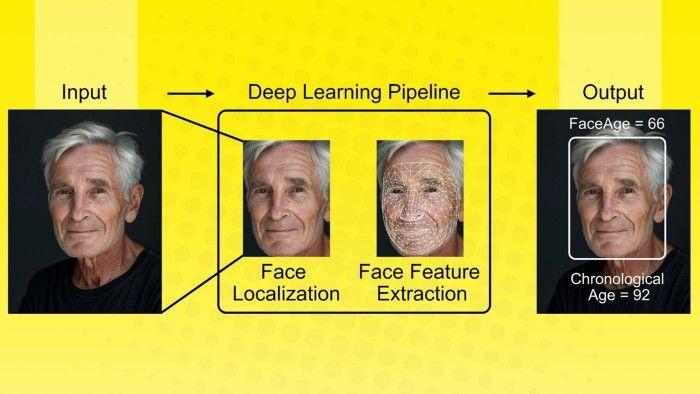
. The foundation model uses self-supervised learning through masked autoencoders to learn facial patterns before being fine-tuned into two distinct tools: FAHR-FaceAge for biological age estimation and FAHR-FaceSurvival for direct survival risk prediction2
5
. Published in The Lancet Digital Health, this research represents the first demonstration that an AI model can directly predict cancer survival from a simple photograph3
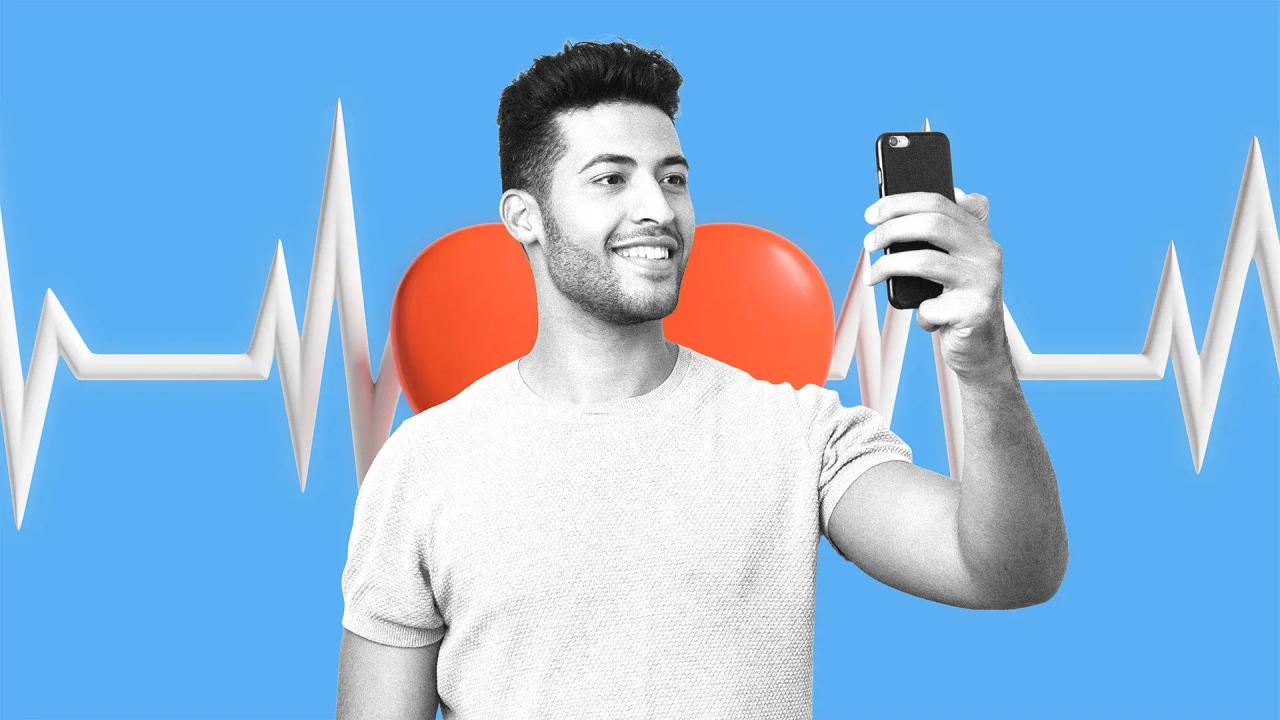
.
Source: Inc.
Distinct Facial Regions Reveal Different Health Insights
The two AI facial health recognition tools analyze different facial areas to extract complementary health information. FAHR-FaceAge focuses on nasolabial folds, the forehead area just above the orbits, and the temples to estimate biological age
3
5
. Meanwhile, FAHR-FaceSurvival evaluates the region below the eyes and around the nasal bridge to assess mortality risk1
3
. Using attention mapping techniques, researchers tracked where the algorithm focused its analysis, though the exact biological mechanisms linking these facial features to survival outcomes remain unclear1
.
Source: Scientific American
Accuracy Metrics Show Promising Results Across Patient Groups
FAHR-FaceAge achieved a mean absolute error of 5.1 years when estimating chronological age in public image datasets, outperforming benchmark models with 6.92-year errors
2
5
. The biological age predictions carried significant prognostic insights: patients who appeared five or more years older than their actual age had a 21% higher risk of mortality, while those looking five years younger showed 17% higher survival rates5
. FAHR-FaceSurvival demonstrated even more striking results in a test group of 3,820 cancer patients, where 52% of those in the highest-risk category died within 90 days, compared to only 2.1% in the lowest-risk group4
5
. In another cohort, 64 out of 122 patients with the highest risk scores died within 90 days of their photograph being taken1
.Lifestyle Factors Influence Facial Aging Patterns
The research revealed connections between lifestyle choices and facial aging. Heavy alcohol use, drug use, and smoking were associated with looking biologically older than chronological age
3
. Smoking showed the strongest pattern, with current smokers appearing older than former smokers, who in turn looked older than people who had never smoked3
. The AI model demonstrated robustness across common photo variations including makeup, lighting, facial expression, and pose1
4
. Most plastic surgery procedures did not significantly affect age predictions, with rhinoplasty being the notable exception—the AI model tended to rate people who had nose jobs as slightly older in post-surgery images1
4
.Clinical Applications Target Personalized Treatment Decisions
According to Raymond Mak, radiation oncologist at Mass General Brigham Cancer Institute and corresponding author, the goal is to make facial photograph-based health assessment more quantitative, consistent, and scalable to support personalized treatment decisions rather than replace physician judgment
3
4
. The AI model builds on how doctors evaluate patients during clinical decision-making, transforming subjective visual assessments into objective measurements1
. As the population ages, physicians need better ways to estimate physical reserve and frailty before recommending intensive treatments such as radiation, surgery, or systemic therapy3
4
. Mass General Brigham has a patent pending for these facial health algorithms1
.
Source: News-Medical
Related Stories

Validation Challenges and Diversity Concerns Remain
The cancer survival model was trained primarily on a Boston-area cancer patient population that was majority white, raising concerns about generalizability
1
. Researchers are working to expand their training sets to include diverse training data from different ethnic groups1
4
. The team tested the model across two independent clinical cohorts: 38,183 patients treated at Harvard-affiliated radiotherapy centers in the United States and 4,892 cancer patients who received radiotherapy in the Netherlands2
. Prof. Miroslaw Bober from the University of Surrey cautioned that while this is a promising proof of concept, the tool needs testing against doctors' own judgment and across different hospitals and patient groups before clinical use4
.Ethical Concerns and Future Development Path
Matthew Liao, professor and director of the Center for Bioethics at New York University, noted that while the research was interesting and could help identify patients needing extra care, ethical concerns exist around AI algorithms potentially misidentifying patients as healthy or sick
1
. The researchers are expanding their work through the FaceAge Research Study, an institutional review board-approved online study open to the public where participants can upload facial photographs and receive their own biological age readout while contributing data to improve validation across larger and more diverse populations3
5
. Hugo Aerts, co-senior author and director of AI in Medicine at Mass General Brigham, emphasized that this foundation-model approach provides a scalable way to develop multiple facial health biomarkers and non-invasive biomarkers rather than training each model from scratch3
5
.References
Summarized by

Navi
[1]
[2]
[3]
Related Stories
AI Tool 'FaceAge' Predicts Biological Age and Cancer Outcomes from Facial Photos
09 May 2025•Science and Research
AI analyzes facial aging to predict cancer survival, revealing how treatment accelerates biological age
28 Apr 2026•Health

AI-Powered Tissue Clocks Reveal How Each Human Organ Ages Differently, Detectable via Blood Tests
15 Aug 2026•Science and Research
Recent Highlights
1
Jensen Huang's Affair with Suspected Chinese Spy Exposes $7 Billion AI Chip Smuggling Network
Policy and Regulation

2
Anthropic Launches Claude Meetings and AI-Powered Office Tools to Challenge Microsoft and Google
Technology

3
Anthropic launches Fable 5.2 and Mythos 5.2 with 20% price cut and 30% faster output
Technology

Recent Highlights
Today's Top Stories






Don’t drown in AI news. We cut through the noise - filtering, ranking and summarizing the most important AI news, breakthroughs and research daily. Follow topics that matter to you and stay ahead.


