AI analyzes facial aging to predict cancer survival, revealing how treatment accelerates biological age


4 Sources
[1]
Face aging rate quantifies change in biological age to predict cancer outcomes - Nature Communications
Aging is a multifaceted biological process characterized by the decline of physiological functions and increased vulnerability to disease and death. It affects nearly all living organisms and is intricately linked with various diseases, particularly cancer, as both result from the accumulation of
[2]
'You Haven't Aged a Day': Quantifying the Prognostic Value of Facial Aging
This transcript has been edited for clarity. Welcome to Impact Factor, your weekly dose of commentary on a new medical study. I'm Dr F. Perry Wilson from the Yale School of Medicine. I went to my 20 medical school reunion last weekend. Shout out to P&S Class of '06. Amazing to see all those folks
[3]
AI tool estimates biological age from photos to predict cancer outcomes
Mass General BrighamApr 28 2026 The Mass General Brigham research team behind FaceAge, an artificial intelligence (AI) tool that can estimate a person's biological age from a single photo, is reporting in a new study that estimating biological age from multiple photos taken over time can provide
[4]
Your face and AI can tell you all you need to know about your health
Scientists have developed an artificial intelligence tool that analyses changes in a person's facial appearance over time to predict cancer outcomes. The face is the mirror of the mind. It shows not just our emotions but the passage of time itself, and, it turns out, the state of health. Some
Share
Copy Link
Researchers at Mass General Brigham developed an AI tool that tracks biological age through facial photographs, finding cancer patients age 40% faster than expected. The Face Aging Rate metric, published in Nature Communications, offers a non-invasive biomarker to guide personalized treatment planning and predict survival outcomes in oncology.
Face Aging Rate Emerges as Powerful Predictor in Cancer Care
A groundbreaking study published in Nature Communications introduces Face Aging Rate as a dynamic biomarker that quantifies how cancer and its treatment accelerate biological age
1
. Researchers at Mass General Brigham analyzed 2,276 cancer patients undergoing radiation therapy between 2012 and 2023, discovering that facial photographs taken at different time points reveal critical information about survival outcomes3
. The median results showed patients' facial aging outpaced their chronological aging by 40%, with higher rates consistently linked to decreased survival probability4
.
Source: News-Medical
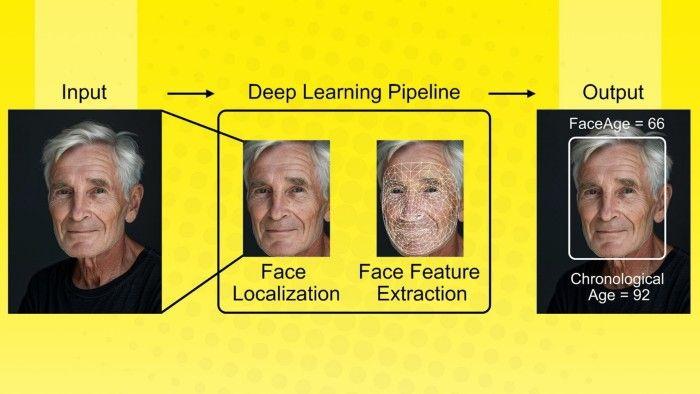
The artificial intelligence tool builds on FaceAge, a deep learning model trained on more than 40 million facial images that estimates biological age from a single photograph
3
. While previous research established that cancer patients typically appear five years older than their chronological age, this new approach measures the rate of change between two facial photographs, divided by the time interval between them1
. A Face Aging Rate value above 1 indicates accelerated aging, while values below 1 suggest decelerated aging.
Source: Euronews
AI Tool Demonstrates Strongest Predictive Power Over Extended Intervals
The study revealed striking mortality risk patterns based on photo timing intervals. Among patients whose facial photographs were taken within one year, approximately 20% showed faces aging at least 20 times faster than expected, experiencing a 22% higher all-cause mortality rate
2
. For those with photos taken one to two years apart, the death rate jumped 54% higher in the accelerated aging group when dichotomized at 10 times faster than expected2
. The effect proved strongest when intervals exceeded two years, where researchers simply divided cohorts at a Face Aging Rate of 1, comparing those aging faster than expected to those aging more slowly2
.Raymond Mak, co-senior author and radiation oncologist at Mass General Brigham Cancer Institute, emphasized the clinical implications: "Deriving a Face Aging Rate from multiple, routine facial photographs allows for near real-time tracking of an individual's health. Our study suggests that measuring FaceAge over time may refine personalized treatment planning, improve patient counseling, and help guide the frequency and intensity of follow-up in oncology"
3
.Non-Invasive Biomarker Offers Advantages Over Single Time-Point Measurements
The research demonstrates that Face Aging Rate provides superior prognostic insights compared to FaceAge Deviation alone, which estimates how biologically old or young a patient looks in a single photograph relative to chronological age
4
. Patients with both high FaceAge Deviation and high Face Aging Rate values showed significantly poorer survival probabilities, but the dynamic measurement proved more reliable over longer intervals3
. This aligns with broader medical evidence showing serial measurements outperform isolated readings, similar to how blood pressure variability better predicts cardiovascular outcomes than single values1
.The non-invasive biomarker approach leverages routine clinical workflow photographs already taken during radiation therapy courses, requiring no additional procedures or patient burden
3
. Hugo Aerts, director of the Artificial Intelligence in Medicine program at Mass General Brigham, noted the broader potential: "Tracking FaceAge over time from simple photos offers a non-invasive, cost-effective biomarker with potential to inform individuals of their health. We hope with continued study we can learn how FaceAge may provide prognostic information for patients with other chronic diseases and for healthy individuals"4
.Related Stories
Future Applications Extend Beyond Oncology
The research team has launched a web portal at faceage.bwh.harvard.edu where the general public can submit facial photographs for FaceAge assessment and participate in advancing this technology
3
. A complementary study published in JNCI: Journal of the National Cancer Institute tested FaceAge on more than 24,500 cancer patients over age 60 receiving radiation therapy, finding that 65% had FaceAge estimates older than their chronological age3
. Those with estimates 10 or more years older faced significantly worse survival outcomes, while those within five years showed better outcomes.The study cohort included patients with varying cancer types, with approximately 63% presenting metastatic disease at baseline
2
. Ongoing prospective trials will investigate Face Aging Rate across different cancers and chronic diseases, potentially establishing facial photographs as standard prognostic tools in multiple medical specialties. The integration of Face Aging Rate with baseline FaceAge Deviation could provide increasingly nuanced measures of evolving health status, enabling earlier interventions before disease manifestation becomes clinically apparent1
.References
Summarized by

Navi
Related Stories
AI Tool 'FaceAge' Predicts Biological Age and Cancer Outcomes from Facial Photos
09 May 2025•Science and Research
AI Model Predicts Biological Age Using Steroid Pathways in Blood Samples
16 Mar 2025•Science and Research

AI Model Revolutionizes Brain Aging Detection and Cognitive Decline Prediction
25 Feb 2025•Science and Research

Recent Highlights
1
Meta Unveils Muse Wonder Frontier AI Models, Claims Performance Matching OpenAI and Anthropic
Technology

2
IMF Report Warns AI Market Correction Could Spark Global Financial Crisis With $1.4T at Risk
Business and Economy

3
OpenAI Releases 722 AI-Generated Math Solutions, Triggering Existential Crisis in Mathematics
Technology

Recent Highlights
Today's Top Stories












Don’t drown in AI news. We cut through the noise - filtering, ranking and summarizing the most important AI news, breakthroughs and research daily. Follow topics that matter to you and stay ahead.


