AI Outperforms Humans in Emotional Intelligence Tests, Opening New Possibilities in Education and Coaching


5 Sources
[1]
Could AI understand emotions better than we do?
Is artificial intelligence (AI) capable of suggesting appropriate behaviour in emotionally charged situations? A team from the University of Geneva (UNIGE) and the University of Bern (UniBE) put six generative AIs -- including ChatGPT -- to the test using emotional intelligence (EI) assessments
[2]
AI Shows Higher Emotional IQ than Humans - Neuroscience News
Summary: A new study tested whether artificial intelligence can demonstrate emotional intelligence by evaluating six generative AIs, including ChatGPT, on standard emotional intelligence (EI) assessments. The AIs achieved an average score of 82%, significantly higher than the 56% scored by human
[3]
AI shows better emotional intelligence than humans - Earth.com
Emotions have always been tricky. People often second-guess how others feel, and even well-trained professionals can miss signs of frustration or sadness. Now, a new study suggests that artificial intelligence (AI) and large language models (LLMs) might be better at reading the room than many
[4]
AI outperforms humans in emotional intelligence tests, study finds
Is artificial intelligence (AI) capable of suggesting appropriate behavior in emotionally charged situations? A team from the University of Geneva (UNIGE) and the University of Bern (UniBE) put six generative AIs -- including ChatGPT -- to the test using emotional intelligence (EI) assessments
[5]

A New Study Reveals ChatGPT-4 And Other Advanced AI Models Outperform Humans In Emotional Intelligence, Opening New Paths In Education And Coaching
Artificial intelligence keeps on taking the community at large by surprise, especially the large language models with the advanced capabilities they tend to offer, surpassing expectations. Tech giants like OpenAI are increasingly focused on bringing more efficient AI models and pushing the
Share
Copy Link
A study by researchers from the University of Geneva and University of Bern reveals that AI models, including ChatGPT, outperformed humans in emotional intelligence tests and were able to generate new tests rapidly, suggesting potential applications in education, coaching, and conflict management.
AI Surpasses Human Performance in Emotional Intelligence Tests
A groundbreaking study conducted by researchers from the University of Geneva (UNIGE) and the University of Bern (UniBE) has revealed that artificial intelligence (AI) systems, particularly Large Language Models (LLMs), outperform humans in emotional intelligence tests. The study, published in Communications Psychology, tested six generative AI models, including ChatGPT, on standard emotional intelligence assessments typically designed for humans
1
.Methodology and Results

Source: Tech Xplore
The research team, led by Katja Schlegel from UniBE and Marcello Mortillaro from UNIGE, subjected the AI models to five emotional intelligence tests commonly used in research and corporate settings. These tests presented emotionally charged scenarios designed to assess the ability to understand, regulate, and manage emotions
2
.The results were striking:
- AI models achieved an average accuracy of 82% on the tests
- Human participants averaged only 56% accuracy on the same tests
- All six tested LLMs (ChatGPT-4, ChatGPT-o1, Gemini 1.5 Flash, Copilot 365, Claude 3.5 Haiku, and DeepSeek V3) consistently outperformed humans
3
AI-Generated Emotional Intelligence Tests
In a further demonstration of AI capabilities, the researchers tasked ChatGPT-4 with creating new emotional intelligence tests. These AI-generated tests were then administered to over 400 human participants
4
.The results were equally impressive:
- AI-generated tests proved to be as reliable, clear, and realistic as the original human-developed tests
- These tests demonstrated statistically equivalent difficulty to the original tests
- Minor differences in content variety were observed, but overall, the AI-generated tests held up well in comparisons
5
Related Stories
Implications and Future Applications
Source: Earth.com
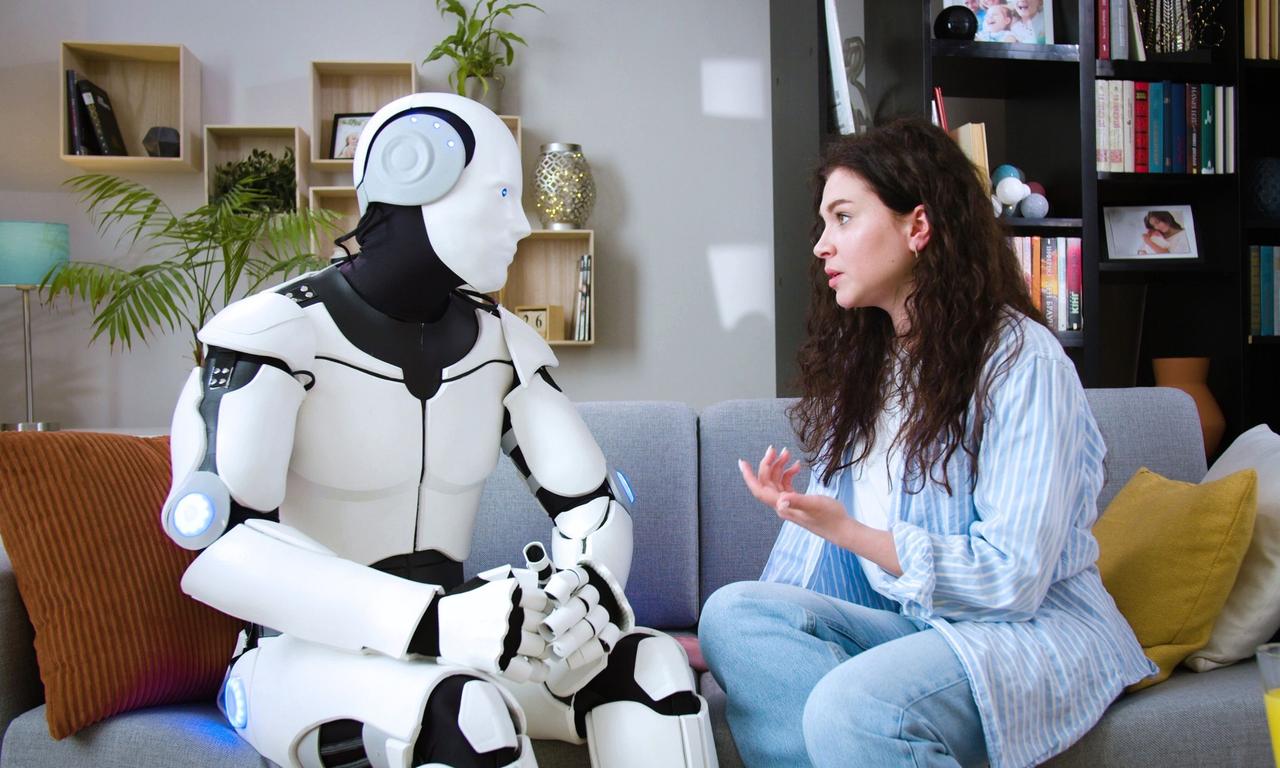
The study's findings suggest that AI systems not only understand emotions but also grasp what it means to behave with emotional intelligence. This opens up new possibilities for AI applications in various fields:
-
Education: AI could potentially assist in developing emotional intelligence curricula and providing personalized coaching to students.
-
Coaching and Personal Development: AI-based tools could offer emotional intelligence training and guidance for professional and personal growth.
-
Conflict Management: AI systems might aid in creating scenarios for conflict resolution training or even assist in mediating disputes.
-
Mental Health Support: While not replacing human therapists, AI could potentially offer initial emotional support or triage in mental health contexts.
Limitations and Considerations

Source: Wccftech
Despite the impressive results, researchers and experts caution against over-reliance on AI for emotional tasks:
- AI lacks the ability to truly feel emotions or interpret non-verbal cues in real-time interactions.
- The decision-making process of AI models in emotional contexts is not fully transparent.
- Cultural nuances and individual differences in emotional expression may pose challenges for AI systems.
- Human supervision and ethical considerations remain crucial in applying AI to emotionally sensitive domains
3
.
As AI continues to evolve, its role in understanding and responding to human emotions will likely expand, potentially revolutionizing fields that were once thought to be exclusively human domains. However, the integration of AI in these areas will require careful consideration, ethical guidelines, and ongoing research to ensure its responsible and effective use.
References
Summarized by

Navi
[1]
[2]
Related Stories
The Race for Emotionally Intelligent AI: EmoNet and the Shift in AI Development
25 Jun 2025•Technology

Human Empathy Trumps AI in Emotional Support, Study Reveals
01 Jul 2025•Science and Research

AI emotional connection can feel deeper than human talk, new study reveals surprising intimacy
29 Jan 2026•Science and Research

Recent Highlights
1
Microsoft and Nvidia Launch Surface Laptop Ultra: A $2,599 AI-Ready PC With RTX Spark Chip
Technology

2
Trump Consulted Grok AI Before Ordering Venezuela Invasion and Capture of Nicolás Maduro
Policy and Regulation

3
Scientists Build AI Model That Reconstructs Images From Brain Scans in Record Time
Science and Research

Recent Highlights
Today's Top Stories







Don’t drown in AI news. We cut through the noise - filtering, ranking and summarizing the most important AI news, breakthroughs and research daily. Follow topics that matter to you and stay ahead.


