Human Empathy Trumps AI in Emotional Support, Study Reveals


4 Sources
[1]
Comparing the value of perceived human versus AI-generated empathy - Nature Human Behaviour
Artificial intelligence (AI) and specifically large language models demonstrate remarkable social-emotional abilities, which may improve human-AI interactions and AI's emotional support capabilities. However, it remains unclear whether empathy, encompassing understanding, 'feeling with' and caring,
[2]
People have empathy with AI... when they think it's human
Study finds emotional support from chatbots is more readily accepted if participants don't know it's an AI A study of AI chat sessions has shown people tend to have more empathy with a chatbot if they think it is human. Nine studies involving 6,282 participants found humans are more likely to
[3]
People Prefer Human Empathy, Even When AI Says the Same Thing - Neuroscience News
Summary: A new study shows that people rate empathic responses as more supportive and emotionally satisfying when they believe they come from a human -- even if the same response is AI-generated. Across nine experiments with over 6,000 participants, responses labeled as human were consistently seen
[4]
Why human empathy still matters in the age of AI
A new international study finds that people place greater emotional value on empathy they believe comes from humans -- even when the exact same response is generated by artificial intelligence. Published in Nature Human Behaviour, the study involved over 6,000 participants across nine
Share
Copy Link
A comprehensive study shows that people perceive empathy more positively when they believe it comes from humans rather than AI, even when the responses are identical, highlighting the importance of perceived authenticity in emotional interactions.
Study Reveals Preference for Human Empathy in AI Era
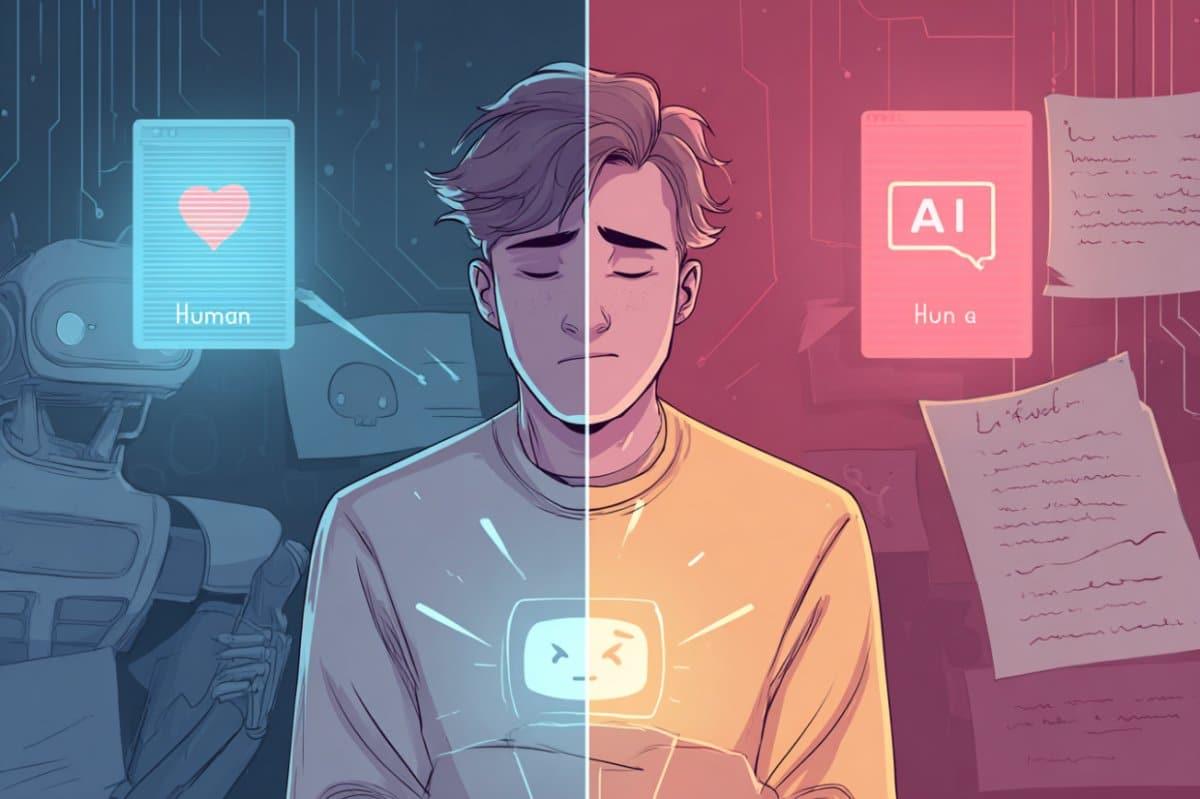
A groundbreaking international study published in Nature Human Behaviour has shed light on the complex dynamics of human-AI interactions in the realm of emotional support. The research, led by Prof. Anat Perry from the Hebrew University of Jerusalem and her colleagues, involved over 6,000 participants across nine experiments, revealing a strong preference for human empathy even in an age of advanced AI capabilities
1
.
Source: Neuroscience News
Methodology and Key Findings
The study employed a clever design where AI-generated empathic responses to participants' emotional situations were labeled as coming from either humans or AI. Remarkably, the responses labeled as human were consistently rated as more empathic, supportive, and emotionally satisfying than identical responses attributed to AI
2
.Prof. Perry noted, "We're entering an age where AI can produce responses that look and sound empathic. But this research shows that even if AI can simulate empathy, people still prefer to feel that another human truly understands, feels with them, and cares"
3
.The Role of Perceived Authenticity
The study uncovered that the preference for human empathy was particularly pronounced for responses emphasizing emotional sharing and genuine care, rather than mere cognitive understanding. Intriguingly, participants were willing to wait longer for a human response, highlighting the value placed on perceived authenticity
4
.Implications of AI Assistance
An unexpected finding revealed that when participants believed AI might have assisted in generating or editing a supposedly human response, their positive perceptions diminished significantly. This suggests that the perceived authenticity of emotional investment plays a crucial role in how empathy is received
3
.
Source: The Register
Related Stories

AI's Potential and Limitations
While the study acknowledges AI's remarkable abilities in social-emotional engagement, it also highlights its limitations. Prof. Perry explained, "AI may help scale support systems, but in moments that require deep emotional connection, people still want the human touch"
4
.Broader Implications and Future Considerations
The research raises important questions about the integration of emotionally intelligent AI into daily life. As AI becomes more prevalent in communication, there's a risk that perceived sincerity and emotional connection may diminish. Prof. Perry cautioned, "As people begin to assume that every message is AI-generated, the perceived sincerity, and with it, the emotional connection, may begin to disappear"
3
.
Source: Tech Xplore
This study not only advances our understanding of empathy but also provides crucial insights into human-AI empathic interactions. As AI continues to evolve, these findings will likely inform future developments in AI-assisted emotional support systems, particularly in fields such as education, healthcare, and mental health
1
.References
Summarized by

Navi
[1]
[2]
[3]
[4]
Related Stories
Boosting AI Effectiveness: The Power of Human Empathy in Sales and Healthcare
16 Jul 2024

Humans Show Empathy Towards AI Bots in Virtual Game Study
18 Oct 2024•Science and Research

AI emotional connection can feel deeper than human talk, new study reveals surprising intimacy
29 Jan 2026•Science and Research

Recent Highlights
1
Microsoft and Nvidia Launch Surface Laptop Ultra: A $2,599 AI-Ready PC With RTX Spark Chip
Technology

2
Trump Consulted Grok AI Before Ordering Venezuela Invasion and Capture of Nicolás Maduro
Policy and Regulation

3
Scientists Build AI Model That Reconstructs Images From Brain Scans in Record Time
Science and Research

Recent Highlights
Today's Top Stories





Don’t drown in AI news. We cut through the noise - filtering, ranking and summarizing the most important AI news, breakthroughs and research daily. Follow topics that matter to you and stay ahead.


