AI PCs hit 81% enterprise adoption as AMD reports shift from experimentation to deployment


2 Sources
[1]
'AI adoption is entering a new phase': AMD report finds AI PCs are becoming an increasingly common sight in the workplace - so what can they do for you?
* Most companies are planning, piloting or deploying AI PCs now * High-performance NPUs are "critical" - performance and security benefits are key * The most popular use cases show AI PCs being most useful for knowledge workers New data from AMD claims AI PC adoption has increased rapidly
[2]
AMD Calls AI PCs "The New Enterprise Standard" As Enterprise Adoption Grows To 81% With The Agentic AI Boom
AMD AI PCs are seeing massive adoption in the enterprise segment as Agentic AI rages on to be the next frontier of computing. The focus on localized AI and the rise of Agentic AI have rapidly boosted the adoption of AI PCs. This has led AMD to see a big demand for AI PCs in the Enterprise segment
Share
Copy Link
AMD's latest research reveals that over four in five organizations are now planning, piloting, or deploying AI PCs, marking a significant shift from experimentation to real-world implementation. The data shows 70% report faster performance with dedicated AI PCs, while 66% see productivity gains as agentic AI drives demand for localized computing power.
AI PCs Become The New Enterprise Standard
AI adoption is entering a new phase, with AI PCs rapidly transitioning from experimental technology to essential business infrastructure. According to new data from AMD
1
, over four in five organizations are either planning, piloting, or deploying AI PCs in some form, representing a fundamental shift in how enterprises approach AI integration. The IDC survey2
, which polled more than 500 IT and business leaders across various regions, found that AI PC adoption has reached 81% among enterprises, with only 4% of organizations not planning to deploy them.
Source: TechRadar
This surge in Enterprise AI deployment reflects organizations embedding AI into everyday workflows, beginning with hardware capable of running workloads locally. AMD calls AI PCs "the new enterprise standard" as businesses accelerate their procurement plans to align with future AI requirements
2
. Already, 27% have deployed them at scale1
, signaling that this technology has moved beyond pilot programs into production environments.Enhanced Employee Productivity Through Localized AI
The data reveals substantial productivity gains driving AI PC adoption. Two in every three companies reported enhanced employee productivity from using AI PCs, with some organizations seeing productivity gains as high as 66%
2
. Additionally, 70% report faster performance and reduced latency when using dedicated AI PCs1
.Knowledge workers are seeing the most immediate benefits, with AI PCs boosting efficiency across tasks like document creation, presentations, spreadsheets, meeting transcription and summarization
1
. Interestingly, image and video generation rank higher than coding assistance, likely because workers prefer online Copilot tools that are cloud-first for development tasks.NPUs and Secure Local Execution Drive Adoption
High-performance NPUs have become critical infrastructure, with 59% of organizations now viewing them as essential
1
. AMD's entire Ryzen AI portfolio now features NPU acceleration, offering over 50 TOPs performance2
, a leading figure for power-efficient systems.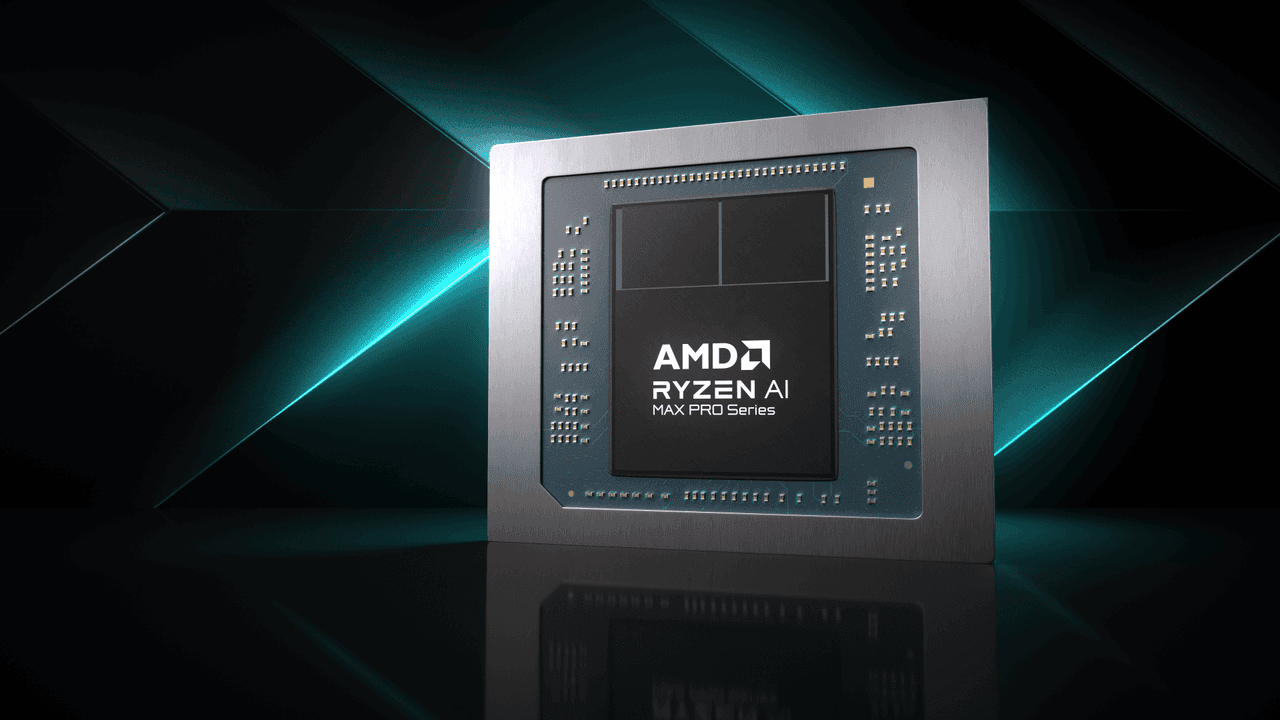
Source: Wccftech
The shift toward secure local execution addresses multiple enterprise concerns simultaneously. AMD describes the latest generations of PCs as a "local execution layer" for real-time, secure task processing, citing lower latency, better data privacy and security benefits, and the possibility of reducing cloud costs as key advantages
1
. Respondents saw PCs acting as an interface for cloud agents at 51% and as a secure local execution hub at 47%, showing near-equal importance for both capabilities.Related Stories
Agentic AI Boom Reshapes Computing Infrastructure
The Agentic AI boom is fundamentally changing how enterprises view PC infrastructure. As AI evolves to become more responsive and context-aware, customers want compute near them rather than relying solely on cloud-based AI
2
. This has never been more critical than today, in the age of always-on AI through agentic capabilities.AMD supports this transition with Ryzen AI PRO processors specifically built for enterprise environments. With long-term platform stability and consistent software images, IT teams can deploy and manage AI-capable fleets using the processes they already rely on
2
. The company's approach enables organizations to deploy AI across cloud and edge environments with flexibility and interoperability.The Hybrid Era of AI Processing
While AI PC adoption accelerates, enterprises aren't abandoning cloud infrastructure. Instead, organizations are entering a hybrid era of AI processing that balances local and cloud computing for optimal performance and security
1
. While most AI workloads today run in the cloud, for AI to truly scale, more of it will need to run on device2
.Notably, 81% of study participants claimed meaningful knowledge of AI PCs [1](https://www.techradar.com/pro/ai-adoption-is-entering-a-new-phase-amd-report-finds-ai-pcs-are-becoming-an-increasingly-common-sight-in-the-workplace-so-what-can-they-do-for-you], suggesting this isn't a technology being pushed onto unprepared organizations. While futureproofing devices plays a role in upgrade decisions, most companies prioritize productivity gains, innovation, competitive advantage, and security improvements as higher priorities. This informed approach suggests enterprises understand both the immediate benefits and long-term strategic value of localized AI processing capabilities.
References
Summarized by

Navi
Related Stories
AMD Ryzen AI Max PRO 400 Series Brings Local Agentic AI to Business PCs with 192GB Memory
25 Sept 2026•Technology
AI-Capable PC Shipments Set to Surge in 2024, with Apple Leading the Charge
14 Aug 2024

AMD CTO explains why agentic AI demands more CPUs as stock nears trillion-dollar valuation
09 Jul 2026•Technology

Recent Highlights



Recent Highlights
Today's Top Stories







Don’t drown in AI news. We cut through the noise - filtering, ranking and summarizing the most important AI news, breakthroughs and research daily. Follow topics that matter to you and stay ahead.


