AI-Powered CellTransformer Creates Most Detailed Mouse Brain Map to Date


4 Sources
[1]
UCSF and Allen Institute create most detailed data-driven map of the mouse brain
Allen InstituteOct 7 2025 In a powerful fusion of AI and neuroscience, researchers at the University of California, San Francisco (UCSF) and Allen Institute designed an AI model that has created one of the most detailed maps of the mouse brain to date, featuring 1,300 regions/subregions. This new
[2]
Scientists used AI to map uncharted areas of the mouse brain
Using a ChatGPT-like AI model, scientists have created a new map of the mouse brain that captures previously uncharted areas of the organ in unprecedented detail. The map, published Tuesday (Oct. 7) in the journal Nature Communications, captures 1,300 regions of the brain and is the first to
[3]
Scientists create ChatGPT-like AI model for neuroscience to build one of the most detailed mouse brain maps to date
In a powerful fusion of AI and neuroscience, researchers at the University of California, San Francisco (UCSF) and Allen Institute designed an AI model that has created one of the most detailed maps of the mouse brain to date, featuring 1,300 regions/subregions. This new map includes previously
[4]
Scientists enlist AI to map regions of the brain in unprecedented detail -- and that's just the start
Scientists say an artificial intelligence program that they compare to ChatGPT has helped them create one of the most detailed maps of the mouse brain to date, with 1,300 regions and subregions marked on the map. Some of those subregions have never been charted before -- and the researchers say
Share
Copy Link
Researchers from UCSF and Allen Institute have developed an AI model called CellTransformer, which has created one of the most detailed maps of the mouse brain, featuring 1,300 regions and subregions. This breakthrough combines AI and neuroscience to advance our understanding of brain structure and function.
AI and Neuroscience Fusion Creates Unprecedented Brain Map
Researchers at the University of California, San Francisco (UCSF) and the Allen Institute have achieved a significant breakthrough in neuroscience by creating one of the most detailed maps of the mouse brain to date. This groundbreaking work, published in Nature Communications, combines artificial intelligence with advanced neuroscience techniques to chart 1,300 regions and subregions of the mouse brain
1
2
.
Source: Medical Xpress
CellTransformer: The AI Behind the Breakthrough
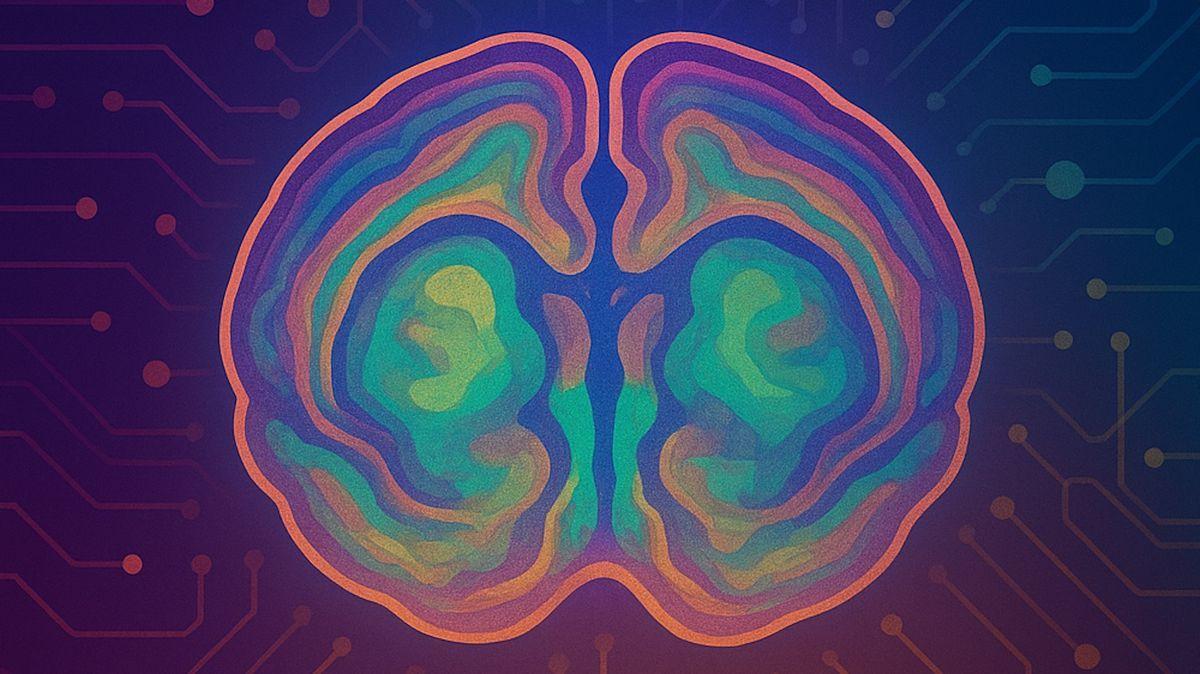
At the heart of this achievement is CellTransformer, a powerful AI model developed by the research team. CellTransformer utilizes the same 'transformer' framework that powers AI tools like ChatGPT, but instead of analyzing relationships between words, it examines the spatial relationships between brain cells
3
.
Source: Live Science
Dr. Reza Abbasi-Asl, associate professor at UCSF and senior author of the study, explained, "Our model learns to predict a cell's molecular features based on its local neighborhood, allowing it to build up a detailed map of the overall tissue organization"
1
.Unprecedented Detail and New Discoveries
The new brain map is unique in several ways:
- It depicts brain regions rather than just cell types.
- It is entirely data-driven, with boundaries defined by cellular and molecular data instead of human interpretation.
- It represents one of the most granular and complex data-driven brain maps of any animal to date
1
.
CellTransformer has not only successfully replicated known brain regions but has also discovered previously uncatalogued, finer-grained subregions in poorly understood areas. For instance, it has revealed new details in the midbrain reticular nucleus, which plays a complex role in movement initiation and release
2
4
.Related Stories
Validation and Future Implications
The Allen Institute's Common Coordinate Framework (CCF) served as a gold standard for validating CellTransformer's accuracy. Alex Lee, a Ph.D. candidate at UCSF and first author of the study, noted, "The high level of agreement with the CCF provided a critical benchmark, giving confidence that the new subregions discovered by CellTransformer may also be biologically meaningful"
3
.This research has significant implications beyond neuroscience. The AI capabilities of CellTransformer are tissue-agnostic, meaning they can be applied to other organ systems and tissues, including cancerous tissue. This versatility could accelerate our understanding of various biological processes and potentially lead to new treatments and therapies
1
4
.The Road Ahead
While this map represents a significant advancement, researchers believe there's potential for even more detailed mapping. Dr. Bosiljka Tasic from the Allen Institute commented, "I think there are already indications that we can go beyond what we see now"
4
.The next challenge lies in applying this technology to the human brain, which contains approximately 170 billion cells compared to the tens of millions in a mouse brain. Despite the complexity, researchers are optimistic about the potential of CellTransformer to work with human brain data in the future
2
.References
Summarized by

Navi
[2]
[3]
Related Stories
Scientists Create Most Detailed Mammalian Brain Map to Date
10 Apr 2025•Science and Research
AI-Powered 3D Brain Mapping Tool Revolutionizes Neurodegenerative Disease Research
20 Mar 2025•Science and Research

AI-Powered NextBrain Atlas Creates Most Detailed 3D Map of Human Brain for Medical Imaging
05 Nov 2025•Science and Research
Recent Highlights
1
Microsoft and Nvidia Launch Surface Laptop Ultra: A $2,599 AI-Ready PC With RTX Spark Chip
Technology

2
Trump Consulted Grok AI Before Ordering Venezuela Invasion and Capture of Nicolás Maduro
Policy and Regulation

3
Scientists Build AI Model That Reconstructs Images From Brain Scans in Record Time
Science and Research

Recent Highlights
Today's Top Stories






Don’t drown in AI news. We cut through the noise - filtering, ranking and summarizing the most important AI news, breakthroughs and research daily. Follow topics that matter to you and stay ahead.


