AI-Powered Smart Glasses: A Breakthrough for Hearing Aid Technology


3 Sources
[1]
AI glasses could be a improvement for those with hearing loss
Artificial intelligence-powered glasses developed by a University of Stirling researcher could dramatically improve how people with hearing loss experience sound. It aims to help by filtering out background noise in real time, even in loud environments, through the use of AI-powered smart
[2]
Here's how smartglasses with AI could give hearing aids 'superpowers'
I wore XR glasses for 24 hours and broke my reality. Here's what I saw Research is being carried out into how smartglasses equipped with a camera, AI, and a data connection could help deaf people better follow real-time conversations. The technology won't replace hearing aids, but enhance them
[3]
Scientists working on 'superpower' glasses that help people hear more clearly
The smart glasses are fitted with a camera that records dialogue and uses visual cues to detect the main speaker in a conversation. New "hearing glasses" are being created that use artificial intelligence to help people hear conversations more clearly in real-time. Scientists in Scotland are
Share
Copy Link
Researchers in Scotland are developing AI-powered smart glasses that could significantly improve hearing aid functionality, offering real-time noise cancellation and speech enhancement for those with hearing impairments.
Revolutionizing Hearing Aid Technology
Researchers in Scotland are developing innovative AI-powered smart glasses that could dramatically improve the quality of life for people with hearing impairments. This groundbreaking technology aims to enhance the functionality of traditional hearing aids by providing real-time noise cancellation and speech enhancement, even in challenging acoustic environments
1
.
Source: Sky News
How the Technology Works
The smart glasses system employs a multi-faceted approach to isolate and enhance speech:
- A small camera built into the glasses tracks the speaker's lip movements.
- A smartphone app uses 5G technology to transmit both audio and visual data to a cloud server.
- Powerful AI algorithms on the server isolate the speaker's voice from surrounding noise.
- The cleaned-up audio is sent back to the listener's hearing aid or headphones almost instantly
1
.
This approach, known as audio-visual speech enhancement, takes advantage of the close link between lip movements and speech. It aims to overcome the limitations of current noise-canceling technologies, which often struggle with overlapping voices or complex background sounds
2
.Potential Impact and Applications
With over 1.2 million adults in the UK experiencing severe hearing loss, this technology could have a significant impact
3
. While primarily designed for those with hearing impairments, the researchers suggest that the technology could benefit anyone working in noisy environments, from oil rigs to hospital wards1
.Future Developments
Dr. Ahsan Adeel from the University of Stirling's Computing Science and Mathematics Division envisions even more advanced developments:
"We are moving towards harnessing the extraordinary capabilities of pyramidal cells in the mammalian neocortex... This breakthrough approach shifts from abstract, human-level cognitive audio-visual models to true cellular-level multisensory processing, enabling the world's first personalized, standalone, data center, cloud-independent, biologically plausible hearing aids"
1
.Related Stories

Current Status and Timeline
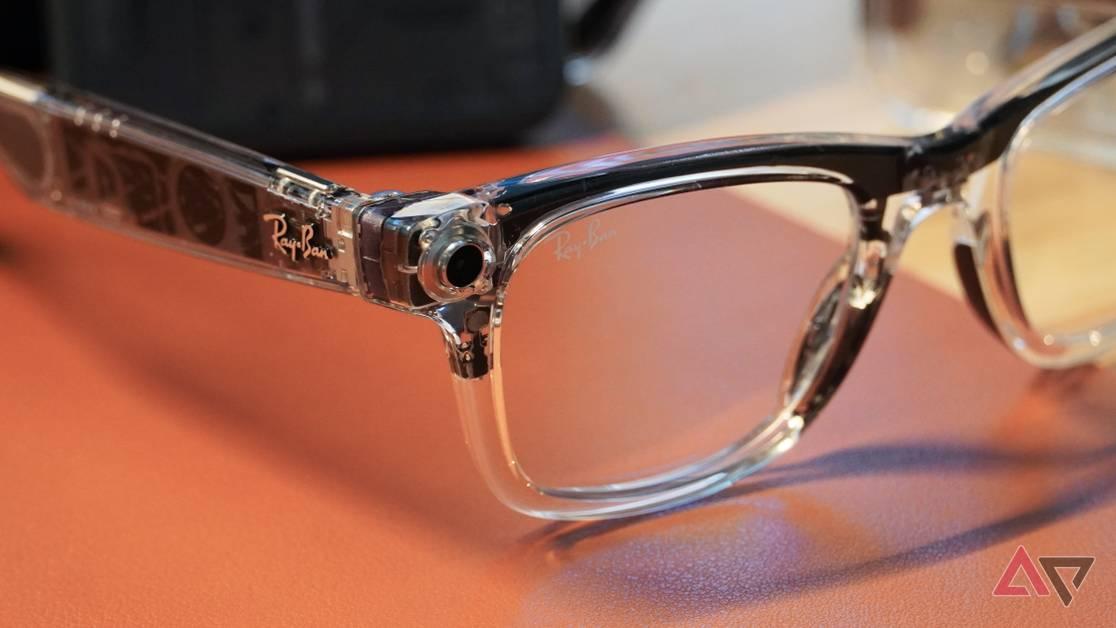
Source: Android Police
The technology is currently in the prototype stage, with researchers having already conducted tests involving hearing aid users. The team is in talks with hearing aid manufacturers about potential partnerships and is working to reduce costs to make the devices more widely accessible
2
.Professor Mathini Sellathurai of Heriot Watt University, who leads the project, aims to have a working prototype by 2026
3
.Privacy and Technical Considerations
While the technology shows great promise, there are potential privacy concerns regarding real-time recording of conversations and the integrity of data transferred and analyzed in the cloud
2
. The researchers are addressing these issues and working on multiple fronts, from cloud AI to edge device AI, to achieve optimal results for sustainability and user privacy1
.References
Summarized by

Navi
[1]
[2]
Related Stories
AI-Powered 'Sound Bubble' Headphones: A Breakthrough in Noise Management
15 Nov 2024•Technology

VueBuds bring visual AI to earbuds with tiny cameras, offering privacy-focused alternative to smart glasses
14 Apr 2026•Science and Research

AI startups bet on earbuds for mind reading and thought-based communication at CES
07 Jan 2026•Technology

Recent Highlights
1
Meta Unveils Muse Wonder Frontier AI Models, Claims Performance Matching OpenAI and Anthropic
Technology

2
IMF Report Warns AI Market Correction Could Spark Global Financial Crisis With $1.4T at Risk
Business and Economy

3
OpenAI Releases 722 AI-Generated Math Solutions, Triggering Existential Crisis in Mathematics
Technology

Recent Highlights
Today's Top Stories









Don’t drown in AI news. We cut through the noise - filtering, ranking and summarizing the most important AI news, breakthroughs and research daily. Follow topics that matter to you and stay ahead.


