Pangram Launches AI Detection Tools for Images and Videos With 99% Accuracy Claims


3 Sources
[1]
Pangram expands its AI detection tools to video and images
Pangram, maker of a widely used tool for detecting AI-generated text, released new tools for flagging AI-generated image and video slop. With the update, Pangram subscribers can upload videos and get an assessment of whether AI was used to create or edit the clip. The company says the tool is able
[2]
Pangram's new models spot AI fakes in images and video, it says
The AI text detection startup adds heatmaps, video uploads and browser alerts, but its accuracy figures are self-reported. Pangram launched Pangram Image 1.0 for AI images and the faster Image Flash 1.0 for video. It claims near-perfect scores on its own tests and 98.7% on the DF26 academic
[3]
Pangram, the gold standard for AI text checks, releases Image 1.0 tool to sniff fake pics and videos
It can identify AI-generated pictures with an astounding 99.96% accuracy on its own evaluation set. Pangram, one of the most widely used and trusted AI text detectors out there, is finally releasing its multimedia detection tools to the masses. Pangram Image 1.0, which was previously available as
Share
Copy Link
Pangram, known for detecting AI-generated text, released Image 1.0 and Flash 1.0 models to identify AI-generated images and videos. The company claims 99.96% accuracy on images and 98.7% on videos, significantly outperforming competitors like TruthScan and AI or Not. The tools are now available through its Chrome extension, web app, and API.
Pangram Expands AI Detection Capabilities Beyond Text
Pangram, widely recognized for its AI text detection tools, has launched two new models designed to identify AI-generated content in images and videos
1
2
. The New York-based startup released Pangram Image 1.0 for still images and Pangram Image Flash 1.0 for video analysis, marking a significant expansion of its detection capabilities into multimedia content2
. These AI detection tools are now available through the company's web app, API, and Chrome extension, allowing users to scan content as they browse social media, shopping platforms, and rental listings3
.Impressive Accuracy Rates Claim Market Leadership
Pangram claims its image detection model achieves an astounding 99.96% accuracy rate on its own evaluation set, with a false positive rate of just 0.27%
1
3
. In the company's internal testing, Pangram created AI copies of 100 real photos using 12 leading image generators with prompts closely matching each original2
. These self-reported figures position Pangram well ahead of competitors, with TruthScan achieving 96.33% accuracy, AI or Not reaching 91.38%, and Sightengine at 88.33%3
. For AI-generated videos, Pangram Image Flash 1.0 demonstrates 98.7% accuracy on the DF26 academic benchmark, a 29-point lead over the next-best detector2
3
.Advanced Features for Detecting AI Fakes
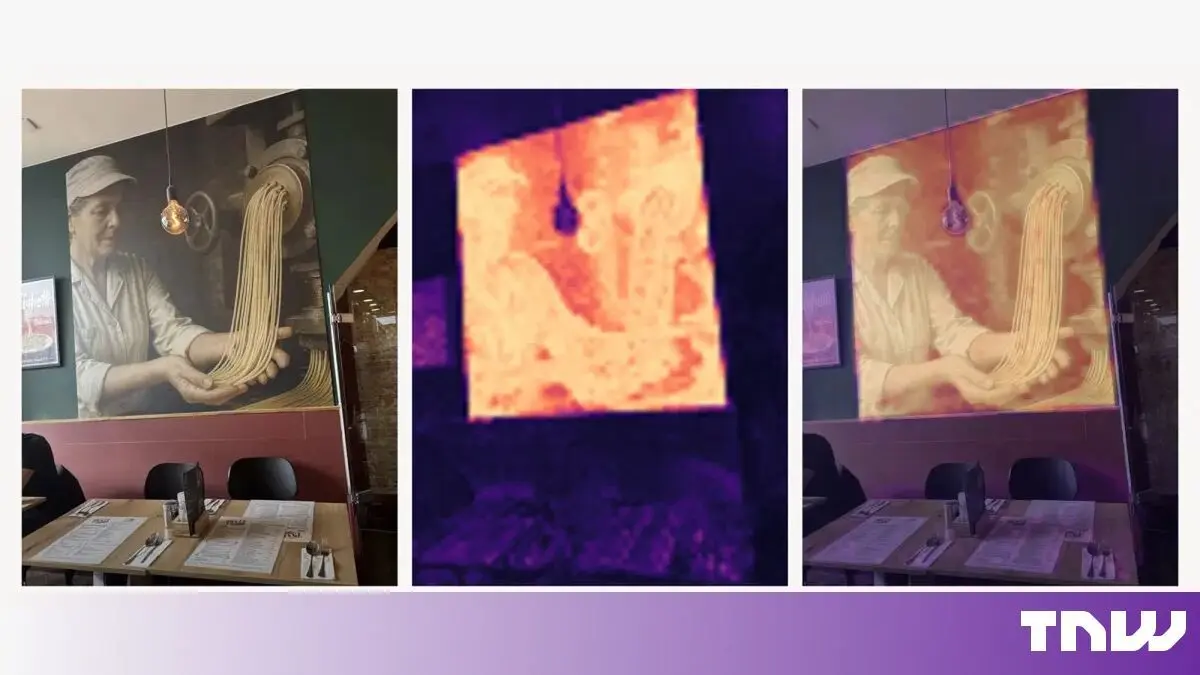
The Pangram Image 1.0 model introduces a heatmap feature that highlights which specific aspects of an image are likely AI-generated, enabling users to distinguish between partially AI-edited content and entirely AI-generated visuals
1
2
. The video detection model performs frame-by-frame analysis and can differentiate between clips that are partially AI-modified versus completely AI-generated1
. Pangram CEO Max Spero explained that the model has been trained to see through compression, blur, and artificial noise that platforms and individuals trying to fool detectors might add2
. The company has also improved its handling of low-resolution images, now supporting images as small as 256 x 256 pixels, down from the initial 512 x 512-pixel minimum, though results below 512 pixels carry a reduced-confidence warning2
3
.
Source: The Next Web
Related Stories

Technical Challenges and Development Hurdles
Developing robust AI detection tools presented unique challenges for Pangram. Spero noted that most phone cameras, including iPhones, perform AI postprocessing to add detail to real photos
1
. "We had to build a model that's robust to this postprocessing while understanding the difference between AI edits and fully AI-generated visuals," he explained1
. The company delayed its image model release to test it on several iPhone 18 Pros after discovering that initial versions incorrectly flagged images from the phones' cameras as AI-generated content1
. For video testing, Pangram used the DF26 benchmark, an academic dataset of 2,691 clips of people speaking to camera published in September, where both humans and leading detectors previously performed little better than chance at identifying fakes2
.
Source: Engadget
Market Position and Future Implications
Pangram raised $9M in a funding round led by Menlo Ventures in July when it first previewed image detection capabilities
2
. The company's text detector already runs on Substack, and its expansion into multimedia detection positions it as a comprehensive solution for identifying AI-generated content across formats2
. However, deepfake detection remains an imperfect science. AI detectors still make mistakes, and even Meta's own image detector missed cropped fakes from its generator more than half the time in Reuters tests2
. Pangram's accuracy figures are self-reported rather than independently verified, and the company previously faced controversy when its text tool flagged a Berkeley professor's op-ed as partly AI-written, which she disputed2
. As platforms like Snapchat crack down on AI videos and the volume of AI-generated content continues to grow, reliable detection tools will become increasingly critical for maintaining trust in digital media.References
Summarized by

Navi
[2]
Related Stories
Pangram Raises $9M to Combat AI-Generated Content Flooding the Internet with Advanced Detection
29 Jul 2026•Technology

Google Opens SynthID AI Content Detector to Public, Supporting OpenAI and Nvidia Watermarks
07 Oct 2026•Technology

Former Tesla and Google Engineers Secure $4 Million for AI Text Detection Startup Pangram
25 Jun 2025•Startups

Recent Highlights
1
Google Unveils Gemini 4 Carbon AI Model With Major Cybersecurity Gains, Beating Claude Opus 5.5
Technology

2
Binance Hack: How AI-Enabled Cyberattack Led to Record $6.3 Billion Crypto Theft
Technology

3
Pope Leo XIV Demands AI Disarmament and Ban on Autonomous Weapons at UN Geneva Meeting
Policy and Regulation

Recent Highlights
Today's Top Stories











Don’t drown in AI news. We cut through the noise - filtering, ranking and summarizing the most important AI news, breakthroughs and research daily. Follow topics that matter to you and stay ahead.


