AI's Effect on the Work Force Shows Up in Wages, Not Unemployment—Gen Z Hit Hardest


3 Sources
[1]
A.I.'s Effect on the Work Force Is Showing Up in Wages
In May 2025, Dario Amodei, the chief executive of Anthropic, said artificial intelligence could wipe out half of entry-level white-collar jobs within five years, pushing unemployment higher than 10 percent. More than a year later, even as A.I. models have made leaps that prompted Mr. Amodei to
[2]
Pat Gelsinger and Naveen Rao: we've seen Silicon Valley move fast and break things, but consider the math of where we're headed | Fortune
We Work In AI. We've Seen It Eliminate Jobs. We've Also Seen It Create More Jobs Silicon Valley used to encourage one another to "move fast and break things." Then we broke everything. And people started to get angry. Every major tech change throughout history has caused painful disruption. Farm
[3]
'People just do not want the world to change so much': The war over the future of work being fought by Gen Z | Fortune
In 2009, the great blogger and cultural critic Mark Fisher picked up on the concept of "capitalist realism," describing a state of mind where the triumph of this economic organization of life was so complete that it was impossible to imagine an alternative to it. But Fisher, who died in 2017,
Share
Copy Link
AI is quietly transforming the labor market—not through mass layoffs, but by suppressing wage growth in AI-exposed occupations and reducing job openings for young workers. New research reveals a 6.7% decline in real wages since 2023 for roles most vulnerable to AI, while Gen Z workers face a 19% employment gap in AI-exposed jobs compared to their peers.
AI's Role in the Labor Market Shifts From Job Cuts to Wage Suppression
Despite warnings from Anthropic CEO Dario Amodei in May 2025 that AI could eliminate half of entry-level white-collar jobs within five years and push unemployment above 10 percent, the reality unfolding in the labor market tells a different story
1
. The unemployment rate has actually fallen to 4.1 percent in August, yet AI's effect on the work force is registering in quieter, more insidious ways: through suppressed wage growth and fewer job openings, particularly for young workers entering AI-exposed occupations1
.New research by Princeton researcher Sania Edlich and Torsten Slok, chief economist at Apollo Global Management, analyzed data across 321 occupations and found that workers in AI-exposed occupations experienced slower wage growth over the past three years while net employment levels remained unchanged
1
. Companies are capturing AI productivity gains not by reducing head count, but by suppressing wage gains—a strategic choice that allows them to preserve efficiencies without the public relations fallout of mass layoffs1
.Wage Growth Plummets 6.7% in AI-Exposed Occupations Since 2023
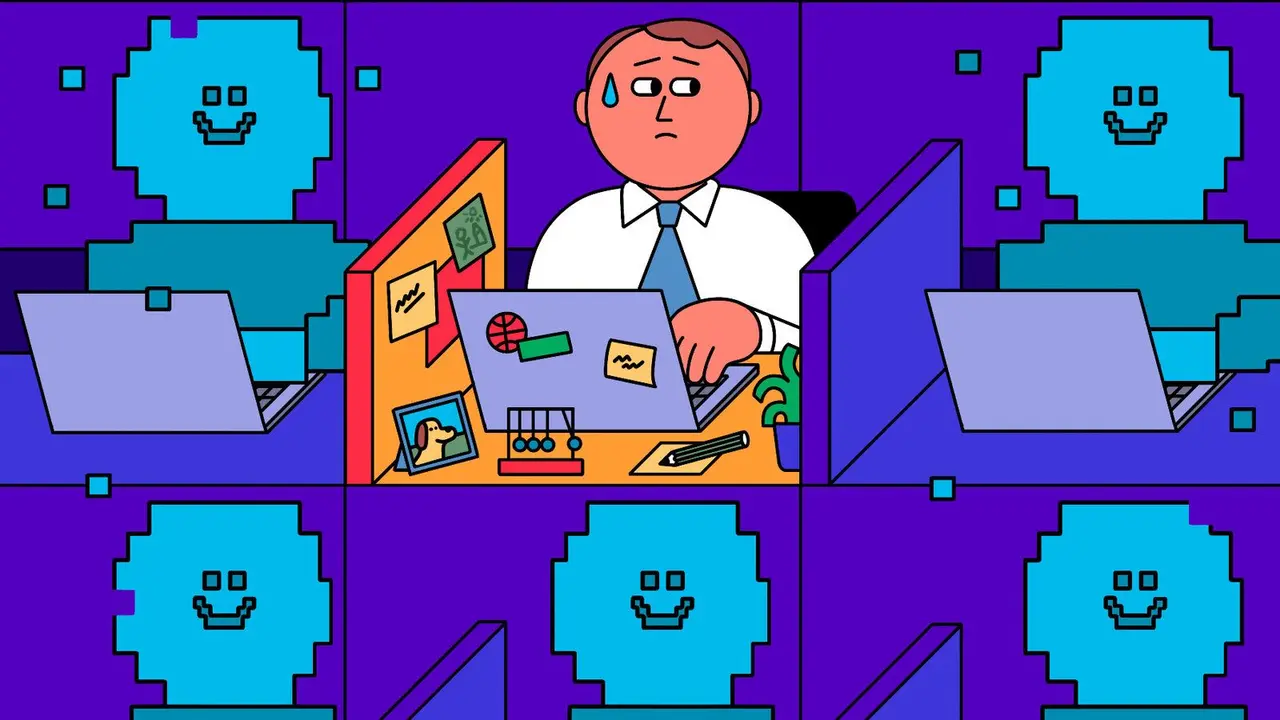
The data reveals stark disparities in how AI adoption by businesses affects different worker segments. Occupations highly exposed to AI have experienced a 6.7 percent decline in real wage growth since 2023, with the harshest impact falling on lower earners
1
. Service workers in administrative or support roles have seen a devastating 24 percent decline in real wages, while the bottom quarter of workers experienced an 11 percent decline1
. Top earners, however, have barely been affected, widening the economic divide1
.
Source: NYT
"If you are a hairdresser, if you are a massage therapist, if you are a doorman, of course your occupation is not threatened by AI, whereas if you are a journalist or an economist, there is just more pressure on wages because now the work that we do can be replaced, at least in some ways, by AI," Slok explained
1
. The future of work is being shaped not by dramatic job displacement, but by a gradual erosion of worker leverage in knowledge-based roles.Two Competing Visions: AI Substitutes for Labor Versus AI Complements Labor
The labor market is splitting into two distinct capitalisms, according to analysis by Gad Levanon, chief economist at the Burning Glass Institute
3
. In one model, AI substitutes for labor—codifiable, routine work gets automated, and hiring dries up. In the other, AI complements labor, raising the value of tacit, contextual human judgment3
.Levanon's research reveals this split empirically: in finance, insurance, information, and professional and business services (FIIPB), the quits rate has collapsed to the 13th percentile of its 25-year range, sitting at 1.8 percent—down from 2.5 percent in 2019, a 28 percent drop
3
. Meanwhile, the rest of the private economy sits near its historical norm, and government, education, and healthcare remain at the 71st percentile3
. People quit when they have somewhere to go, and in sectors shedding jobs, there's nowhere to go3
.Gen Z Bears the Brunt: 19% Employment Gap in AI-Exposed Jobs
Young workers are experiencing the acute stress of AI's labor market transformation. A Stanford Digital Economy Lab working paper by economists Erik Brynjolfsson, Bharat Chandar, and Ruyu Chen found that employment of workers aged 22 to 25 in AI-exposed occupations now sits 19 percent below where it would be had it kept pace with their less-exposed peers
3
. Experienced workers in the same occupations show no comparable gap—the divergence appears not as layoffs but as an absence of hiring3
.
Source: Fortune
Liminal Capital estimated in August that about a third of jobs appear more exposed to substitution than augmentation by AI
1
. In those occupations, new hires among workers ages 22 to 25 have fallen by a third since 2021, even as firings have barely budged1
. Gen Z's rate of switching jobs has overtaken every other generation for the first time since 2021, suggesting young workers are being pushed out of the queue for AI-exposed roles and scrambling laterally into whatever positions remain3
.Related Stories

Companies Choose Efficiency Over Expansion Amid Corporate Profit Gains
Corporate profits are up across the board, and companies facing AI-driven productivity gains have three options: lay off workers, scale up and add new hires, or preserve efficiencies by hiring less than usual
1
. Many are choosing the third option1
.Melissa Krut, senior vice president at Sogolytics, a Virginia software company serving over 10,000 clients with around 100 employees, explained how this plays out in practice. "Productivity has increased, we have more clients, we have grown by almost every measure you want to throw out there, but we don't have, proportionately, that many more people" in positions across sales, account management and support roles
1
. AI models now handle more than half the baseline tasks for some jobs, leading to "higher expectations" for workers seeking raises and for new hires1
. "If your job could be done by AI, yeah, you better have something else on top," Krut said1
.AI-Driven Job Opportunities Emerge Alongside Job Quality Concerns
Pat Gelsinger and Naveen Rao, technology veterans with over 70 years of combined industry experience, argue that every technology disruption throughout history has created more jobs than it destroys, and AI will follow this pattern
2
. Gelsinger, former Intel CEO and current General Partner at a venture capital firm, and Rao, founder of three AI startups with his current company valued at $4.5 billion, point to concrete examples of job transformation rather than elimination2
.
Source: Fortune
At Intel fabs, safety technicians who once checked for chemical leaks—exceedingly dangerous work where most gases could kill you—were reassigned as fleet managers of robot dogs that now perform those checks
2
. This created safer, more pleasant, and more interesting jobs while making the entire facility safer through more frequent inspections2
. Rao's company got a chip designed in six months without a dedicated team, something impossible before AI, but the company's growth is being hindered by its inability to hire people fast enough2
.Yet concerns about job quality persist. "We could be living in a world where unemployment is low while job quality, composition and wages deteriorate," said Loujaina Abdelwahed, head of economic research at Revelio Labs
1
. The tension between human productivity enhancement and worker displacement remains unresolved, with labor shortages in construction and healthcare coexisting with hiring freezes in white-collar sectors2
.References
Summarized by

Navi
Related Stories
Jack Dorsey cuts 4,000 jobs at Block, citing AI tools that 'can do more and do it better'
27 Feb 2026•Business and Economy

Block's 4,000-person layoff sparks debate: AI revolution or corporate cost-cutting in disguise?
05 Mar 2026•Business and Economy

Economists Shift Stance on AI and Jobs as New Data Shows Early Signs of Workforce Disruption
02 Apr 2026•Business and Economy

Recent Highlights
1
Microsoft and Nvidia Launch Surface Laptop Ultra: A $2,599 AI-Ready PC With RTX Spark Chip
Technology

2
Google Unveils Gemini 4 Argon AI Model, Restricts Access to Trusted Cyber Defenders
Technology
3
OpenAI Releases 722 AI-Generated Math Papers on GitHub, Igniting Fury Among Mathematicians
Science and Research

Recent Highlights
Today's Top Stories









Don’t drown in AI news. We cut through the noise - filtering, ranking and summarizing the most important AI news, breakthroughs and research daily. Follow topics that matter to you and stay ahead.


