Over 21% of YouTube Shorts is AI slop, with creators earning millions farming views


8 Sources
[1]
1 in 5 YouTube Shorts is AI slop now - and Americans are eating it up
A new study shows AI slop makes up more than 20% of YouTube.Brainrot, or poor quality content, makes up 33%.There's no incentive for creators to try to lessen AI slop. If you feel like you're seeing a lot more AI-generated slop on YouTube, you're right. According to a study from video-editing
[2]
Over 21% of YouTube Is Now AI Slop, Says Report
As tools like OpenAI's Sora and Google's Veo are making AI video creation more accessible than ever, over 21% of YouTube is now what's called "AI slop," according to a new report by video editing firm Kapwing. The company simulated the experience of an "untainted" YouTube Shorts algorithm by
[3]
More than 20% of YouTube's feed is now "AI slop," report finds
Serving tech enthusiasts for over 25 years. TechSpot means tech analysis and advice you can trust. The takeaway: Not only are more than half the articles on the web created by AI, but over 21% of YouTube videos being show to new users is "AI Slop." That's according to a new report, which also
[4]
Study reveals just how much AI slop is on YouTube
If it feels like there's a lot of AI slop on YouTube, that's because there's a lot of AI slop on YouTube. New research from video-editing company Kapwing, reported by the Guardian found that more than one in every five videos that the YouTube Shorts algorithm shows new users is low-quality,
[5]

From shrimp Jesus to erotic tractors: how viral AI slop took over the internet
Flood of unreality is an endpoint of algorithm-driven internet and product of an economy dependent on a few top tech firms In the algorithm-driven economy of 2025, one man's shrimp Jesus is another man's side hustle. AI slop - the low-quality, surreal content flooding social media platforms,
[6]

The amount of AI slop and brainrot videos on YouTube is shocking
A new study by Kapwing has says that a huge volume of videos circulating on YouTube are brainrot content and 'AI slop': a catch-all term for low-quality, AI-generated content designed to farm views rather than offer real value. Kapwing's researchers tested this by creating a new YouTube account
[7]
More than 20% of videos shown to new YouTube users are 'AI slop', study finds
Low-quality AI-generated content is now saturating social media - and generating about $117m a year, data shows More than 20% of the videos that YouTube's algorithm shows to new users are "AI slop" - low-quality AI-generated content designed to farm views, research has found. The video-editing
[8]

AI Slop Videos Make Up 33% of YouTube Feed, Says Study
Low-quality AI-generated videos now make up a significant share of what users see on YouTube, raising concerns about platform quality, monetisation, and misinformation, according to new research by Kapwing. The study estimates that 21-33% of YouTube's content feed may consist of what it describes
Share
Copy Link
A new study from Kapwing reveals that more than one in five YouTube Shorts videos served to new users is AI slop—low-quality, AI-generated content designed solely to farm views and subscriptions. An additional 33% falls into the brainrot category. With top AI channels earning an estimated $4.25 million annually and platforms rewarding engagement over quality, the flood of AI-generated content shows no signs of slowing down.
AI Slop Dominates YouTube Shorts Feed
A comprehensive study from video-editing service Kapwing has exposed the extent to which AI slop has infiltrated YouTube, revealing that more than 21% of content served to new users consists of low-quality AI-generated content
1
. The research defines AI slop as careless, low-quality content generated by computer applications and designed solely to farm views and subscriptions3
. Even more concerning, an additional 33% of content falls into the brainrot category—compulsive, nonsensical, low-quality video content that often incorporates generative AI elements1
.
Source: TechSpot
To conduct the study, Kapwing created a brand-new YouTube account to simulate an untainted experience with YouTube's algorithm
2
. The researchers tracked the first 500 YouTube Shorts videos served to this fresh account, reasoning that an algorithm-free profile would provide an accurate overview of YouTube content at large without personalized recommendations skewing results1
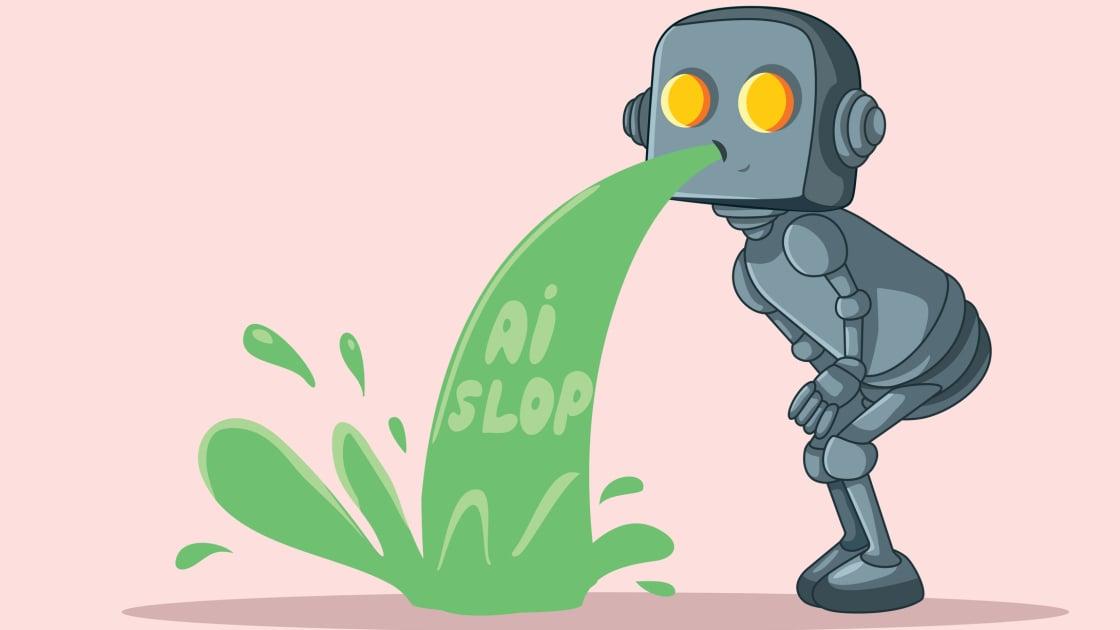
. While the first 16 videos were mercifully free of AI-generated content, the floodgates opened quickly thereafter. In total, 104 of the first 500 videos, or 21%, were AI slop, while 165, or 33%, qualified as brainrot3
.
Source: PC Magazine
Global Consumption Patterns and Top Earning Channels
The study also examined global consumption of viral AI content by analyzing the top 100 trending YouTube channels in every country
1
. South Korea leads the world in AI slop consumption, with its top 11 trending AI channels accumulating over 8.45 billion views3
. The country's Three Minutes Wisdom channel, featuring photorealistic footage of wild animals being defeated by cute household pets, has racked up 2.02 billion views by itself and earns an estimated $4 million annually2
.Pakistan ranked second with 5.34 billion views across its top AI slop channels, while the United States came in third with 3.39 billion views
2
. However, when measuring subscribers rather than views, Spain dominates with 20.22 million people subscribing to trending AI channels, followed by Egypt with 17.9 million and the United States with 14.47 million3
. The most popular AI channel globally is India's Bandar Apna Dost, which has accumulated 2.07 billion views and brings in an estimated $4.25 million per year1
.
Source: MediaNama
Why Creators and Platforms Have No Incentive to Change
The proliferation of AI-generated content on social media feeds is driven by simple economics. Content creation tools powered by AI generators like OpenAI's Sora and Google's Veo mean very low-cost or even no-cost content for creators
1
2
. When creators can generate videos with minimal effort and YouTube's algorithm reinforces this behavior by pushing these videos and rewarding engagement, the cycle continues unabated1
.Oleksandr, an AI YouTube creator based in Ukraine, told The Guardian that only the top 5% of creators ever monetize a video, and only 1% make a living from it
5
. Yet the potential for virality and substantial earnings keeps creators churning out content. The US-based Spanish-language channel Cuentos Facinantes has earned an estimated $2.66 million with 1.28 billion views2
.YouTube only serves up what it perceives as popular or engaging, meaning users must be watching this style of content
1
. While some platforms like Meta and Pinterest are taking steps to label AI content, and some AIs like Gemini can now detect whether a video was made by AI, as long as users keep consuming it, there's no incentive for creators or platforms to lessen AI slop1
. TikTok has rolled out features enabling users to keep AI slop out of their feeds, but YouTube has yet to implement similar measures2
.Related Stories

The Broader Context of AI Content Proliferation
YouTube isn't the only part of the web being overrun by AI-generated content. Written content is now more prominently AI-generated than ever, with the percentage of AI articles on the web slightly above 50% as of May 2025
2
. Even professional workplaces aren't immune, with four in ten employees in the United States receiving "workslop" material over the past year—AI-generated work content that lacks substance to meaningfully advance tasks2
.The flood of unreality represents an endpoint of an algorithmically determined internet optimized for engagement and turbocharged with powerful new tools
5
. It's also the product of an underlying global economy increasingly dependent on a few powerful technology companies and platforms, one which appears to offer dwindling returns for real work but lavish fortunes for the lucky, viral few5
. Merriam-Webster's selection of "slop" as its word of the year underscores how this phenomenon has come to define the internet experience3
.References
Summarized by

Navi
[2]
Related Stories
TikTok serves 59% AI slop to new users, with children's content hit hardest at 57%
21 Jun 2026•Entertainment and Society
AI Slop Floods Social Media as Platforms Introduce Filters Amid Growing User Backlash
29 Jan 2026•Entertainment and Society

YouTube AI crackdown punishes faceless creators who never used AI at all
15 Jun 2026•Entertainment and Society

Recent Highlights



Recent Highlights
Today's Top Stories









Don’t drown in AI news. We cut through the noise - filtering, ranking and summarizing the most important AI news, breakthroughs and research daily. Follow topics that matter to you and stay ahead.


