ChatGPT's Dreaming V3 memory upgrade lets it remember you better across conversations


7 Sources
[1]
ChatGPT can now remember you better by dreaming about you while it 'sleeps'
* ChatGPT "dreams" -- reviews past chats to learn, summarize, and improve responses. * It saves preferences and timelines (like completed trips) so suggestions stay current. * You can edit ChatGPT's dream summary; recall accuracy reportedly rose to 82.8%. It's near-impossible to guess where the
[2]
ChatGPT is getting better at remembering everything about you
It's rolling out to Pro and Plus users in the US, and will expand to Free users in the coming weeks. If you've been using ChatGPT for a while, you'd know that its memory feature can be quite useful. It remembers important information about you and tailors responses based on what it already knows.
[3]
ChatGPT Dreaming Memory Means You'll Never Have to Re-Explain Yourself Again
If you've ever opened a new ChatGPT session and had to re-explain who you are, what you do, or what you're working on, you're not alone. Every new chat basically starts from scratch. And if you've ever had the AI ask you something you already covered two conversations ago, you know how quickly that
[4]
ChatGPT now remembers your preferences automatically -- and it actually works
When not writing, Dave enjoys spending time with his family, running, playing the guitar, camping, and serving in his community. His favorite place is the Blue Ridge Mountains, and one day he hopes to retire there (hopefully his fear of heights will have retired by then, too!). * OpenAI has
[5]

Dreaming memory system rolls out to ChatGPT Plus and Pro users By Investing.com
Investing.com - OpenAI began rolling out a more capable memory synthesis system for ChatGPT on Thursday, designed to improve how the chatbot recalls user preferences and context across conversations. The new system, called Dreaming V3, addresses staleness and accuracy issues in ChatGPT's memory
[6]

OpenAI Dreaming explained: How ChatGPT updates your memory in the background
The new version of ChatGPT remembers you like never before, and it does so without you realizing it. OpenAI has released an enhancement to the memory function in ChatGPT, known as Dreaming, which is now accessible by Plus and Pro subscribers in America. This feature will run in the background and
[7]
ChatGPT can now remember more about you with OpenAI's new memory upgrade: Details
According to OpenAI, this new system is "significantly" more capable and compute-efficient. OpenAI has announced a major upgrade to ChatGPT's memory feature, making the AI chatbot better at remembering information about users and offering more personalised responses over time. To understand the
Share
Copy Link
OpenAI has launched Dreaming V3, a major upgrade to ChatGPT's memory feature that automatically learns from past conversations. The enhanced memory system boosts factual recall to 82.8% and will roll out to Free tier users for the first time, thanks to a 5x reduction in compute requirements.
ChatGPT Memory Feature Gets Major Overhaul with Dreaming V3
OpenAI announced on June 4 that ChatGPT is receiving significant improvements to its memory feature through a new system called Dreaming V3
1
2
. The enhanced memory system marks a departure from the chatbot's original note-taking approach, where users had to explicitly instruct ChatGPT to remember specific details. Instead, the new architecture automatically curates information from chat history in the background, allowing the AI to recall context, remember user preferences, and stay current over time without manual prompting4
.
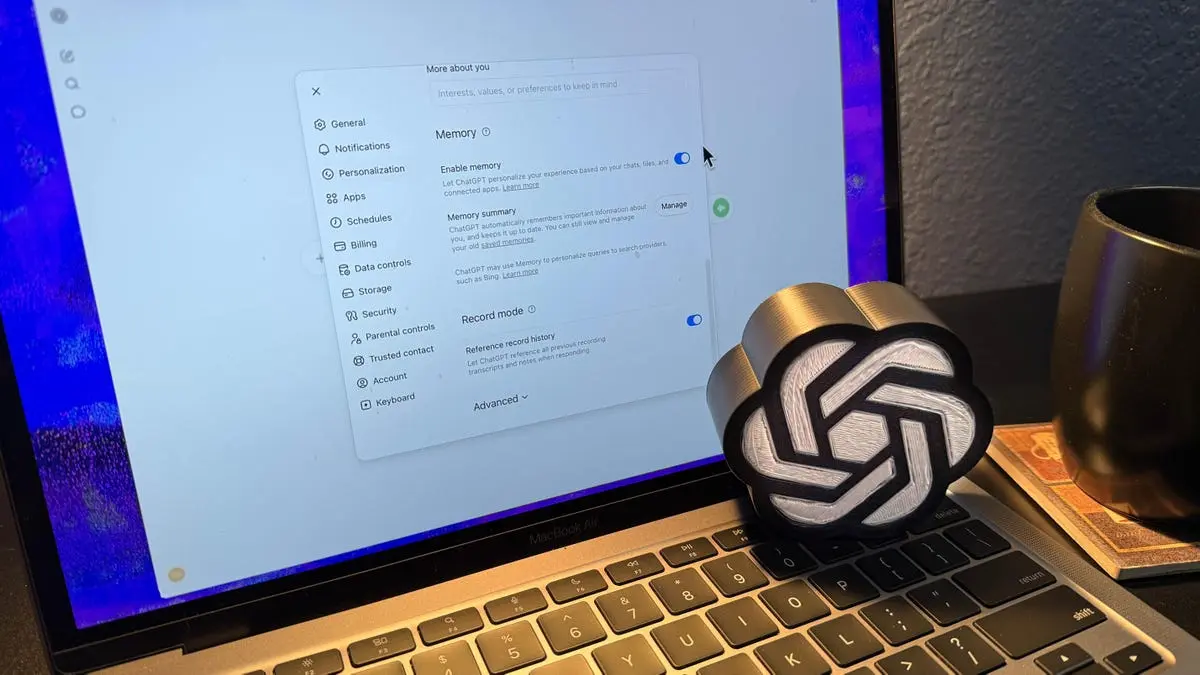
Source: Digit
The update addresses a persistent frustration among users who had to re-introduce themselves and their preferences with each new conversation
3
. When you start a new chat with ChatGPT, the AI can now build on prior context, especially for complex, long-running projects. For example, if you've discussed your camera setup in previous conversations, you can simply ask for products compatible with "my photography setup" and receive tailored recommendations1
.How Dreaming V3 Transforms User Experience
The ChatGPT memory system now operates through what OpenAI calls "dreaming"—a process where the AI reviews past chats to identify patterns, preferences, and important information
1
. This happens in the background while the chatbot isn't actively engaged with users. Dreaming V3 introduces several critical improvements that enhance personalization and user experience.One standout feature is temporal awareness. The system now understands the passage of time and automatically updates memories accordingly. OpenAI provides an example of a user planning a trip to Singapore in July. Previously, ChatGPT might continue assuming the user was still traveling long after the trip ended. With Dreaming V3, the AI can revise its memory from "You're going to Singapore in July" to "You went to Singapore in July 2026" once the trip concludes
2
. This temporal understanding prevents outdated context from interfering with current conversations.Users also gain access to a readable summary of everything ChatGPT knows about them
2
. You can review this summary, add or update information, and even edit the AI's "dreams" if something has been misremembered1
. This transparency matters, especially as OpenAI has indicated plans to use ChatGPT memory for personalized advertising in the future.
Source: MakeUseOf
Dramatic Performance Improvements and Wider Access
OpenAI evaluated the ChatGPT memory system on three key criteria: carrying forward context, following preferences, and staying current over time
4
. The results show substantial gains across all metrics. Factual recall task success jumped to 82.8% from 67.9% in 2025 and just 41.5% in 20245
. Preference adherence rose to 71.3% from 55.3% in 2025 and 31.4% in 2024. The system's ability to stay current over time reached 75.1%, up from 52.2% in 2025 and just 9.4% in 20245
.Perhaps most significant for AI development is the efficiency breakthrough. Recent improvements reduced the compute requirements to serve dreaming to Free tier users by approximately 5x
4
5
. This makes Dreaming V3 not only more capable but also more practical to deploy at scale. As a result, OpenAI is bringing the dreaming capability to Free tier users for the first time, democratizing access to advanced memory features previously reserved for paying subscribers.The rollout began with ChatGPT Plus and Pro users in the United States on June 4, with expansion to additional countries and Free and Go users planned for the coming weeks
2
4
. OpenAI is also increasing memory capacity for users on the Plus and Pro plans4
.Related Stories

What This Means for the AI Landscape
The improvements to how ChatGPT can recall context and remember user preferences position it ahead of competitors in the memory domain. While ChatGPT already had one of the better memories among AI agents, rivals like Claude have struggled with memory functionality
4
. Google has been developing its own memory import tool for Gemini, signaling that contextual memory has become a key battleground in AI development.
Source: Phandroid
The shift toward AI systems that "know you" raises important questions about personalization versus privacy. Users who find the concept unsettling can review exactly what ChatGPT knows, make corrections, or wipe their memory entirely from the new summary page. Those who prefer the old system can also revert to it in settings
4
.For users, the immediate benefit is clear: less repetition and more productive conversations. Whether you're managing complex projects, shopping for compatible equipment, or planning travel, ChatGPT can now carry forward the context that matters without constant reminders. As AI assistants become more integrated into daily workflows, memory systems like Dreaming V3 will determine which platforms feel genuinely helpful versus merely functional.
References
Summarized by

Navi
[2]
Related Stories
ChatGPT's Memory Upgrade: Enhancing Personalization and Long-Term Interactions
11 Apr 2025•Technology

ChatGPT Extends Memory Feature to Free Users: Enhancing Personalization and Continuity
04 Jun 2025•Technology

ChatGPT's new memory builds a profile of you automatically—and OpenAI admits you can't see it all
18 Jun 2026•Technology
Recent Highlights
1
Microsoft and Nvidia Launch Surface Laptop Ultra: A $2,599 AI-Ready PC With RTX Spark Chip
Technology

2
Trump Consulted Grok AI Before Ordering Venezuela Invasion and Capture of Nicolás Maduro
Policy and Regulation

3
Scientists Build AI Model That Reconstructs Images From Brain Scans in Record Time
Science and Research

Recent Highlights
Today's Top Stories







Don’t drown in AI news. We cut through the noise - filtering, ranking and summarizing the most important AI news, breakthroughs and research daily. Follow topics that matter to you and stay ahead.


