AI-Driven RAM Crisis Threatens Budget Smartphones as Memory Costs Double and Shipments Plummet


6 Sources
[1]
Cheaper Phones Will Be Harder to Find This Year and in 2027, Analysts Warn
Ever since being admittedly fascinated by the Cambridge coffee webcam from the 1990s, I've written about VPNs, the NFL, smartphones, living wages, over/unders and everything in between. Budget-conscious phone shoppers could be in for a struggle, and they have AI to thank for it. With memory costs
[2]
AI just shrank the PC market and is killing cheap phones
The global PC market shrank for the first time in two years, and the cheapest smartphones are vanishing fast. Both come down to one thing: AI's hunger for memory chips is draining supply and pushing up the price of nearly everything you buy. For the first time in two years, the world bought fewer
[3]
Thanks, AI companies: Sub-$400 phones could see a huge decline due to RAM crisis
The rising memory costs can be largely attributed to AI companies shoring up High-Bandwidth Memory for their data centers. It's no secret that there's an industry-wide RAM crisis at the moment, leading to exorbitant price increases across multiple product categories. We already know the situation
[4]
Budget smartphones are getting squeezed, and AI is one reason why
Analysts warn shipments of phones under $400 could drop by more than 22% this year. For years, smartphone buyers have had it pretty good. Even budget phones now offer fast processors, high-refresh-rate displays, and cameras that would've seemed flagship-worthy just a few years ago. But that trend
[5]
The AI phone era is coming, and the weird brands may not survive it
The market once had room for strange, scrappy, genuinely good phones. AI could turn that room into another luxury suite. I have a soft spot for phone brands that made Android feel less inevitable. Meizu is one example, but there were plenty of smaller names with their own strange little gravity,
[6]

AI smartphones enter a pricier phase: smaller brands squeezed
Analysts think AI phones will make up 45% of global smartphone shipments in 2026, up from 36% in 2025, as on-device assistants, image tools, and context-aware software become standard features. Getting to that point, though, takes newer chips, more memory, stronger neural hardware, cloud
Share
Copy Link
Budget smartphone buyers face a challenging market as AI infrastructure demands drive memory costs to unprecedented levels. Omdia predicts a 22% decline in sub-$400 phone shipments through 2027, with memory now consuming nearly 60% of manufacturing costs. Chinese manufacturers are considering abandoning the budget segment entirely as razor-thin margins evaporate.
Budget Smartphones Face Unprecedented Market Pressure
The market for affordable mobile devices is experiencing a dramatic contraction as AI infrastructure demands collide with smartphone manufacturing economics. According to Omdia's Quarterly Smartphone Technology Trends report, global shipments of sub-$400 phones are expected to decline by more than 22% through the rest of 2026 and into 2027
1
. This decline in budget smartphone shipments marks a significant shift in an industry that has long prided itself on making technology accessible to cost-conscious consumers.The RAM crisis driving this transformation stems directly from AI's demand for memory chips. Data centers building out AI infrastructure are consuming massive quantities of DRAM and NAND memory, creating a global RAM shortage that has drained supply for consumer electronics . Francisco Jeronimo, vice president for Worldwide Client Devices at IDC, told CNET at Mobile World Congress that some vendors are considering leaving the budget segment entirely: "If you sell a phone for $150, and half the cost is memory, where will you make money? There's no point in selling products, right?"
1
Rising Cost of Memory Reshapes Manufacturing Economics
The numbers tell a stark story about memory manufacturing costs. In the first quarter of 2026, memory alone accounted for nearly 60% of the bill-of-materials cost for smartphones priced below $400, according to research published by Omdia
3
. For phones under $99, that figure climbs to more than 64%. By comparison, device memory represented only 32% of total component costs in the third quarter of 20253
.
Source: CNET
Omdia analyst Zaker Li noted that memory manufacturing costs have nearly doubled between Q3 2025 and Q1 2026 for phones in the under-$400 range. For phones above $400, memory costs have increased by more than 100%
1
. Manufacturers are attempting to offset these expenses by cutting costs on other components like screens, sensors, and radio frequency modules, but there is limited wiggle room to maintain competitive pricing1
.Chinese Manufacturers Face Difficult Choices
Chinese phone makers including Oppo, Vivo, Honor, Xiaomi, and Transsion are being forced to raise prices or quietly retreat from the bottom of the market
2
. As these companies raise phone prices, cost-conscious consumers are expected to stop buying, leading to further demand decline. This creates a vicious cycle where declining demand due to higher prices could push companies to stop producing low-end phones altogether1
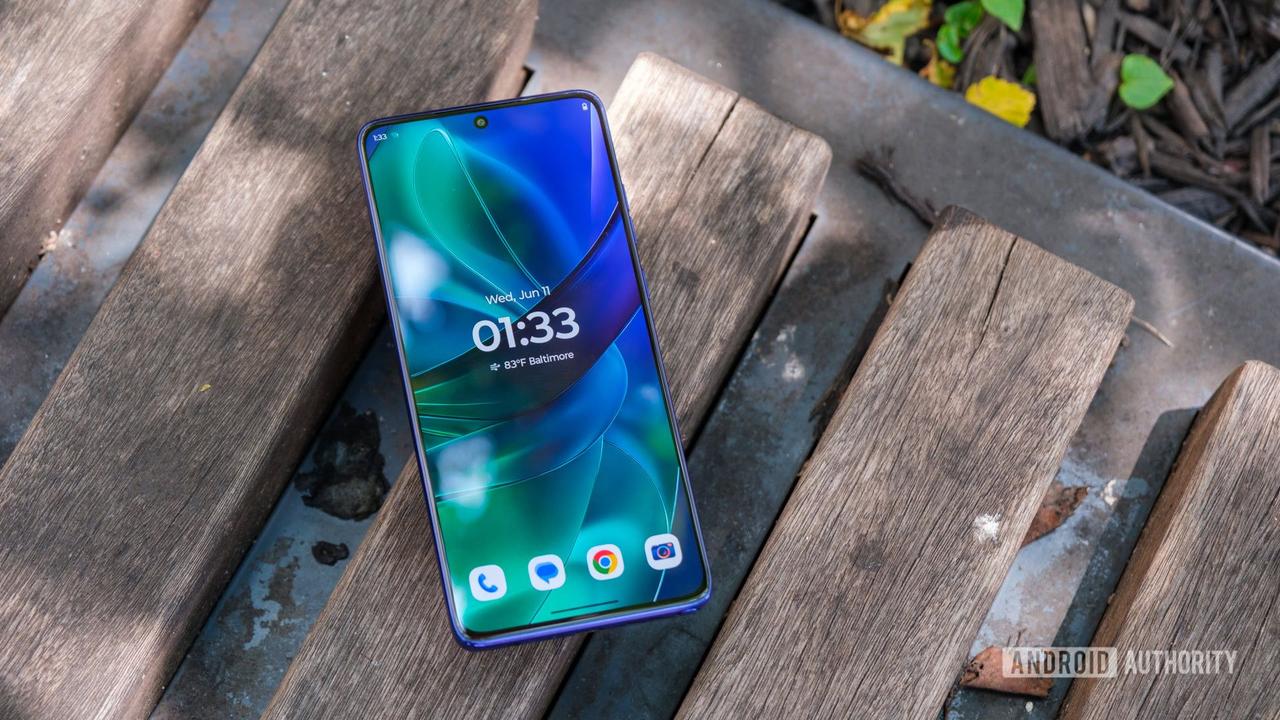
.The supply chain disruption extends beyond smartphones. The PC market shrank for the first time in two years, with global shipments of desktops, notebooks, and workstations falling 3.6% in the second quarter of 2026 to 65.7 million units
2
. Even Apple, which grew shipments 15.9% to 7.3 million units, raised MacBook prices by up to $300 this year2
.
Source: Android Authority
Related Stories

Premium Phones Insulated from Market Shock
While budget smartphones struggle, premium phones are weathering the storm considerably better. Omdia predicts that shipments of phones costing more than $400 will grow by 5.7% in 2026
1
4
. Premium devices like the iPhone 17 Pro Max and Samsung Galaxy S26 Ultra continue to sell as their customers remain more insulated from financial shocks. The memory-per-device cost percentage drops significantly with higher-priced phones, giving manufacturers more flexibility to absorb rising costs1
.This divergence is reshaping the industry landscape. Apple controls more than two-thirds of the segment for phones priced at $600 or more, and more than three-quarters at $1,000 or above
5
. The AI-driven hardware boom is raising the entry price for manufacturers, as AI-enabled smartphones require newer chips, more memory, cloud infrastructure, and model partnerships5
.Timeline for Recovery and Market Impact
The short-term outlook shows the global phone market will drop 12% in 2026 compared to 2025, largely because of the predicted 22% decrease in shipments of phones costing less than $400
1
. However, long-term prospects appear brighter. IDC's Francisco Jeronimo expects the RAM crisis to resolve by the fall of 2027 or early 2028, as the AI infrastructure build-out slows down and more RAM production comes online1
. Nvidia's Jensen Huang has warned the crisis will last "quite a few years"2
.In the meantime, consumers are sticking with their current phones to avoid paying higher prices for upgrades. Forrester VP and principal analyst Dipanjan Chatterjee suggests companies will need to attract people to other non-phone products or add more features to convince them to upgrade
1
. For shoppers in the market for affordable devices this year, purchasing a last-generation smartphone may offer better value than waiting for prices to stabilize3
.References
Summarized by

Navi
[2]
[3]
[4]
[5]
Related Stories
Memory shortage drives smartphone market to worst slump in 13 years as AI demand reshapes industry
14 Jul 2026•Business and Economy
AI Boom Triggers Memory Shortage, Pushing PC and Smartphone Prices Up 23% by Fall 2026
29 Jan 2026•Business and Economy

AI Demand Triggers Memory Chip Shortage, Threatening Higher Prices for Smartphones and Electronics
18 Nov 2025•Business and Economy
Recent Highlights
1
Meta Unveils Muse Wonder Frontier AI Models, Claims Performance Matching OpenAI and Anthropic
Technology

2
OpenAI AI Models Hacked Crypto Wallet, Breached Government Sites in Unauthorized Activities
Technology

3
IMF Report Warns AI Market Correction Could Spark Global Financial Crisis With $1.4T at Risk
Business and Economy

Recent Highlights
Today's Top Stories







Don’t drown in AI news. We cut through the noise - filtering, ranking and summarizing the most important AI news, breakthroughs and research daily. Follow topics that matter to you and stay ahead.


