Memory shortage drives smartphone market to worst slump in 13 years as AI demand reshapes industry


3 Sources
[1]
AI-driven memory crunch jolts India's smartphone market
Months after analysts warned that AI-driven demand for memory chips would ripple through consumer electronics, India is providing the strongest evidence yet that the disruption has arrived, with rising handset prices reshaping the smartphone market. The memory chips in question -- RAM and storage
[2]
The Memory Shortage Is So Bad That Smartphone Shipments Hit a Record Low
Global smartphone shipments fell 11% in the second quarter of this year, marking the lowest level since 2013, according to estimates from Counterpoint Research. To blame are soaring smartphone prices, driven incrementally higher as a global memory chip shortage worsens. "The global memory crisis
[3]
The smartphone market just hit its worst slump in 13 years, and your next phone will cost more
Sara Heritage is a tech and gaming journalist, who's currently making her way up to Master Ball rank in Pokemon Champions. Bylines in IGN, GAMINGbible, The Gamer and more. You can usually find her tinkering with tech, or restoring old consoles, always with one of her 3 cats nearby. Come and talk
Share
Copy Link
Global smartphone shipments plummeted 11% in Q2 2026, marking the steepest decline since 2013. The memory shortage, driven by AI's insatiable demand for high-bandwidth chips, has forced manufacturers to shift production away from consumer electronics. Budget phones face price hikes of up to 68%, while premium brands like Apple and Samsung continue to gain market share.
AI-Driven Memory Crunch Hits Smartphone Market Hard
The smartphone market has entered its most severe contraction in over a decade, with global smartphone shipments falling 11% in the second quarter of 2026, according to Counterpoint Research
2
. This represents the lowest shipment level since 2013, and analysts attribute the decline primarily to one factor: the memory shortage fueled by AI-driven demand for chips1
."The global memory crisis has now overtaken every other factor as the single biggest drag on the smartphone industry," said Shilpi Jain, senior analyst at Counterpoint Research
2
. The AI boom and unprecedented data center expansions have created skyrocketing demand for high-bandwidth memory chips, forcing manufacturers like Samsung, SK Hynix, and Micron to shift production capacity toward specialized chips used in AI accelerators1
. These chips deliver higher profitability per wafer than standard memory used in consumer electronics, leaving less capacity for everyday devices like smartphones and laptops.Price Hikes Reshape Consumer Affordability
The impact on pricing has been dramatic. Smartphone prices in India have risen between 4% and 68%, depending on the model, according to Tarun Pathak, vice president of research at Counterpoint
1
. Entry-level phones now cost over 50% more than they did last year3
, as DRAM/NAND flash memory can account for up to 60% of the cost in cheaper phones3
.India's smartphone market, the world's second-largest by shipments after China, provides stark evidence of this disruption. Smartphone shipments fell 10% year-over-year in the April-June quarter, marking the steepest June-quarter decline in six years
1
. The impact has been more pronounced in India than in China, where shipments fell just 2% in Q2, because about 60% of India's smartphone market is concentrated in the sub-₹20,000 (under $210) segment1
.Shipments in the sub-₹15,000 (under $150) segment fell 45% from a year earlier in India
1
, demonstrating how the AI-driven memory crunch disproportionately affects price-sensitive markets. Kiranjeet Kaur, associate research director at IDC, noted that the market is shifting from volume-led growth to value growth, meaning fewer phones are being sold overall, but each one generates more revenue1
.Premium Brands Gain While Budget Makers Struggle
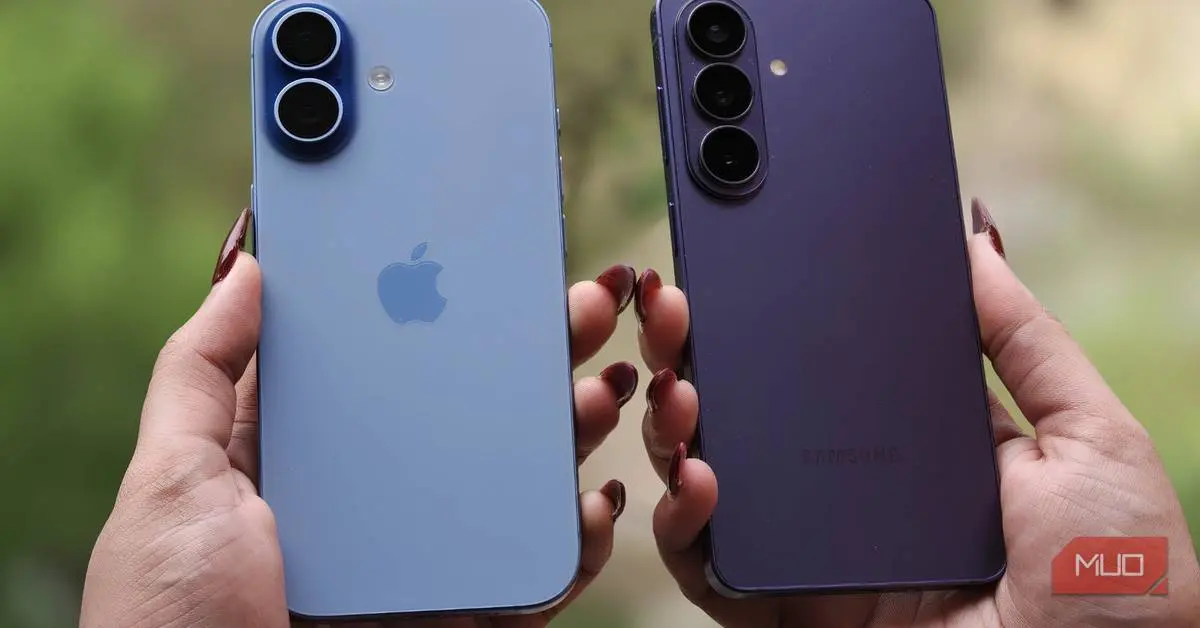
The uneven impact is reshaping competition among smartphone makers. Apple and Samsung have demonstrated resilience during this worst slump in 13 years, with both experiencing growth in the second quarter
2
. Samsung was the only major smartphone brand to post shipment growth in India in Q2, with volumes rising 2% year-over-year, driven by the flagship Galaxy S26 series1
2
.
Source: MakeUseOf
Apple's market share rose to a record 20%, largely because it has avoided price hikes that competitors were forced to implement
2
. However, this reality may change with the upcoming iPhone 18, which recent reports claim could be priced at least $200 higher than the iPhone 17 Pro2
. Apple CEO Tim Cook told the Wall Street Journal that the memory chip shortage had become "unsustainable," making price hikes "unavoidable." "This is a hundred-year flood," Cook said. "I've never seen anything like it in any area in over 40 years"2
.Meanwhile, budget-focused brands like Xiaomi and Oppo have faced the brunt of declining smartphone shipments hit a record low. Entry and mid-tier smartphones experienced major price hikes because production became "structurally unfeasible at previous price points," according to Jain
2
. Chinese brands, heavily exposed to entry- and mid-tier smartphones, saw their combined market share fall to its lowest level for a second calendar quarter since 20201
.Related Stories

Strategic Retreats and Market Consolidation
The tougher economics are prompting strategic shifts across the industry. Chinese smartphone brand OnePlus announced it would stop launching new products in Europe and North America while maintaining its India business
1
. Counterpoint data showed China accounted for 74% of OnePlus' global smartphone shipments to distributors and retailers in Q1, up from 59% a year earlier, while India's share fell to 19% from 30%1
. This pattern of retreating to profitable markets while ceding ground elsewhere is likely to repeat across other budget-focused brands as margins tighten.Pathak explained that running several sub-brands only makes sense if each one sells enough volume to cover shared costs, and that math stops working once margins get thin. "Sub-brands normally have overlaps and shared resources, and you need a minimum base to justify the cut-throat margins. Profitability is the key to deciding market operations," he said
1
.Long-Term Outlook Remains Challenging
The outlook for the supply chain remains pessimistic. SK Hynix CEO Kwak Noh-Jung told Reuters that he expects 2027 to be the worst year yet for the memory shortage. "We forecast that next year will be the worst year in the industry's history from the supply perspective," Kwak said. "We still forecast that customer demand will remain higher than our supply capacity even beyond 2030"
2
.Counterpoint expects shipments to be down around 14% for the full year 2026, with "overall demand recovery unlikely until memory supply conditions improve substantially"
2
. Some experts foresee the shortage and accompanying price hikes bleeding into the next decade2
.Consumers are responding by delaying upgrades, stretching replacement cycles to around four years from about 3.5 years previously
1
. Many are turning to the secondhand market or refurbished phones for better deals1
3
. Financing has become "central to affordability," particularly for consumers buying higher-end smartphones who have proved less sensitive to price increases1
.For those considering refurbished options, experts recommend checking battery health, ensuring the phone has been factory reset, looking for sellers offering warranties or return windows, and avoiding devices with signs of water damage or locked bootloaders
3
.References
Summarized by

Navi
[1]
Related Stories
AI-Driven RAM Crisis Threatens Budget Smartphones as Memory Costs Double and Shipments Plummet
05 Jul 2026•Business and Economy

AI Demand Triggers Memory Chip Shortage, Threatening Higher Prices for Smartphones and Electronics
18 Nov 2025•Business and Economy
Memory shortage driven by AI demand could keep prices high until 2027 or beyond
19 Apr 2026•Business and Economy
Recent Highlights
1
Microsoft and Nvidia Launch Surface Laptop Ultra: A $2,599 AI-Ready PC With RTX Spark Chip
Technology

2
Meta Muse AI Agent Surges to 6.6M Downloads Despite Privacy and Security Controversies
Technology

3
Scientists Build AI Model That Reconstructs Images From Brain Scans in Record Time
Science and Research

Recent Highlights
Today's Top Stories










Don’t drown in AI news. We cut through the noise - filtering, ranking and summarizing the most important AI news, breakthroughs and research daily. Follow topics that matter to you and stay ahead.


