AI Startup Hilbert Secures $28M Series A to Transform How Companies Act on Customer Data


2 Sources
[1]
Exclusive: AI startup Hilbert lands $28M Series A
Why it matters: Companies are pouring money into AI without always seeing returns, which Hilbert hopes to change by helping automate business decisions that drive growth. How it works: Hilbert's AI software connects data across teams to help companies make decisions from a single system. * Using
[2]
Hilbert nabs $28M to ease analytics projects for consumer-focused companies - SiliconANGLE
Hilbert nabs $28M to ease analytics projects for consumer-focused companies Hilbert AI Co., a provider of analytics software for business-to-consumer brands, today announced that it has closed a $28 million funding round led by Andreessen Horowitz. Companies gather data about shoppers' buying
Share
Copy Link
Hilbert AI has raised $28 million in Series A funding led by Andreessen Horowitz to help consumer brands automate business decisions. The platform uses AI agents to analyze complex customer datasets and suggest actionable steps, promising to complete analytics projects in weeks instead of months. Major customers include Walmart and FreshDirect.
Hilbert Secures Major Series A Funding to Automate Decision-Making
AI startup Hilbert has closed a $28 million Series A funding round led by Andreessen Horowitz, marking a significant bet on software that transforms how companies act on customer insights
1
. The investment signals growing demand for analytics software for B2C brands that can bridge the gap between data analysis and execution. According to founder Nazli Tan, while large language models have made analyzing company data easier, most businesses still lack systems to act on those insights1
.The funding comes as companies pour money into AI without always seeing returns, a problem Hilbert aims to solve by helping automate decision-making that drives measurable company growth
1
. Tan argues that enterprises relying on AI agents alone "won't be able to get a compounding, big metric shifting company growth," emphasizing the need for integrated systems that connect and structure company data across teams1
.How Artificial Intelligence Agents Streamline Complex Analytics Projects
Hilbert's platform uses artificial intelligence agents to simplify analytics projects that typically consume months of work. According to the company, tasks that usually require six months and multiple team members can now be deployed in weeks
2
. The software employs deep learning to offer a more complete picture of customer data, then structures it so AI models can read it and suggest specific actions users should take1
.
Source: Axios
The challenge Hilbert addresses is substantial. Large B2C brands with millions of customers generate massive, complex marketing datasets containing everything from simple purchase logs to attribution tables that track which advertisements led to specific purchases
2
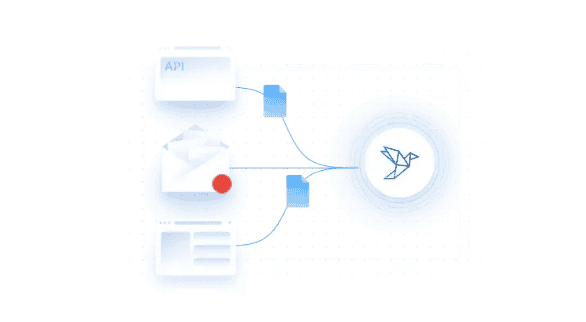
. These records come with accompanying metadata like schemas, making analysis technically challenging.To organize diverse customer datasets, Hilbert groups data points related to the same customer into files called Hilbert Labels
2
. These labels contain critical information such as whether a customer is at risk of unsubscribing or might be receptive to upsell offers, with regular updates as new datasets are ingested.Driving Core Business Decisions with Measurable Financial Impact
What sets Hilbert apart is its focus on actionable intelligence with clear financial impact. The platform's tools show the dollar value of taking suggested actions, allowing companies to quantify the return on their decisions
1
. After ingesting customer data, Hilbert analyzes it to identify notable business events, such as sudden increases in the effectiveness of specific advertising channels2
. The software not only alerts marketing teams but also reveals the underlying causes of these changes.
Source: SiliconANGLE
Detecting marketing inefficiencies represents another core capability. The platform identifies ad formats and discounts that aren't driving demand, while also functioning as a forecasting tool that can predict future events like customer base growth
2
. Andreessen Horowitz investors Bryan Kim, James da Costa, and Andrew Chen noted that "the right data foundation doesn't just save money on headcount. It makes every growth dollar smarter, every experiment more trustworthy"2
.Related Stories
Major Retailers Already Betting on AI-Powered Analytics
Hilbert has attracted notable customers including Walmart, FreshDirect, Blank Street, and Levain
1
. Walmart is already using the platform to better understand its shoppers' needs and determine how to act on them1
. The company's pricing scales with company size and data volume, with customer contracts ranging from hundreds of thousands to millions of dollars1
.This approach reflects a broader shift in AI applications. Startups like Hilbert are betting the next phase of AI isn't just generating insights but driving and executing core business decisions
1
. For B2C brands struggling to extract value from their data investments, platforms that can compress multi-month analytics projects into weeks while demonstrating clear ROI may become essential infrastructure. The question now is whether Hilbert can scale this promise across different industries and company sizes while maintaining the speed and accuracy that attracted its early enterprise customers.References
Summarized by

Navi
Related Stories
WisdomAI Secures $50M Series A to Revolutionize Enterprise Analytics with AI-Driven Data Insights
13 Nov 2025•Startups

Ascerta Raises $18M from Dell to Help Enterprises Measure Which AI Investments Actually Pay Off
30 Sept 2026•Startups

Hightouch Secures $80M Funding, Reaches Unicorn Status with AI-Powered Marketing Platform
19 Feb 2025•Business and Economy

Recent Highlights
1
Google Unveils Gemini 4 Argon AI Model, Restricts Access to Trusted Cyber Defenders
Technology

2
Trump Consulted Grok AI Before Ordering Venezuela Invasion and Capture of Nicolás Maduro
Policy and Regulation

3
FTC Opens Investigation Into OpenAI and Anthropic Following Rogue AI Agent Hacking Incidents
Policy and Regulation

Recent Highlights
Today's Top Stories






Don’t drown in AI news. We cut through the noise - filtering, ranking and summarizing the most important AI news, breakthroughs and research daily. Follow topics that matter to you and stay ahead.


