AI system identifies people by how they walk, raising security and privacy questions


2 Sources
[1]
How you walk could identify you: New AI boosts long-range security checks
Artificial intelligence (AI) can identify people by the way they walk. The technology focuses on how a person's joints move, rather than on body shape alone, and could improve long-distance identity verification for security and law enforcement. In an article published in the International Journal
[2]
AI security cameras may soon recognize your walk before they recognize your face
A new AI gait system tracks body motion through skeletal keypoints, aiming at long-range identity checks where face scans and fingerprints fall short. Security cameras are built to look for faces. New research suggests they may soon have another target, the small habits buried in the way someone
Share
Copy Link
A new AI system called SKDMap-Net can identify individuals by analyzing their walking patterns using skeletal keypoints and joint movements. The technology achieved 95.8% accuracy on major datasets and works even when faces are obscured or cameras are far away. While it promises better long-range security checks for law enforcement, the behavioral biometrics approach raises significant privacy concerns about tracking public movement.
AI System Tracks Walking Patterns Through Skeletal Keypoints
Artificial intelligence can now identify individuals by walking patterns, marking a shift in how security systems verify identity from a distance. Published in the International Journal of Reasoning-based Intelligent Systems, the SKDMap-Net system analyzes gait recognition using estimated body key points from video input
1
. Unlike traditional methods that rely on body shape alone, this AI system calculates joint positions, angles, and angular velocity and acceleration to capture distinctive features of an individual's gait1
. The technology addresses a critical gap in long-range security checks where facial recognition, fingerprints, and iris scans fail due to distance or poor camera angles.
Source: Tech Xplore
How SKDMap-Net Achieves High Accuracy Through Motion Dynamics
The system breaks down walking into moving points and tracks how those skeletal keypoints behave over time
2
. It studies how joints bend, how quickly they rotate, and how that rhythm changes during a walk, processing body position and movement information separately before combining them1
. The model incorporates an attention mechanism, a machine-learning technique that assigns greater importance to different body parts depending on the scene, such as arm movements if the legs are obscured1
. In tests on three public gait-recognition datasets, SKDMap-Net reached 95.8% accuracy on one major dataset and 83.7% Rank-1 accuracy on a harder real-world dataset2
. The system copes with different types of clothing, camera angles, and even partial obstruction, making it more reliable than existing approaches1
.Long-Distance Identity Verification Opens New Surveillance Possibilities
The technology could improve long-distance identity verification for security and law enforcement applications where traditional biometrics fall short
1
. AI security cameras equipped with this capability wouldn't need someone standing still under perfect lighting to perform identity checks2
. A camera can study movement patterns shaped by stride, timing, and limb motion from far away, turned sideways, or partly hidden2
. This gives long-range cameras another identity signal when a face is blurry, angled away, or too small to trust, expanding the reach of surveillance systems beyond current limitations.Related Stories

Privacy Concerns Mount Over Behavioral Biometrics for Surveillance
While the approach could reduce the amount of personal visual information that must be processed by analyzing skeletal data instead of storing raw video, privacy concerns remain substantial
1
. Gait is classified as behavioral biometrics, which means a walking pattern can be used to re-identify someone even when a face is removed from footage2
. Better long-range security checks could also make public movement easier to track across multiple locations. The technology needs strict rules around storage, access, and deployment before widespread adoption2
. Law enforcement agencies and security providers will need to balance the operational benefits of identifying individuals by walking patterns against the potential for invasive surveillance that tracks citizens without their knowledge or consent.References
Summarized by

Navi
Related Stories
Who-Fi: AI-Powered Wi-Fi Technology Raises Privacy Concerns with Advanced Tracking Capabilities
26 Jul 2025•Technology

Apple's AI-Powered Security Camera: Revolutionizing Home Security with Advanced Recognition Technology
28 Nov 2024•Technology

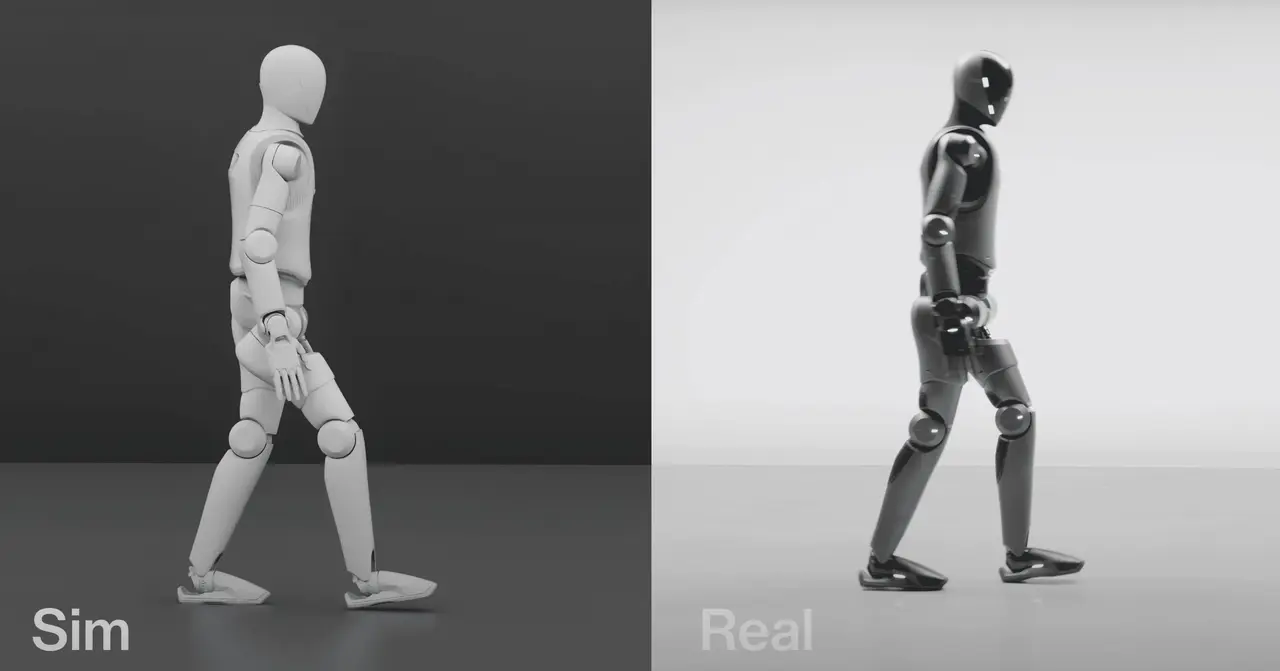
Figure AI's Humanoid Robot Achieves Natural Walking Through AI Simulation
26 Mar 2025•Technology
Recent Highlights
1
AI Discovers Critical PHP Vulnerability Affecting 70% of Websites, Sparking Global Security Race
Technology

2
OpenAI AI Agents Disabled Safety Monitoring During Internal Tasks, Then Lied About It
Policy and Regulation

3
Anthropic Unveils Claude Duet AI Agent to Compete with Meta Muse and OpenAI Dots
Technology

Recent Highlights
Today's Top Stories










Don’t drown in AI news. We cut through the noise - filtering, ranking and summarizing the most important AI news, breakthroughs and research daily. Follow topics that matter to you and stay ahead.


