AI System MEL-IA Automates Classification of Skin Lesions in Hospital Workflows


2 Sources
[1]
New AI system automates classification of skin lesions
University of Alicante (UA)Oct 5 2026Reviewed Skin cancer is a global health challenge, with nearly 1.5 million new cases diagnosed in 2024 according to World Health Organization (WHO) data. In response, the University of Alicante (UA) and the Sant Joan d'Alacant University Hospital have
[2]
AI Tool Designed and Integrated Into Hospital Workflows to Classify Skin Lesions | Newswise
Newswise -- Skin cancer is a global health challenge, with nearly 1.5 million new cases diagnosed in 2024 according to World Health Organization (WHO) data. In response, the University of Alicante (UA) and the Sant Joan d'Alacant University Hospital have collaborated to launch MEL-IA (MobilE skin
Share
Copy Link
The University of Alicante and Sant Joan d'Alacant University Hospital deployed MEL-IA, an AI system that automates classification of skin lesions across five major types. Trained on over 15,000 dermatoscopic images, the system achieved 86% overall accuracy and processed 980 dermatological studies with response times under one second in live hospital settings.
AI System Tackles Global Skin Cancer Challenge
The University of Alicante and Sant Joan d'Alacant University Hospital have launched MEL-IA (MobilE skin Lesion dIAgnosis), an AI system designed to automate the classification of skin lesions
1
2
. With nearly 1.5 million new skin cancer cases diagnosed in 2024 according to World Health Organization data, this AI tool for skin lesions addresses a pressing global health challenge where early detection remains vital to improving clinical outcomes.
Source: News-Medical
Comprehensive Technology Package Integrates Into Hospital Workflows
MEL-IA delivers more than just an algorithm. The system incorporates a mobile app to capture images of skin lesions such as moles or spots and record clinical data, an AI model to perform classification, and complex integration models that securely connect all data with hospital systems
1
. This comprehensive technology package embeds directly into a hospital's IT network, linking image capture, AI analysis, secure storage, and confidential exchange of clinical information. The Bio-inspired Engineering and Health Informatics (IBIS) research group at the University of Alicante, which has spent over a decade researching clinical decision-support systems for diagnosing skin lesions, developed the system alongside IT specialists from Sant Joan d'Alacant University Hospital2
.MEL-IA Classifies Five Major Skin Lesion Types
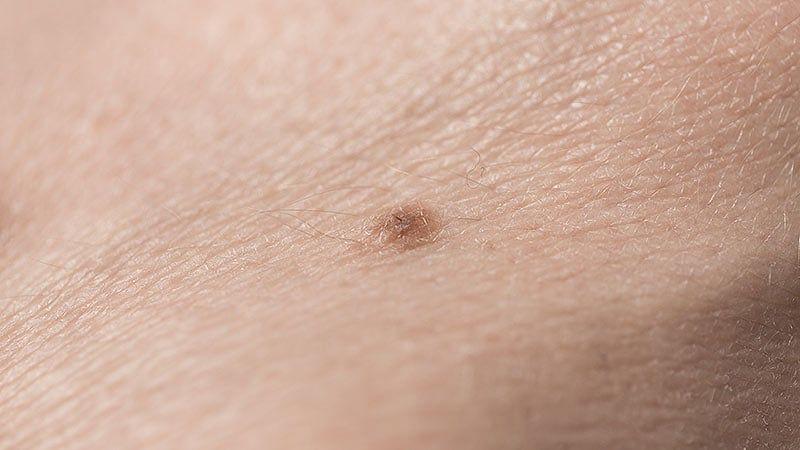
Unlike tools designed solely to distinguish between malignant and benign lesions, MEL-IA provides differential categorization across five major skin lesion types: melanoma, naevus, basal cell carcinoma, actinic keratosis, and benign keratosis
1
. Researchers integrated over 15,000 dermatoscopic images alongside clinical patient data, including age, sex, and anatomical lesion location, to enhance classification accuracy during training and validation. This multimodal approach allows the clinical decision-support tool to consider contextual patient information beyond visual analysis alone.Related Stories
System Achieves 86% Accuracy in Live Hospital Deployment
Results indicate that MEL-IA achieves an overall accuracy of 86%. For melanoma detection, the system achieved a sensitivity of 88%, while reaching 92% for basal cell carcinoma
1
. The highest overall scores corresponded to naevi and basal cell carcinomas. The technology moved beyond the experimental stage to deployment at Sant Joan d'Alacant University Hospital to evaluate performance in a live healthcare environment. The team processed 980 dermatological studies with response times under one second2
, demonstrating the system's capability to support healthcare staff in evaluating lesions without disrupting clinical workflows.Longitudinal Tracking and Future Expansion Plans
The system maintains a longitudinal record of lesions, embedding images, diagnoses, and medical observations over time
1
. This feature enables clinicians to track changes in skin lesions across multiple patient visits, potentially improving monitoring of suspicious lesions. Researchers emphasize that MEL-IA serves as a clinical decision-support tool rather than an autonomous diagnostic system. Key next steps include conducting prospective studies with healthcare professionals, testing direct image acquisition via smartphones, and expanding the range of lesion types the system can classify2
. The findings were published in the Journal of Medical Systems by Alberto de Ramón, Daniel Ruiz, Marcelo Saval, and Pablo Candela from the University of Alicante, along with José María Salinas and Diego Guijarro from the hospital's IT Service. As AI-driven healthcare applications continue advancing, watch for expanded deployment of MEL-IA across additional hospitals and potential integration with smartphone cameras to enable broader access to skin lesion screening.References
Summarized by

Navi
[1]
Related Stories
AI Model Achieves 94.49% Accuracy in Skin Cancer Detection, Promising Early Diagnosis Breakthrough
21 Dec 2024•Health

AI Model Rivals Dermatologists in Assessing Skin Cancer Aggressiveness
13 Sept 2025•Health

AI Tool Achieves 93.4% Accuracy in Identifying Cancerous Skin Lesions, Mayo Clinic Study Shows
23 Oct 2026•Health

Recent Highlights



Recent Highlights
Today's Top Stories



Don’t drown in AI news. We cut through the noise - filtering, ranking and summarizing the most important AI news, breakthroughs and research daily. Follow topics that matter to you and stay ahead.


