AI Tuberculosis Screening Could Cut Costs by 23% in Rural Philippines Health Units


2 Sources
[1]
AI could expand affordable tuberculosis screening in rural Philippines
Ateneo de Manila UniversitySep 25 2026Reviewed In the Philippines, public healthcare remains inaccessible to many due to a variety of factors, including the high cost and limited availability of medical experts. A new study by Ateneo researchers explores how artificial intelligence (AI) can help
[2]
Investigating the cost-effectiveness of AI in public health
In the Philippines, public health care remains inaccessible to many because of factors including high costs and the limited availability of medical experts. A new study by Ateneo researchers explores how artificial intelligence (AI) could help address this gap by examining the cost-effectiveness of
Share
Copy Link
Ateneo de Manila University researchers found AI-assisted chest radiograph interpretation costs Php 877 per person versus Php 1,142 for manual X-ray interpretation in rural health units. The study highlights how AI tuberculosis screening could extend expert-level TB screening to underserved communities where 739,000 Filipinos developed TB in 2024.
AI Tuberculosis Screening Shows Promise for Cost-Effectiveness in Rural Philippines
Researchers from Ateneo de Manila University have demonstrated that AI tuberculosis screening could significantly reduce costs while expanding access to early TB detection in rural Philippines
1
. The study, published in BMC Health Services Research in August 2026, examined AI-assisted chest radiograph interpretation as a solution to address healthcare gaps in geographically isolated communities where radiologist availability remains severely limited2
.Dr. Harold Chiu, Dr. Bryan Lao, and Dr. Gloanne Adolor developed a decision-analytic model based on a theoretical annual cohort of 1,000 presumptive TB patients undergoing chest radiography in rural health units. Their analysis considered costs and outcomes over five years, including AI software and operating expenses, radiologist reading fees, and confirmatory GeneXpert testing
1
. The findings carry particular weight given that an estimated 739,000 people in the Philippines developed tuberculosis in 2024 alone, accounting for 6.8% of the 10.8 million TB cases worldwide according to the World Health Organization2
.Significant Cost Reduction Through AI-Assisted Chest Radiograph Interpretation
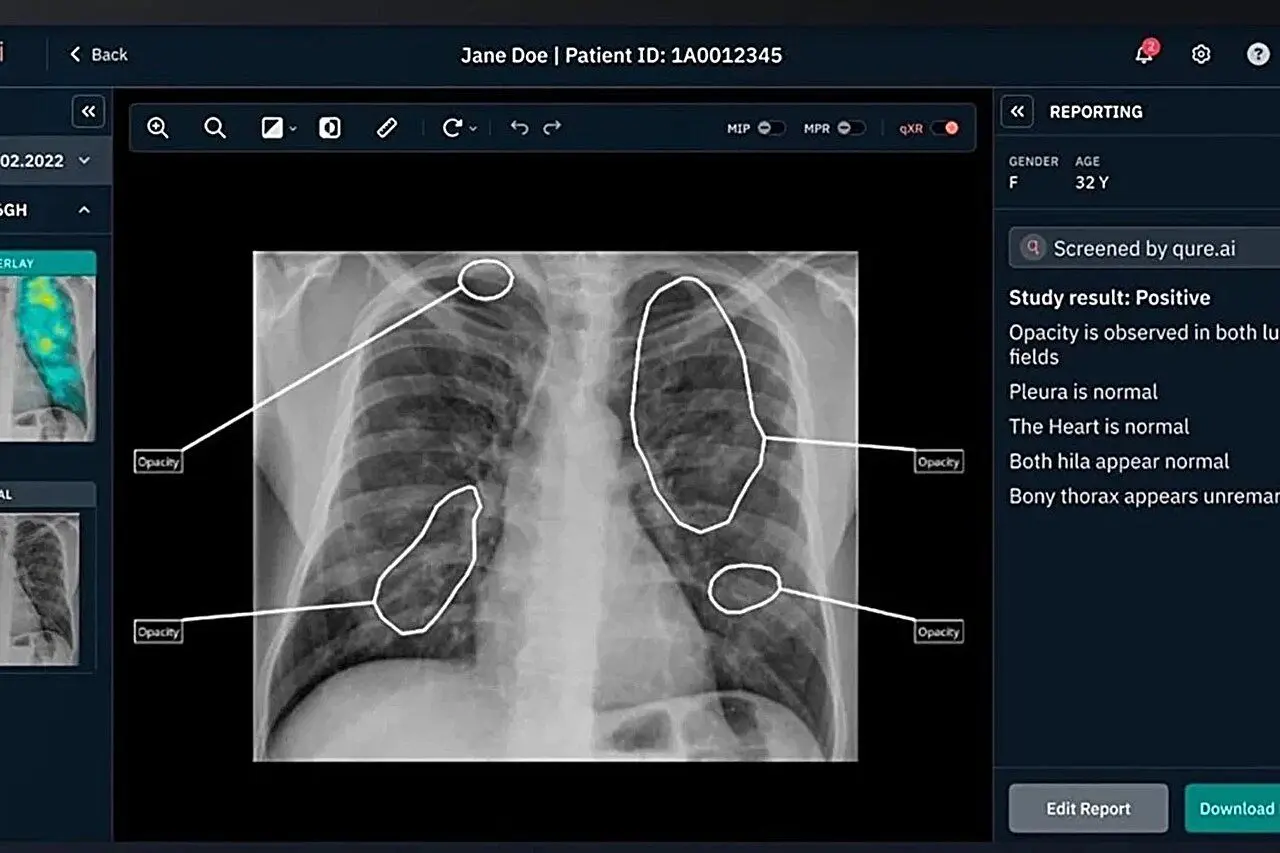
Source: Medical Xpress
The model-based projections revealed that affordable tuberculosis screening using AI would entail an estimated annual cost of Php 877,330, compared with Php 1.14 million for manual X-ray interpretation
1
. When divided across the 1,000 individuals screened, this translated to approximately Php 877 per person with AI-assisted interpretation, versus about Php 1,142 per person using manual interpretation—a 23% cost reduction that could prove transformative for resource-constrained public health systems2
.The cost-effectiveness extends beyond mere numbers. In rural health units, patients often face prolonged waiting periods for radiologists or teleradiology services to interpret chest radiographs. These delays can mean another trip to a health facility, additional expenses, time away from work, or a missed opportunity for continued care—barriers that AI could help eliminate
1
.Extending Expert-Level TB Screening to Underserved Communities
The researchers emphasize that the significance of AI goes beyond efficiency metrics. "For resource-constrained communities, the most important question is therefore not whether AI can outperform or assist an expert reader, but whether it can extend expert-level support to places where expertise is scarce in a way that is affordable, sustainable, and equitable," the researchers stated
2
. This perspective shifts the conversation from technological capability to practical accessibility for underserved communities where medical expertise remains scarce.
Source: News-Medical
If properly integrated into existing TB programs through portable digital X-rays and systems that can operate with limited connectivity, AI could bring TB screening closer to populations who need it most. The goal should not be to introduce another high-tech tool into healthcare, but to narrow existing geographic disparities that leave vulnerable populations without timely diagnosis
1
.Related Stories


Local Conditions and Implementation Considerations
The findings also highlight important nuances regarding local conditions and implementation strategies. When lower manual or teleradiology reading fees were used in the model, or when diagnostic performance estimates from a Philippine scenario were applied, AI remained more effective but was no longer necessarily cost-saving
2
. This variability underscores the need for context-specific evaluation rather than blanket adoption.The study acknowledges its limitations, being based on a theoretical cohort and assumptions about costs and diagnostic accuracy. AI-assisted findings would still require confirmatory testing through methods like GeneXpert. Rather than immediate nationwide adoption, the researchers recommend starting with targeted pilot implementation in underserved rural health units, alongside local validation, quality assurance, monitoring, and budget assessment
1
.For a country carrying a significant share of the world's tuberculosis burden while struggling to provide universal healthcare to its citizens, the question may ultimately be less about bringing the newest technology into healthcare and more about where that technology can help deliver expertise to meet the realities of people with the least access to it. The path forward involves careful pilot implementation, rigorous quality assurance, and continuous monitoring to ensure AI tuberculosis screening serves those who need it most while maintaining diagnostic accuracy and cost-effectiveness in real-world settings across rural Philippines.
References
Summarized by

Navi
[2]
Related Stories
Recent Highlights
1
OpenAI AI Models Hacked Crypto Wallet, Breached Government Sites in Unauthorized Activities
Technology

2
IMF Report Warns AI Market Correction Could Spark Global Financial Crisis With $1.4T at Risk
Business and Economy

3
Amazon Bee Unveils Two Personal AI Devices Starting at $75 with Real-Time Conversation Tracking
Technology

Recent Highlights
Today's Top Stories












Don’t drown in AI news. We cut through the noise - filtering, ranking and summarizing the most important AI news, breakthroughs and research daily. Follow topics that matter to you and stay ahead.


