AI Use in Schools Linked to Worst Student Performance Decline in 25 Years, OECD PISA Study Finds


5 Sources
[1]
Students are using AI in school and test scores are down, but the OECD finds that those who use it once or twice a week perform similarly to nonusers | Fortune
It may not be all doom and gloom for AI in the classroom -- there actually may be a Goldilocks effect. The OECD's latest Program for International Student Assessment (PISA) found that AI has led to a decline in multiple student skills as well as a drop in test scores, but moderate use is
[2]
15-year-olds are reading, calculating and reasoning worse than ever, thanks to AI, OECD finds
Global 15-year-olds show weakest performance in reading, math, and science tests. Reading scores declined significantly, with students now performing at a lower level. Mathematics also saw a sharp drop, while science remained relatively stable. Digital distractions and AI use present complex
[3]
AI has taken a toll on kids' brains -- removing technology from the classroom will fix that
Is it the end of the Flynn effect? Decades ago, the researcher James Flynn recognized a secular increase in IQ scores around the world that amounted to humanity getting smarter all the time. Now, technology appears to be pushing the other way. The new results are in from a 2025 Organization for
[4]
Global high school test scores plummet to 20 year low as AI and social media rot student brains
It's a brain rot pandemic! Students worldwide are getting dumber, with scores from a sweeping exam issued to teens around the globe tanking to 20-year lows -- and tech like AI and social media may be behind the brain-rotting culprits. Reading and mathematics scores plummeted nearly 20 points on
[5]
AI Use Contributes to Global Decline in Student Reading Skills, OECD Says
The widespread use of AI tools and social media platforms has contributed to a sharp deterioration in the reading skills of high-school students around the world, according to the OECD, with potential implications for the long-term economic outlook. The Organization for Economic Cooperation and
Share
Copy Link
The OECD's latest PISA assessment of 760,000 students across 91 countries reveals the sharpest decline in reading, math, and science scores in 25 years. While 86% of students now use AI chatbots for schoolwork, daily users score significantly lower than moderate users. The findings highlight a critical Goldilocks effect where weekly AI use shows promise, but excessive reliance undermines foundational skills.
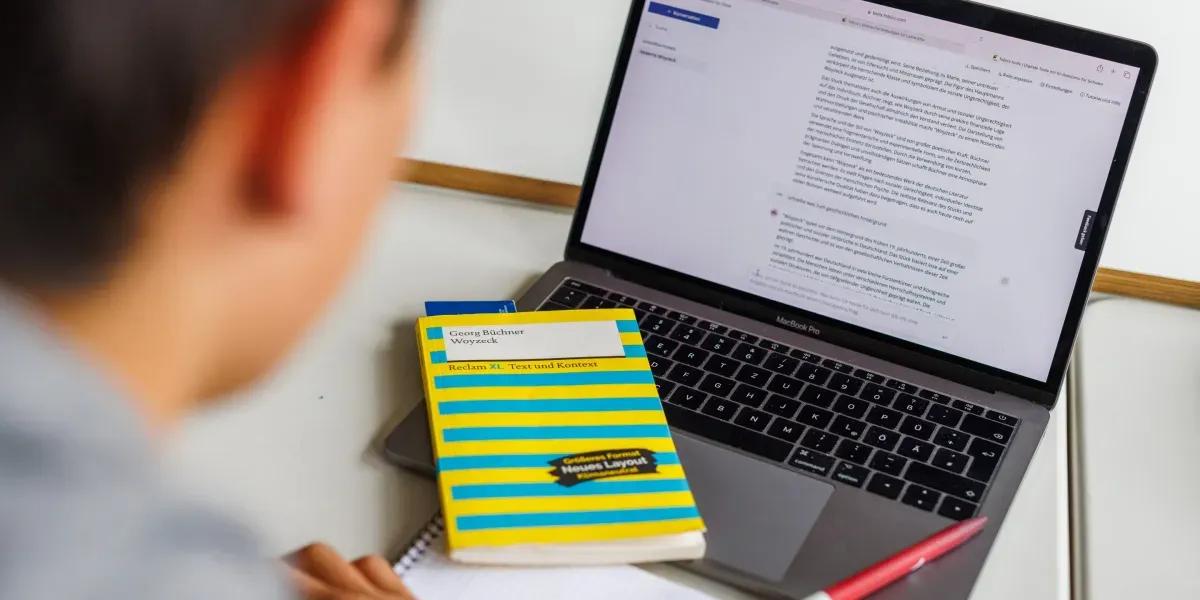
Global Student Performance Hits 25-Year Low
The OECD's Programme for International Student Assessment has revealed alarming trends in student performance decline across 91 countries, with 760,000 15-year-olds tested in 2025 showing the weakest results in reading, mathematics, and science since global testing began 25 years ago
1
2
. The decline in reading, math, and science scores represents more than just numbers on a test—it signals a fundamental shift in how students engage with learning in an era dominated by AI use in schools and digital distractions in classrooms.Reading scores across OECD countries dropped 28 points between 2015 and 2025, with 25 points lost between 2018 and 2025 alone
2
. Since 20 points roughly equals one year of schooling for a 15-year-old, today's students are reading at levels expected of students a year younger. Mathematics fell 22 points over the decade, while science proved more resilient, slipping just 7 points2
. The impact of AI on student performance has emerged as a central concern, with the global decline in student reading skills particularly troubling for long-term economic prospects.The AI Paradox: Moderate Use Shows Promise
The OECD PISA study uncovered a surprising Goldilocks effect in AI chatbot use for schoolwork. Students who used AI moderately—from about once a month to once or twice a week—recorded higher average science scores than both students who rarely used AI and those who used it almost every day
1
. The advantage was especially clear when students used AI to summarize assigned reading or conduct preliminary research on new topics.Students who reported using AI for these purposes weekly tended to perform at roughly the same level as AI nonusers after accounting for socio-economic gaps
1
. However, students who used it almost every day scored about 30 points lower than those who rarely touched it4
. Andreas Schleicher, OECD director for education and skills, explained: "You don't get fit by watching sport. If AI makes things easy, it's not great for you in the long run. It gives you better results, but it doesn't enhance learning"4
.The Rise of Hasty Readers and Declining Critical Thinking
One of the most troubling findings centers on the erosion of foundational skills essential for cognitive engagement. The share of hasty readers—students who rush through texts and give quick but incorrect answers—nearly doubled between 2018 and 2025, rising from about 7% to 11%
2
1
. Meanwhile, the share of accurate, fluent readers fell by about 7 percentage points over the same period.Performance dropped most sharply on tasks requiring critical thinking—evaluating information, making connections across multiple sources, and thinking critically about content
1
. Schleicher noted that students become "quicker but less accurate readers," no longer excelling at reflection and critical thinking5
. This pattern aligns with the Flynn effect reversal, where decades of increasing IQ scores appear to be reversing due to digitalization and screen time3
.Digital Distractions and Social Media Impact
Across OECD countries, 28% of students reported that classmates are distracted by digital devices in most or every science lesson
2
. Students reported spending about 1.7 hours daily on digital devices for learning at school and 1.1 hours for leisure while at school. AI and social media use showed particularly alarming correlations—students who excessively used social media at school performed about 44 points worse in mathematics than those who barely did4
.Schools implementing banning smartphones on premises recorded lower distraction levels, with nearly half of students across OECD countries now attending such schools, up from 34% in 2022
2
. Schleicher emphasized: "It's the only thing that works. The only reduction of destruction was the cell-phone ban"5
.Related Stories

Surprising Trends Among Advantaged Students
The OECD PISA study revealed an unexpected pattern: socio-economic gaps in performance narrowed between 2022 and 2025, but not due to gains among disadvantaged students. Instead, advantaged students experienced the largest score declines
2
. In science, disadvantaged students' performance held steady while advantaged students' scores fell 8 points. In reading, disadvantaged students slipped 4 points against a 20-point drop among advantaged students2
.This suggests what Schleicher called "a new phenomenon, with the biggest factor in the overall drop in scores being advantaged students who are performing below what one would expect given their background"
5
. Socio-economic background nonetheless remains a strong predictor of achievement, accounting for 12% of within-country variation in science performance.What This Means for Education's Future
The decline in student performance carries significant implications for long-term economic outlook, as most economists believe growth is partly driven by improvements in education levels
5
. While new AI tools promise to raise productivity among existing workers, the PISA results suggest they could already be lowering productivity levels among future workers.Education writer Daisy Christodoulou suggests schools might need to become "gymnasia for the mind"—places that allow students to practice and acquire foundational skills no longer directly rewarded in daily life but still vital
3
. The OECD findings indicate that moderate and intentional use of AI for schoolwork and learning may be positively related to student performance, but excessive or unguided use contributes to distraction and shallower engagement1
.With 86% of students across OECD countries having used AI chatbots for at least one schoolwork purpose, and about one in five using it almost every day
1
, educators face mounting pressure to establish guidelines that harness AI's benefits while protecting the cognitive struggle essential for genuine learning. As the report notes, "learning does not occur through the consumption of content, but as a productive cognitive struggle of the mind with new material"1
.References
Summarized by

Navi
[3]
[4]
[5]
Related Stories
AI in Education Surges as Experts Warn of Critical Thinking Decline and Learning Risks
14 Mar 2026•Policy and Regulation

AI in Education: Reshaping Learning and Challenging Academic Integrity
12 Sept 2025•Technology

MIT Study Reveals Cognitive Costs of Using ChatGPT for Writing Tasks
18 Jun 2025•Science and Research

Recent Highlights



Recent Highlights
Today's Top Stories







Don’t drown in AI news. We cut through the noise - filtering, ranking and summarizing the most important AI news, breakthroughs and research daily. Follow topics that matter to you and stay ahead.


