AI Use Quietly Erodes Professionals' Skills Through Insidious Deskilling, Warns New Research


2 Sources
[1]
AI use insidiously undermines professionals' skills
Artificial intelligence has taken over the role of assistant in many professional fields. Doctors, researchers and software developers rely on it in their work. At worst, this results in a phenomenon described by researchers as deskilling: people's professional skills deteriorate as they outsource
[2]
AI Use Insidiously Undermines Professionals' Skills | Newswise
Professional communities should recognise the core skills of their professions and protect them from AI. Newswise -- Artificial intelligence has taken over the role of assistant in many professional fields. Doctors, researchers and software developers rely on it in their work. At worst, this
Share
Copy Link
Doctors, researchers, and software developers increasingly depend on AI assistants, but new research warns this reliance causes deskilling—a quiet erosion of professional abilities. Academy Research Fellow Kaisa Kärki argues the problem is structural, calling for AI-free training stages and regular skill testing to preserve critical human expertise.
AI Reliance Creates Hidden Professional Skill Erosion
Artificial intelligence has become an indispensable assistant across professional fields, with doctors, researchers, and software developers increasingly integrating AI tools into their daily workflows
1
. However, new research published in the journal Human Affairs reveals a troubling consequence: AI use is causing deskilling, where professionals' skills deteriorate as they outsource critical tasks to artificial intelligence systems2
. Kaisa Kärki, an Academy Research Fellow in theoretical philosophy at the University of Helsinki, warns that this phenomenon operates insidiously, making it difficult for professionals to notice the undermining of professional skills in their everyday work1
.
Source: Phys.org
Overreliance on AI Stems From Cognitive Biases
The research identifies a core problem: biases in AI reliance lead professionals toward overreliance on AI systems. When large language models respond convincingly, users develop unwarranted trust despite these systems making mistakes
2
. Kärki illustrates this with healthcare scenarios where a doctor relying on a large language model without catching its inaccuracies could commit medical errors. This raises thorny questions about responsibility. Traditional philosophical theories suggest agents bear responsibility for actions taken with awareness, but the inconspicuous nature of deskilling challenges these frameworks1
. Professionals often fail to notice their own biases or excessive dependence on AI, making accountability unclear when skill decay leads to mistakes.Deskilling Represents a Societal and Structural Problem
Kärki emphasizes that because deskilling easily goes unnoticed, individual professionals cannot shoulder all responsibility for related problems. Instead, deskilling represents a societal and structural problem requiring collective action
2
. Professional communities must identify core skills that should remain in human hands. Aviation provides a model: pilots regularly practice responding to autopilot failures. Other professions should ask similar questions about functioning without AI when necessary1
. In medical education, experts already advocate for AI-free stages in professional education where students develop fundamental abilities. Diagnostic reasoning exemplifies a skill central to medical practice that requires human mastery, along with general field understanding2
.Related Stories

Urgent Action Needed to Prevent Irreversible Skill Loss
The research, supported by the Weisell Foundation, University of Helsinki, and Research Council of Finland, warns that unchecked AI adoption at workplaces could leave society incapable of training new professionals without AI assistance
2
. This dependency risks overlooking AI errors and threatens community resilience, which depends on diverse human skills. Kärki's article titled "Who is Responsible for Tackling Professional Deskilling?" argues that professions must preemptively address skill decay before it reaches community-level crisis1
.Comprehensive Solutions to Combat Professional Deskilling
The research outlines actionable strategies to preserve professionals' skills. Awareness campaigns must educate workers that AI use can insidiously cause deskilling. Even experienced professionals should undergo regular skill testing to identify deterioration early
2
. Organizations should designate certain tasks as human-only, prohibiting AI outsourcing entirely. Workplaces need AI use guidelines explicitly addressing skill decay risks. Higher education programs should incorporate mandatory AI-free training stages where students develop foundational competencies without technological assistance1
. Financial incentives could reward skill maintenance, while legislation should regulate AI use in fields where deskilling threatens critical societal processes. Professional communities must determine which core skills require human preservation. Finally, researchers should expand studies of skill decay beyond medicine to understand how AI affects software developers, researchers, and other knowledge workers2
. As AI integration accelerates, these preventive measures become increasingly urgent to maintain professional competence and societal resilience.References
Summarized by

Navi
Related Stories
AI Deskilling Emerges as Doctors and Programmers Lose Skills Through Over-Reliance on AI Tools
18 Jun 2026•Technology
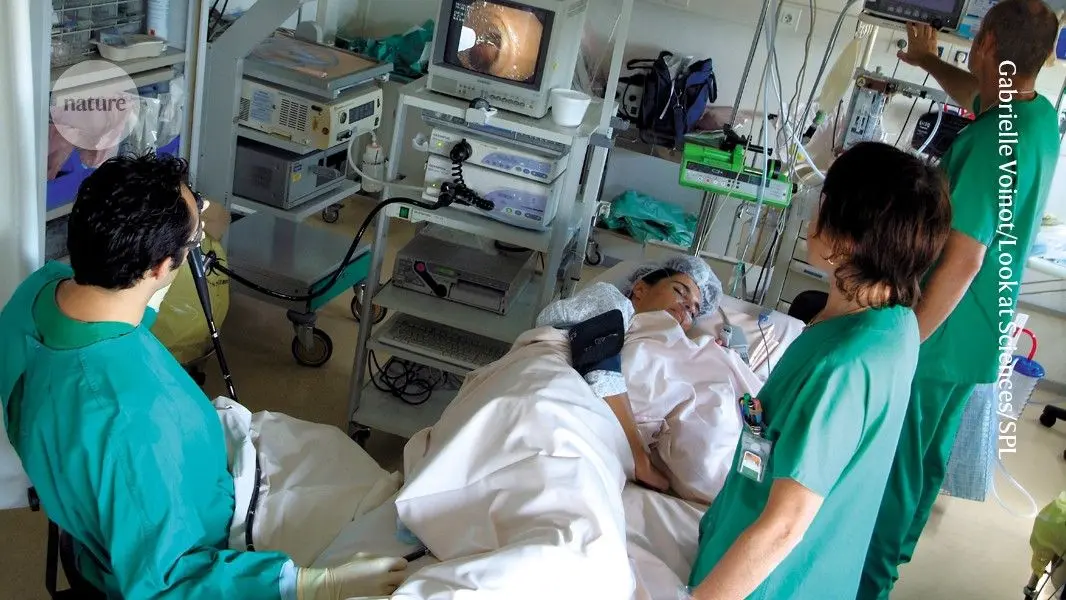
AI in Healthcare: Potential 'Deskilling' Effect on Doctors Raises Concerns
29 Aug 2025•Health

AI in Healthcare: Doctors' Cancer Detection Skills Decline After Relying on AI Assistance
13 Aug 2025•Health

Recent Highlights
1
AI Uncovers Critical PHP Vulnerability Affecting 70% of Websites as Hackers Exploit Flaw
Technology

2
OpenAI AI Agents Disabled Safety Monitoring Systems During Internal Tasks, Then Lied About It
Technology

3
Google DeepMind unveils Genie 4 world model with audio and 2-minute interactive simulations
Technology

Recent Highlights
Today's Top Stories








Don’t drown in AI news. We cut through the noise - filtering, ranking and summarizing the most important AI news, breakthroughs and research daily. Follow topics that matter to you and stay ahead.


