12 Sources
[1]
Australia wants to 'manage' AI. What will that look like?
Today, prime minister Anthony Albanese laid out how his government plans to manage artificial intelligence (AI) and ensure the rapidly advancing technology works in Australia's interest. In a major speech at the University of Sydney, Albanese declared that AI "is a bigger challenge and a bigger opportunity than social media", and that Australia must move now to determine its "social licence" and capture the opportunities it presents. Key to the government's plans is the immediate establishment of an Office of AI within the prime minister's own department and the creation of new national standards for AI. This news comes as a group of leading economists and AI researchers urge policymakers and tech companies around the world to prepare now for how the technology could reshape the global economy on a much bigger and faster scale than the Industrial Revolution did. A new office and new standards Albanese said the new Office of AI will coordinate AI policy across government, rather than leaving individual departments to develop their own approaches. This will be similar to how the government developed coordinated approaches for other significant technologies such as civil aviation and genetics. The office will also help coordinate the design of new national standards for AI. These standards, which Albanese said will be legislated early next year, will build on the government's previously announced expectations for data centres. They will, for example, create a new legal obligation for large data centre operators to underwrite their own power supply, not increase household power prices, and minimise water usage. Other countries are also grappling with how best to handle this issue. Indeed, hours before Albanese's speech, New York enforced a one-year moratorium on the building of new data centres. There are growing calls for Australia to do the same. But Albanese suggested his government would not be heeding these calls. As he said: No government can turn back the clock or press pause on all of this. Nor would we want to. That would only mean cutting ourselves off from the opportunities that are there to be seized. Protection for artists and creative industries Albanese also reiterated his government's commitment to the "strongest possible protection" for artists, musicians and journalists, who should retain ownership and control of their works in the AI age. Last year the Labor government rejected a copyright exemption that would allow AI companies to use protected content for free when developing AI models. In contrast to other jurisdictions (such as the United States, European Union and Japan), Australian AI developers will still have to pay for creators' content. This approach is fair. But the government has since been grappling with how to ensure this policy does not disadvantage Australian AI developers and the payments reach actual creators. In his speech today, Albanese promised laws to address this. But he did not provide any clarity on what they might look like. Where does Australia sit internationally? By establishing the AI Office and developing national standards for AI, Australia is trying to position itself as an international leader in AI policy. But Albanese's claim that Australia "will be the first country in the world to bring [AI] issues into a single, national framework" is overstated. For example, the European Union adopted the AI Act back in 2024. This established strict regulation especially for high-risk AI. It also established the EU AI Office to coordinate the implementation of the AI Act and protect people against the risks of the technology. This year, however, the EU Commission introduced amendments to weaken some of the requirements in the AI Act and postponed certain implementation deadlines. This "watering down" of the AI Act is intended to boost AI innovation in the EU. It comes after AI developers have been complaining that strict EU regulation slows down AI development. Other countries seem to also favour a pro-innovation approach, instead of strong regulation. South Korea, for example, has introduced an AI Basic Act for high impact AI systems, but its rules are much less strict than in the EU. Japan has opted for voluntary guidance for the AI sector. So Australia's decision not to introduce hard regulation (such as mandatory AI guardrails) but rather rely on softer standards and national-level coordination appears to align with international trends. A starting point The new standards and office announced today are a good starting point for managing AI. So too is Albanese's promise to protect creative industries whose content has been used by AI companies to train their large language models without consent. However, we don't yet know how, or how well, the government will do this. Much more work and leadership from the government is needed - especially in relation to mitigating the wide array risks of AI, from misinformation and deceptive deep-fakes, anti-democratic propaganda, health AI apps causing health safety issues, and public security challenges. And while the government hopes its new AI standards will allay community fears about data centres, the news out of New York is likely to only fuel the push in Australia to hit "pause" on them.
[2]
Australia demands AI companies must produce more energy than they consume, stop 'theft' of content
Australian Prime Minister Anthony Albanese has delivered a landmark speech outlining the nation's AI policy, which will require datacenter builders to contribute more energy than they consume and mean AI companies must reach agreements with local artists and media before using their content. "Let me make this crystal clear - not everything produced in Australia is up for grabs," Albanese said, a reference to both content and the nation's energy and water resources. The PM said Australia will therefore legislate to require builders of large new datacenters to become net generators of energy, rather than consumers, by funding electricity generation projects to meet their needs and pay for associated work to bolster energy grids. The policy also requires datacenter operators to pay for water infrastructure and make minimal environmental impacts. The PM expects Australia's states and territories to sign up to his plan so the nation can offer expedited approval processes for datacenter builds and consistent operating standards that apply across the country. Nationwide laws, Albanese argued, will make Australia a more attractive destination for inbound investment by making it easier for AI companies to plan new datacenters - and perhaps offset other elements of the policy that are more onerous than laws in other countries. "Australian writers, musicians, artists and journalists, must retain ownership and control of their work," Albanese said. "Anything less is theft." He said Australia's approach "will ensure Australian writers, artists and journalists retain ownership over their work, meaning no company should use Australian creative works to train AI without the artist's control." The PM added his view that no country has given artists and rights-holders sufficient control of how AI companies use their works. Albanese didn't say how he plans to enforce that control, but his speech framed the effort to do so as getting ahead of AI before big players get too much power. Albanese asked his audience to imagine how much better off Australia would be if it had regulated social media a decade before the 2024 introduction of a ban on children aged under 16 accessing such services. He also compared the AI plan to past landmark reforms won by the global labor movement, such as winning a minimum wage and fixed working week. The PM also said that without regulations of this sort, Australia will effectively outsource its security to big tech companies. "If we are always dependent on someone else, somewhere else, we will be vulnerable," he said. The AI policy aims to instead make Australia stronger. Albanese argued that Australians should not see AI as a threat to jobs, but that strong policy can make the technology a means to create new ones - beyond employment created by a short-term datacenter construction boom. The PM wrapped his speech by suggesting AI can stand for "Australia's Interest" as well as "artificial intelligence." ®
[3]
View from The Hill: Albanese takes oversight of government's response to AI under his own wing
Prime Minister Anthony Albanese is taking direct oversight of the government's handling of Australia's AI rollout by establishing an Office of AI in his own Department of the Prime Minister and Cabinet. Albanese will announce the new office, which starts operation immediately, in a major speech on Wednesday. Extracts were released ahead of delivery. His message will be positive: that handled properly, AI can be made to work in Australia's interests. The address emphasises the whole-of-government approach to be taken to the rapidly developing technology that is presenting vast opportunities, especially for productivity, but also raising widespread concerns on many fronts. These range from potential job losses to issues around data centres. An Essential poll in May showed the considerable suspicion around AI: 36% said it carried more risk than opportunity, with only 22% saying it carried more opportunity than risk; 41% saw the risks and opportunities as about the same. Albanese says the Office of AI will work closely with Industry Minister Tim Ayres, and Assistant Minister for Science, Technology and the Digital Economy, Andrew Charlton, "to co-ordinate the design of our new Australian Standards and to bring together the work ministers are undertaking across government". Outlining individual ministers' activity, the prime minister says: * Energy Minister Chris Bowen is working with states and territories and energy market bodies * Attorney-General Michelle Rowland has been facilitating consultation on copyright and protection of artists * Treasurer Jim Chalmers will be responsible for AI in the productivity agenda * Employment Minister Amanda Rishworth is liaising with employers, workers and unions * Education Minister Jason Clare is meeting his counterparts on Wednesday to discuss AI's impact in schools "This is in addition to ongoing work in everything from the design of our digital duty of care, to the risks that chatbots pose to children to the intersection of AI and skills and manufacturing, and - importantly - AI in defence and national security," Albanese says. He points out the 2026 National Defence Strategy indicates AI and machine learning hold "the most significant potential for technological disruption" in coming years. "We know that both extremists and state actors already use AI to create propaganda aimed at young people - and to spread disinformation that targets democracies," Albanese says. Defence Minister Richard Marles and Home Affairs Minister Tony Burke are working with their agencies - and Australia's Five Eyes Partners - on these national security matters. Australia "will be the first country in the world to bring these issues into a single, national framework," Albanese says. "And getting this right will enhance our appeal to international investors, by delivering greater clarity and speed for approvals, and a streamlined process for verifying compliance." Albanese says that so far the government response has been "issue-by-issue, sector by sector". "But just as government developed co-ordinated approaches for other significant technologies: from civil aviation in the 1920s to genetics in the 1990s, we must do this with AI as well." Former industry minister Ed Husic, who when responsible for the area championed an interventionist rather than light touch approach, on Tuesday again emphasised the need for robust action. "None of these firms will go one out from the other to bring in guardrails to limit the risks, because their investors will ask questions about, well, why are you doing this when others are working without guardrails? "So it really is incumbent on governments to set consistent national rules that protect Australians who already distrust AI from the toughest, hardest risks of generative AI." He also urged restraint on data centre construction, saying there had been a "bit of a frenzy going on" in relation to these builds. "Land gets snapped up that should have been set aside for houses, and we've already got 90,000 workers short in construction," he told Sky . "So, if we are having a situation where data centres are now taking up land for homes, we've got to pump the brakes on this." Next week's ALP national conference will discuss AI, with the unions anxious for job protection. Labor's draft platform for the conference says Should AI adoption lead to the displacement of jobs at a significant scale, Labor will play an active role in an economy-wide transition.
[4]
Anthony Albanese promises fast-track approvals for datacentres to shore up AI investment
PM to declare Australia the first country worldwide to bring economic, social, security and environmental issues from AI under single office in major speech Anthony Albanese says the federal government will introduce faster approval processes for AI projects, including datacentres, across Australia, seeking to shore up investor certainty and maintain community confidence in the rapidly advancing technology. Announcing the creation of a new office of AI to be established within his department in a major speech on Wednesday, the prime minister will declare Australia is set to become the first country in the world to bring the economic, social, national security and environmental issues stemming from AI into a single, national framework. Excepts of the speech provided to Guardian Australia did not detail the government's plans on copyright laws, as Labor comes under intense pressure from AI companies seeking exemptions or carve outs to train large language models. "Getting this right will enhance our appeal to international investors, by delivering greater clarity and speed for approvals, and a streamlined process for verifying compliance," Albanese will tell an event. "It also imposes an important discipline on government." The speech - set to be closely watched at home and abroad - comes as Labor seeks to better grapple with the societal freight train that is AI, including growing angst about massive datacentre infrastructure, energy systems and protection for intellectual property of Australian writers, musicians, film-makers and journalists. AI platforms are already preparing pitches for a significant expansion of the government's own GovAI artificial intelligence service, established to drive secure and ethical adoption of new technologies in the Australian public service. The finance department launched a new multi-stage procurement process in recent days, asking for industry to develop new tools for service delivery and policymaking, including AI chat, already being used to boost efficiency within government departments. Talking up the social licence of AI and seeking to reassure workers about adequate guardrails to govern investment and development, Albanese will say AI requires a coordinated government approach, akin to the development of civil aviation in the 1920s and genetics in the 1990s. The new office of AI, to be created within the department of the prime minister and cabinet with immediate effect, is expected to work with the minister for industry and innovation, Tim Ayres, and the assistance science and technology minister, Andrew Charlton. It will design new Australian AI standards and coordinate cross-government work. Albanese will point to work on AI already under way within the federal government, including on the national security risks and necessary protection being dramatically expanded. The newly released national defence strategy labelled AI and machine learning as holding "the most significant potential for technological disruption" facing the country in the years ahead. "We know that both extremists and state actors already use AI to create propaganda aimed at young people, and to spread disinformation that targets democracies," Albanese will say, according to preview excerpts. The defence minister, Richard Marles, and the home affairs minister, Tony Burke, are already working closely with national security agencies and Australia's Five Eyes intelligence allies on the possible threat. Ayres said on Tuesday that the speech would address concerns from AI companies about Australian copyright laws and their desire to use Australian content to train large models. Ahead of meetings with senior cabinet ministers earlier this year, AI giant Anthropic cited Australia's policy uncertainty as a major impediment to new investments in the country. "Tomorrow, the prime minister will have something to say about all of this," Ayres said. "We have made it very clear as a government that there won't be a text and data mining exception in Australia, but we are working hard to secure these investments because they are in the Australian national interest." The Climate Council chief executive, Amanda McKenzie, called on Labor to align the expansion in datacentres with climate action. "Datacentres are hungry for energy," she said. "Governments must proactively manage the surging demand, making sure that they are powered with clean renewable power. "If they don't, there is a big risk that they will push up pollution from coal and gas at a time when we're already living through more frequent floods, and ferocious fires."
[5]
Australian PM says to enact laws to govern AI
Sydney (AFP) - Australia will enact laws to regulate how artificial intelligence data centres use power and water, and to protect creative copyright, Prime Minister Anthony Albanese said Wednesday. In a landmark speech setting out his government's policies, Albanese sought to allay public concern over AI, saying it could be adopted in a way that enhanced the national interest. The centre-left leader said he would meet Australia's state and territory leaders next month to discuss the proposed new laws, which would be introduced next year to build trust in AI and protect national security. Australia had led other countries in imposing limits on social media use for children, but the challenge to shape AI in Australia's interest was greater and demanded action now, he said. "If we hang back and stand still this will just run right over the top of us," he said in the speech at the University of Sydney. "Our great country can be much more than a data warehouse for AI products made overseas." Albanese's announcement comes after it emerged this week that US startup Anthropic has lobbied Australian officials to change copyright laws to assist the training of AI models. Musicians, writers and publishers have urged the government to resist such pressure and protect their work. Australian creative content was not "up for grabs", Albanese said. "No company should use Australian books, music, art or news to build or train AI without the artist's control... anything less is theft," he said. The new standards would set clear legal obligations for large data centres, requiring them to put more power into the electricity grid than they take out, minimising water usage and ensuring they don't compete for land with housing. Investment in data centres was the largest contributor to the country's economic growth in the three months to March, according to government figures. Albanese said the government had not yet seen the impact of AI on the Australian jobs market. "We should not treat AI as a threat to good jobs. We should use it as an instrument to create them," he said. The government will elevate its response to artificial intelligence with a dedicated office in his department to oversee policy. "Getting this right will enhance our appeal to international investors, by delivering greater clarity and speed for approvals, and a streamlined process for verifying compliance," he said.
[6]
Albanese to compare pivotal moment in AI to renewable energy transition as he outlines approach
Labor sources say the PM will discuss safety concerns in speech this week but will not provide an update on copyright reforms to protect artists Anthony Albanese will describe the progress of AI as an inflection point for society on par with the renewable energy transition, but is not expected to detail progress on copyright reforms to protect creative industries. The prime minister will deliver a highly anticipated speech in Sydney on Wednesday to address growing concerns around social license and the necessary policy guardrails for AI, datacentres, and the ability of big tech to profit from Australian intellectual property. The speech comes as newly released government documents show AI giant Anthropic cited Australia's policy uncertainty as a major impediment to new investments. According to Labor sources, Albanese is expected to focus his remarks on safety and compliance considerations around AI, including building trust in the community about workforce changes, defence implications, and development of energy-intensive infrastructure such as datacentres. Labor is planning to take a more active role in the rollout of the rapidly growing sector, which is potentially worth billions to the economy, but has observed heated community division over datacentres overseas. Insiders compared the policy challenges presented by AI as similar to those presented by social media, and said planning for the future now will be more effective than waiting for the wave of technological change to arrive. Polling shows Australians are split on how they view AI. The Guardian Essential poll in May found 36% of voters thought AI carried more risk than opportunity, while 41% saw risk and opportunity about the same. Just 22% thought AI had more opportunity than risk. An invitation to Albanese's speech, seen by Guardian Australia, says it will include discussion of "the challenges and opportunities" of AI, as well as "the responsibility this creates for government". "Every bit as importantly, we can bring our enduring values of fairness and opportunity to this task," the invitation says. "To ensure that AI earns its social licence, driving growth without undercutting conditions, fragmenting our society or damaging our environment." Labor sources said the speech was the next step in a whole-of-government project, after months of intense lobbying and different views among senior ministers about how best to navigate policy and political pitfalls. The assistant minister for science, technology and the digital economy, Andrew Charlton, and the industry minister, Tim Ayres, have been leading development of the policy, with other senior figures closely engaged in recent days. The health minister, Mark Butler, said Wednesday's speech would be "a blend" of guardrails and principles, especially around safety risks, data and privacy. "Are we harnessing all of the opportunities with every wave of technology? But are we also making sure that everyone gets the benefits, not just a few? And with this technology, maybe more than most, I think people are also focused on managing the risks and the safety potential for this technology," he told Channel Nine. "Stepping through that, the benefits, the opportunities, equity issues and managing risk, I think, is the focus of our government." Documents released under freedom of information laws reveal Treasury officials warned Jim Chalmers that Anthropic would complain that copyright rules were "impeding the development of data centres" in Australia, ahead of a meeting with the company's chief executive, Dario Amodei, in April. Briefing notes prepared by Chalmers' department ahead of the meeting predicted that Anthropic would claim their investment "is contingent on clarity of copyright settings" and that they wanted "certainty over their liability to rights holders". Officials said Anthropic had warned that while they could do deals with larger rights holders, a "long tail" of smaller rights holders "impedes efforts to identify and purchase licencing rights". They recommended Chalmers "strongly encourage" Anthropic to engage with rights holders and the attorney general's department, which is leading the copyright work, "to ensure creative and media industries are fairly compensated for the use of their material in Al training within Australia's robust copyright framework". The government has ruled out including AI companies in its News Bargaining Incentive, where social media platforms are required to either sign commercial deals with news outlets or pay a larger levy which would be distributed by the government. Senior ministers insisted on Monday creative industries would not be sold out under the AI plans. Ahead of a separate meeting with Amodei, Ayres was urged by his department to tell Anthropic that "it is essential that benefits accrue to Australians and the Australian economy from AI investments". FoI documents for Ayres' meeting - where he was to be joined by Albanese - state that the government "want an enduring collaboration with Anthropic".
[7]
Albanese hits data centres with grid mandate in major AI pivot
The Albanese government will force data centres to generate more power than they take from the grid and minimise water usage to keep household bills from rising and is also exploring a new copyright regime designed for artificial intelligence training. In a landmark speech at the University of Sydney titled AI in Australia's interests, Albanese reversed Labor's hands-off approach to regulation of artificial intelligence by announcing new Australian standards on AI, and a new Office of AI within his own department.
[8]
Albanese seizes control of AI agenda in major policy pivot
Prime Minister Anthony Albanese has seized control of the government's artificial intelligence agenda, installing a new Office of AI inside his department. In a speech at the University of Sydney titled "AI in Australia's interests", Albanese on Wednesday will outline new policies on AI that include Australian standards for the technology and the Labor government's expectations of how big technology companies such as Anthropic, OpenAI, Microsoft and Google will have to act to "earn" their social licence.
[9]
Albanese sets up Office of AI
In a major speech in Sydney on Wednesday Mr Albanese will argue Australia can harness the benefits of AI while ensuring it reflects the "country's values". "Australia will be the first country in the world to bring these issues into a single, national framework," he will say. "Getting this right will enhance our appeal to international investors, by delivering greater clarity and speed for approvals, and a streamlined process for verifying compliance." As part of the announcement, Mr Albanese has established the Office of AI within his own department, elevating oversight of AI in the government. The new office will work with Industry and Innovation Minister Tim Ayres and Assistant Minister for Technology and the Digital Economy Andrew Charlton. Mr Albanese had previously scrapped the AI approach set up by former industry minister Ed Husic, replacing him in the role with Mr Ayres. In response to the AI announcement, deputy opposition leader Jane Hume told Sky News on Wednesday that the Albanese government risked overregulating the sector. "AI presents an enormous opportunity for Australia. It's potentially that next great productivity leap," she said. "My concern is more about whether Labor stifles the innovation that comes with AI, rather than allowing it to flourish. "One of the great inconsistencies that has come from Labor in this, is whether unions should have a right of veto over whether private sector companies can adopt AI. "Can you imagine if unions had have had a right to veto over where a private company could adopt personal computers or use of the internet, or use of email." Ms Hume's warning comes after the Maritime Union of Australia demanded a 28-hour work week for the same pay to compensate for AI taking jobs. Speaking ahead of Mr Albanese's address, Labor MP Julian Hill told Sky News the new office was about more than creating more bureaucracy. "This technology is transformative and there's enormous economic and productivity opportunities for us to harness for Australia. But it's also fraught with risk," he said. Mr Hill said the government wanted to ensure AI "serves the interests of Australia and Australians, not the other way around". He said the Office of AI would help preserve long-standing Australian legal protections and social norms as artificial intelligence became more widespread. Liberal MP Aaron Violi said the Prime Minister should have established the AI office years ago, saying Mr Albanese was "all talk and no action". "These are the big discussions and they should have already been had," Mr Violi told Sky News. "It is so disappointing that it has taken so long for the Prime Minister to acknowledge this is an issue... AI impacts everything. "There always should have been a national co-ordinated approach, not an ad hoc approach, which changes when ministers change." Under the changes, Energy Minister Chris Bowen will work with states, territories and energy market bodies on AI's role in the electricity system. Attorney-General Michelle Rowland will oversee consultation on copyright protections and safeguards for artists whose work may be used to train AI models. Treasurer Jim Chalmers will oversee AI's contribution to the government's productivity agenda.
[10]
Albanese government to launch national AI office
Prime Minister Anthony Albanese is set to announce the establishment of a new artificial intelligence office to coordinate AI policy across the Australian government. The Prime Minister is scheduled to deliver a speech on artificial intelligence in Sydney on Wednesday, titled "AI in Australia's Interests", during which he will launch the new initiative. Defence Industry Minister Pat Conroy is set to liken the plan to the under-16 social media ban. It comes as the Coalition pushes for rapid development of AI technology as a "national security imperative" due to a rise in foreign interference. "AI touches on the work of every Minister and Department, so it is only natural that, up until now, our response has been issue-by-issue, sector by sector," an excerpt of Mr Albanese's speech reads. "But just as government developed co-ordinated approaches for other significant technologies: from civil aviation in the 1920s to genetics in the 1990s, we must do this with AI as well. "Effective today, I am establishing The Office of AI in my own Department of the Prime Minister and Cabinet. "It will work closely with the Minister for Industry and Innovation, Tim Ayres, and the Assistant Minister for Science, Technology and the Digital Economy, Andrew Charlton, to co-ordinate the design of our new Australian Standards and to bring together the work Ministers are undertaking across government." Mr Albanese will add the government is implementing regulations requiring digital platforms to take reasonable measures to protect young people from harm, including the risks associated with chatbots. "The Minister for Climate Change and Energy is working with his state and territory counterparts and energy market bodies, the Attorney-General has been facilitating consultation on copyright and artist protections where AI training is involved, the Treasurer will have responsibility for the pivotal role of AI in our productivity agenda, the Minister for Employment is engaging with employers, workers and unions on AI's role in the workplace, and the Education Minister is meeting with his counterparts today to discuss the impact of AI in schools," he will say. "This is in addition to ongoing work in everything from the design of our digital duty of care, to the risks that chatbots pose to children, to the intersection of AI and skills and manufacturing, and - importantly - AI in defence and national security. "This year's National Defence Strategy identified AI and machine learning as holding 'the most significant potential for technological disruption' in the years ahead. "We know that both extremists and state actors already use AI to create propaganda aimed at young people - and to spread disinformation that targets democracies." The move is likely to spark debate, with shadow defence minister James Paterson recently advising against over-regulating AI as he declared winning the artificial intelligence race was a "national security imperative". Senator Paterson warned foreign authoritarian states such as China, Russia and Iran were undermining public support for AI in Western nations. "The nations who secure sovereign AI will not just win commercial and economic advantages but a strategic and military edge too," he told The Australian. "So we should not be surprised if foreign authoritarian states try to throw sand in the gears of AI adoption among their potential rivals. "Australia should not allow foreign interference to get in the way of the immense opportunities offered by data centre investment and the sovereign AI capability that comes with it."
[11]
Australia to establish government AI office, curb data centres' water use
SYDNEY, July 15 (Reuters) - Australia will create an office at the heart of the government to manage the development of artificial intelligence standards and force data centres to be net producers of energy and limit their water usage, Prime Minister Anthony Albanese said on Wednesday. The "Office of AI" will be established within the Department of the Prime Minister and Cabinet and ensure a whole-of-government approach across different ministries. "Up until now, our response has been issue-by-issue, sector by sector," Albanese said in a speech in Sydney on Wednesday. "This is our time to decide what AI looks like here in Australia. It is not a question of if or when AI will transform our economy, we are past that." The approach is a world-first and will enhance Australia's appeal as a destination for AI investment by providing more clarity for approvals and a more streamlined compliance process, Albanese said. "Our Australian standards will also set clear rules for large data centres: where they are built and the power and water they use," he said, adding that legislation would be introduced in Parliament early next year. The announcement comes as Australia seeks to position itself as an AI leader and a global hub for data centres, while facing calls for tougher regulation as the technology spreads through the economy. Concerns are growing that AI will lead to job losses and higher energy costs, infringe on safety, security and intellectual property, and harm the environment through the expansion of data centres that require vast amounts of water. "The AI-driven surge in data centres will have a profound effect on our energy system, and unchecked, this growth could mean soaring prices and rampant climate pollution," said Amanda McKenzie, CEO of the Climate Council think tank. Australia currently does not have any specific AI laws, and instead relies on a range of privacy and consumer protection laws as well as a voluntary AI ethics framework. (Reporting by Christine Chen and Alasdair Pal in Sydney; Editing by Kate Mayberry and Thomas Derpinghaus) By Christine Chen and Alasdair Pal
[12]
'National security imperative': Coalition says Australia must act fast on AI
The Coalition has pushed for a hasty development of artificial intelligence (AI) technology as a "national security imperative" due to the rise in foreign interference. It comes as union officials push to secure stronger government oversight of the technology on top of the existing guardrails in Labor's draft policy platform. Union officials have been working to rally support ahead of a debate on protecting workers' rights in the face of the AI revolution at next week's national conference, according to The Australian. However, there is concern whether such a push for tighter regulation will get off the ground. Prime Minister Anthony Albanese is expected to deliver a speech on Wednesday outlining his government's approach to AI regulation. Speaking to The Australian, shadow defence minister James Paterson advised against over-regulating AI as he declared winning the artificial intelligence race was a "national security imperative". Mr Paterson warned foreign authoritarian states such as China, Russia and Iran were undermining public support for AI in Western nations. "The nations who secure sovereign AI will not just win commercial and economic advantages but a strategic and military edge too," Mr Paterson said. "So we should not be surprised if foreign authoritarian states try to throw sand in the gears of AI adoption among their potential rivals. "Australia should not allow foreign interference to get in the way of the immense opportunities offered by data centre investment and the sovereign AI capability that comes with it." Menzies Research Centre director Jarryd Williamson told the same publication that public support for AI in Australia was likely to be meddled with by foreign entities, which has already occurred in the US. Mr Williamson urged the Albanese government to prepare for the interference. He said there had been reports that Chinese, Iranian and Russian state media had already portrayed to Americans the boom was a way for "the powerful to profit while ordinary families pay higher bills". The Albanese government is expected to unveil a requirement for data centre developers to invest in local communities, as well as pushing for an expansion of government guardrails and industrial relations rules. Labor has also flagged a requirement for data centre developers to commit to measures to minimise electricity price increases by limiting production when the grid is strained. Last week, Opposition Leader Angus Taylor vowed to "get the balance right" on AI amid fears of job losses. The Opposition Leader said AI could be "useful" and its benefits were self-evident, given Australia's uptake. "People are seeing that every day. They're using it all the time," he told Nine's Today last Monday. "On the other hand, we don't want it to control us. So, we've got to get the balance right. "We've got to... make sure the copyright laws are right so it's not stealing from Australian creators and creatives - that's incredibly important." Mr Taylor said the productivity boosts from AI would in turn push wages up. "That's how we get prosperity so we've got to use it for our benefit - not have it use us for its benefit," Mr Taylor said. "We do believe in raising standards of living. We know technology can help that, but that means it has to be used for our benefit."
Share
Copy Link
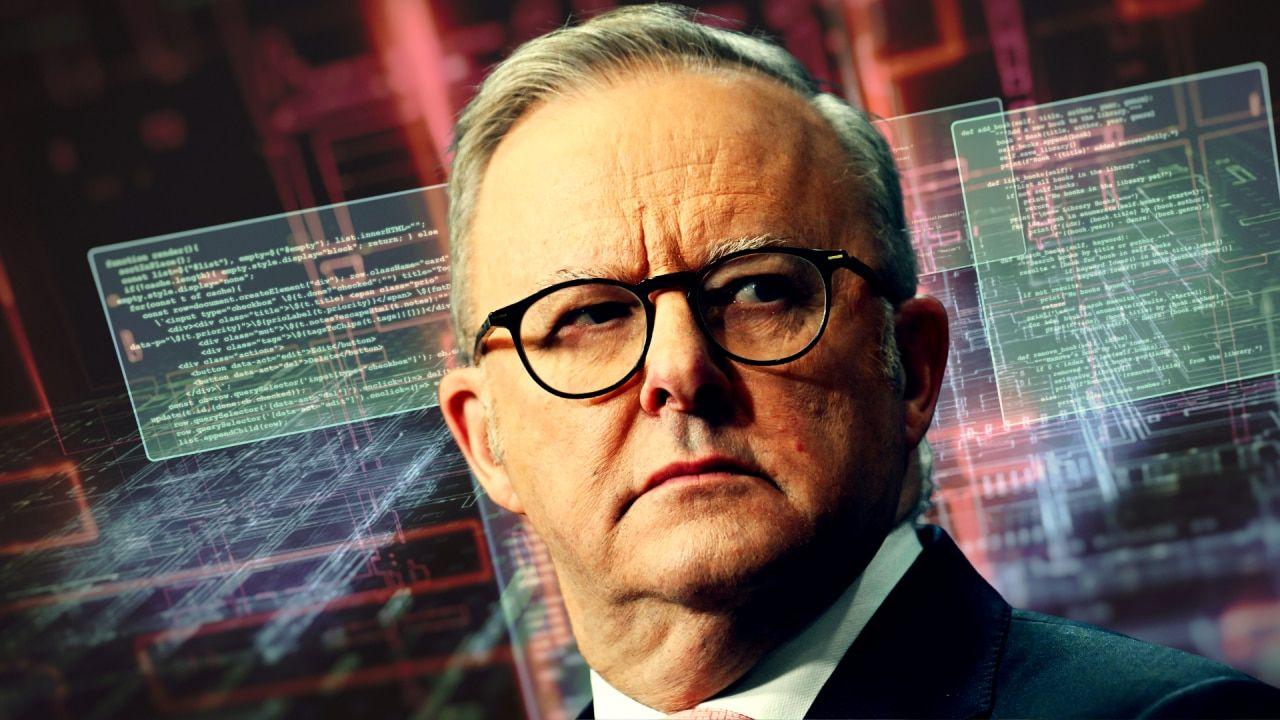
Prime Minister Anthony Albanese announced Australia's comprehensive approach to manage AI, establishing a new Office of AI within his department. The policy requires large data centers to become net energy generators and mandates that AI companies secure agreements with local artists before using their content. Australia positions itself as the first nation to coordinate AI's economic, social, security and environmental impacts under a single framework.
Prime Minister Anthony Albanese delivered a landmark speech at the University of Sydney, unveiling Australia AI policy that seeks to balance innovation with protection for national interests
1
. The government's response to AI now centers on a newly created Office of AI, housed within the Department of the Prime Minister and Cabinet, which begins operations immediately3
. This marks a shift from the previous "issue-by-issue, sector by sector" approach to a coordinated whole-of-government strategy3
. Albanese declared that AI "is a bigger challenge and a bigger opportunity than social media," emphasizing the need to act now to determine its "social licence"1
. The Office of AI will work closely with Industry Minister Tim Ayres and Assistant Minister for Science, Technology and the Digital Economy Andrew Charlton to design new Australian Standards and coordinate ministerial work across government3
.
Source: Sky News
The new laws to govern AI will impose strict obligations on AI data centers, requiring builders of large facilities to become net generators of energy rather than consumers
2
. Data center operators must fund electricity generation projects to meet their needs and pay for associated work to bolster energy grids2
. The policy also requires data center operators to pay for water infrastructure and minimize environmental impacts2
. These standards address growing concerns about energy consumption, particularly as investment in data centers emerged as the largest contributor to Australia's economic growth in the three months to March5
. The Climate Council's Amanda McKenzie warned that "datacentres are hungry for energy" and governments must ensure they're powered with clean renewable energy to avoid pushing up pollution from coal and gas4
.
Source: The Register
Albanese took a firm stance on protecting creative copyright, stating that "Australian writers, musicians, artists and journalists, must retain ownership and control of their work" and that "anything less is theft"
2
. The policy ensures no company should use Australian books, music, art or news to build or train AI without the artist's control5
. This announcement comes after US startup Anthropic lobbied Australian officials to change copyright laws to assist the training of AI models, with musicians, writers and publishers urging the government to resist such pressure5
. Last year, the Labor government rejected a copyright exemption that would allow AI companies to use protected content for free when developing AI models1
. Unlike jurisdictions such as the United States, European Union and Japan, Australian AI developers will still have to pay for creators' content1
. However, Albanese did not provide clarity on how these intellectual property protections would be enforced1
.To offset more stringent requirements, the government will introduce fast-track approvals for AI projects across Australia, seeking to shore up investor certainty
4
. Albanese expects Australia's states and territories to sign up to his plan so the nation can offer expedited approval processes for data center builds and consistent operating standards that apply across the country2
. "Getting this right will enhance our appeal to international investors, by delivering greater clarity and speed for approvals, and a streamlined process for verifying compliance," Albanese stated4
. The prime minister will meet with state and territory leaders next month to discuss the proposed new laws, which would be introduced next year5
. Anthropic had previously cited Australia's policy uncertainty as a major impediment to new investments in the country4
.The newly released national defence strategy labelled AI and machine learning as holding "the most significant potential for technological disruption" facing Australia in the years ahead
4
. Albanese warned that "both extremists and state actors already use AI to create propaganda aimed at young people, and to spread disinformation that targets democracies"4
. Defence Minister Richard Marles and Home Affairs Minister Tony Burke are working with their agencies and Australia's Five Eyes intelligence partners on these national security risks3
. The prime minister argued that without AI regulation of this sort, Australia will effectively outsource its security to big tech companies, stating "If we are always dependent on someone else, somewhere else, we will be vulnerable"2
.
Source: Financial Review
Related Stories
Albanese sought to reassure workers that Australians should not see AI as a threat to jobs, but that strong policy can make the technology a means to create new ones beyond employment created by a short-term data center construction boom
2
. "We should not treat AI as a threat to good jobs. We should use it as an instrument to create them," he said5
. Former industry minister Ed Husic, who championed an interventionist approach when responsible for the area, emphasized that "it really is incumbent on governments to set consistent national rules that protect Australians who already distrust AI from the toughest, hardest risks of generative AI"3
. An Essential poll in May showed considerable suspicion around AI, with 36% saying it carried more risk than opportunity, and only 22% saying it carried more opportunity than risk3
. Next week's ALP national conference will discuss AI, with unions anxious for job protection, and Labor's draft platform states that should AI adoption lead to job displacement at a significant scale, Labor will play an active role in an economy-wide transition3
.Albanese claimed Australia "will be the first country in the world to bring these issues into a single, national framework," though this assertion is somewhat overstated
1
. The European Union adopted the AI Act back in 2024, establishing strict AI regulation especially for high-risk AI and creating the EU AI Office to coordinate implementation1
. However, this year the EU Commission introduced amendments to weaken some requirements and postponed certain implementation deadlines after AI developers complained that strict regulation slows down development1
. Other countries favor a pro-innovation approach instead of strong regulation, with South Korea introducing an AI Basic Act with much less strict rules than the EU, and Japan opting for voluntary guidance1
. Australia's decision not to introduce hard regulation such as mandatory AI guardrails but rather rely on softer standards and national-level coordination appears to align with international trends1
. The prime minister compared the AI plan to past landmark reforms won by the global labor movement, such as winning a minimum wage and fixed working week2
.Summarized by
Navi
[1]
[2]
[3]
[4]
[5]
01 Dec 2025•Policy and Regulation

22 Mar 2026•Policy and Regulation

01 Apr 2026•Policy and Regulation

1
Technology

2
Business and Economy

3
Technology