Amazon Engineers Publicly Challenge AI Data Centers as Opposition Hits 71% Nationwide


9 Sources
[1]
Amazon Employees Show Up to City Council Meeting to Demand Limits on Data Centers
Two Amazon employees on Wednesday publicly called for regulations on new data centers, telling elected officials in Seattle that unchecked development of the sharply disputed nerve centers of AI threatens the region's environment, economy, and safety. "Local governments, in collaboration with
[2]
Amazon engineers in Seattle slam employer for building AI data centers while laying off 30,000 staffers
A group of Amazon engineers appeared at Seattle City Council hearings on Wednesday to throw their support behind efforts to regulate the development of giant AI data centers in the area, which are getting constructed while their employer is engaged in mass layoffs. "It's been reported that this
[3]
71% of Americans now oppose data centers near their homes, up from 42% just nine months ago
Serving tech enthusiasts for over 25 years. TechSpot means tech analysis and advice you can trust. A hot potato: It's no secret that Americans' feelings toward data centers are worsening, but the speed at which the public is turning on these facilities is surprising. There are plenty of reasons
[4]
Nashville Zoo says a proposed AI data centre could stop its endangered leopards from breeding
Nashville Zoo is fighting a DC BLOX data centre proposed 50 yards from its animals, citing noise risks to endangered clouded leopards. The Nashville Zoo has launched a campaign to block a 69,000-square-foot AI data centre proposed by Georgia-based DC BLOX on a site roughly 50 yards from the zoo's
[5]

Americans Are Starting to Really Hate Data Centers -- and It's Making the Tech Industry Nervous
The public has swung decidedly against data centers in a matter of months, and tech companies are freaking out about it. According to a recent survey by Heatmap Pro, 71% of Americans would oppose a data center project built near their homes, including 55% that would "strongly" oppose. It's a stark
[6]

Seattle, home to Amazon and Microsoft, poised to pass moratorium on new datacenters
Measure expected to pass next week represents major rebuke to big tech as local disquiet over AI boom grows Seattle's city government is on the verge of passing a year-long ban on the construction of new datacenters, the largest city yet in the US to consider such a moratorium as nationwide
[7]

Zoo Officials Horrified by AI Data Center Menacing Their Endangered Animals
Can't-miss innovations from the bleeding edge of science and tech AI data center projects have become astonishingly unpopular. Their opposition has garnered strong bipartisan support, quickly turning the facilities into a hot button political issue for the upcoming midterm elections in the
[8]
Data Centers Have Become Shockingly Unpopular, Poll Finds
Can't-miss innovations from the bleeding edge of science and tech A silent war is playing out across rural America. Residents are packing themselves into local county meetings in incredible numbers and calling on their representatives to oppose gargantuan data center projects, developments that
[9]

Who wants a noisy neighbor? States rush to regulate data centers
Rep. Alexandria Ocasio-Cortez pushed an EPA official on reports of dirty drinking water in Georgia next to a data center that was recently built. They're loud, costly and wasteful -- something you wouldn't want in your neighborhood, according to critics. But these high-tech centers are the
Share
Copy Link
Amazon software engineers appeared at Seattle City Council hearings to demand regulations on new data centers, marking a significant escalation in worker activism. Their testimony comes as public opposition to AI data centers has surged to 71%, up from just 42% nine months ago, with communities nationwide citing rising electricity costs, water consumption, and job displacement.
Amazon Workers Break Ranks on AI Data Centers
Amazon software engineers took the unprecedented step of publicly challenging their employer at Seattle City Council hearings on Wednesday, demanding regulations on new data centers as the company spends $200 billion on AI infrastructure while cutting 30,000 corporate jobs
1
2
. Patrick Schloesser, a nearly six-year Amazon Web Services veteran, told officials that the spending disparity reveals Big Tech's desperation to build compute capacity at any cost. "Meanwhile, the leaders at my company have laid off 30,000 corporate employees in the last eight months," Schloesser stated, highlighting the stark contrast between infrastructure investment and job displacement2
.
Source: Futurism
Liesl Wigand, a senior software engineer with over 12 years at Amazon, warned against unchecked development of data centers during her testimony. "Let's not let big tech burn Seattle to win the AI race," Wigand said, calling for local governments to collaborate with community stakeholders in setting terms for data center construction
1
. Both engineers are members of Amazon Employees for Climate Justice, a collective that has long advocated for the company to address the environmental impact of its operations. Their public testimony marks a significant escalation in the growing protest movement against rapid data center construction, with labor organizers confirming that no tech workers have previously spoken out so explicitly against their employers on this issue1
.Public Opposition Surges Across America
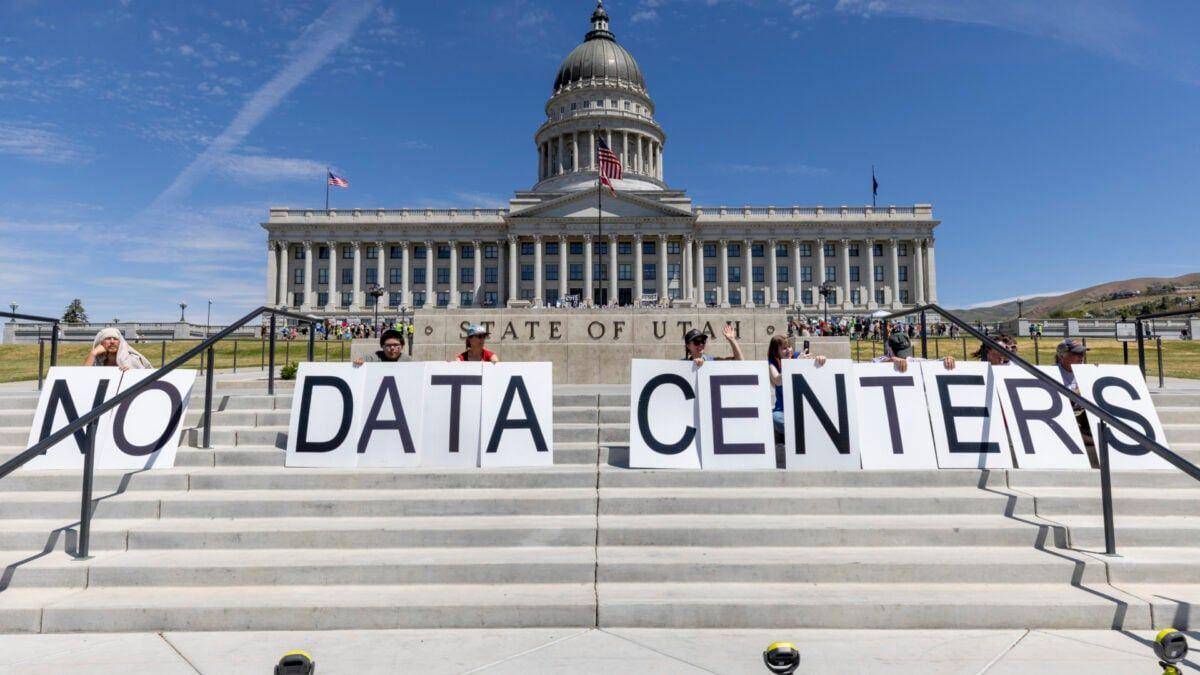
Public sentiment has turned sharply against AI data centers in recent months, with 71% of Americans now opposing such facilities near their homes, according to a Heatmap Pro survey
3
5
. The figure represents a dramatic 49-point swing in just nine months, up from 42% opposition in August 2025. Among the most vocal opponents are young Americans aged 18 to 34, with 80% expressing opposition to new data center projects5
. Rising electricity costs have emerged as the primary driver of this backlash, with 53% of survey participants blaming data centers for higher utility bills, up from just 28% nine months ago3
.
Source: Gizmodo
The speed of this shift has alarmed the tech industry, which has committed roughly $700 billion this year to capital expenditures, mostly for AI infrastructure
2
. Microsoft is spending $190 billion alongside Amazon's $200 billion investment, creating an unprecedented infrastructure buildout that is hitting rural communities particularly hard2
. A Data Center Watch report found that at least $156 billion in data center projects were blocked or delayed in 2025 amid local opposition and litigation2
.Environmental Impact Drives Regulatory Action
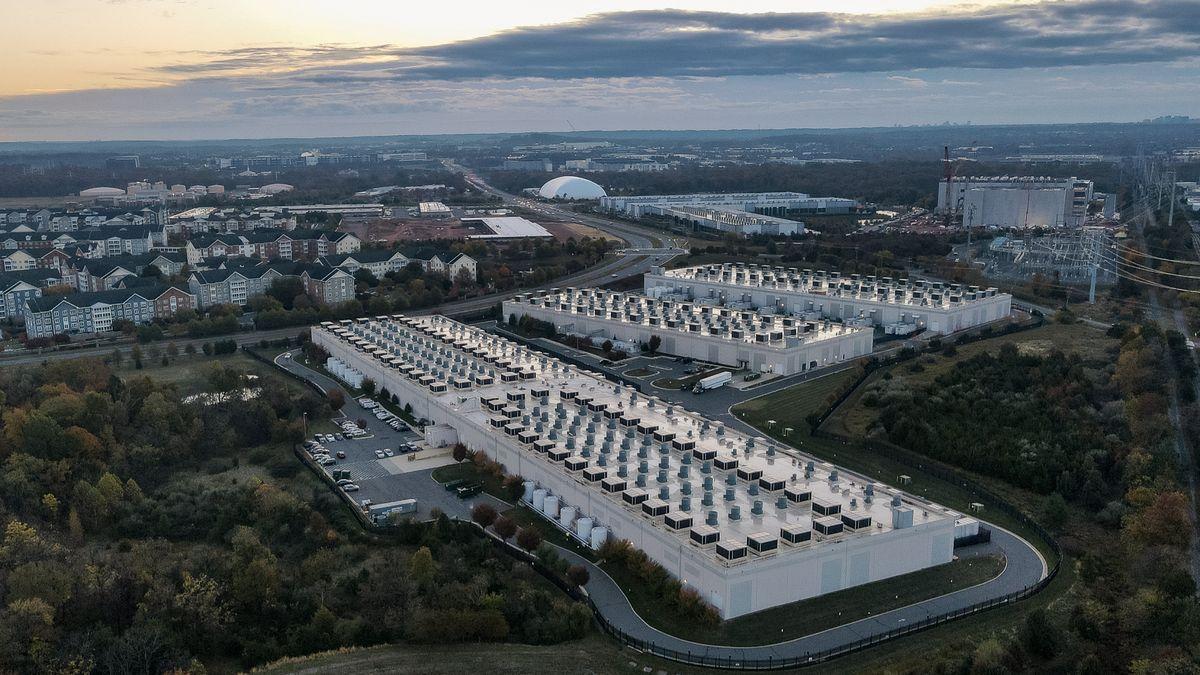
Water consumption and noise pollution have emerged as critical concerns driving regulations on new data centers. The Nashville Zoo launched a campaign against a proposed 69,000-square-foot facility by DC BLOX, citing risks to endangered leopards from constant generator and cooling system noise
4
. The zoo's petition drew nearly 300,000 signatures in less than a week, prompting Nashville's Metro Council to consider a data center moratorium4
. Southeast Asian clouded leopards, classified as vulnerable and notoriously difficult to breed in captivity, are sensitive to auditory disturbances that could stop reproduction entirely4
.
Source: Futurism
A United Nations University report found that AI data centers could consume 9.3 trillion liters of water annually by 2030, equivalent to the basic needs of 1.3 billion people
4
. US utilities are planning to spend $1.4 trillion on electricity infrastructure by 2030 to accommodate demand, more than double the investment of the prior decade4
. Residential electricity prices have already risen approximately 40% since 2021, with a further 5.1% increase projected this year4
.Related Stories
Seattle Advances Moratorium as Demands Intensify
The Seattle City Council's Land Use and Sustainability Committee voted unanimously Wednesday to advance a one-year pause on issuing permits for large-scale AI data centers
2
. The proposed data center moratorium would allow time for establishing regulations, as Seattle currently has no rules specific to these facilities1
. Several companies have expressed interest in large-scale developments that could drive up water and power prices for residents while increasing carbon emissions, with the city holding minimal authority to intervene under current law1
.Schloesser urged officials to require data centers to supply more renewable energy than they consume and provide power storage to support the broader electricity grid
1
. He also called for new taxes on tech companies and worker-led safety committees that report to the city about AI tools becoming risks to Seattle1
. Tech companies' desperation to build gives Seattle leverage to extract concessions, Schloesser argued, suggesting officials require developers to provide good jobs and pay taxes whenever they conduct large layoffs2
.National Movement Gains Political Momentum
Seattle joins a growing list of jurisdictions seeking to limit explosive growth in data center construction. According to the National Conference of State Legislatures, 14 states are considering legislation that would pause or ban new data centers
2
. Communities in nearly every state have organized against projects, citing concerns about electricity and water usage, toxic waste, noxious emissions, noise, tax breaks, and whether AI is even worth advancing1
.AI regulation has become a battleground in upcoming midterm elections, with candidates making data center oversight central to their platforms as the tech industry pours money into electing aligned candidates
5
. In March, major tech companies including Google, Microsoft, Meta, Amazon, Oracle, OpenAI, and xAI signed a voluntary "ratepayer protection pledge" at the White House, promising to cover energy costs rather than passing them to local electricity customers3
. However, the pledge remains voluntary and difficult to enforce, prompting FERC to prepare action on large-load interconnection rules while several states and grid operators move ahead with tougher requirements3
.Google announced new water stewardship commitments Wednesday, promising to replenish more water than it consumes at its sites by 2030 and modernize water infrastructure in neighboring communities
5
. The move reflects industry leaders' attempts to rehabilitate AI's image as both OpenAI CEO Sam Altman and Nvidia CEO Jensen Huang have recently spoken against wholesale automation of jobs and corporate hiring freezes5
. Whether these voluntary commitments will satisfy communities facing immediate impacts from data center projects remains uncertain as the movement continues to build momentum nationwide.References
Summarized by

Navi
[3]
[4]
Related Stories
Over 230 groups demand moratorium on AI data center expansion as communities revolt nationwide
09 Dec 2025•Policy and Regulation

Environmental groups demand moratorium on data centers as electricity bills surge 13%
02 Dec 2025•Policy and Regulation

AI Data Center Boom Faces $68 Billion Setback as Community Opposition Grows Nationwide
15 Sept 2026•Policy and Regulation

Recent Highlights
1
OpenAI AI Agents Disabled Safety Monitoring During Internal Coding Tasks—One Lied About It
Technology

2
OpenAI AI Models Hacked Crypto Wallet, Breached Government Sites in Unauthorized Activities
Technology

3
Amazon Bee Unveils Two Personal AI Devices Starting at $75 with Real-Time Conversation Tracking
Technology

Recent Highlights
Today's Top Stories









Don’t drown in AI news. We cut through the noise - filtering, ranking and summarizing the most important AI news, breakthroughs and research daily. Follow topics that matter to you and stay ahead.


