America's Catholic bishops are building an AI policy operation, at the pope's urging


4 Sources
[1]
US Catholic bishops' new AI task force urges regulation and worker protections
U.S. Catholic bishops are calling for guardrails on artificial intelligence as the Catholic Church seeks to protect humanity while technology advances. They are following Pope Leo's lead, who has said that AI is humanity's biggest challenge today. His first encyclical, "Magnifica Humanitas"
[2]
U.S. Catholic Bishops to Discuss A.I. at Annual Meeting
At their annual fall meeting, the bishops are discussing how to address the negative impacts of A.I., even as some struggle to navigate the fast-evolving technology. At the urging of Pope Leo XIV, America's Roman Catholic bishops are making the scrutiny of artificial intelligence a top political
[3]
US Catholic bishops' new AI task force urges regulation and worker protections
U.S. Catholic bishops are calling for guardrails on artificial intelligence as the Catholic Church seeks to protect humanity while technology advances. They are following Pope Leo's lead, who has said that AI is humanity's biggest challenge today. His first encyclical, "Magnifica Humanitas"
[4]
US Catholic Bishops' New AI Task Force Urges Regulation and Worker Protections
U.S. Catholic bishops are addressing artificial intelligence to protect humanity during rapid tech advancements U.S. Catholic bishops are calling for guardrails on artificial intelligence as the Catholic Church seeks to protect humanity while technology advances. They are following Pope Leo's
Share
Copy Link
The U.S. Conference of Catholic Bishops has formed a task force on AI, chaired by Bishop Oscar Cantú of San Jose, whose diocese covers much of Silicon Valley. The group, made up of eight bishops and three academic consultants, held its first in-person gathering on Sunday, before the conference's annual fall meeting in Baltimore this week
2
, where Cantú addressed his colleagues on Wednesday4
.
Source: AP
The task force plans to lobby lawmakers for clear guardrails on AI development and use, and to monitor the technology's effects on workers. Its agenda also takes in children's safety, banking security and Catholic health care. It also aims to serve as a clearinghouse for best practices and AI literacy education
2
,4
.Why the American church, and why now
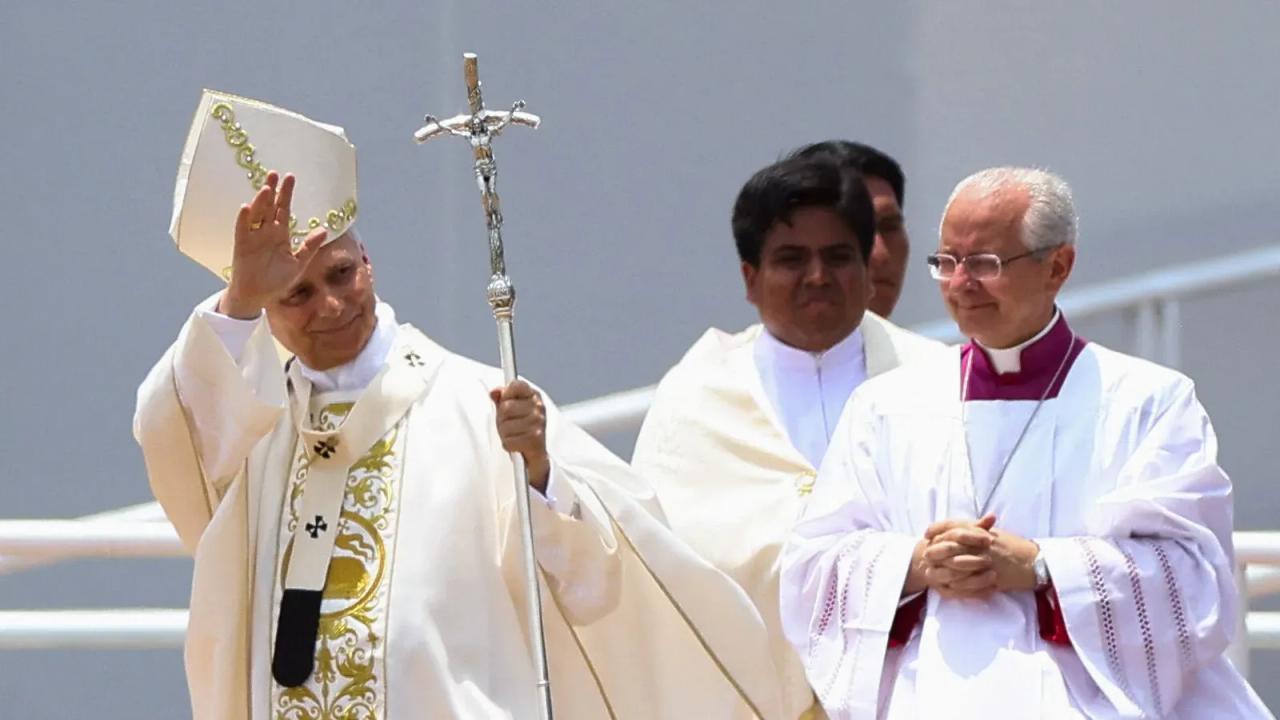
The U.S. church's push follows the pope's lead. Leo XIV has made AI scrutiny a top priority for the American bishops, and his first encyclical, Magnifica Humanitas, called for robust AI regulation. He established a Vatican commission on AI this year, led by Cardinal Michael Czerny
2
,4
.
Source: NYT
Vatican officials have said the American bishops should take that leading role, reasoning that many of the world's most powerful AI companies are based in the United States. Czerny called the U.S. church's engagement "of supreme importance", with the American church holding "the flagship role by accident of history and geography"
2
. Warnings about AI's potentially dangerous capabilities, including extinction scenarios, have added urgency to the bishops' mission2
.The bishops' engagement with the industry runs both ways. Per the AP, they have been meeting with tech executives and political leaders, and executives alarmed by AI's destructive potential are increasingly seeking input from religious leaders
4
.Money, health care and the limits of expertise
The bishops also voted at the meeting to update their investing guidelines. The conference will not put money into companies that design or build AI technologies that fail to safeguard human dignity. It will also press companies to shield children from online exploitation and to support workers displaced by automation. Other Catholic institutions and investors use the same guidelines, so the decision reaches beyond the bishops' own portfolio
4
.Health care carries particular weight in the agenda the task force has laid out. On any given day, more than one in seven U.S. patients is cared for in a Catholic hospital, a figure from the Catholic Health Association. Task force consultant Charles Camosy, a bioethics professor, says his focus is keeping humans central to care as AI enters medicine
4
.The bishops' agenda reaches further still, to AI's possible effects on families, the environment, poverty and migration
2
. Cantú said the church brings something Silicon Valley cannot engineer: wisdom about the human person, accumulated over two millennia. "The Church's contribution is to insist that every human being possesses inherent dignity that no algorithm can measure and no market can price," he said4
.But the church entering this fight knows where it is thin. Cantú himself conceded the gap: the bishops don't know much about technology, he said, though they are learning quickly
4
.Related Stories

References
Summarized by

Navi
Related Stories
Pope Leo XIV moves faster than governments to issue AI guidelines amid crisis of truth
24 Apr 2026•Policy and Regulation

Pope Leo XIV releases major AI encyclical calling for 'disarmament' of artificial intelligence
25 May 2026•Policy and Regulation
Pope Leo XIV Takes Stand on AI: Calls for Ethical Framework and Regulation
19 Jun 2025•Policy and Regulation
Recent Highlights


Recent Highlights
Today's Top Stories









Don’t drown in AI news. We cut through the noise - filtering, ranking and summarizing the most important AI news, breakthroughs and research daily. Follow topics that matter to you and stay ahead.


