Pope Leo XIV moves faster than governments to issue AI guidelines amid crisis of truth


2 Sources
[1]
The pope moves to police AI
Why it matters: The Holy See is moving faster than most other legacy institutions to shape rules and guardrails in verifying reality, with urgency that's unfolding amid unusual geopolitical and digital clashes. * The Vatican has stepped up cybersecurity partnerships and AI oversight efforts,
[2]
Want to Get AI and Cybersecurity Right? Consider Following the Pope's Example
The pope is working quickly to take a moral -- and policy-driven -- stance on AI. Moving faster than most major governments, the leader of the Catholic Church has ramped up partnerships in cybersecurity, and even released a formal set of guidelines to govern AI. In so doing, the Holy See is
Share
Copy Link
The Vatican has implemented one of the world's first state-level AI frameworks, requiring systems to be ethical, transparent and human-centered. Pope Leo XIV told priests not to use AI to write homilies, warning that technology must never replace human beings. The Holy See is establishing itself as a moral counterweight to AI-driven misinformation.
Vatican Establishes Formal AI Governance Framework
The Holy See is moving faster than most legacy institutions in regulating artificial intelligence, implementing one of the world's first state-level frameworks to address what church leaders call a crisis of truth
1
. The Vatican has stepped up cybersecurity partnerships and AI oversight efforts, blending defense with diplomacy and ethics in an environment marked by deepfakes and digital manipulation1
.
Source: Axios
The policy framework issued by the Vatican explicitly requires AI systems to be ethical, transparent and human-centered, stating that technology must "never overtake or replace human beings" and must serve protecting human dignity
1
. The AI guidelines also prohibit uses that could manipulate people, discriminate or threaten security, while requiring safeguards around data and institutional integrity1
.Pope Leo XIV Takes Direct Stance on AI Use
In February, Pope Leo XIV told priests not to use AI to write homilies or to seek "likes" on social media platforms like TikTok, according to the National Catholic Reporter
1
. "To give a true homily is to share faith," and AI "will never be able to share faith," the Pope said during a question-and-answer session with clergy from the Diocese of Rome .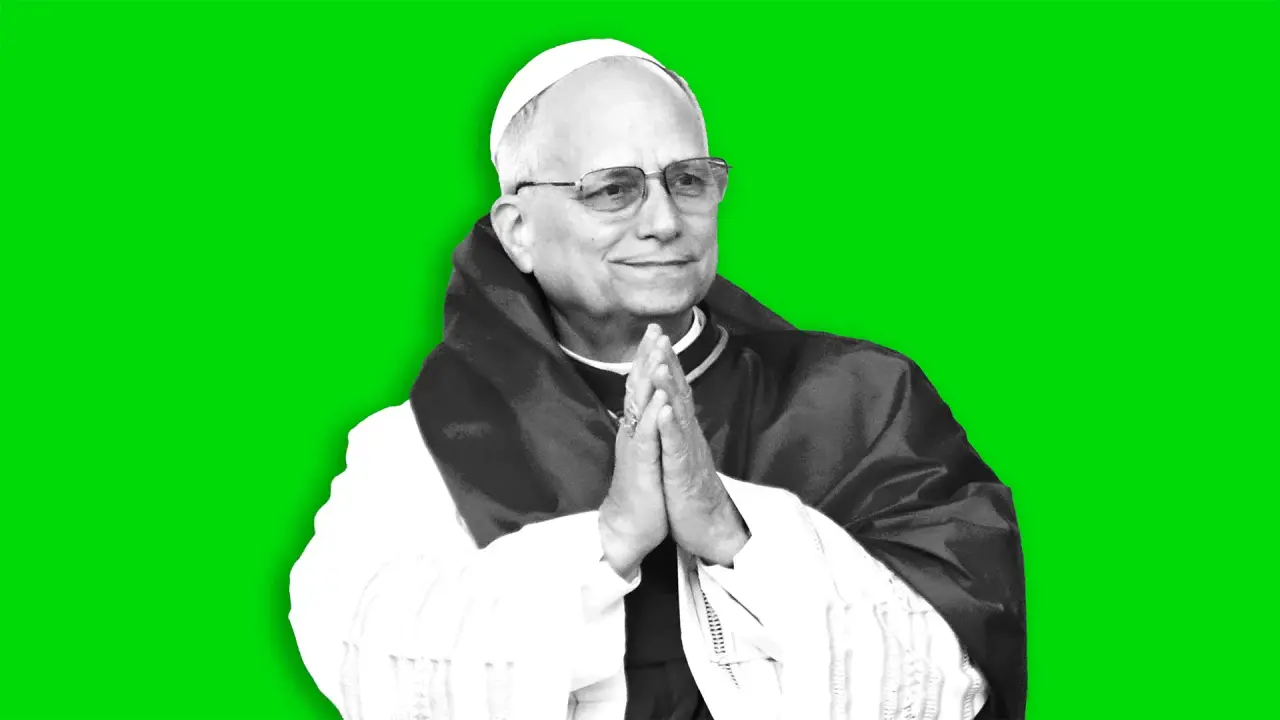
Source: Inc.
Despite having assumed his role less than a year ago, Pope Leo XIV has already made his position abundantly clear
2
. His messaging for the upcoming 60th annual World Day of Social Communications on May 17 focuses on human dignity2
. "The task laid before us is not to stop digital innovation, but rather to guide it and to be aware of its ambivalent nature," Pope Leo said in a statement released earlier this year2
.Vatican Emerges as Counterweight to AI-Driven Misinformation
Church leaders are increasingly warning about AI-generated content threatening truth, something the late Pope Francis addressed before his passing
1
. The moves follow warnings from the late pontiff that AI could exacerbate an ongoing crisis of truth2
.The push has fueled speculation that the Vatican could build a kind of "truth engine," a system to authenticate information or arbitrate reality
1
. While there's no public evidence that such a tool exists, the idea reflects something real: the Vatican is emerging as a moral and institutional counterweight to misinformation, even as it moves cautiously on the technology itself1
.Related Stories

Expert Perspectives on Vatican's Ethical AI Systems Approach
"Insofar as (AI) promotes and uplifts humans, it's good. But it also has the potential for degrading human dignity," Thomas Ryan, a theology professor at Loyola University New Orleans, tells Axios
1
. Ryan said the Vatican is concerned about what AI is doing to humans and to creation, like the divide between the haves and have-nots1
."Obviously, they're very worried about fake news ... the degree of faking people's voices and videos has increased exponentially," Andrew Chesnut, Virginia Commonwealth University's Catholic studies chair, tells Axios
1
. Chesnut said the Vatican's approach is cautious and a deliberate effort to set limits despite the buzz1
.By establishing itself as a steward of reality in an increasingly confusing digital world, the Holy See is guiding technological advancements with moral authority
2
. While the Vatican can't control AI, it's trying to shape who controls truth in an AI-driven world1
. The Vatican has implemented formal AI guidelines and monitoring structures inside Vatican City, creating guardrails that blend ethics with governance1
.References
Summarized by

Navi
[1]
Related Stories
Pope Leo XIV Takes Stand on AI: Calls for Ethical Framework and Regulation
19 Jun 2025•Policy and Regulation
Pope Leo calls for AI regulation, warns autonomous weapons now beyond human control
02 Jun 2026•Policy and Regulation
Pope Francis Warns Davos Summit of AI's Potential to Exacerbate 'Crisis of Truth'
23 Jan 2025•Policy and Regulation

Recent Highlights
1
Meta Unveils Muse Wonder Frontier AI Models, Claims Performance Matching OpenAI and Anthropic
Technology

2
IMF Report Warns AI Market Correction Could Spark Global Financial Crisis With $1.4T at Risk
Business and Economy

3
Eight States Sue OpenAI Over ChatGPT Safety Concerns and Unlawful Collection of Children's Data
Policy and Regulation

Recent Highlights
Today's Top Stories








Don’t drown in AI news. We cut through the noise - filtering, ranking and summarizing the most important AI news, breakthroughs and research daily. Follow topics that matter to you and stay ahead.


