7 Sources
[1]
Android 17 launches with new multitasking tools as Google expands Gemini features
Google on Tuesday released the final version of its Android 17 operating system, as well as its counterpart for smartwatches, Wear OS 7. The latest release, which arrives first on its own Pixel devices, is also accompanied by a Pixel Drop, bringing new features that include support for the latest AI models, like the music generation model Lyria 3, the multimodal Gemini Omni, and speech-to-translation tools for the Pixel 10a with AudioLM. The latest feature release underscores Google's strategy of using its Android and Pixel devices to showcase its latest AI technology. While its rival Apple is focused on catching up in AI with September's public launch of AI upgrades to Siri and iOS 27, Google's Android 17 is focused on its newest AI models, Gemini's role in creation, communication, and other device experiences. In today's Pixel Drop, Android Quick Share's file-sharing feature will become compatible with Apple's AirDrop on older Pixel 8a and 9a devices. Plus, Gemini Omni will now let you edit videos in a conversation, while Lyria 3 lets users create music tracks with text prompts and/or images in the Gemini app. Pixel 10a devices will also get better speech-to-speech translation tools with AudioLM. Other phone features are arriving, too, such as the ability to record a personalized outgoing audio message for callers when you can't answer. Plus, the "Take a Message" feature will arrive in more global markets. The Pixel Drop brings emergency detection features to the Google Pixel Watch, as well, meaning that if the watch detects a car crash, fall, or lack of pulse, it will automatically contacts emergency services and your selected emergency contacts. Beyond AI, Android 17's larger update allows users to take advantage of features like a "bubble bar," which is a new user interface element that lets you organize, move, and then quickly access recent apps that appear as bubbles at the bottom of your screen. The feature is designed to help speed up app interactions and aid in multi-app workflows. Social media users may like Android 17's new feature that lets them record themselves with the selfie camera and phone screen simultaneously for screen reaction videos that can be shared on platforms like TikTok, YouTube, Instagram, and others. Parental controls and security features were also improved in this latest release, adding a "Mark as Lost" feature in Find Hub, Live Threat Detection, and other threat defenses, alongside screen time limits and content filtering tools that can now be set with a PIN without linking a Google account. A new foldable gaming mode offers a 50/50 layout with a dynamic gamepad. Meanwhile, watch owners can now receive live updates from phone apps that mirror to the Pixel Watch. Smartwatches will also work better with Google's upcoming AI glasses and other hardware, such as headphones. This summer, Wear OS will introduce more Gemini Intelligence features, like tools for making personalized widgets just by describing them, and it will be able to offer "Personal Intelligence" by connecting your Google apps and chat history with Gemini. Battery life improvements -- up to 10%, Google claims -- as well as multi-step automation will also arrive in the new Wear OS.
[2]
Google launches 'bubble' multi-tasking and foldable gaming mode with Android 17 - Engadget
Android 17 is rolling out to Pixel handsets today, with other devices to follow. Google is rolling out Android 17 today, with Pixel devices getting the new mobile OS first before it makes its way to more Android phones throughout the year. Gemini Intelligence, the company's new context-aware AI system that can accomplish multi-step tasks for you, is also coming to select advanced devices this summer. Android 17 will, of course, bring new features to your devices, including Bubbles, which can turn any app into a floating window so that you can see information from two other applications at once. You can long press on any app icon to turn it into a "bubble" that floats on top of other apps. On devices with bigger screens, such as the Samsung Galaxy Fold and the Google Pixel 10 Pro Fold, you'll find a dedicated bubble bar at the bottom of your screen. It's where the bubble you opened is docked and where you can switch between apps with one tap. You can also resize or maximize bubbles to full screen from there. Google's updated screen recording tool now comes with "Screen Reactions," which lets you record yourself using the selfie camera and capture your phone screen at the same time. The feature will make it easy to record reaction videos to websites, apps and other videos without switching apps. It's obviously meant for making quick videos for TikTok, Instagram or Facebook. If you have a phone like the Galaxy Fold and Pixel 10 Pro Fold, Android 17's new foldable gaming mode will make sure no part of your screen is wasted. The new mode introduces an optimized 50/50 layout with a view of the game on the top screen and a virtual gamepad at the bottom. If you're using an external controller instead of the onscreen one, you can tailor your view further with native controller remapping. In addition, Google has made memory cleanup more efficient for HD gaming to reduce lags and frame drops. Android 17 also comes with new safety and security features. You'll be able to grant apps temporary access to your location and share only specific contacts with it, instead of giving it access to your location all the time or sharing all your contacts' information. The mobile OS gives you access to an improved "Mark as lost" feature in Find Hub, formerly known as Find My Device, as well. With it, you'll be able to remotely lock a missing phone with biometrics, so thieves won't be able to unlock it even if they somehow get ahold of your passcode. In addition, Google has beefed up Live Threat Detection to block more suspicious apps and has reduced the number of times someone can guess your PIN. It made the wait times longer between failed attempted, too. Aside from the new Android 17 features, Google is also releasing more useful tools for Pixel devices today. Conversational editing is now available for Google Photos on Pixel devices -- specifically the Pixel 10 Pro, Pixel 10 Pro XL, Pixel 10 Pro Fold, Pixel 10a -- in Germany, the UK, France, Spain and Italy. It will allow you to do both quick touchups and complex edits simply by talking to your device. Voice translate is also coming to Pixel 10a, Google's newest entry in the mid-range line, giving the phone the capability to translate what each caller is saying in their own voice. Pixel 9a and Pixel 8a phones are now AirDrop compatible and can use Android Quick Share to transfer files to and from an iPhone. This feature used to exclusively available to the Pixel 10 line. Google is also expanding Magic Cue's access, so that the AI tool can surface important information from more messaging applications. Finally, for the Pixel Watch, Google is integrating Emergency Sharing into its core detection features, such as Car Crash, Fall and Loss of Pulse Detection. "If a severe event is detected, your Pixel will call emergency services and notify your chosen contacts," the company explained.
[3]
Google rolls out Android 17 with Gemini Intelligence, foldable gaming mode, and tighter privacy controls
Google is rolling out Android 17 to Pixel devices starting today, delivering multitasking tools, a dedicated foldable gaming mode, and a set of privacy changes that limit how much data apps can collect by default. The update reaches Pixel phones first and will expand to devices from Samsung, OnePlus, and other manufacturers throughout 2026. A separate feature called Gemini Intelligence, which embeds Google's AI more deeply into the operating system, is coming to select flagship devices this summer. The most visible change is Bubbles, a floating window system that works with any application. Long-pressing an app icon now opens it as a resizable overlay that stays on top of other content, turning any app into a picture-in-picture window rather than limiting the feature to messaging. On foldable devices like the Galaxy Fold and Pixel 10 Pro Fold, a persistent bubble bar sits at the bottom of the screen for quick access. Screen Reactions uses the selfie camera during screen recording to capture the user's face alongside whatever is on display, combining both feeds into a single video. The feature is aimed at content creators who record walkthroughs, gameplay commentary, or tutorials. It eliminates the need for third-party apps that overlay a webcam feed onto screen captures. Foldable phones get a dedicated gaming layout that splits the inner display into a 50/50 configuration, with the game running on the top half and a virtual gamepad on the bottom. The system supports native controller remapping, letting users customise button placement without relying on the game developer to offer the option. Google says it has also improved memory cleanup for HD gaming, though the company has not published specific benchmarks. The privacy changes are incremental but meaningful. Apps can now request temporary location access that expires after a single session, replacing the previous binary choice between "always," "while using," and "never." Users can share specific contacts with an app rather than granting access to the entire address book. A new Mark as Lost feature in Find Hub locks a missing device with biometric authentication, and enhanced Live Threat Detection runs continuously in the background to flag suspicious app behaviour. Google has also reduced the number of PIN guess attempts before the phone enforces progressively longer wait times, making brute-force attacks against a locked device slower. The company did not disclose the new threshold, and the exact wait-time escalation schedule has not been published. Gemini Intelligence, previewed at Google I/O in May, will arrive on the Samsung Galaxy S26 and Google's own Pixel 10 line this summer as a separate rollout. It represents a deeper integration of Gemini into Android's core functions, though Google has not detailed which specific capabilities will ship at launch versus arriving in later updates. The distinction matters because Android 17 itself is a platform update available to a broad range of devices, while Gemini Intelligence is restricted to hardware Google classifies as "select advanced devices." The June Pixel Drop, shipping alongside Android 17, adds features exclusive to Google's own hardware. Conversational editing in Google Photos lets Pixel 10 Pro, XL, Fold, and 10a users describe image edits in natural language, available initially in Germany, the UK, France, Spain, and Italy. Voice Translate arrives on the Pixel 10a, and AirDrop-compatible Quick Share file transfers expand to the Pixel 9a and 8a, having previously been limited to the Pixel 10 line. The Pixel Watch receives Emergency Sharing integration with its existing Car Crash, Fall, and Loss of Pulse detection features, automatically notifying emergency contacts when those sensors trigger. Wear OS 7 is also rolling out to Pixel Watches alongside the Android 17 update. The rollout arrives as the European Commission prepares to force Google to open Android to rival AI assistants under the Digital Markets Act, with a binding decision due by July. How deeply Google can embed Gemini into Android without triggering regulatory intervention in its largest international market remains an open question. Google is simultaneously replacing ChromeOS with Android-powered Googlebook laptops that put Gemini at the operating system level, making the stakes of the EU's interoperability ruling considerably higher than a single phone update. Android 17 is a refinement release rather than a platform overhaul, with no redesigned interface or new design language. The foldable gaming mode and Bubbles multitasking address hardware categories that have grown substantially since Android 16, while the privacy features bring Android closer to the granular permission controls iOS has offered for several years. Whether Gemini Intelligence delivers a meaningful difference when it ships this summer will depend on specifics Google has not yet provided.
[4]
Android 17: Everything we know so far
From AI agents that book your dinner to emojis with actual depth, Android's biggest update yet. Considering all the Android 16 QPR updates and the new ones announced at The Android Show and Google I/O 2026, Android 17 is definitely shaping up to be one of the most ambitious updates the company has shipped in years. Between Gemini Intelligence that gets things done on your behalf, the new security features, and productivity-based features like App Bubbles, there's a lot to unpack. The stable update is expected in June or early July 2026, but plenty of the upcoming features are already live on the Android 17 Beta version for compatible Pixel devices. Recommended Videos Here's everything we know so far, including the latest Android 17 news, release timeline, how to download the beta version, compatible devices, and all the features that might reach a wider audience with the upcoming stable build release. Android 17: Latest news * June 10, 2026 Google released Android 17 QPR1 Beta 4 for Pixel devices. * June 1, 2026 Android 17 Beta 4.1 went live with a couple of new features like Continue On. * May 20, 2026 Android 17 is getting a feature that makes switching between Android devices feel much more natural than it currently does. The feature is called Continue On. * May 17, 2026 Google is working on an anti-doomscrolling feature called Pause Point, which will arrive with Android 17 for all users. * May 12, 2026 At the Android Show 2026, Google announced several developments including Gemini Intelligence, which itself is a suite of AI-powered features, along with Chromebooks, and Android 17. * May 12, 2026 The upcoming Android version will get a new location button that grants an app precise location access only when you're using it. * May 12, 2026 Instagram is getting Ultra HDR capture, playback, built-in video stabilization, and Night Sight support for flagship smartphones with Android 17. * April 8, 2026 With Android 17, gamers should be able to remap their controllers on a system level. Android 17 release timeline The Android 17 release cycle looks slightly different from anything Google has done before, and that's largely because Google retired its long-standing Developer Preview this year. Instead of the early, developer-only preview that used to kick off each Android release, Google has now placed the Android Canary channel. While Android 17 reached platform stability in April 2026, Google just dropped the Beta 4.1 upgrade on June 3, 2026, an unscheduled big-fix drop addressing the lingering issues ahead of the stable launch, which is also expected to roll out in June 2026. How to download the Android 17 Beta? For now, Android 17's beta version is available to anyone who has a supported Pixel device. To download the beta, you'd first have to enroll yourself in Google's official Beta Program. However, before you proceed, there's one important caveat: if you leave the beta program before the stable Android 17 release, Google will require a full factory reset of your device before returning it to the stable Android 16 channel. The steps required to install the Android 17 beta are given below. * Head to Settings > System > Backup and initiate a manual backup to your Google account. * Enroll your device in the Android Beta Program by signing in to the portal with the Google account tied to your Pixel, and locate your device in the list of eligible hardware. * Once you locate your device, tap "Opt in" to enroll. * Now, on your compatible Pixel device, go to Settings > System > System update and tap "Check for update." The beta package should appear in a few minutes after you enroll. * Download the update and wait for the installation to run in the background. You'll see a restart prompt once your phone is ready. Which devices support Android 17? Google Pixel Every Pixel smartphone that runs on a Tensor chip is eligible for Android 17. This includes the older models from the Pixel 6 series, all the way up to the latest Pixel 10 family, both flagships and the A-series devices. More than 20 Pixel devices will receive the Android 17 stable update. It's worth mentioning here that Google extended the software support for the Pixel 6 series, including the regular Pixel 6, Pixel 6 Pro, and the Pixel 6a, keeping them in the update window through October 2026. However, Android 17 will be the final major operating system update for these devices. Refer to the complete list of supported Pixel devices below. * Pixel 6, Pixel 6 Pro, Pixel 6a * Pixel Tablet * Pixel 7, Pixel 7 Pro, Pixel 7a, Pixel Fold * Pixel 8, Pixel 8 Pro, Pixel 8a * Pixel 9, Pixel 9 Pro, Pixel 9 Pro XL, Pixel 9 Pro Fold, Pixel 9a * Pixel 10, Pixel 10 Pro, Pixel 10 Pro XL, Pixel 10 Pro Fold, Pixel 10a Samsung Galaxy Samsung's new custom skin, One UI 9, is based on Android 17. The skin is already available as part of the One UI 9 beta program (through the Samsung Members app), which went live for Galaxy S26 users in May 2026 in regions like the United States, United Kingdom, Poland, South Korea, and India. This makes Samsung one of the earliest non-Google partners to roll out the Android 17 beta. Regarding the stable launch, Samsung is expected to roll out One UI 9's stable version with its second major hardware event of the year, Galaxy Unpacked in July, along with its latest generation of foldables. Older lineups like the Galaxy S25 and Galaxy S24 series could get the stable OTA update around the same time. However, the S23 series, along with the mid-range A-series devices and the Galaxy tablets, could get the stable release later in 2026. Devices expected to receive One UI 9 are given below. * Galaxy S26, Galaxy S26 Plus, Galaxy S26 Ultra * Galaxy S25, Galaxy S25 Plus, Galaxy S25 Ultra, Galaxy S25 Edge, Galaxy S25 FE * Galaxy S24, Galaxy S24 Plus, Galaxy S24 Ultra, Galaxy S24 FE * Galaxy S23, Galaxy S23 Plus, Galaxy S23 Ultra, Galaxy S23 FE * Galaxy Z Fold 8 Ultra, Galaxy Z Fold 8, Galaxy Z Flip 8 (upcoming devices) * Galaxy Z TriFold * Galaxy Z Fold 7, Galaxy Z Flip 7 * Galaxy Z Fold 6, Galaxy Z Flip 6 * Galaxy Z Fold 5, Galaxy Z Flip 5 * Galaxy A57, Galaxy A37, Galaxy A56, Galaxy A36 * Galaxy Tab S11 series * Galaxy Tab S10 series Third-party OEM partners For the first time, Google has opened the Android 17 beta pipeline to international hardware partners during the Beta 4/4.1 stability phase. Nine manufacturers currently have devices in the official beta program, including OnePlus, Xiaomi, Vivo, Oppo, Honor, iQOO, Lenovo, and Realme. Most of these don't sell smartphones in the United States, but they're quite popular in other major markets like India. Stable Android 17 rollouts for these brands are expected to begin in Q3 2026, along with their respective software skins, such as OxygenOS 17 for OnePlus and HyperOS 4 for Xiaomi. What's new in Android 17? Android 17 is the most feature-loaded operating system upgrade Google has shipped in years. The credit goes partly to the new features confirmed at The Android Show and Google I/O 2026, and partly to a wave of Pixel-exclusive Android 17 QPR updates that will finally reach a broader audience through the stable update. While Google has already confirmed a bunch of new features for the stable Android 17 release, a couple of others introduced in Android 16 QPR updates could also make their way to other OEMs with Android 17. Gemini AI and core UI updates Gemini Intelligence The most crucial announcement of The Android Show 2026, Gemini Intelligence moves Google's AI assistant beyond voice commands and transforms it into an AI agent that is capable of performing multi-step tasks in the background, while you're off doing something else. Gemini Intelligence can parse an open Chrome tab (through on-screen awareness), identify details like event times or prices, and complete bookings or fill forms in the background, using the new Gemini in Chrome and the new, smarter Autofill. You only confirm the payment details; Gemini Intelligence takes care of the rest. Create My Widget Android 17 will also embrace vibe-coding (in a controlled manner) by allowing users to create their own custom widgets. The new tool will let users describe a widget in plain language and build it for them on the spot, such as one that includes a to-do list for shopping, fetches information from Daily Brief, or shows a countdown to an event marked in their calendar. Gboard Rambler At the same event, Google confirmed a new feature called Rambler, which redefines what traditional speech-to-text means. Built into Gboard, the feature can not only remove filler words (such as "umm" or "ya"), but it can also handle awkward phrasing, mid-sentence conversions, recognize multiple languages, and produce a clean transcription of whatever you ramble (that's where the name comes from). Split Notifications and Quick Settings Panels The upcoming update will split the combined notifications and Quick Settings drawer into two different panels, wherein swiping down from the top-left corner will bring up the notifications, while swiping from the top-right will let you access the Quick Settings menu. While the redesign is mandatory on foldables and tablets, it will remain optional on smartphones. Independent Wi-Fi and Mobile Data Toggles You'll have access to two separate Quick Settings tiles for enabling/disabling Wi-Fi and mobile data, effectively reversing the rather controversial internet pill merger, which was introduced a couple of years ago. Hide app names from the home screen Available in the Pixel Launcher for Android 17, this particular feature will let you remove app names from beneath the home screen icons entirely, resulting in a cleaner layout. Apple iPhones got a similar feature with iOS 18 in 2025. Noto 3D Emoji Overhaul Google has redesigned all of its Noto emoji with a subtle, textured look. Called Noto 3D, these emojis will be available first with Android 17 on Pixel phones via Gboard, YouTube, and Gmail. Android 17 Easter Egg This is the first new Android Easter egg since Android 14. Head to Settings > About Phone > Android version, tap the version number repeatedly, and you should see a black screen with diamond-shaped dots arranged in a circle. You can connect them in any order, and it reveals the Android 17 logo. Live Updates display more data points At Google I/O 2026, Google announced the Metric Style update of Android's Live Updates framework. Designed for health, fitness, and travel apps, the Live Updates can now display up to three data points across the always-on display, lock screen, and status bar at once. Pill-style media app switcher This particular feature arrived with Android 17 QPR1 Beta 3, replacing the carousel-style media control tile in the notification section with a compact card layout. This eliminates any accidental seek-bar scrubbing. Keyboard quick settings tile Confirmed in Android 17 QPR1 Beta 4, the feature adds a dedicated Quick Settings tile for switching input methods like Gboard's voice typing or Gemini. Medical companion device profile This new companion device profile tier gives health-critical apps a dedicated Bluetooth connection that goes around standard battery optimization settings. Material 3 Expressive The UI overhaul arrived with Android 16 QPR1, exclusively for Pixel devices, and should reach other Android OEMs with Android 17. It introduces bouncier, physics-based animations, and background blur effects in the app drawer and notification shade. Forced Auto-Themed Icons Released with Android 16 QPR2, the feature mandates that all app icons adopt the system's chosen color theme, and not just those whose developers chose to support it. Expanded Dark Theme Yet another feature from Android 16 QPR2, this one expands and applies a forced dark theme on apps that lack native support for dark mode. It also includes a per-app override setting, letting you exempt select apps from dark mode. Lock Screen Widgets Launched with Android 16 QPR2 on Pixel phones, Lock Screen Widgets might expand to all supported phones with Android 17. Flashlight Brightness Slider Released in Android 16 QPR3 Beta 1, this update will roll out to all Android 17 users, allowing them to access a vertical brightness slider instead of simply toggling the flashlight on or off by long-pressing the flashlight tile in the Quick Settings menu. Ability to remove At a Glance With Android 17, you'll be able to remove the At a Glance widget from the home screen on Pixel phones. This ability was first introduced with Android 16 QPR3. Ecosystem continuity, interoperability and auto Continue On Google's answer to Apple's Handoff lets you start a task on your Android phone, such as reading an email or editing a document, and pick it up on a nearby tablet exactly where you left off. Better iPhone-to-Android migration Android 17 supports transferring contacts, messages, files, home screen layouts, and eSIM data from iPhones running iOS 26.3 or newer. Improved Quick Share Google has updated its Quick Share wireless file transferring system to reduce the friction between Android and iOS devices. With Android 17, the system will detect non-Android devices quicker than it currently does. Mouse Cursor Flow and Pointer Acceleration Toggle First rolled out with Android 16 QPR1, pointers now move seamlessly from the device screen to a connected external monitor without getting stuck at the edge. Furthermore, a pointer acceleration disable toggle delivers flat 1:1 movement tracking. Android Auto dashboard overhaul At Google I/O 2026, the company revealed its Android Auto redesign, introducing media card configurations that adapt to a broader range of infotainment display aspect ratios. The stable update will also add a swipeable card-based media app switched to Android Auto. Content creation and gaming Screen Reactions Screen Reactions uses the native screen recorder to capture the screen and the video from your front camera simultaneously, stitching the video (with your reaction) directly onto what you're recording. It will roll out exclusively for Pixel devices with Android 17. Smart Enhance and sound separation Meta's Edits app gets two more flagship-exclusive tools with Android 17: Smart Enhance and Sound Separation. While the former upscales photos and videos, the latter isolates individual audio layers from the noise, letting creators boost their vocals. APV support Co-developed with Samsung, Google has integrated Advanced Professional Video (APV) support directly into the Android 17 framework. Currently available on flagships like Galaxy S26 Ultra, the storage-efficient video format will expand to more flagship devices with the upcoming update. Instagram updates Google has partnered with Meta to introduce Instagram-specific updates for flagship Android devices. These include Ultra HDR capture and playback, built-in video stabilization, and Night Sight into the Instagram app. Floating screen recording toolbar Confirmed with the third beta of Android 17, the screen recorder's controls no longer live exclusively in the notification shade. Instead, they live in a compact pill overlay on the screen (during recording). Adobe Premiere comes to Android Adobe's Premiere mobile app is coming to Android this summer, with its launch timeline tied to the Android 17 stable update rollout. System-wide loudness management Confirmed via Android 17's audio framework changelogs, this particular addition automatically balances volumes across streaming apps and media sources. Native gamepad button remapping Google's upcoming operating system update contains a system-level controller configuration dashboard for both USB-C wired and Bluetooth-based gamepads, allowing users to remap buttons and adjust analog thumbstick curves without using third-party keymapping apps. Native VVC (H.266) video decoding Versatile Video Coding is integrated at the platform level in Android 17, with hardware-accelerated decoding on supported silicon, and can deliver the same visual quality as H.265/HEVC at about half the data rate. Vulkan 1.4 Android 17 increases the minimum graphics API floor to Vulkan 1.4 and mandates ANGLE (Almost Native Graphics Layer Engine) support. Productivity, multitasking, and performance Forced app resizeability In the fourth Android 17 beta, Google enforces app resizeability by removing the opt-out mechanism for developers that allowed them to block split screen resizing. All apps must allow users to customize their window size or split configurations. App Bubbles Long-pressing any app icon in Android 17 Beta 3 or newer reveals a new Bubble option that keeps the app active as a small circular icon in one corner of the screen, helping users with two or three-app-based workflows. Pause Point Pause Point adds a 10-second waiting period before opening an app you've marked distracting. During the pause, Android 17 offers a breathing exercise, a favorite photo memory, or an audiobook suggestion. Split-screen adjustment arrows Confirmed in Android 17 Beta 4, the thin window splitter between split-screen apps now features small directional arrows that users can tap to change the split ratio to 70:30 or 90:10. Desktop Mode external monitor workspaces Desktop Mode arrived with Android 16 QPR1 and might expand to more devices with Android 17. It transforms compatible phones into a full windowed computing experience (like Samsung DeX) when connected to an external display. App memory limits Android 17 Beta 4 comes with RAM usage limits on a per-app basis. Apps that exceed their allocation are closed by the system, preventing a few heavy apps from hogging all the available memory. Custom keyboard shortcut rebinding The feature lets users map specific hardware key combinations to open apps or trigger system functions. It might expand to a broader range of devices with Android 17. Disable background blur toggle A toggle in Settings > Accessibility > Color & motion > Reduce blur effects reduces the frosted glass effect from the user interface. It was first rolled out with Android 16 QPR2. Privacy and security-related updates Bank Spoofing Protection When a suspicious call arrives, Android silently queries the bank's app installed on users' phones to confirm whether a call is actually in progress from the bank's end. If not, the call is immediately terminated. The feature won't just work with Android 17, but Android 11 and newer versions. Live Threat Detection With Android, Google's on-device AI scam scanner can now flag apps secretly forwarding SMS messages or abusing accessibility permissions to place invisible overlays that capture user inputs, and there's a new "dynamic signal monitoring" feature as well. SMS OTP hiding Confirmed in Beta 2, Android 17 only allows the intended recipient apps or the device's default SMS app to read OTPs within three hours from receiving them. Granular contacts access picker The upcoming Android version will introduce a contact-level permission selector instead of granting apps blanket access to the entire contacts directory. Transparent location sharing controls Android 17 adds a new button that surfaces which apps are actively using GPS data in real time, along with a single-tap option to revoke location access immediately. Background audio isolation and restrictions The audio framework enforces strict limits on background apps trying to start an audio playback, request audio focus, or adjust system volume without actively informing the user. Biometric lock for lost devices The Mark as Lost feature in Find Hub now requires biometric authentication on top of PIN/passcode. Time zone change notification When a local cell tower overrides the device clock, something that silently changes calendar events and alarms, a system notification confirms the time zone adjustment. The feature was rolled out with Android 16 QPR2, and should reach more devices with the stable Android 17 update.
[5]
Sweeping Android 17 update brings new AI capabilities and features to Pixel smartphones
Sweeping Android 17 update brings new AI capabilities and features to Pixel smartphones Google LLC today dropped the latest version of its Android operating system for mobile devices, and it's rolling out to Pixel smartphone users first of all. It's a pretty sweeping update, introducing numerous artificial intelligence capabilities, new communication tools, smartwatch features and security enhancements, among upgrades. Alongside Android 17, Pixel users will also get access to a new Pixel Drop update that enhances their smartphones with a number of exclusive features for their hardware only. Smartwatch users are also getting some new features via a new version of Google's Wear OS platform. The release provides us with a clearer idea of what Google's intentions for AI in Android are. Rather than treating AI as a separate capability, the company seems to be trying to put the technology at the heart of the smartphone experience, with automation coming to everything from content creation and communication to personal assistance and productivity. One of the most important AI updates is the addition of support for Google's newest models, including Gemini Omni, Lyria 3 and AudioLM. These new models can handle all kinds of AI-related tasks, including speech recognition, conversations, multimodal interactions and music generation, Google said. They're not accessible directly, but can instead be found in various applications and features on Pixel devices. A lot of people forget that the main function of their smartphones is to actually facilitate phone calls, but Google provides a gentle reminder of this purpose in Android 17. It's getting a new way for people to manage their phone calls. For instance, users will be able to create a personalized audio greeting for whenever they're unable to answer the phone. Meanwhile the "Take a Message" feature, which lets callers leave a message in a more interactive way, is coming to additional regions. Of course, smartphones can also do a lot more than just handle calls. They're designed to help people organize their personal and work lives too, and now Google wants people to multitask while doing that. Android 17 brings a new interface element called "Bubble Bar" that places recently used applications in floating bubbles at the bottom of the screen. The idea is that users can click on one of those bubbles to switch back to the apps they were using a few moments earlier, rather than swiping up or pressing a button to view their active applications. For content creators and social media enthusiasts, Android 17 introduces a new tool that allows them to capture whatever is showing on their phone's screen while simultaneously recording themselves on video with the front selfie camera. This can help people to create reaction videos, tutorials and other content they might want to share on social media platforms, Google said. Foldable smartphone users are getting an exclusive update, too, in the shape of a new gaming mode. It allows them to access a split-screen layout, where one half of the foldable display becomes a dynamic game controller while the actual gameplay is viewed on the other half. Meanwhile, there are new security and parental controls in the update. There's a "Mark as Lost" option within the Find Hub tool, which allows users to secure misplaced devices, and more powerful threat detection protections. Parents will find they can now set screen-time limits on Android devices and restrict access to certain types of content or apps using a PIN number, without needing to link a Google account. The Pixel Drop update adds even more safety features. For instance, Pixel Watch devices can automatically seek assistance if they detect something like a car crash, a severe fall or the loss of the user's pulse. If it detects something like this, it can automatically contact the emergency services or predefined emergency contacts, Google said. In a separate announcement, Google unveiled a bunch of AI-focused updates within Wear OS 7, the latest version of its Android-based smartwatch operating system. Starting this summer, users will be able to create personal widgets for their smartwatch homescreens by simply telling it what they want. This will be enabled by an enhanced Gemini Intelligence, which also introduces "personal intelligence" that will use information from connected Google applications and user's chat histories to offer more personalized assistance. Another benefit of Wear OS 7 is improved connectivity. For instance, live updates from more smartphone apps will now appear on several Pixel Watch devices, and there are closer integrations with devices such as Google's new AI-enabled glasses. Finally, Google said users should notice that the battery life of their smartwatches will last up to 10% longer, thanks to various optimizations on the efficiency side. Google said Android 17 and Wear OS 7 are rolling out on Pixel devices now, and promised that other eligible devices will receive the updates later in the year.
[6]
Google rolls out Android 17: New AI tools, Screen Reactions, Gemini upgrades, privacy features and more
Google's Android 17 update brings a host of new features, including enhanced multitasking with 'Bubbles' and simplified content creation via 'Screen Reactions'. Gemini now offers music generation, while foldables get a dedicated gaming mode. Privacy sees improvements with a new contact picker, and India gains Manual Call Screen. Expect a visual refresh and performance boosts. Google has started rolling out Android 17, introducing a range of new features aimed at improving productivity, entertainment, gaming, security and overall device performance. The update is arriving first on Pixel devices before expanding to other eligible Android smartphones and tablets throughout 2026. The company also announced that select advanced devices will receive Gemini Intelligence later this summer, bringing more proactive assistance and AI-powered capabilities to users. Bubbles feature boosts multitasking One of the key additions in Android 17 is Bubbles, a multitasking feature that allows applications to run in compact floating windows above other apps. Users can activate the feature by long-pressing an app icon. On larger-screen devices, bubbles are stored in a dedicated bar at the bottom of the display, enabling quick switching between applications as well as resizing or expanding them to full-screen mode. Google said the feature is intended to make it easier for users to access maps, notes, tutorials and other content while working across multiple apps. Screen Reactions simplify content creation Android 17 introduces Screen Reactions, a new feature that combines screen recording with selfie-camera video capture. The tool allows users to record their screen while simultaneously appearing in a video overlay, enabling them to add commentary and reactions directly to apps, websites and videos without relying on third-party software or switching between applications. Gemini adds music generation capabilities Google has expanded Gemini's creative tools on supported Pixel devices with the addition of music generation. Users can create original music tracks by describing the type of song they want or by providing images as inspiration. Gemini can generate music complete with lyrics based on those inputs. Foldable gaming mode arrives The update introduces a dedicated gaming mode for foldable devices, designed to make better use of available screen space. The feature employs a 50-50 layout, with gameplay displayed on the upper portion of the screen and a dynamic game controller interface on the lower half. Android 17 also supports native controller remapping for users who connect external gaming controllers. Google said memory management improvements have helped reduce frame drops and stuttering during graphics-intensive gaming sessions. Calling features expand to India Android 17 brings additional call management tools, including the introduction of Manual Call Screen in India. The feature allows users to screen unknown callers and obtain information before deciding whether to answer incoming calls. Visual redesign and interface refinements The operating system further expands the use of blur effects that were introduced in earlier Android versions. Blurred backgrounds and interface elements are now available in additional areas, including the widget picker, volume controls and power menu, creating a more consistent visual design. Google has also redesigned settings menus with a more compact layout, allowing more information to be displayed on a single page. Privacy and security enhancements Android 17 introduces a new System Contact Picker that enables users to share only selected contacts with applications rather than granting access to their entire contact list. The update also includes the option to hide app names on the home screen, expanded parental controls across Android devices, dedicated volume controls for digital assistants and additional customisation options for dark mode. Performance improvements and widget updates Under the hood, Android 17 introduces app memory limits designed to prevent applications from consuming excessive RAM, helping improve performance and battery efficiency. The operating system also improves widget support on connected and external displays. Widgets will now automatically adjust based on screen pixel density, ensuring a more consistent appearance across different devices and display sizes. Pixel devices are receiving additional exclusive updates as part of the Android 17 rollout.
[7]
Android 17 stable update arrives for Pixel phones
Google has officially released Android 17, initiating its rollout to Pixel devices, with other eligible Android devices expected to receive the update throughout 2026. The latest version marks a architectural shift toward what Google describes as an "intelligence system," prioritizing adaptive design across various form factors alongside updates to productivity, privacy, and media capabilities. Later this summer, select advanced devices will also receive integrated Gemini Intelligence to support proactive daily workflows. Transition to an Intelligence System Android 17 introduces deeper integration between hardware, software, and artificial intelligence. Central to this transition is the expansion of AppFunctions, a platform API and Jetpack library that allows applications to offer their specific capabilities as orchestratable "tools" for Android MCP (the on-device equivalent of the Model Context Protocol). This integration allows AI agents and assistants, such as Google Gemini, to discover and execute workflows within apps by accessing local states directly. While the full Gemini integration is currently in a private preview with trusted testers, developers can begin optimization using a newly provided test agent app and the AppFunctions agent skill. Adaptive-First Development Standards With over 580 million large-screen devices in use and the upcoming launch of Googlebooks (the next generation of ChromeOS built on the Android stack), Android 17 enforces an adaptive-first development standard. Forced Resizability on Large Screens For apps targeting API level 37, Android 17 removes the developer opt-out for orientation and resizability restrictions on large screens (sw > 600 dp). The system will ignore legacy manifest attributes and runtime APIs like and . Games remain exempt from this requirement, but standard applications must natively support free-form windowing and adjust to any window size. Advanced Multitasking Capabilities * App Bubbles: Users can convert any app into a compact, floating window by long-pressing its icon on the launcher. * The Bubble Bar: On tablets and foldables, a dedicated section in the system taskbar docks and organizes these floating bubbles for single-tap switching. * Desktop Interactive PiP: In desktop modes, Picture-in-Picture windows are no longer read-only; they remain fully interactive while staying on top of other windows. Activity Recreation and Task Continuity To prevent UI stutter, the platform will no longer restart activities by default during typical configuration changes (such as keyboard visibility or color mode shifts). Instead, updates are passed via . Furthermore, a new Continue On feature allows users to seamlessly transition tasks between devices, displaying a one-tap deep-link suggestion on a tablet taskbar for an app recently opened on a mobile phone. Performance and Efficiency Optimizations Android 17 introduces several under-the-hood upgrades aimed at improving battery life and device responsiveness. * App Memory Limits: The system now enforces strict RAM limits based on total device hardware capacity. Processes that exceed these limits are terminated, returning a status code. * Generational Garbage Collection: Android's Concurrent Mark-Compact garbage collector now utilizes frequent, lightweight "young-generation" sweeps rather than full-heap scans, reducing CPU usage and UI stutter. This optimization will also roll out to devices running Android 12 and higher via Google Play System updates. * Lock-Free MessageQueue: Applications targeting SDK 37 or higher benefit from a lock-free architecture within , improving startup times and multithreaded performance. Enhanced Privacy and Security The update revises data permissions and system protections to give users more granular control over their information. * Privacy-Preserving Choosers: Android 17 expands session-based, temporary access tools. A system-level Contact Picker allows users to share specific fields rather than an entire address book, while a new EyeDropper API provides secure color-picking without requiring full screen-capture permissions. * Local Network Restrictions: Apps targeting Android 17 require the runtime permission or system-mediated device pickers to communicate with local smart home devices or casting receivers. * Anti-Theft and Hardware Protection: The "Mark as lost" feature in Find Hub now locks missing phones using biometrics, bypassing passcode access. Physical keyboard inputs are also secured by hiding the last typed character by default. * Post-Quantum Cryptography: The platform introduces the v3.2 APK Signature Scheme, combining classical signatures with ML-DSA (Module-Lattice-Based Digital Signature Algorithm) keys to secure app delivery against future quantum threats. Media, Camera, and Accessibility Updates Android 17 brings new tools for content creators and consumer media experiences: * Eclipsa Video: A new HDR video standard based on SMPTE ST 2094-50 specifications that helps hardware adapt content according to display headroom and ambient light. * Advanced Capture & Encoding: Native support for the RAW14 image format preserves high detail from compatible camera sensors, while an extended HE-AAC software encoder improves audio quality for low-bandwidth voice messages. * Hearing Aid Optimization: The framework introduces a specific device category for Bluetooth LE Audio hearing aids (), allowing independent audio routing so notifications and alarms can be directed away from the ears while maintaining device management. Availability and Ecosystem Rollout Android 17 source code is now officially available at the Android Open Source Project (AOSP). The consumer rollout is live for supported Google Pixel devices. Users participating in the Android 17 Beta 4.1 program who have not joined the QPR1 beta can opt out to receive the stable public release over the air. The Android 17 beta is also available for select handset, tablet, and foldable devices from partner manufacturers, including HONOR, iQOO, Lenovo, OnePlus, OPPO, Realme, Sharp, vivo, and Xiaomi.
Share
Copy Link
Google released Android 17 with new AI features and multitasking tools, starting with Pixel devices. The update introduces Gemini Omni, Lyria 3, and AudioLM models, alongside a Bubble Bar interface for app switching. Foldable phones get a dedicated gaming mode, while privacy controls now allow temporary location access and selective contact sharing.
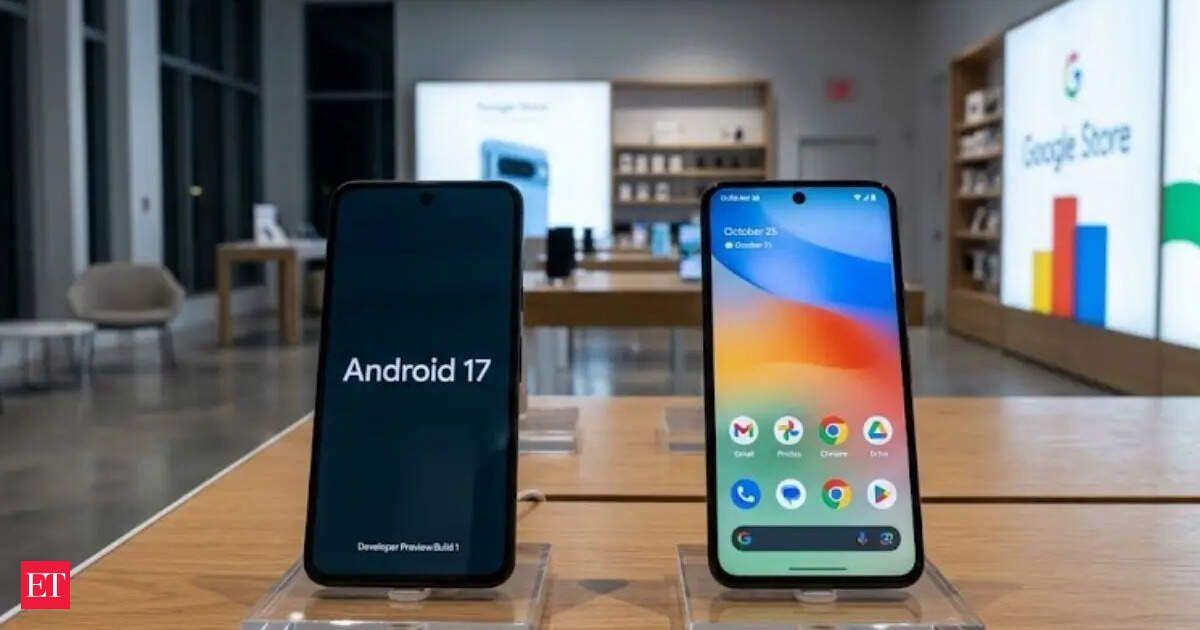
Google released the final version of Android 17 on Tuesday, rolling out first to Pixel devices before expanding to Samsung, OnePlus, and other manufacturers throughout 2026
1
. The update arrives alongside Wear OS 7 for smartwatches and a Pixel Drop that brings support for the latest AI models, including the music generation model Lyria 3, the multimodal Gemini Omni, and speech-to-translation tools with AudioLM1
. The release underscores Google's strategy of using Android and Pixel devices to showcase its latest AI technology, positioning itself against Apple's upcoming iOS 27 AI upgrades to Siri scheduled for September1
.
Source: ET
Gemini Intelligence, a context-aware AI system capable of accomplishing multi-step tasks, will arrive on select advanced devices this summer, including the Samsung Galaxy S26 and Google's Pixel 10 line
2
3
. This represents a deeper integration of Gemini into Android's core functions, though Google has not detailed which specific capabilities will ship at launch3
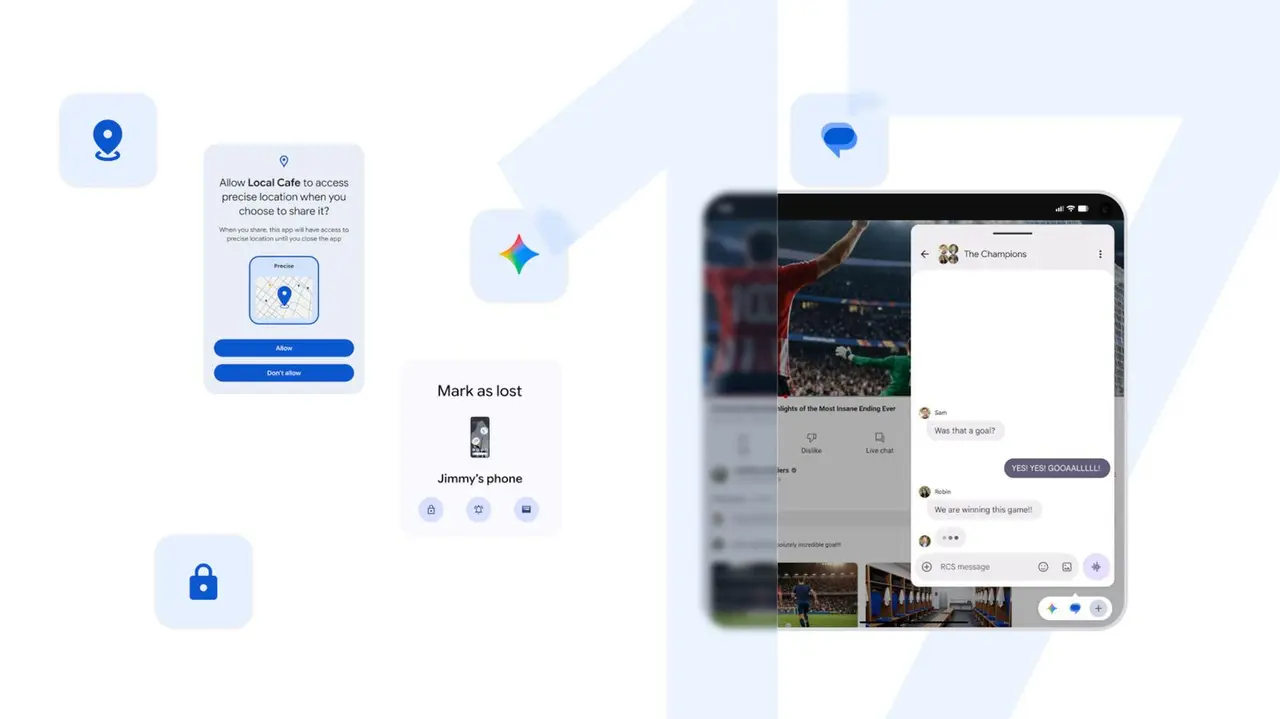
.The most visible change in Android 17 is Bubbles, a floating window system that works with any application
3
. Users can long-press any app icon to turn it into a "bubble" that floats on top of other apps, essentially turning any app into a picture-in-picture window2
. The Bubble Bar appears at the bottom of the screen, allowing users to organize, move, and quickly access recent apps that appear as bubbles1
. On devices with bigger screens, such as the Samsung Galaxy Fold and Google Pixel 10 Pro Fold, a dedicated bubble bar provides one-tap switching between apps2
. Users can resize or maximize bubbles to full screen, making the feature useful for multi-app workflows2
.
Source: Engadget
Android 17 introduces a dedicated foldable gaming mode that splits the inner display into a 50/50 configuration, with the game running on the top half and a virtual gamepad on the bottom
3
. The new mode ensures no part of the screen is wasted on devices like the Galaxy Fold and Pixel 10 Pro Fold2
. The system supports native controller remapping, letting users customize button placement without relying on game developers to offer the option3
. Google has also made memory cleanup more efficient for HD gaming to reduce lags and frame drops2
.Screen Reactions uses the selfie camera during screen recording to capture the user's face alongside whatever is on display, combining both feeds into a single video
3
. The feature eliminates the need for third-party apps and is designed for creating reaction videos, tutorials, and gameplay commentary for platforms like TikTok, YouTube, and Instagram1
. In the Pixel Drop, Lyria 3 lets users create music tracks with text prompts and images in the Gemini app1
. Conversational editing in Google Photos now allows Pixel 10 Pro, Pixel 10 Pro XL, Pixel 10 Pro Fold, and Pixel 10a users to describe image edits in natural language, available initially in Germany, the UK, France, Spain, and Italy2
.Android 17 introduces privacy controls that limit how much data apps can collect by default
3
. Apps can now request temporary location access that expires after a single session, replacing the previous binary choice between "always," "while using," and "never"3
. Users can share specific contacts with an app rather than granting access to the entire address book2
. A new Mark as Lost feature in Find Hub locks a missing device with biometric authentication, preventing thieves from unlocking it even if they obtain the passcode2
. Enhanced Live Threat Detection runs continuously in the background to flag suspicious app behavior3
. Google has also reduced the number of PIN guess attempts before the phone enforces progressively longer wait times3
.Related Stories
Voice Translate is coming to Pixel 10a devices, providing better speech-to-speech translation tools with AudioLM
1
. The feature translates what each caller is saying in their own voice2
. Users can now record a personalized outgoing audio message for callers when they can't answer1
. The "Take a Message" feature will arrive in more global markets, letting callers leave messages in a more interactive way1
5
. Android Quick Share's file-sharing feature is now compatible with Apple's AirDrop on older Pixel 8a and 9a devices1
.Wear OS 7 is rolling out to Pixel Watches alongside Android 17
3
. This summer, Wear OS will introduce more Gemini Intelligence features, including tools for making personalized widgets just by describing them1
. Personal Intelligence will connect Google apps and chat history with Gemini to offer more personalized assistance1
5
. Watch owners can now receive live updates from phone apps that mirror to the Pixel Watch1
. Battery life improvements of up to 10% will also arrive1
. The Pixel Drop brings emergency detection features to the Google Pixel Watch, automatically contacting emergency services and selected emergency contacts if the watch detects a car crash, fall, or lack of pulse1
.
Source: TechCrunch
The rollout arrives as the European Commission prepares to force Google to open Android to rival AI assistants under the Digital Markets Act, with a binding decision due by July
3
. How deeply Google can embed Gemini into Android without triggering regulatory intervention in its largest international market remains an open question3
. Google is simultaneously replacing ChromeOS with Android-powered Googlebook laptops that put Gemini at the operating system level, making the stakes of the EU's interoperability ruling considerably higher than a single phone update3
. More than 20 Pixel devices will receive the Android 17 stable update, including devices from the Pixel 6 series through the latest Pixel 10 family4
.Summarized by
Navi
[2]
[3]
[4]
12 May 2026•Technology

Yesterday•Technology

02 Dec 2025•Technology

1
Policy and Regulation

2
Business and Economy

3
Technology