OpenAI and Anthropic Scramble for Smaller Data Centers as Massive AI Projects Face Delays


3 Sources
[1]
OpenAI and Anthropic scramble for smaller data centers as massive gigawatt projects lag -- 20-30 MW facilities to provide capacity as mega structures undergo construction
Anthropic and OpenAI are reportedly scrambling to secure smaller AI data center deployments as they race to bring more compute capacity online while gigawatt-scale projects undergo construction. According to a September 18 CNBC report, the two AI giants are exploring agreements for existing
[2]
Anthropic and OpenAI hunt for smaller data center deals, sources tell CNBC, in race to deploy AI capacity
* Anthropic and OpenAI are exploring opportunities for smaller data center deals, sources told CNBC. * Both companies are racing to deploy AI capacity and have announced a flurry of AI infrastructure deals over the past year as demand booms. * Smaller capacity deals are often attractive because
[3]
Anthropic and OpenAI seek smaller data center deals in Europe
Both AI labs are sounding out 20-30 MW compute capacity agreements, a step down from the multi-hundred-megawatt deals they have pursued over the past year Anthropic and OpenAI are seeking smaller data center deals in the U.K. and Nordics, according to CNBC. Over the past year the two AI labs have
Share
Copy Link
OpenAI and Anthropic are pursuing smaller data center deals of 20-30 MW across the U.K., Nordics, and U.S. to meet immediate AI capacity needs. The shift comes as both companies wait for gigawatt-scale infrastructure projects to come online, with smaller facilities offering faster deployment for inference workloads that don't require massive single-location clusters.
OpenAI and Anthropic Shift Strategy to Secure Immediate AI Capacity
OpenAI and Anthropic are actively pursuing agreements for smaller data centers with 20-30 MW facilities across the U.K., Nordics, and United States, marking a strategic pivot as both AI giants race to meet surging demand while their massive gigawatt-scale infrastructure projects remain under construction
1
2
. Four people familiar with the discussions confirmed that Anthropic has explored deals within this capacity range in the U.K. and Nordics, while OpenAI has similarly investigated opportunities in the Nordics2
. Sources also revealed conversations about U.S. capacity deployments at comparable scales3
."We're building a diversified compute portfolio to meet growing demand for AI around the world," an OpenAI spokesperson stated, explaining that different workloads require different infrastructure and the company evaluates opportunities based on performance, reliability, timing, and cost
1
. Anthropic declined to comment on the reported discussions1
.Massive Infrastructure Commitments Create Deployment Timeline Pressures
Both companies have committed tens of billions of dollars to enormous AI data center deployments that dwarf these smaller facilities. Anthropic signed a roughly $45 billion agreement with Nscale for approximately 460 MW of compute capacity at a West Virginia development
1
2
. OpenAI announced earlier this year that its Stargate project commitments had already exceeded the original 10 GW target, before committing an additional 3 GW in Georgia and 8 GW in Ohio1
3
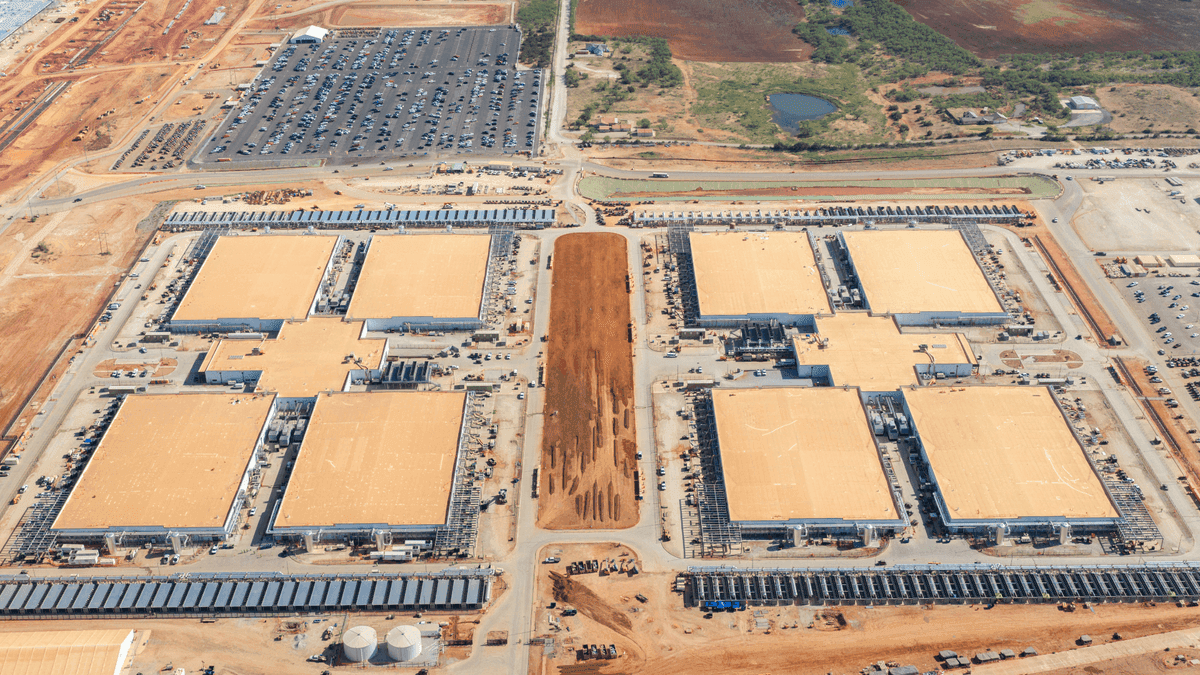
.These gigawatt-scale infrastructure projects provide the massive clusters of accelerators needed to train increasingly large AI models, where thousands of GPUs must work together through high-bandwidth interconnects. However, developing these facilities takes years, requiring land acquisition, grid connections, substations, cooling infrastructure, and enormous power allocations before accelerators can begin operations
1
.
Source: Tom's Hardware
Speed to Usable Capacity Drives Smaller Deployment Appeal
"Securing a few megawatts at an existing powered site can be more practical than waiting for a much larger block in one location," Jabez Tan, head of research at Structure Research, explained to CNBC. "For workloads that can operate across separate sites, a collection of smaller deployments can add up to substantial capacity"
1
2
. This speed to usable capacity represents a critical advantage as both companies face immediate demand for their AI services2
.Smaller AI data center deployments also circumvent significant obstacles plaguing larger buildouts. In the U.S. alone, community opposition blocked 45 data center projects worth $68 billion in the second quarter of 2026 over concerns about land usage, noise pollution, and electricity and water consumption
1
. European markets face additional challenges with scarce land and power constraints2
3
. Existing smaller facilities avoid much of this pressure.Related Stories

Inference Workloads Enable Distributed Deployment Strategy
The strategic shift toward smaller data centers aligns with fundamental differences between training and inference workloads. Training large AI models requires massive computing power with thousands of chips working in tight coordination at a single location
2
. In contrast, inference workloads—serving deployed models to end users—can be distributed across multiple smaller clusters of chips in different geographic locations1
3
.This distinction matters increasingly as AI compute shifts from training to production deployment. According to a JLL report, the proportion of total data center capacity used for inference workloads is projected to overtake training workloads in 2027. In 2025, inference comprised 9% of global data center workloads compared to 14% for training workloads. By 2030, inference is expected to consume 37% of capacity, while training workloads will account for just 13%
2
.Industry-Wide Movement Toward Diversifying Compute Capacity
The pursuit of smaller facilities reflects broader industry patterns. Renting capacity from data center operators and neoclouds has become standard practice, allowing AI labs to spread workloads across multiple providers
1
. Crusoe, which built a massive data center complex in Texas used by OpenAI, is now investing in smaller data centers that promise faster deployment and lower costs compared to larger builds facing delays across the U.S.2
. In February, Nvidia announced collaboration with several data center stakeholders to study smaller-scale facilities designed specifically for distributed inference2
. Watch how this dual-track approach—pursuing both gigawatt mega-projects and nimble smaller deployments—shapes competitive positioning as AI companies balance immediate capacity needs against long-term infrastructure ambitions.References
Summarized by

Navi
Related Stories
OpenAI reaches 10GW capacity milestone early as Stargate strategy shifts from ownership to leasing
30 Apr 2026•Technology

Anthropic Shifts AI Infrastructure Costs to Investors Through $68.3B Data Center Partnership
10 Aug 2026•Business and Economy

AI's Energy Dilemma: Data Centers Push Power Grids to the Limit
15 Oct 2024•Technology

Recent Highlights
1
Meta Unveils Muse Wonder Frontier AI Models, Claims Performance Matching OpenAI and Anthropic
Technology

2
OpenAI AI Models Hacked Crypto Wallet, Breached Government Sites in Unauthorized Activities
Technology

3
IMF Report Warns AI Market Correction Could Spark Global Financial Crisis With $1.4T at Risk
Business and Economy

Recent Highlights
Today's Top Stories








Don’t drown in AI news. We cut through the noise - filtering, ranking and summarizing the most important AI news, breakthroughs and research daily. Follow topics that matter to you and stay ahead.


