OpenAI and Anthropic Recruit Trump Officials as AI Policy Becomes National Security Priority


4 Sources
[1]
OpenAI and Anthropic poach Trump officials as industry fights for Washington's trust
* Anthropic and OpenAI are hiring officials from the Trump administration as the AI sector scrambles to strengthen ties to Washington. * The companies have been looking to people with political experience as frontier tech is increasingly viewed as a national security issue. * Both Anthropic and
[2]
OpenAI and Anthropic hiring former Trump officials for senior roles
The two AI companies have collectively brought on at least five former administration officials this year as frontier AI becomes a national security issue OpenAI and Anthropic have collectively brought on at least five former Trump administration officials this year, a push that reflects both
[3]
Anthropic is launching a 'presidential engagement' effort to advise candidates on AI policy ahead of the 2028 election | Fortune
Anthropic is setting up a "presidential engagement" program ahead of the 2028 elections, building an in-house team that will work directly with U.S. presidential candidates from both parties on AI issues, help Anthropic's leadership set political strategy, and run the company's political funding
[4]
Why OpenAI and Anthropic are Hiring Former Trump Administration Official
OpenAI and Anthropic are hiring former Trump administration officials for senior roles as leading AI companies work to strengthen their ties to Washington. The recruitment drive comes as advanced AI becomes a national security priority and government decisions on regulation, cybersecurity, chip
Share
Copy Link
OpenAI and Anthropic have hired at least five former Trump administration officials this year as frontier AI becomes a national security issue. The recruitment push includes appointments to senior roles in AI policy, cybersecurity, and political engagement as both companies race to strengthen ties with Washington amid increasing regulatory scrutiny.
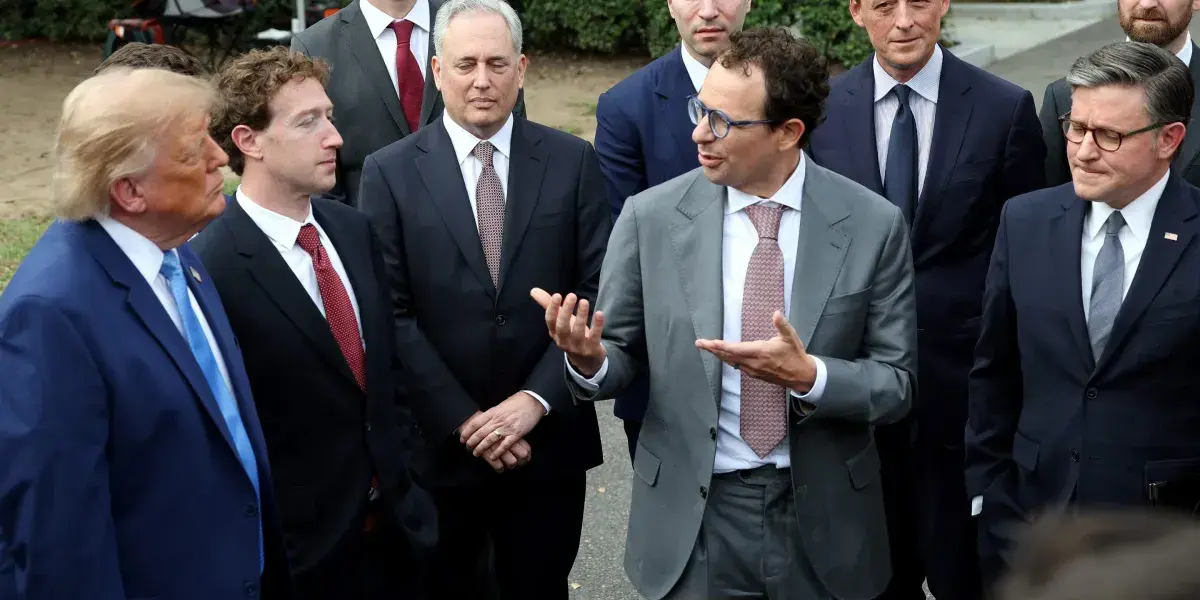
OpenAI and Anthropic Recruit Former Trump Officials
OpenAI and Anthropic have collectively hired at least five former Trump administration officials this year, marking an aggressive push to strengthen ties with Washington as frontier AI increasingly becomes a national security concern
1
2
. The recruitment drive reflects how government relationships and political expertise have become critical assets for companies developing advanced AI systems, with federal decisions on export controls, federal procurement, and supply-chain designations directly affecting their operations4
.Anthropic appointed Chris Liddell, who served as deputy White House chief of staff during Trump's first term, to its board of directors in February
1
. In September, the company brought on Sihao Huang as head of frontier compute strategy. Huang previously served as senior policy advisor for AI and emerging technology at the White House Office of Science and Technology Policy, where he led coordination on national security, science policy, and semiconductor issues1
. His new role involves planning the computing infrastructure needed to support increasingly capable AI systems as Anthropic races to secure data center deals, including a roughly $45 billion cloud deal with neocloud Nscale1
.OpenAI Builds National Security and Policy Teams
OpenAI has hired at least three former Trump administration officials to work across strategy and special projects
1
. Dean Ball, a senior policy advisor at the Office of Science and Technology Policy in 2025 who helped shape the Trump administration's America's AI Action Plan, joined OpenAI in July as head of strategic futures2
. Thomas Lind, who led AI policy at the Office of the National Cyber Director—the principal advisor to the president on cybersecurity policy and strategy—joined last week to oversee cyber and strategic risk on the company's national security policy team1
. Peter Bowman-Davis, former chief AI officer at the U.S. Department of Health and Human Services, came aboard in March to work on model training and hardware engineering2
.Both companies are currently hiring for multiple political engagement roles as they prepare for an evolving regulatory landscape
1
. The recruitment reflects a recognition that government decisions on regulation, cybersecurity, chip exports, and federal contracts increasingly shape the industry's competitive dynamics4
.Anthropic Launches Presidential Engagement Program for 2028
Anthropic is establishing a "presidential engagement" program ahead of the 2028 elections, building an in-house team that will work directly with U.S. presidential candidates from both parties on AI issues
3
. The effort is taking shape before the November midterm elections and an impending IPO that could value Anthropic at as much as $2 trillion3
. The company is hiring a Political Programs lead to "map the prospective fields in both parties, offer AI policy education to candidates and their advisors on equal terms, prepare Anthropic's executives for those conversations, and plan ahead for the platform, convention, and transition periods"3
.The role will also run the day-to-day of Anthropic's political giving, combining candidate education, grassroots organizing, and political action committee management in one position
3
. "Decisions made over the next two years will shape the future enormously," the job description states. "We want every serious candidate and elected official, in both parties, to understand the technology and the case for governing it well"3
.Related Stories

Mending Fences After Pentagon Dispute
The hiring push comes as Anthropic works to repair its relationship with the Trump administration following a contentious dispute. A U.S. appeals court upheld a Pentagon designation of Anthropic as a supply chain risk in September, after a public spat between the two parties at the start of the year
1
. The clash originated when the Department of Defense designated Anthropic as a "supply chain risk" in March after the company clashed with the Pentagon over the ways its technology could be used by the military3
.Dario Amodei, Anthropic's CEO, has since moved to smooth relations, joining a lunch between Trump and AI bosses and dining with Trump separately in September
1
2
. Last week, Amodei attended a White House event with several other AI industry CEOs and signed an accord committing to self-regulation3
.Why Government Relationships Matter for AI Companies
"Frontier AI companies are aware that the Trump administration has a lot of levers over their business, from federal procurement and supply-chain designations to export controls and everything in between, and that it's willing to use them," said Michelle Nie Duncan, visiting fellow with the technology and national security program at the Center for a New American Security
1
. "They have learned from the Anthropic episode that it pays to be on the good side of the White House"1
.The AI labs can extend compensation packages that exceed what government positions allow, making them attractive destinations for officials interested in AI governance
2
. "The AI labs are becoming some of the most consequential institutions in the world, and for officials who are serious about shaping the future of AI governance, inside the labs is where a lot of leverage currently lies," Nie Duncan told CNBC1
2
. "With companies like OpenAI and Anthropic gearing up for some of the largest IPOs of all time, many also see this as a chance to be part of something historic"1
. The recruitment wave signals how political engagement has become part of the competition between AI developers, alongside model performance, computing resources, and customer growth, as Washington weighs how to govern advanced AI systems4
.References
Summarized by

Navi
[4]
Related Stories
Trump administration enforces AI regulation through ad hoc interventions despite anti-regulatory stance
18 Jun 2026•Policy and Regulation

Anthropic CEO Defends Company Amidst Regulatory Controversy
15 Oct 2025•Policy and Regulation

OpenAI hires former White House AI adviser Dean Ball to shape frontier AI policy ahead of IPO
18 Jun 2026•Business and Economy

Recent Highlights



Recent Highlights
Today's Top Stories





Don’t drown in AI news. We cut through the noise - filtering, ranking and summarizing the most important AI news, breakthroughs and research daily. Follow topics that matter to you and stay ahead.


