US Government Takes Control of AI Model Releases as Anthropic and OpenAI Face Regulatory Limbo


14 Sources
[1]
It's not about Anthropic vs. OpenAI anymore
The U.S. government is set to take an awful lot of control over which AI models get released. Two weeks after the U.S. government pulled Anthropic's Fable and Mythos models, OpenAI's new model seems to be headed for the same limbo. The Information broke the news Thursday that GPT 5.6 would be
[2]
Anthropic's Mythos mess is only getting worse
It's been two weeks since Anthropic took its Mythos-class models offline after a Friday evening ultimatum from the Trump administration. The company sprang into action immediately, sending a barrage of executives to Washington, DC. But updates have been suspiciously lacking, with no resolution in
[3]
Tech CEOs want AI rules -- it may be too late
A deregulated environment sounds good until it results in ad hoc political intervention The writer is a fellow at Stanford University's Institute for Human-Centered Artificial Intelligence. She is author of 'The Tech Coup' For the past year American tech companies have created a collective
[4]
US in talks with AI companies over voluntary standards for new models
An announcement could land within days, the Financial Times reports, as Washington tries to formalise the review process it sketched out in June. The US government is negotiating voluntary standards with AI companies covering how new models get released, according to the Financial Times, with an
[5]

Trump Administration Reportedly on Verge of Standards Deal With Big AI
As I've written before, part of the reason AI news is such a mess right now is that what AI companies are and aren't allowed to do is not clear. But a voluntary deal with Big AI is reportedly in the works that might smooth things out significantly (Your mileage may vary on whether or not that's a
[6]

Opinion | Feds deciding who gets GPT access reflects a misreading of AI threats
OpenAI CEO Sam Altman at the Group of 7 summit in France on June 17. (Evelyn Hockstein/Reuters) Perfect security is a dangerous delusion. That's something close to a gospel truth for cybersecurity experts, who work from the understanding that their work is never finished. This appears not to be
[7]
Silicon Valley paid to kill AI regulation, now it wants the rules back
AI executives who funded Trump's deregulation push now want a formal framework after chaotic export controls and model restrictions. The AI industry that donated heavily to elect Donald Trump on the promise he would leave the technology alone is now asking for formal regulation, Politico reported
[8]
Big AI Had a Point When It Said It Needed to Be Told What Is Not Okay
A new report from Politico makes fascinating, if somewhat amusing, reading right now. It sounds like Big AI wants the Trump Administration to speak in a clear voice about what's not okay, and broadly thinks it was inevitable that it would eventually crack down like it has recently on Anthropic. But
[9]

The pro-AI movement is splintering
Why it matters: The fight is happening in public, in real time, and it could reshape the way the administration regulates the world's most powerful technology. Catch up quick: David Sacks -- Trump's former AI and crypto czar -- warned that restricting access to America's most advanced AI models
[10]
Opinion | What if Trump is right to pump the brakes on the most advanced AI?
President Donald Trump at the G-7 summit in Evian, France, on June 17. (Mandel NGAN/AFP) Robert Wright publishes the NonZero Newsletter and is the author of, most recently, "The God Test: Artificial Intelligence and Our Coming Cosmic Reckoning." Last week the prominent cybersecurity expert Alex
[11]

Anthropic has bucked the rules of Trump's Washington. It's cost them. | Fortune
At first glance, it might seem like the two frontier AI labs are in a similar position in President Donald Trump's Washington. But nothing could be further from the truth. Anthropic has had a far rougher ride in Trump's D.C. than OpenAI, or pretty much any other tech company. Twice now the
[12]

FOR INSIDERS: Trump White House holds back new AI models, spurring confusion
The Trump administration's request for OpenAI to delay the release of its new models is sparking more confusion over White House AI policy and keeping private firms on their toes. The government asked OpenAI and Anthropic to delay or suspend their newest models this month, just weeks after
[13]

US AI model standards: US in talks with AI companies for voluntary model standards
The U.S. government is in advanced talks with AI companies to create voluntary standards for the release of new models, with an announcement possible as soon as next week, the Financial Times reported on Wednesday, citing sources. * Washington has tightened oversight of new model releases to
[14]

Tech Companies Scramble to Respond to Shifting White House AI Policies | PYMNTS.com
Early in his first year back in office, Trump tore up President Biden's executive order that sought to establish a broad regulatory framework for AI safety, security and oversight, despite broad support for order's long list of AI priorities. Trump then spent much of 2025 and early 2026 keeping the
Share
Copy Link
The US government has begun implementing strict oversight over frontier AI models, pulling Anthropic's Mythos from the market and forcing OpenAI into limited preview for GPT 5.6. After weeks of uncertainty, Washington is now negotiating voluntary standards with major AI companies to formalize the review process, but the ad hoc approach has already created serious economic consequences for the US AI industry.
US Government Tightens Grip on Frontier AI Models
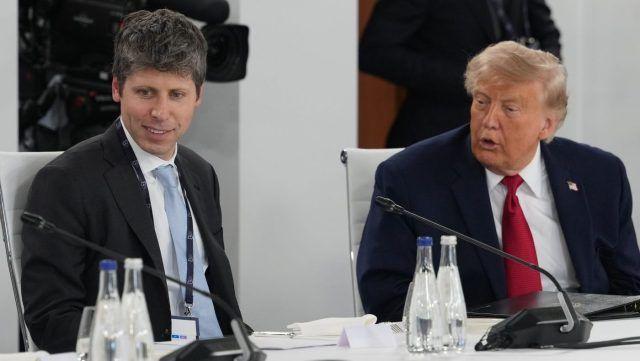
The US government has dramatically shifted its approach to AI regulation, moving from a hands-off stance to active intervention in how and when advanced AI models reach the market. Two weeks after pulling Anthropic's Fable and Mythos models from public access, the government is now requiring OpenAI to release its new GPT 5.6 model only through limited preview, with officials approving access "customer by customer" until general release can be authorized
1
. While OpenAI CEO Sam Altman reportedly projected the preview period might last only "a couple of weeks," Mythos has already been offline for months with no clear path to general availability2
.
Source: The Hill
The Trump administration's June 12th export control order demanded that Anthropic suspend access by "any foreign national" to Mythos 5 and Fable 5 due to security concerns, covering any non-US citizen inside or outside the US, including Anthropic's own employees
2
. After 14 days of high-intensity negotiations between Anthropic executives and Washington officials, no resolution has emerged, leaving the company's most powerful AI models in regulatory limbo.The Economic Stakes for Anthropic and OpenAI
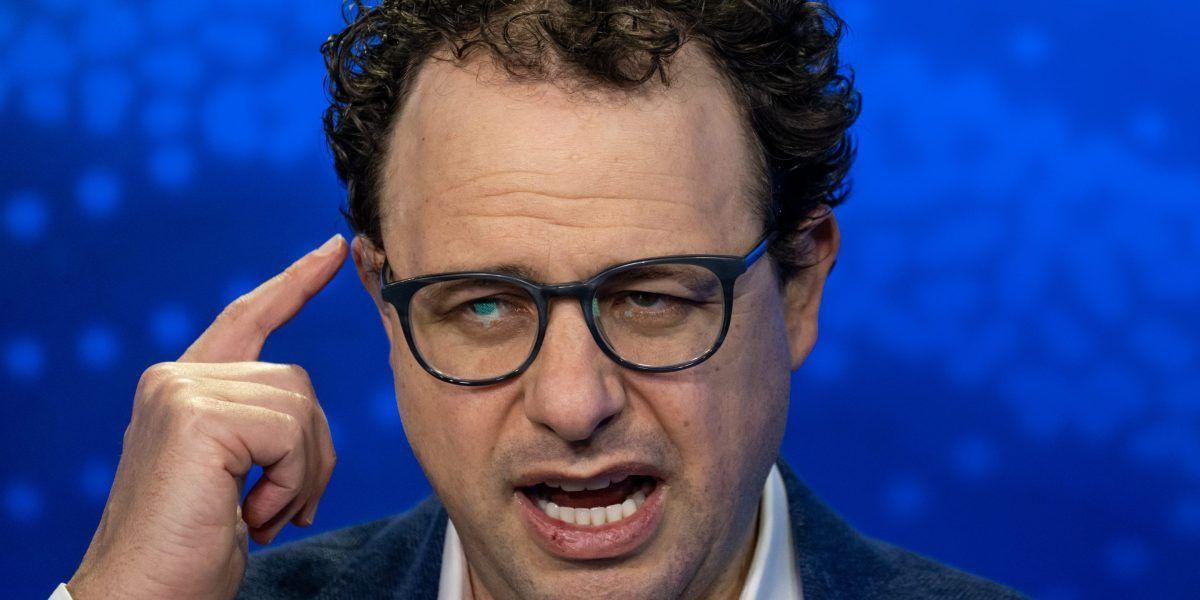
The financial implications are substantial for both companies. Before the government intervention, Anthropic was viewed as one of the rare AI companies with a clear path to profitability. Its Mythos-class models, whose input tokens sell for double the cost of its lower-powered Opus 4.8, were expected to boost revenue ahead of an upcoming IPO
2
. The company needs this revenue to cover recent commitments, including a deal to pay SpaceX $15 billion per year for access to its data centers2
.
Source: Fortune
For OpenAI, even a few weeks spent in review could significantly limit the economic upside of a costly new system, at a time when AI labs are trying desperately to improve their bottom lines
1
. If the pace of model development slows as a result, it's likely to dampen the ongoing data center buildout that has defined the industry's recent expansion.Voluntary Standards Framework Takes Shape
In response to mounting pressure and confusion, the US government is now negotiating voluntary standards for new AI models with major companies including Google, Microsoft, Amazon, Anthropic and OpenAI
4
. According to reports, an announcement could arrive within days, formalizing the review process sketched out in the June executive order4
.The standards would set benchmarks and timelines for covered frontier models, while clarifying who gets access to them inside the US and abroad
4
. The Center for AI Standards and Innovation (CAISI) under the Department of Commerce and the National Security Agency are expected to be central to these standards once formalized5
.The Cybersecurity Trigger Behind Government Action
The catalyst for the Anthropic intervention appears to have been concerns about cybersecurity capabilities. The US Department of Commerce reportedly tested Fable 5 before release and raised no complaints initially. The agency apparently didn't act until someone—reportedly Amazon CEO Andy Jassy—flagged a method for seemingly breaking Fable 5's guardrails
2
.Katie Moussouris, founder and CEO of Luta Security, reviewed a report about the Fable 5 vulnerability at Anthropic's request and concluded it was significantly overblown. Researchers had jailbroken guardrails that prevent Fable 5 from finding exploitable security holes, but Moussouris argued this functionality is essential for AI coding and defensive security work
2
.AI Governance Challenges and Industry Unity
The fundamental problem facing AI regulation is that the US government lacks clear expertise or capacity for the kind of testing needed to evaluate advanced AI models. It's not even clear what regulators are trying to protect against, since there's been no effort to articulate what risks the government is actually concerned about
1
.Most companies making dual-use products can evaluate them using essentially a checklist during manufacturing. Anthropic, however, is facing a complicated bureaucracy figuring out how to apply its rules from first principles
2
. This export control process can normally unfold over months, if not years, and conclude before a product reaches market.Related Stories
Global Implications and Market Power Vacuum
The glacial negotiations have created a power vacuum in the global AI market, not only because of the Mythos shutdown, but because the US government has signaled a willingness to lock down American AI systems it deems risky
2
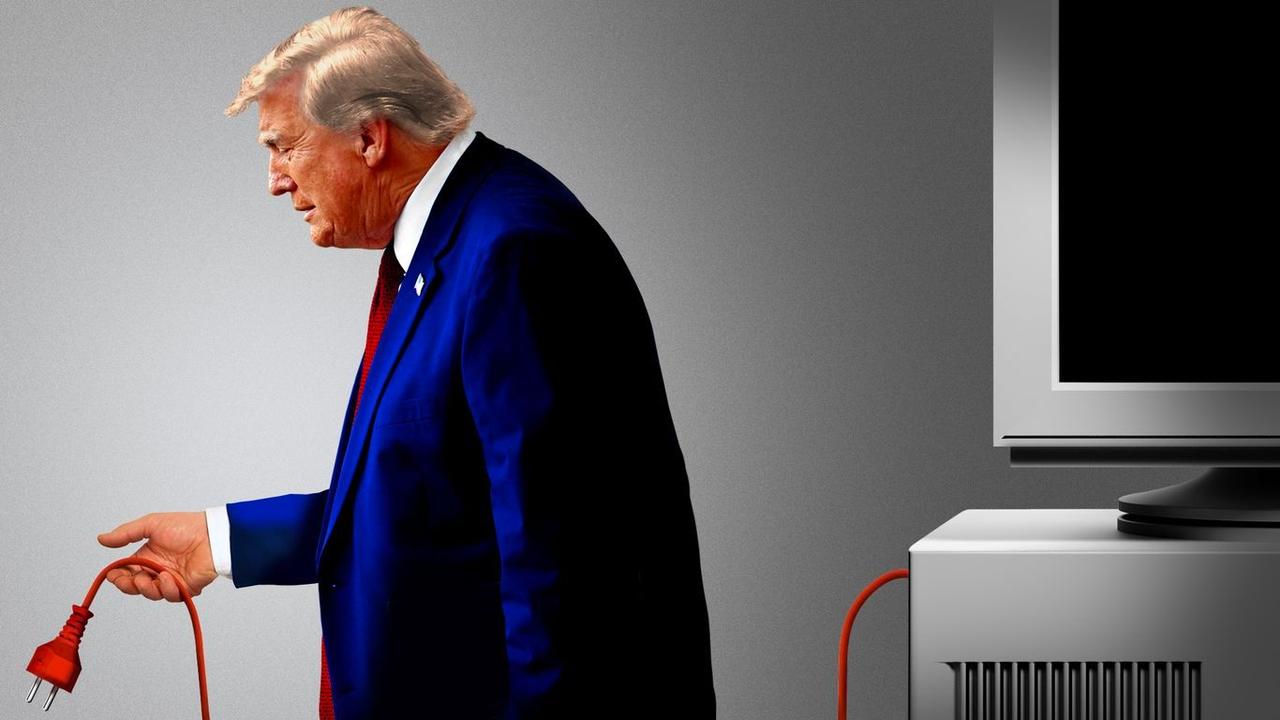
. Countries have started calling for non-American AI alternatives. As cybersecurity expert Alex Stamos noted, this sort of "vibes-based regulation" could result in public loss of trust towards American AI companies, with the world receiving the message that services can and will be cut off at any moment by the White House3
.
Source: Axios
The Cost of Ad Hoc Executive Interventions
Stanford fellow and author of 'The Tech Coup' argues that tech companies created this collective inaction problem by failing to speak out when core rule-of-law principles were attacked. The absence of a legitimate rule book doesn't mean the absence of power plays and ad hoc executive interventions—instead it means that interventions are political and unconstrained
3
.Transparency International's latest Corruption Perceptions Index gives the US 64 out of 100, its lowest score on record
3
. The industry got the deregulated environment it asked for, but things are not playing out as hoped. Instead of predictable rules, companies face uncertainty that executives identified as their biggest economic concern in recent surveys.What Comes Next for the US AI Industry
Critically, Anthropic and OpenAI now face identical challenges with the same potential disaster waiting if they fail. The cost of implementing a haphazard government approval process for every frontier model is obvious, and there's no fix that helps one lab without helping the others
1
. Addressing biorisk, cybersecurity, and alignment concerns will require working together, trusting independent groups to guide the process, and lining up behind the least-bad regulatory options available instead of fighting every regulation.Whether the voluntary standards framework actually reduces friction or simply codifies the ad hoc reviews already underway depends on details that haven't yet been made public
4
. Companies retain the right to decline participation without penalty, which means the framework's force depends entirely on how many of the largest labs opt in. If the benchmarking process is classified as expected, the public won't know what standards Big AI is being held to5
.References
Summarized by

Navi
[1]
[2]
Related Stories
Sam Altman urges US lawmakers to fund AI testing but reject mandatory model approvals
03 Jun 2026•Policy and Regulation
Trump's AI executive order creates voluntary framework as MAGA base pushes for tighter oversight
18 May 2026•Policy and Regulation
White House Finalizes Secret AI Safety Framework, Shares Only with Select Tech Companies
05 Aug 2026•Policy and Regulation
Recent Highlights



Recent Highlights
Today's Top Stories



Don’t drown in AI news. We cut through the noise - filtering, ranking and summarizing the most important AI news, breakthroughs and research daily. Follow topics that matter to you and stay ahead.


