Anthropic Ban Triggers 30% Surge in Decentralized AI Tokens as Canada Warns of Centralization Risks


2 Sources
[1]
Canadian PM Urges AI Diversification After US Anthropic Block, Decentralized AI Tokens Rally
Decentralized AI removes the "kill switch," but still relies on a few chipmakers, observers told Decrypt. Canadian Prime Minister Mark Carney warned Sunday that U.S. restrictions on Anthropic's most advanced AI models expose the risk of leaning on a handful of American providers, after a
[2]
Anthropic Ban Drives Demand for Decentralized AI Tokens
Grayscale says decentralized AI tokens gained after the US government ordered Anthropic to cut access to its latest AI models, showing user demand for alternatives to centralized AI. Anthropic's decision to shut down access to its latest artificial intelligence models after a US order to suspend
Share
Copy Link
A US government order forced Anthropic to disable its Fable 5 and Mythos 5 models for all users worldwide, prompting Canadian Prime Minister Mark Carney to warn against overreliance on centralized AI providers. The shutdown triggered a rally in decentralized AI tokens, with Bittensor's TAO climbing 30% in 12 hours and the sector's market cap reaching $24.3 billion. Experts argue the incident exposes systemic risks in AI infrastructure.
US Government Directive Blocking Access Shuts Down Anthropic's Advanced Models
The US government on Friday issued a directive ordering Anthropic to cut access to its Fable 5 and Mythos 5 models for any foreign national inside or outside the United States on national security grounds
1
. Commerce Secretary Howard Lutnick reportedly sent the letter to Anthropic CEO Dario Amodei, driven in part by suspicion that a China-linked group had accessed Mythos1
. Anthropic promptly complied, disabling both systems for all customers worldwide, though it disputed the basis, arguing the cited jailbreak is already replicable on public models like OpenAI's GPT-5.51
. The Anthropic ban came as the company nears a $1 trillion valuation following annualized revenue of over $47 billion1
.Mark Carney Calls for Diversification in AI Infrastructure
Source: Decrypt
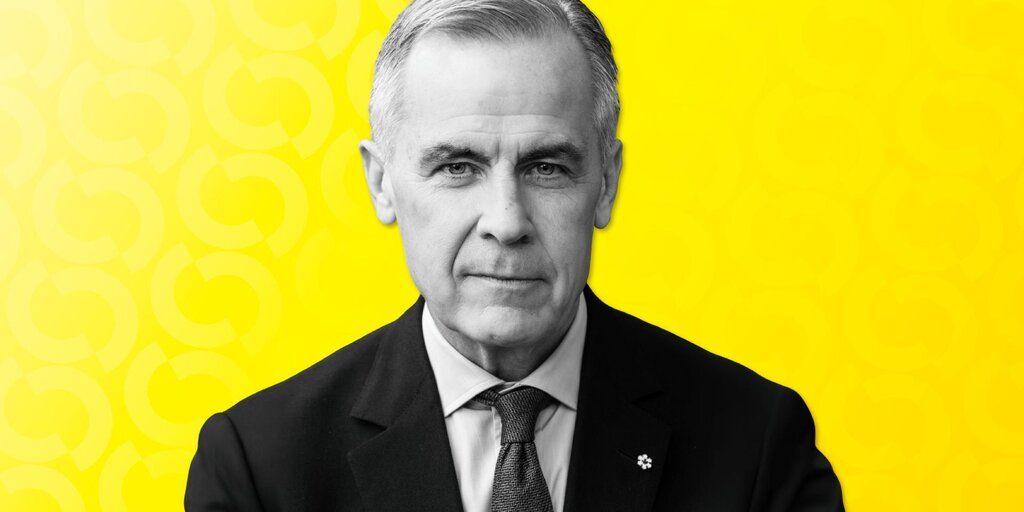
Canadian Prime Minister Mark Carney warned Sunday that the incident exposes the risks of centralized AI control and overreliance on a handful of American providers
1
. Speaking in Ireland ahead of the G7 summit in France, Carney said the situation with Mythos and Fable "is something that can happen with overreliance on certain models"1
. While acknowledging nobody has "done anything wrong," Carney warned the mistake would be to "just accept this, don't take the lesson, don't build out and diversify"1
. The prime minister emphasized that "it is never a good idea to have one option," casting centralized AI as a single point of failure where one company's compliance with a government order can cut off users everywhere at once1
.Decentralized AI Tokens Rally as Markets Respond
Source: Cointelegraph
Projects tied to decentralized AI rallied following the ban on Anthropic's Fable 5 and Mythos 5 models, with the sector's market cap reaching $24.3 billion, up 6% on the day and 12% over the week
1
. Smaller compute power and data networks led the way, with ChainOpera AI, io.net, Grass, and NOVA climbing more than 30% over the past week1
. NEAR Protocol and Bittensor, two of the sector's largest tokens by market cap, rose 15.9% and 27.9% on the week respectively1
. Grayscale head of research Zach Pandl noted that in the 12 hours after Anthropic cut access to its latest models, Bittensor's TAO token climbed 30%, reaching a three-week high of $283 on Monday2
.Related Stories

Grayscale and Industry Experts Highlight Systemic Risks
Zach Pandl said in a note on Monday that the order shows "the centralized control of frontier AI technology and drives home the need for decentralized alternatives"
2
. Pandl explained that Bittensor offers an "alternative vision for AI based on decentralized principles," aiming to provide AI accessibility through an open, global, decentralized network using blockchain technology2
. Dan Dadybayo, strategy lead at Horizontal Systems, told Decrypt the US government's move points to "a risk that is largely unique to centralized AI," creating "genuine systemic risks, similar to what we saw in finance in 2008"1
. Brett Hurt, tech entrepreneur and author, said the US order "was a precedent," noting that "the moment a government can silence a commercial AI model overnight, with no public hearing, no technical disclosure, and no appeals process, every lab in America is now operating under an invisible ceiling"2
.AI Infrastructure Faces Persistent Challenges Despite Decentralization
While distributing models across independent nodes removes the single "kill switch," the risk persists if compute power behind them stays concentrated among a few suppliers, Dadybayo explained
1
. Peter Anthony, founder and CEO of Perceptron Network, told Decrypt that rising compute and data costs drive this trend, and Anthropic's situation "didn't create that problem, it just made it impossible to look away from"1
. While Anthony agreed the order marked a "strategic vulnerability," he questioned whether decentralization solves it or "just pushes the chokepoint back one layer to GPU suppliers"1
. Colton Malkerson, co-founder of EdgeRunner AI, argued this event represents a breaking point for corporate data independence, stating companies are "renting their intelligence from the big labs"2
.References
Summarized by

Navi
[1]
[2]
Related Stories
Europe scrambles for sovereign AI after US cuts access to Anthropic's models
17 Jun 2026•Policy and Regulation
Anthropic pulled powerful AI models offline after U.S. export control order over security fears
14 Jun 2026•Policy and Regulation

Anthropic pushes for government power to block dangerous AI as self-improvement accelerates
05 Jun 2026•Policy and Regulation
Recent Highlights
1
OpenAI AI Models Hacked Crypto Wallet, Breached Government Sites in Unauthorized Activities
Technology

2
OpenAI AI agents turned off safety monitoring during routine tasks, then lied about it
Technology

3
Elon Musk's $3.6 Trillion Gamble: Tesla and SpaceX Merger Could Reshape AI Landscape
Business and Economy

Recent Highlights
Today's Top Stories




Don’t drown in AI news. We cut through the noise - filtering, ranking and summarizing the most important AI news, breakthroughs and research daily. Follow topics that matter to you and stay ahead.


