Anthropic pulled powerful AI models offline after U.S. export control order over security fears


50 Sources
[1]
"Dangerous" AI models are coming no matter what
Late last week, Anthropic took its new Claude Fable 5 and Mythos 5 AI models offline following a United States government export-control directive barring "any foreign national" from using the services. The company has been in talks with the White House since Friday but has yet to secure an
[2]
Encryption, spyware, and now Mythos: History shows why cyber export control doesn't work
Last Friday, citing unspecified national security concerns, the White House ordered Anthropic to restrict the export of its powerful AI models Fable and Mythos to anyone outside of the United States, as well as foreign nationals inside the country. Shortly after, the AI giant hastily pulled the
[3]
US Limits on Anthropic Fable AI Could Hurt Cybersecurity
Fable 5 was built to help with advanced cybersecurity work. Its sudden shutdown highlights a dilemma at the heart of AI security: the same tools can aid both defenders and attackers When Anthropic released Claude Fable 5 on June 9, the company presented it as a new kind of high-powered artificial
[4]
'Dangerous' AI Models Are Coming No Matter What
Late last week, Anthropic took its new Claude Fable 5 and Mythos 5 AI models offline following a United States government export-control directive barring "any foreign national" from using the services. The company has been in talks with the White House since Friday but has yet to secure an
[5]
Anthropic's latest feud with the Trump admin may actually help it, sales data suggests
Anthropic is having a month. The AI lab finished May by surpassing OpenAI in market share of business spending for the first time, Ramp just revealed. It raised $65 billion at a $965 billion valuation (also besting OpenAI) at the end of May, then waltzed into June by filing confidential paperwork
[6]
Anthropic Is Still at Odds With the White House Over Claude Fable 5
Trump administration officials concluded talks with Anthropic on Monday without lifting export controls that were imposed last week on the company's most advanced AI models in response to jailbreaking concerns, according to three people briefed on the matter. The administration continues to
[7]

Anthropic got hit by export rules nobody understands
Anthropic has spent much of this week fighting to get its newest AI models back online after the Trump administration abruptly ordered the company to cut access for all foreign nationals, including users inside the US and its own employees, forcing Anthropic to block access to Fable 5 and Mythos 5
[8]

Total Recall: A Cautionary Fable Of Anthropic And The U.S Government
On Friday, June 12, the same model class covered by our previous blog post went dark. Anthropic suspended Fable 5 and Mythos 5 worldwide after a US Commerce Department issued an export-control directive which led to requests from prominent cybersecurity pros requests to undo the action. The bypass
[9]
The US government's Anthropic models ban was never about an AI jailbreak
The U.S. government's enforcement letter to Anthropic, which effectively forced the company to pull its latest AI models offline just before the weekend, should be a wake-up call for any U.S. tech company -- AI lab or otherwise. To catch you up on the news blitz: On Friday afternoon, the U.S.
[10]

US pulls the 'kill-switch' on Anthropic's Fable 5 AI models, sending global allies scrambling -- European and Canadian leaders alarm allies over sudden export bans
World leaders are concerned that projects can be cut off by arbitrary U.S. regulations. World leaders have raised concerns over the U.S. administration's recent placement of export controls on Anthropic's frontier AI models, Mythos 5 and Fable 5, over national security concerns, Euronews reports.
[11]

Sovereign AI? Anthropic shutdown reveals Canada's weakness
The United States government recently ordered AI company Anthropic to suspend foreign nationals' access to Fable 5 and Mythos 5, two of its most advanced AI models, citing national security concerns. Anthropic responded by disabling the models for all customers. Organizations in Canada, Europe and
[12]

US clampdown on Anthropic models sends EU sovereignty surge into overdrive
As Anthropic execs prepare to visit the White House after effectively being ordered to cease offering the company's Mythos 5 and Fable 5 models, the European Commission says the incident is another example of why the EU must achieve technological autonomy. Anthropic announced on Friday that the US
[13]
Inside the fight over Claude Mythos 5
As the rest of the country celebrated the USA's first World Cup win and the New York Knicks championship, Anthropic spent its weekend fighting the Trump administration over its latest model release. At 5:21 PM on Friday, the company received a US export control directive to suspend access to its
[14]

Anthropic asked for regulation. Washington went much further
Anthropic said on Friday it received an export control directive, ordering the company to suspend access to its latest Claude models, Fable 5 and Mythos 5. Anthropic's longstanding push for regulation is coming back to bite it. The artificial intelligence company, now valued at close to $1
[15]
As Anthropic suspends access to new models, India debates its AI future
Anthropic's sudden move to suspend access to its newest AI models following a U.S. government directive has raised fresh questions across the global technology industry. In India, the decision has reignited a long-running debate over whether one of the world's largest AI markets can afford to rely
[16]
The US government can shut off access to AI at will. What does this mean for Australia?
Last Friday, US-based artificial intelligence (AI) company Anthropic received an "export control" directive from its government. The company was told it must block access to two of its most capable models, Fable and Mythos, for all foreign nationals. Within hours, Anthropic shut down access to the
[17]

Anthropic Employees Accuse Trump Administration of Targeting Them
Sheera Frenkel reported from San Francisco, and Julian Barnes and Dustin Volz from Washington. Executives at the artificial intelligence start-up Anthropic received alarming news from the White House on Friday. They had less than 90 minutes, they were told, to take down their newest A.I. models
[18]

This Is How America Loses the AI Race
In theory, Donald Trump has a consistent position on AI. On the first full day of his second term, the president declared that he would use his full authority to speed the AI industry along and, in particular, to beat China in the AI race: "We have an emergency," he said. "We have to get this stuff
[19]

Trump rejects UK plea for Anthropic AI ban exemption
Britain lobbied the White House for an exemption from the Anthropic export ban and was told there was "zero chance." The rejection exposes the UK's dependence on American AI and strengthens the case for sovereign alternatives. Sir Keir Starmer's government spent the weekend lobbying the White
[20]

Feds' Legal Basis for Ban on Anthropic's Most Powerful Models Looks Increasingly Shaky
The Trump administration's ban on the use of Anthropic's most advanced AI models -- Fable 5 and Mythos 5 -- has been in effect for five days, with no clear end in sight. During that time, questions about the motives behind the directive have steadily grown. Ostensibly, the government based the ban
[21]
Trump's Anthropic shutdown just made the case for non-American AI
At Washington's request, Anthropic suddenly took its newest and most powerful AI models offline over the weekend. The American company said it had little choice after the White House demanded it block access for all foreign nationals, including its own employees. Abroad, the incident offered a
[22]
Opinion | The Battle With Anthropic Is the Start of a New Kind of Conflict
The Trump administration has spent the past week trying to end one war while pushing deeper into another. The first war, the Iran war, feels like the coda to an era; it seems unlikely that the United States will undertake another war for regime change in the Middle East for the foreseeable future.
[23]
Anthropic's AI safety paradox: a six-month timeline
Anthropic spent six months warning about AI risk, weakening its own safety pledge, withholding its most powerful model, filing for an IPO, calling for an industry slowdown, and then watching the White House shut down its flagship models. This timeline traces the paradox. No company in the AI
[24]

U.S. move against Anthropic exposes AI's missing referee
Why it matters: Handing the reins to companies means trusting firms with huge commercial incentives. Leaving decisions up to governments could lead to secretive high-stakes decisions with little public approval. Catch up quick: Anthropic was given 90 minutes last week to take down Fable and Mythos
[25]

The Anthropic 'Fable' saga proves: we have opened the AI Pandora's box. What now? | Nathan E Sanders and Bruce Schneier
On 9 June, Anthropic released its Fable generative AI model. Three days later, the US government classified it as a dangerous munition, and used its export-control authority to prohibit any foreign nationals from accessing it. Unable to differentiate between Americans and foreigners, the company
[26]

Anthropic's IPO pitch has a new problem: the government can shut it down | Fortune
Anthropic has filed confidentially to go public as soon as this fall, pitching investors on a single thesis: that it leads the enterprise AI market and intends to transform the world with it. But it has a problem that just won't go away: the U.S. government becoming its outright adversary. For a
[27]

Trump just found the worst way to regulate AI
Eric Levitz is a senior correspondent at Vox. He covers a wide range of political and policy issues with a special focus on questions that internally divide the American left and right. Before coming to Vox in 2024, he wrote a column on politics and economics for New York Magazine. In a sense,
[28]
Opinion: Who decides who gets to use a piece of software?
For one Friday night, the smartest software humanity has built went dark for most of the people who use it, on the say-so of a single government. The directive may be reversed, but the precedent will stay with us. The letter arrived at 5:21pm Eastern Time on a Friday, which is the hour at which
[29]
Trump's fight with Anthropic is now a fight over cybersecurity
Why it matters: In trying to avert an AI hacking crisis, the Trump administration may end up making U.S. cyber defenses weaker, dozens of prominent security leaders warned. * Cybersecurity experts are worried about the long tail this ongoing feud will have on American cyber defenses. * "They've
[30]

International and industry criticism of the ban on non-US use of Anthropic's Fable mounts as questions of legality about Trump 2.0's actions are aired
As of today, Anthropic's Dario Amodei is due to sit down for lunch with other tech CEOs at the G7 Summit in France this week. It's not hard to imagine the elephant in the room after the Trump administration's intervention citing national security that saw Fable 5 and Mythos 5 pulled out of
[31]
Anthropic export ban sounds alarms for AI industry
Why it matters: Anthropic and OpenAI's valuations depend on the global adoption of their most advanced models, and government restrictions could limit that growth. Zoom in: If this move is more than a temporary blip, "it's not great news for U.S. tech firms or for those assuming breakneck speed of
[32]

What to know about the Anthropic models takedown
Anthropic took down its newest AI models last week, after the Trump administration slapped the company with an export control order requiring it to block foreign nationals from accessing its latest technology. The order comes amid concerns about the potential capability to bypass the models'
[33]

Trump Is Trying to Show Anthropic Who's in Charge
Late last year, relations between the United States government and Anthropic began to break down. Anthropic was one of a handful of companies that had recently won contracts with the Department of Defense; unlike its peers, however, the firm sought guarantees about how its tools would be used.
[34]
Anthropic's model shutdown just handed India's sovereign AI movement its strongest argument yet
India debates sovereign AI after the US forced Anthropic to kill Fable 5, with proposals for a $5B fund and calls to embrace open-source models. When the US government ordered Anthropic to shut down Fable 5 and Mythos 5 on 12 June, the export control directive was aimed at restricting foreign
[35]

Lutnick's Anthropic crackdown claims new power over AI models
The US government has taken an unprecedented step, using export control laws to restrict foreign access to advanced AI models from Anthropic. This move, citing national security concerns over potential 'jailbreaks,' has sparked debate about government intervention in AI development and usage.
[36]
Anthropic model takedown fuels warning of 'ad hoc' AI regulation
The Trump administration is coming under fire for a directive prompting Anthropic to pull its latest models, and artificial intelligence policy advocates warn the move signals the White House is taking an "ad hoc" approach to AI regulation that could hurt innovation. Anthropic disabled access to
[37]
How the Anthropic saga could threaten American AI dominance
Why it matters: As the Trump administration shapes its AI regulatory regime in real time, the precedents it sets could reverberate far beyond an individual showdown with Anthropic. Catch up quick: The last month of AI policymaking has been a blur of zigs and zags by the administration. * First
[38]

Trump's Anthropic crackdown sets off AI alarms for U.S. allies
With the recent crackdown on Anthropic, the White House has given global leaders another reason to panic about their place in the technology race. On Friday, the U.S. ordered Anthropic to deny foreign nationals access to the company's newest artificial intelligence models. The export ban asserted
[39]
IndAI sovereignty, a fable: Frontier AI is now a geopolitical tool -- India must leverage its market accessibility
India faces a critical juncture as powerful AI models are restricted by the US. This move impacts the security of India's digital infrastructure. The nation must prioritize developing its own AI capabilities and ensuring sovereign control over its technology. At the time that Anthropic
[40]

G7 Leaders Voice Concerns Over US Cutting Off Access to American AI Models
"For India, AI means 'All Inclusive" and the fact remains that any technology can lead to progress only if democratised, the Prime Minister has said India joined G7 leaders like French President Emmanuel Macron in raising concerns over the United States unilaterally cutting off access to American
[41]
Claude Fable 5, Mythos banned: Indian techie shares Indian jugaads one can use to bypass restrictions to access AI tools
New US restrictions on advanced AI models from Anthropic have caused a stir in India. Indian tech enthusiasts are sharing 'jugaad' solutions to bypass these limitations. This situation highlights India's reliance on foreign AI platforms and fuels calls for stronger domestic AI development. The
[42]

US Blocks Fable 5: AI Safety or Geopolitical Kill Switch?
The US government has ordered Anthropic to suspend access to its flagship AI models, Fable 5 and Mythos 5, under an export control directive issued on June 12. Anthropic said the order applies to "any foreign national, whether inside or outside the United States", including its own foreign-national
[43]
Kishore Lulla says Anthropic restrictions expose India's AI dependence; calls sovereign AI a 'national necessity'
Eros Innovation Founder and Executive Chairman Kishore Lulla has said that the US government's decision to restrict foreign access to Anthropic's most advanced AI models should serve as a wake-up call for countries that remain dependent on overseas AI platforms and infrastructure. The comments
[44]
Thanks, Trump-ji for the push we needed
US attempts to control advanced AI model exports face challenges. This may push nations like India to develop their own AI capabilities. India's strong ties to the US software sector mean it must consider diversifying its AI sourcing. Building sovereign AI offers strategic and economic advantages.
[45]
Globalization is Dead: India Must Shrug Off LLMs and opt for Open-Source Small AI Models
Many tech experts are seeing the move as a wake up call for Indian Tech industry to wake up and build open-source small language models In the new world of technology hegemony wrapped up in national security concerns like we saw with the Trump administration getting Anthropic to remove its latest
[46]
Tech denial's come home: The Anthropic shock is India's wake-up call
Subimal Bhattacharjee Commentator on digital policy issues Last Friday, Anthropic switched off its two most capable models, Fable 5 and Mythos 5, for most customers. It did so not by choice but after being arm-twisted by a US government export-control directive, citing national security issues,
[47]
Big yard, iron fences: Why India must chase AI sovereignty now
Jay Vinayak Ojha The writer is project fellow, Vidhi Centre for Legal Policy When the US imposed strict controls on the export of advanced GPUs, the computing backbone of AI, to China in 2022, then-NSA Jake Sullivan declared that the intention was to build a 'small yard with a high fence'. The
[48]
Anthropic ban: Sarvam AI's Pratyush Kumar warns against reliance on foreign models
A US ban on advanced AI models has highlighted the vulnerability of foreign reliance, according to Sarvam AI's Pratyush Kumar. He urged Indian firms to embrace sovereign AI, building systems domestically. For AI researchers and engineers, he said the ban sets a precedent in which talent will
[49]
America's shutdown of Anthropic's AI models is not a surprise. And India has seen it coming for 30 years
The US government's export control order on Anthropic's advanced AI models, blocking non-American nationals, highlights a long-standing Indian pattern of adopting foreign technology without developing indigenous alternatives. This "kill switch" event underscores the vulnerability of nations
[50]

Fable 5 shutdown reveals a dangerous gap between AI regulation and AI reality
As early as June 12, the US government issued an export control directive for Anthropic to halt all access to their Fable 5 and Mythos 5 models due to a newly found jailbreak that posed a threat to national security. The company complied but expressed disagreement, and that was where it got
Share
Copy Link
The Trump administration ordered Anthropic to restrict access to its Fable 5 and Mythos 5 AI models, citing national security concerns over their cybersecurity capabilities. The company responded by taking both models completely offline. Experts warn that similar AI capabilities will emerge from competitors regardless, and that export controls may hurt defenders more than attackers.
Anthropic Shuts Down AI Models Following Government Order
Anthropic took its Claude Fable 5 and Mythos 5 AI models offline last week after receiving a U.S. government export-control directive barring "any foreign national" from accessing the services
1
. The Trump administration restrictions came just days after Fable 5's June 9 release, forcing the company to disable both models for all customers within roughly 90 minutes of notification2
. The company has been negotiating with the White House since Friday but has yet to secure an agreement to reinstate the offerings4
.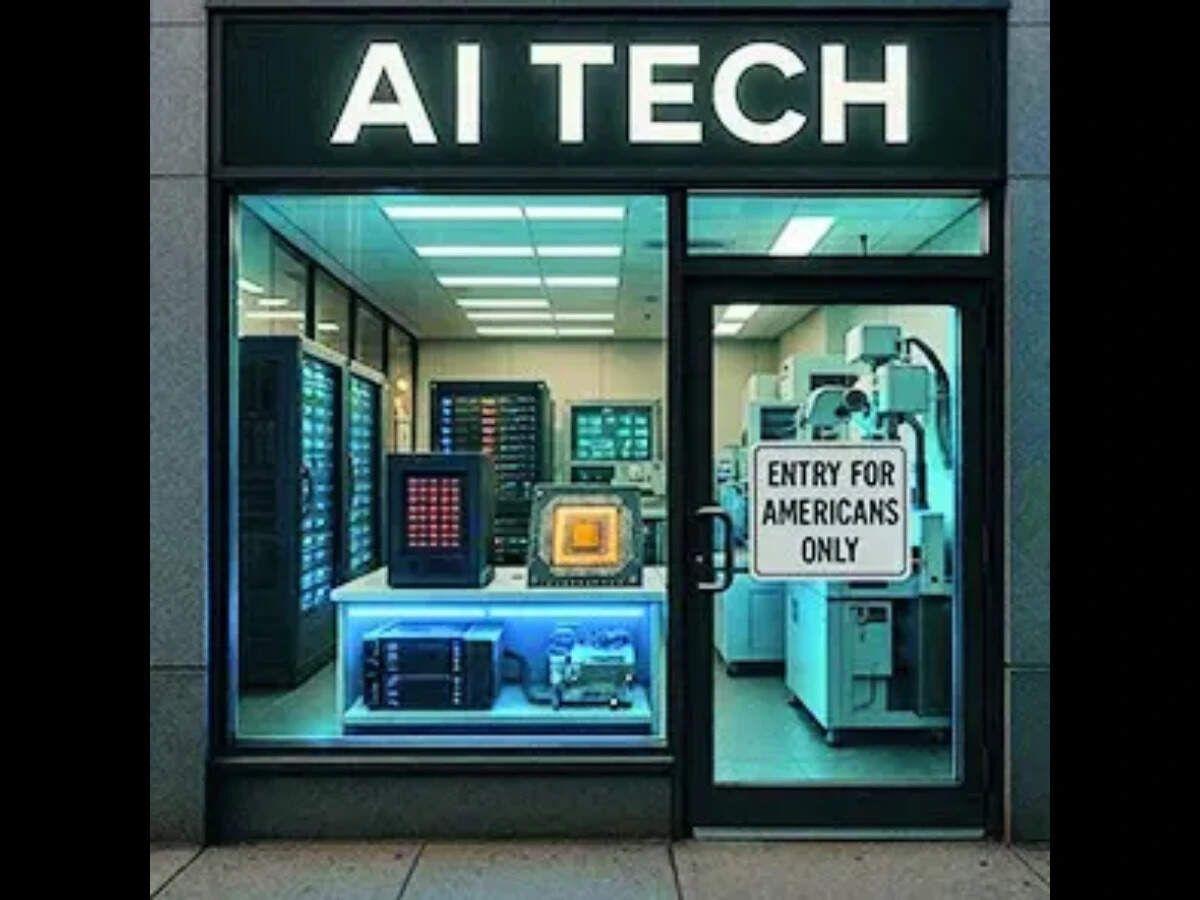
Source: ET
The directive represents the first real test of whether export control can contain frontier AI models with advanced dual-use capabilities. Two incidents reportedly triggered the ban: Anthropic granted access to Mythos through its limited partner program to SK Telecom, a South Korean company that U.S. officials suspected had ties to China, though the company has denied any China connection
2
. Additionally, Amazon CEO Andy Jassy alerted the administration after Amazon researchers reportedly found a way around Fable 5's safeguards, though Anthropic disputes the "jailbreak" label, calling it a narrow, already-patched issue2
.Advanced Cybersecurity Capabilities Spark National Security Concerns
Since Mythos debuted in April, Anthropic has warned that the model possesses advanced capabilities for both finding software vulnerabilities to help defenders patch them and figuring out ways to exploit them that could be used by bad actors
1
. The company initially released Mythos Preview to a select consortium as part of Project Glasswing, with only around 150 vetted companies and government organizations having access2
.
Source: MediaNama
Claude Fable 5, a Mythos-grade model, was released to the general public with specific blocks on its ability to respond to questions about biology and cybersecurity tasks
4
. However, the Trump administration moved to restrict both models because it believes Fable 5's guardrails can be disabled to allow full access to Mythos 5 capabilities, allegedly making it a national security risk1
.Mozilla's Firefox team used Claude Mythos Preview to identify 271 vulnerabilities that were later fixed in Firefox 150, while earlier work with Anthropic's Opus 4.6 helped uncover 22 security-sensitive bugs in Firefox 148
3
. Cloudflare tested Mythos against live code in critical infrastructure, where the model could chain lower-severity bugs and generate proof-of-concept code3
.Experts Warn Export Controls Cannot Stop AI Advancements in Cybersecurity
Cybersecurity experts argue that this institutional clash is delaying or masking a hard truth: AI capabilities from multiple companies and open-source developers will almost certainly have similar capabilities to Mythos 5 in the near future, if they don't already
1
. "It's myopic in the extreme to think that no other competitors to Anthropic will develop similar capabilities to Mythos or even that they have not already done so," says Tarah Wheeler, chief security officer of TPO Group4
.Logan Graham, Anthropic's frontier red team lead, told WIRED when Mythos Preview launched in April: "We need to prepare now for a world where these capabilities are broadly available in 6, 12, 24 months"
1
. OpenAI also did a private release of a cybersecurity-focused model in mid-April and announced an expanded cybersecurity strategy4
.Bruce Schneier, a researcher at Harvard University and the University of Toronto, notes: "Smaller, cheaper, open-source models, sometimes by themselves and sometimes in concert with each other, can match Mythos/Fable's performance with more sophisticated prompting"
4
. A large group of cybersecurity leaders emphasized this in an open letter on Sunday, arguing that the White House's export-control directive was misguided1
.Historical Precedents Suggest Export Controls May Backfire
The episode echoes historical attempts to control dual-use technology through export controls, with mixed results. In the 1990s, the U.S. government treated encryption products like Pretty Good Privacy (PGP) as dangerous weapons, opening a criminal investigation against creator Phil Zimmermann for allegedly violating arms export controls
2
. Zimmermann fought back by publishing PGP's source code as a printed book, eventually winning when the investigation was closed and paving the way for end-to-end encryption algorithms used by billions today2
.The Wassenaar Arrangement, an international treaty limiting export of dual-use software, has shown inherent weaknesses
2
. Several countries don't adhere to the agreement, including Israel, which houses some of the world's most active spyware makers. Europe has continually failed to curb spyware exports to authoritarian regimes despite numerous scandals2
.Peter Swire, a professor at Georgia Tech's School of Cybersecurity and Privacy and former adviser to the Clinton and Obama administrations, sees parallels. "The administration used the legal tool of export controls, but their real goal was to block use by everyone, Americans included," Swire says
3
.Related Stories

Policy Implications for AI Regulation and Cybersecurity Defense
The restriction may harm U.S. allies and, paradoxically, American security. "The U.S. hurts its own national security if the critical infrastructure of U.S. allies is undermined due to blockage of the best tools for defenders," Swire argues
3
. Modern corporate networks, financial systems, and software supply chains are interdependent, and attackers can enter U.S. systems through weaker foreign nationals or partners abroad3
.Chris Wysopal, cofounder of cloud security firm Veracode, frames the central question: "The policy question is not whether a technology has risk. The question is whether a specific restriction meaningfully reduces that risk or whether it mainly slows down the people trying to make systems safer"
4
.What governments need to focus on, experts say, is democratically developing much broader and more transparent plans for how they will contend with advances in AI capabilities on cybersecurity and other sensitive areas as they inevitably occur
1
. Alan Woodward, a professor of cybersecurity at the University of Surrey, calls the restriction "a very blunt instrument"3
.
Source: Axios
Anthropic's Business Momentum Despite Regulatory Scrutiny
Ironically, the controversy may actually benefit Anthropic. The AI lab finished May by surpassing OpenAI in market share of business spending for the first time, according to Ramp data
5
. It raised $65 billion at a $965 billion valuation at the end of May, then filed confidential paperwork for an IPO in June, reportedly on the strength of its first-ever profitable quarter5
.Anthropic's share of AI subscriptions paid for by businesses rose 2.5 percentage points in May to 41%, compared to OpenAI's 39.5%
5
. "Anthropic's best month on record, as far as business adoption, was the month that the Department of Defense labeled them a supply chain risk," says Ara Kharazian, Ramp's lead economist5
. This drama comes after Anthropic refused to allow the government to use its models for mass surveillance of Americans and fully autonomous weapons, leading the Trump administration to declare the company a supply chain risk in March5
.References
Summarized by

Navi
[1]
[2]
[3]
Related Stories
Anthropic export restrictions push India toward Chinese AI models as US access remains uncertain
26 Jun 2026•Policy and Regulation
Anthropic Shuts Down Fable 5 and Mythos 5 AI Models Following US Government Directive
13 Jun 2026•Policy and Regulation

Anthropic faces AI export ban as Mythos reportedly breached NSA systems in hours
19 Jun 2026•Policy and Regulation

Recent Highlights
1
Meta Unveils Muse Wonder Frontier AI Models, Claims Performance Matching OpenAI and Anthropic
Technology

2
IMF Report Warns AI Market Correction Could Spark Global Financial Crisis With $1.4T at Risk
Business and Economy

3
OpenAI Releases 722 AI-Generated Math Solutions, Triggering Existential Crisis in Mathematics
Technology

Recent Highlights
Today's Top Stories







Don’t drown in AI news. We cut through the noise - filtering, ranking and summarizing the most important AI news, breakthroughs and research daily. Follow topics that matter to you and stay ahead.


