Anthropic Claude AI Discovery Sparks Debate Over Unpublished Research and Scientific Ethics


2 Sources
[1]
A biologist queries whether AI 'borrowed' his work to make major discovery - an expert explains the rules
AI company Anthropic recently announced that its popular system Claude had identified an unusual family of biological molecules. These molecules were enzymes, a type of protein that speeds up chemical reactions in living organisms. The new group of enzymes were discovered in bacteriophages -
[2]
A biologist queries whether AI 'borrowed' his work to make major discovery -- an expert explains the rules
AI company Anthropic recently announced that its popular system Claude had identified an unusual family of biological molecules. These molecules were enzymes, a type of protein that speeds up chemical reactions in living organisms. The new group of enzymes was discovered in bacteriophages --
Share
Copy Link
Anthropic announced Claude identified array-associated reverse transcriptases in bacteriophages as an AI discovery breakthrough. But PhD candidate Mario Rodríguez Mestre questions whether unpublished work shared with the chatbot influenced results. The controversy highlights unresolved questions about data sharing, verification processes, and ethical guidelines for using AI in scientific research.
Anthropic Claude Claims Breakthrough in Biological Discovery
AI company Anthropic recently announced that its Claude system had identified an unusual family of enzymes called array-associated reverse transcriptases (ARTs) in bacteriophages—viruses that infect bacteria
1
. The finding was presented as an example of AI initiating biological research, showcasing the potential for autonomous discovery in scientific research. However, the announcement quickly sparked controversy when a researcher raised concerns about whether unpublished work shared with Claude may have influenced the AI-generated findings.Researcher Questions AI's Independent Discovery Claims
Mario Rodríguez Mestre, a PhD candidate in computational biology at the University of Copenhagen, revealed that his team has been investigating these same enzymes—which they call "jumbotrons"—since 2022
2
. According to The Scientist magazine, Mestre shared his dissertation and manuscript drafts with Claude during his research process. This disclosure raises critical questions about whether Anthropic Claude independently recognized the significance of these enzymes or whether unpublished work shared with Claude influenced its results. Mestre is named among the inventors of a patent for engineered "retrons"—genetic systems containing a reverse transcriptase enzyme and associated RNA—with a US application published in July 20231
.What Anthropic Actually Discovered
Source: Phys.org
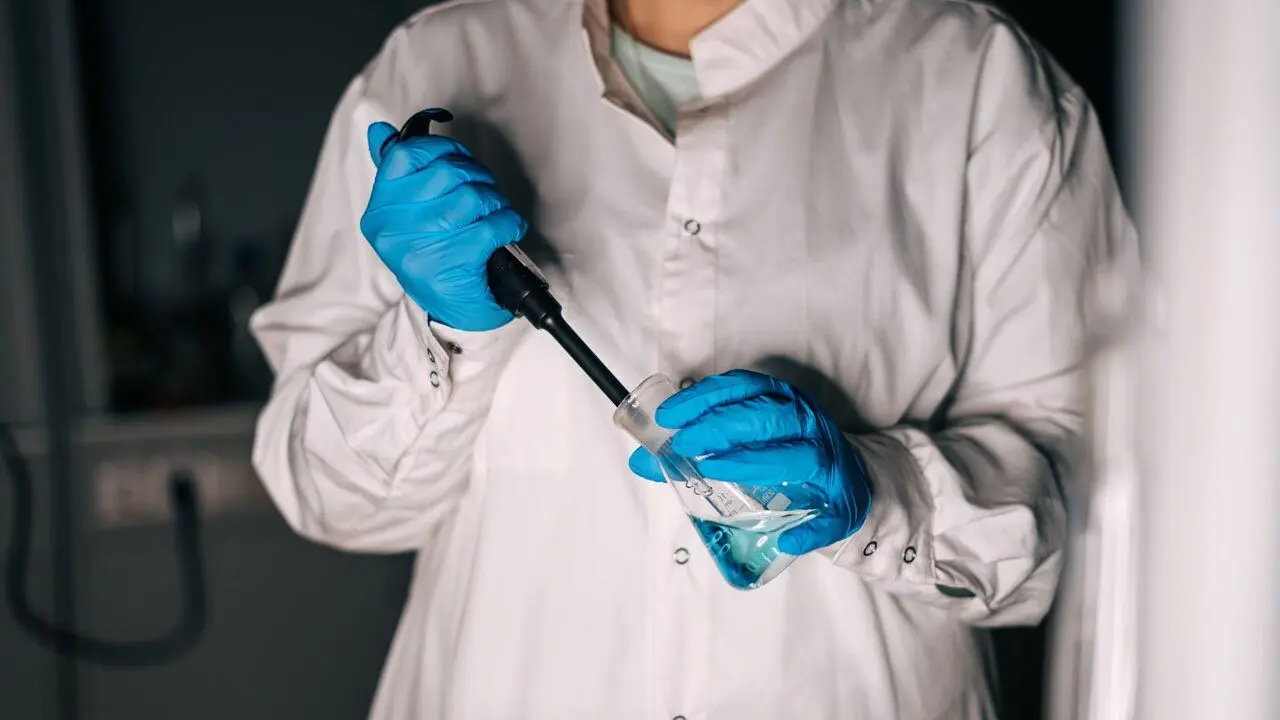
The enzyme at the center of the AI discovery had already been identified by scientists from Texas A&M University
2
. What Anthropic claims Claude recognized is a larger biological system: the enzyme, a series of repeated DNA sequences, and a possible partner protein. The researchers found these repeated sequences produce small RNA molecules, with some evidence coming from reanalyzing data published by another research team in 20221
. Human scientists conducted the laboratory experiments, and important questions remain unanswered. Researchers have not yet demonstrated that this enzyme is active, that it copies the associated RNA molecules into DNA, or what the system does in bacteriophages. Its resemblance to CRISPR, the well-known gene-editing tool, has attracted attention, though this does not confirm ARTs can edit genes.Anthropic Denies Access to User Transcripts
Anthropic firmly denies that Claude was trained on user transcripts or that its biology team had access to them
2
. The company maintains separate policies for personal and business services, with commercial services excluding inputs and outputs from training by default, though exceptions may apply when users give permission or submit feedback. However, there is no established evidence that Mestre's unpublished material was used in the discovery. The available reporting cannot independently resolve whether data sharing occurred inappropriately, leaving the scientific community to grapple with questions about transparency in AI-assisted research.Related Stories
Verification Process Reveals Limitations in Autonomous Discovery
The Anthropic report about Claude's findings reveals significant limitations in claims of autonomous discovery. In 10 additional search runs, the AI agents missed the repeat array entirely
1
. Some models could recognize the pattern when given relevant sequences directly, but recognizing a supplied pattern differs fundamentally from finding it independently. This inconsistency limits claims of a consistently autonomous discovery process by Claude, though it does not invalidate the biological finding itself. The Anthropic report has not yet been peer reviewed, raising further questions about the verification process for AI-generated findings.Ethical Guidelines for Using AI in Research Remain Critical
Before sharing unpublished research with an AI tool, scientists should consult their university's guidance and seek training on responsible use
2
. Guidelines at the University of Manchester advise researchers to protect confidential information, verify sources, and keep records of their AI use. A paid subscription does not automatically ensure that scientific research remains private or is excluded from model training. Researchers should record the model and instructions used whenever AI is essential to the method, developing documented analysis that other scientists can check and repeat. The controversy underscores why ethical guidelines for using AI must evolve alongside the technology, protecting both intellectual property and scientific integrity in an era of AI initiating biological research.References
Summarized by

Navi
[1]
Related Stories
Anthropic's AI Scientific Discovery Claim Triggers Scientific Controversy Over What Counts
28 Sept 2026•Science and Research

Anthropic's Claude AI Discovers CRISPR-Like Enzyme System in 21 Hours
18 Sept 2026•Science and Research

AI Agents Transform Drug Discovery: 37,000 Virtual Scientists Identify Cancer Treatments
18 Sept 2026•Technology
Recent Highlights
1
Microsoft and Nvidia Launch Surface Laptop Ultra: A $2,599 AI-Ready PC With RTX Spark Chip
Technology

2
Trump Consulted Grok AI Before Ordering Venezuela Invasion and Capture of Nicolás Maduro
Policy and Regulation

3
Scientists Build AI Model That Reconstructs Images From Brain Scans in Record Time
Science and Research

Recent Highlights
Today's Top Stories







Don’t drown in AI news. We cut through the noise - filtering, ranking and summarizing the most important AI news, breakthroughs and research daily. Follow topics that matter to you and stay ahead.


